A EUR 13m agreed value on a EUR 8m yacht voided the whole policy
What she was insured for, and what she was worth
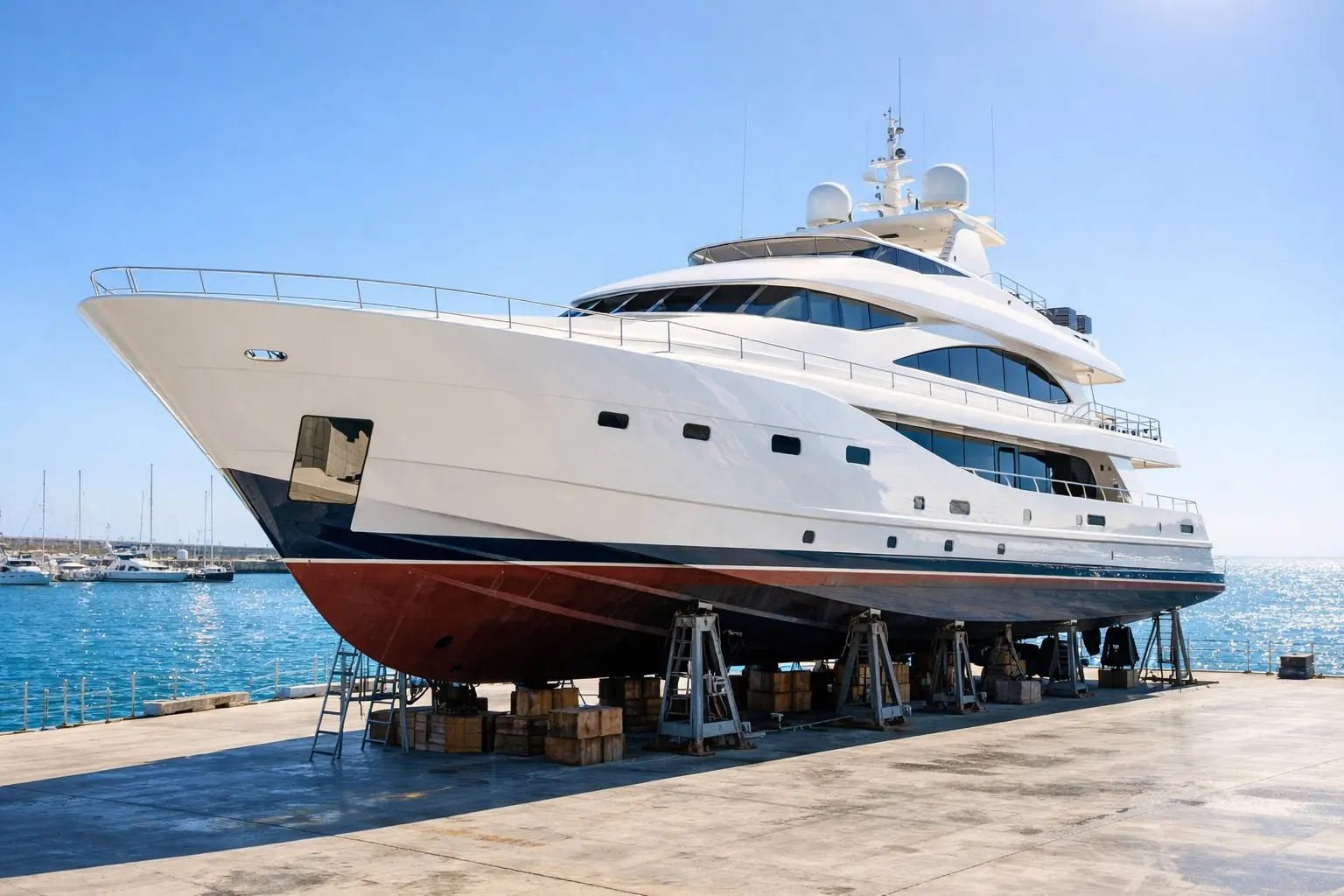
The Galatea was a Riva Athena 115, about 35 m, the second of only nine built, bought new in May 2007 for EUR 13m. She caught fire at her mooring in Athens Marina early on 3 December 2011 and was damaged beyond economic repair in what insurers accepted was an accident. Her agreed value was EUR 13m, split into EUR 9.75m of hull and machinery and EUR 3.25m of increased value.
Three documents sat in the owning company's files and none reached the underwriter. A professional valuer certified a sound market value of about EUR 8.5m including VAT in November 2009, roughly EUR 7m net. On 2 March 2011 the manager advised in writing that she be listed at EUR 8.5m at the most. By 9 May she was advertised at EUR 8m, and the insurance was concluded on 17 May.
An agreed value is a valuation the underwriter buys
An agreed value fixes the sum payable on a total loss before anything happens, which kills the argument about what the yacht was worth on the day she was lost. That certainty is why owners ask for it. The price of it is that the figure becomes a fact the underwriter rates and reinsures on, not a preference and not a ceiling to be set high for a little more premium.
In Involnert Management Inc v Aprilgrange Ltd, Mr Justice Leggatt held that all three were material and should have been disclosed before inception. On full disclosure the insurers would still have written the risk, but at an agreed value of EUR 8m. The omission induced the contract they actually signed, so they could avoid it. The over-valuation was accidental and it changed nothing.
Why the remedy was all or nothing
Under the Marine Insurance Act 1906 regime governing this policy, material non-disclosure gave the insurer one remedy: avoidance. The contract is unwound from the start, the premium goes back and every claim fails, however innocent the omission. Nothing scaled the payout down to the EUR 8m the underwriter would have accepted. That is the difference between voiding a policy and reducing cover.
Two further conditions closed off what was left. The R12 clauses required a sworn proof of loss within 90 days, none was filed, and that alone barred any suit under Section A. No valid notice of abandonment was given either, which independently stopped the loss counting as total. Section B carried neither requirement, which is why any figure survived.
The valuation reasoning is the part worth keeping
Both sides called an expert valuer and the judge accepted neither. The owner's expert took 25 per cent off the purchase price for four years of age and reached EUR 9.75m. Leggatt J rejected percentage-of-purchase-price depreciation outright, holding there is no typical rate because depreciation depends on the market. The insurers' expert tabled 13 comparable listings averaging EUR 5.68m and cut 30 per cent to reach EUR 4m.
The comparables method survived, but the judge took it apart on execution. A newer Riva 115 asking EUR 9.8m was dropped from the sample because the expert thought that price too high, which biased the average down. A quarter of the sales behind the 30 per cent discount were forced bank sales. Corrected for both, real market value came out at EUR 5m to EUR 6m.
What the law changed, and what to check on a policy
The Insurance Act 2015 came into force 18 months after it was passed in February 2015. Schedule 1 keeps avoidance and forfeiture of premium only where the breach of fair presentation was deliberate or reckless. Where it was neither, and the insurer would have written the risk on other terms, the contract is treated as if written on those terms. Where the insurer would only have charged more, the claim is cut in proportion.
The checks are short. An agreed value wants reviewing at each renewal against a current valuation and any live asking price, and both belong with the underwriter. Cover renewed each year at the original invoice is the pattern the court found. The owning company did recover EUR 2m, and not from insurers: the producing broker was held negligent for leaving the manager's opinion of value off the proposal form.
Questions this story answers
What happened?
A yacht insured for an agreed value of EUR 13m had been valued at about EUR 7m and was on the market at EUR 8m. None of that reached the underwriter, and when she burned out the English Commercial Court let the insurers avoid the policy and pay nothing at all.
Who reported this?
SuperyachtNews, 7KBW, Herbert Smith Freehills Kramer, Lexology.
We do this for everyone who loves this world. The people who have spent their lives in it, and the people just discovering it. Yotters exists so that what we learn belongs to all of them.
Nobody pays us for this. No ads, no sponsors, nothing for sale. We just believe the world is a little better when knowledge is shared instead of kept.
If it gave you something today, tell us to keep going. Follow us, leave a like, or write a positive comment. We read every one, and they are what keeps us going.