A EUR 16.5m gap divides a certified explorer from a look-alike
A 33 point spread over the same fifteen years
Ben Abbott, writing for SuperyachtNews on 29 July, models three residual value curves across a fifteen year hold. A well maintained ice-class explorer retains about 59 percent of its original value at year fifteen. A conventional Mediterranean superyacht of similar age sits at about 44 percent. A vessel styled like an expedition yacht while carrying no genuine certification falls to about 26 percent. The three curves begin at the same point and separate steadily from the first year of ownership.
The worked example is the part that reaches a buyer. On a EUR 50m yacht, the 33 percentage point gap between the certified explorer and the imitation comes to EUR 16.5m. That is a larger sum than the cost of building the capability into the hull in the first place. It is also money that never shows up on a condition survey, because it turns on what the next owner is permitted to do with the yacht rather than her condition.
Baltic ice is not polar ice
The distinction the case is built on is a real one, and listings routinely blur it. Lloyd's Register Ice Class 1D is written for Baltic winter conditions. It says nothing about polar access and does not grant it. Polar Class 5, an IACS notation, covers year round operation in medium first-year ice that may contain older inclusions.
The consequence for an owner is binary. A yacht with a polar notation can work where a Baltic-classed hull is turned back at the ice edge, which is why the resale market treats the two as separate assets rather than as neighbours on one scale. Anyone planning Antarctic or high Arctic itineraries needs the second notation on the certificate. No quantity of expedition styling substitutes for it, and a charter manager cannot market an itinerary the paperwork will not support.
The two sales the argument rests on
Abbott anchors the case on two transactions. Polar Star is a 65.17m Lurssen delivered in 2005 as Northern Star, with exterior lines by Espen Oeino and an interior by FM Architettura d'interni. She measures 1,495 GT, carries an ice-class hull, and runs 7,000 nautical miles at 12 knots with ten guests and nineteen crew aboard. She changed hands in 2024, having been extensively refitted in 2016 and upgraded since.
The second is Q, formerly Ragnar. Royal Niestern Sander built the hull in 2012 as a plain supply vessel for the offshore industry, and Icon Yachts spent roughly three years converting her, launching the finished boat in January 2020. At 68.2m and 2,450 GT she carries an ice-breaking hull with PC5 rated pods, complies with the Large Yacht Code, and takes twelve guests and sixteen crew behind exterior styling by Redman Whiteley Dixon. She was listed at EUR 69.5m and sold in 2023.
Where the numbers are soft
Abbott prices both sales per gross tonne, at roughly USD 35,400 for Polar Star and roughly USD 37,400 for Q. Those rates come from a comparable transaction register he maintains himself rather than from an independent dataset. Multiplied out against published tonnages they track reported prices closely in one case and loosely in the other, which is what a per tonne rate tends to do. Two sales is a thin sample on which to hang a fifteen year curve.
He is candid about the limits. He describes the model as an informed estimate rather than an audited number, calls it directionally sound, and tells advisers to verify the figures independently before putting them in front of a client. There is a commercial interest to declare as well. Abbott founded Utrinque Yachts, a brokerage working exclusively in the 50m plus expedition and explorer segment. An argument can be sound and still amount to advocacy for the segment its author sells into, and the numbers deserve reading on that basis.
What to check before signing
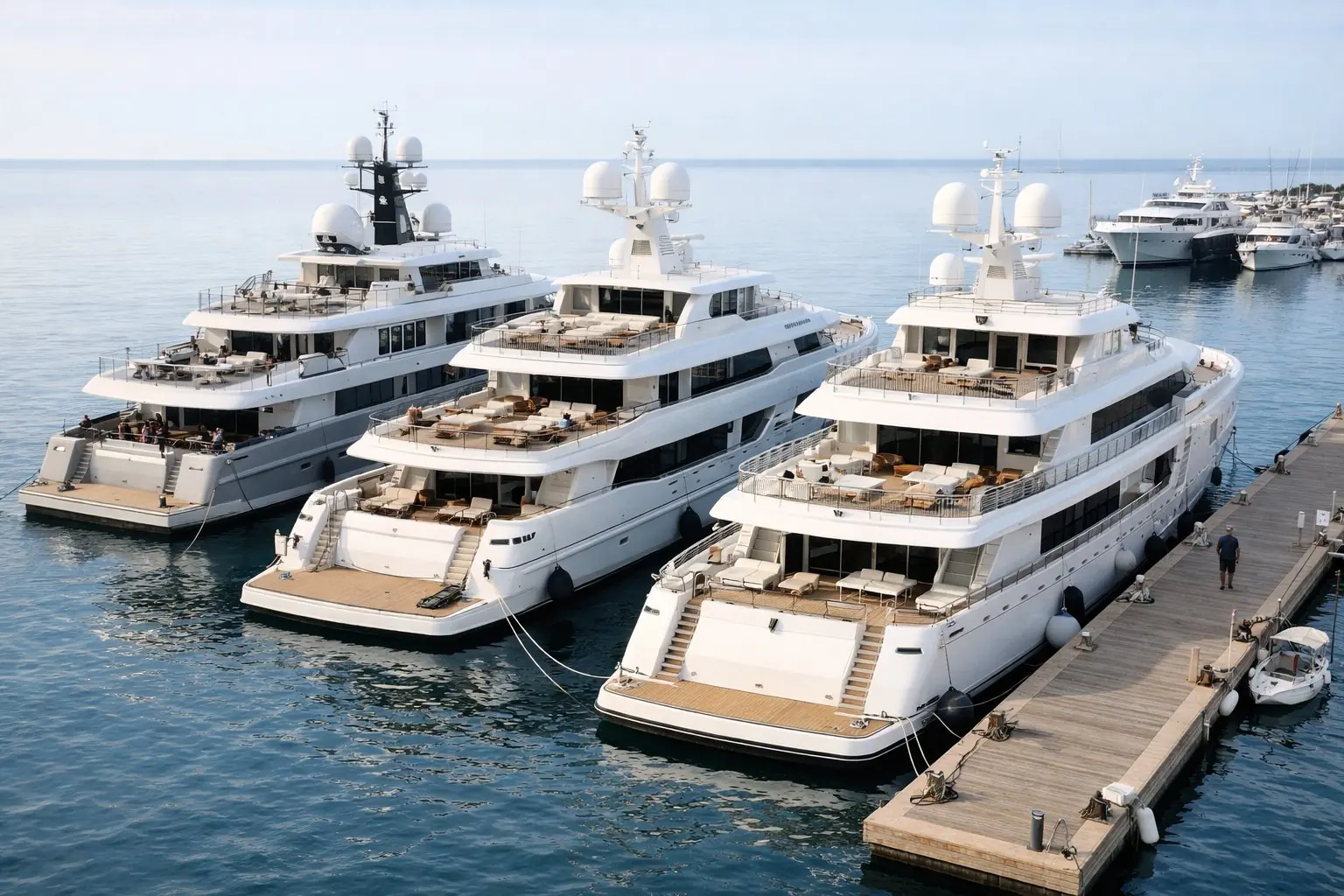
For an owner weighing a build or a purchase, the practical test is short. Read the notation on the class certificate rather than the description in the brochure, then confirm which society issued it and against which standard. Styling costs very little to add. A plumb bow, heavy bulwarks, a deck crane and a dark hull can be drawn onto almost any displacement yacht without changing a line of what she is certified to do.
At build stage the economics run the other way. Scantlings, machinery protection and the survey regime are far cheaper to specify on paper than to retrofit in a shed, so an owner who genuinely intends high latitude cruising has a straightforward case for paying at the outset. An owner who wants the appearance alone should price in the 26 percent trajectory before signing, because that is the figure the next buyer will be working from.
Questions this story answers
What happened?
A brokerage analysis published on 29 July puts a 33 point spread between what a certified ice-class explorer and a styled imitation are worth after fifteen years. On a EUR 50m yacht that difference comes to EUR 16.5m of residual value. The figures are one broker's own model rather than an audited dataset, and the distinction they turn on is written on the class certificate.
Who reported this?
SuperyachtNews, BOAT International, SuperYacht Times, IACS, Lloyd's Register.
We do this for everyone who loves this world. The people who have spent their lives in it, and the people just discovering it. Yotters exists so that what we learn belongs to all of them.
Nobody pays us for this. No ads, no sponsors, nothing for sale. We just believe the world is a little better when knowledge is shared instead of kept.
If it gave you something today, tell us to keep going. Follow us, leave a like, or write a positive comment. We read every one, and they are what keeps us going.