ARuby
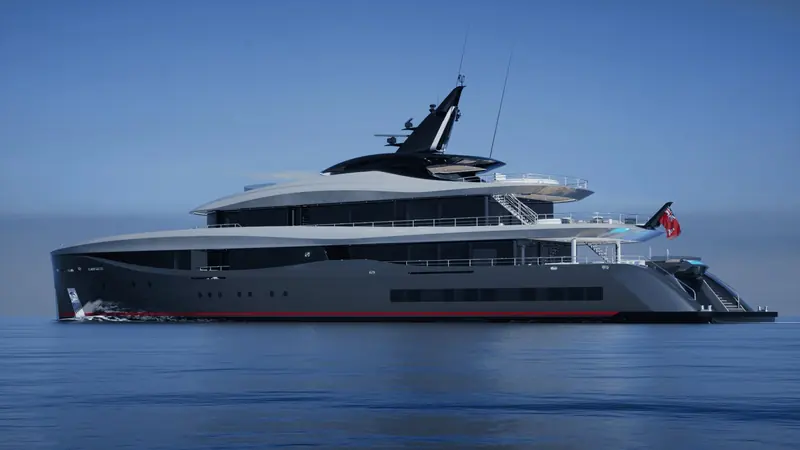
| 70 m LOA, about 1,770 GT semi-custom platform | |
| First semi-custom programme in the yard's history | |
| Unveiled 2026, developed with Reymond Langton Design | |
| Diesel-electric propulsion with pod drives | |
| Projected 16 knots top, 12.5 knot cruise | |
| Transatlantic range | |
| Layout and styling open to each owner | |
| Five main engines of about 650 kW each with a 150 kWh battery bank |
A first for the yard
For most of its modern history Abeking & Rasmussen has built yachts one commission at a time, the four-hull 78 metre series of 2008 to 2011 standing as the exception that proved the yard could repeat a platform. ARuby, unveiled in 2026, goes further as its first true semi-custom programme, a 70 metre platform on which the naval architecture, structure and systems are resolved in advance while the visible yacht remains open to each owner's direction.
The move answers a shift the whole top end of the market has felt. Experienced owners increasingly decline four-year build timelines, and the yards able to compress delivery without diluting quality are capturing those clients while the others watch briefs walk out of the door. ARuby is Lemwerder's response, and characteristically it arrived late and thoroughly engineered instead of early and speculative. The platform was announced only once its core engineering was already in place.
Reymond Langton on deck
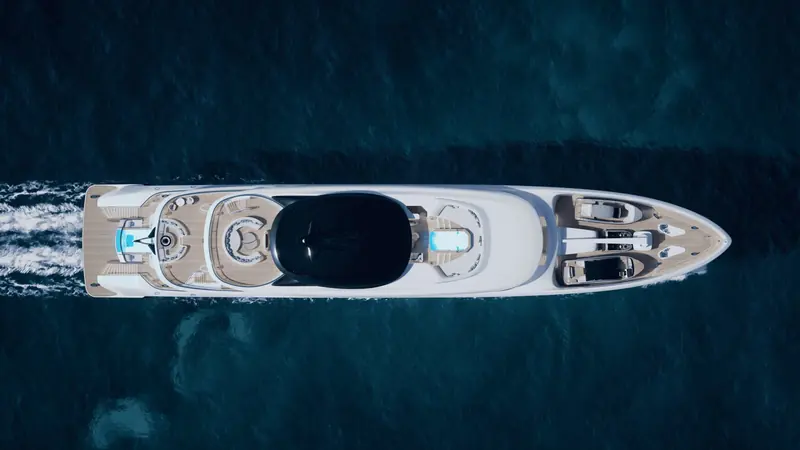
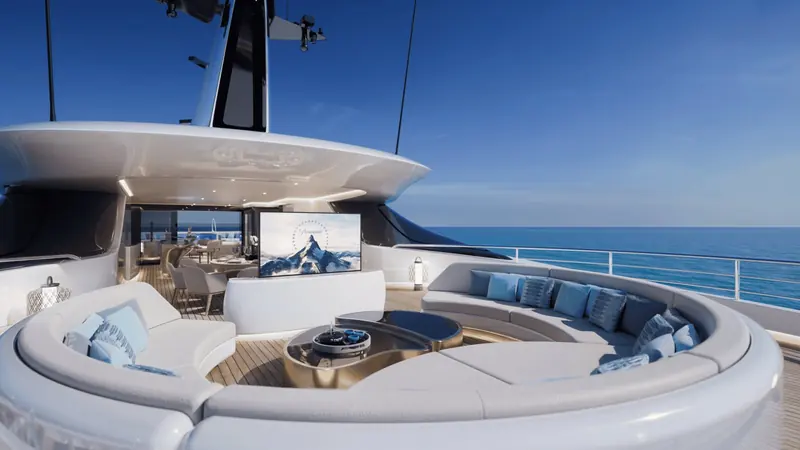
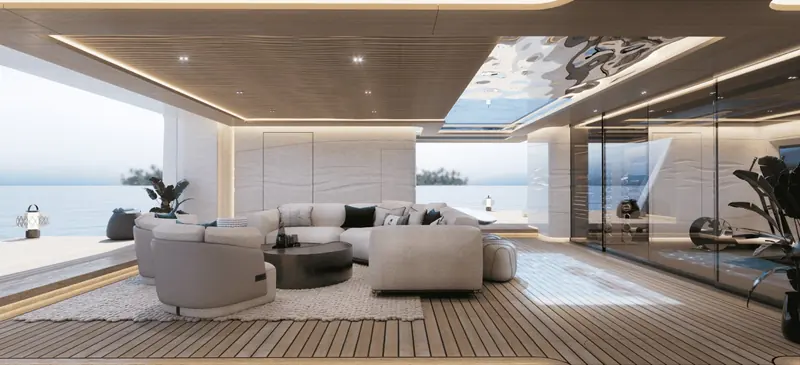
The design partner is Reymond Langton, the studio behind Amaryllis and the flagship Aviva, which makes ARuby a continuation of the yard's most productive creative relationship. The published design shows a contemporary 70 metre profile with the studio's characteristic balance, generous glazing and an emphasis on connected indoor and outdoor living across the principal decks.
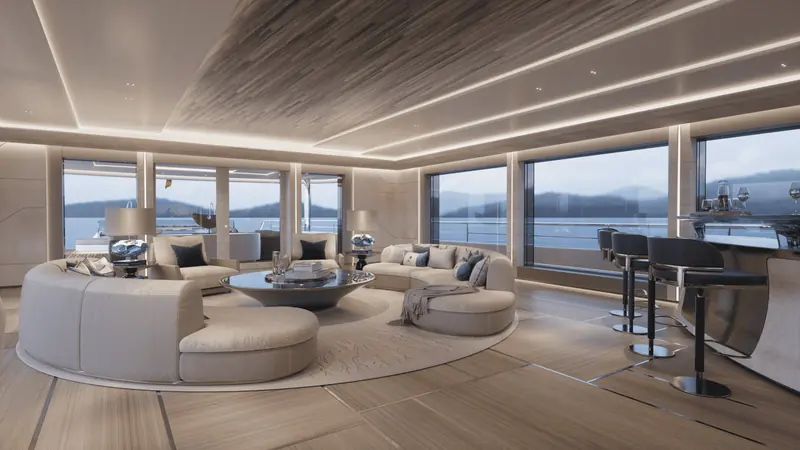
Semi-custom at this level does not mean choosing from a catalogue of fabrics. Interior layout, styling and much of the exterior treatment remain genuinely open, with the fixed elements confined to the parts of a yacht an owner never sees, frames, tanks, machinery spaces and cable runs. The intent is that no two ARubys will read as sisterships from the guest's side of the experience.
A 70 metre platform announced with its engineering already resolved. Lemwerder does not sell renderings.
Diesel-electric pods, engineered first
The technical heart of the platform is a diesel-electric propulsion system driving pods, fed by five compact main engines of around 650 kW each with a 150 kWh battery bank, projected to deliver a top speed of around 16 knots, a 12.5 knot cruise and transatlantic range. Generating power centrally and distributing it electrically frees the layout, shrinks noise and vibration paths and lets the machinery run at efficient loads across the whole speed range.
What separates the proposition from the concept renderings that crowd boat shows is that the engineering exists. The yard describes the platform as pre-engineered and proven, built on decades of client feedback and the diesel-electric experience of its naval and specialist vessels. An owner signing for an ARuby is buying into a resolved technical file, with the design conversation layered on top of settled engineering from the first meeting.
The value of a shorter clock
Time is the scarcest commodity in custom yachting. A clean-sheet 70 metre project consumes years in engineering before steel is cut, and ARuby removes most of that phase from the schedule. For an owner, the practical promise is a Lemwerder-built yacht delivered meaningfully sooner, with the cost certainty that comes from a platform the yard has already priced in detail.
There is an asset argument as well. Semi-custom yachts from top-tier yards historically hold value strongly, because the platform is understood by surveyors and the brand carries the residual. ARuby extends that logic to a builder whose full-custom hulls already trade at a premium. The programme is young and unproven in the water, which buyers should weigh, but the underlying yard is anything but.
Where ARuby fits in the fleet
ARuby slots beneath the yard's full-custom flagships in scale and above almost everything else in engineering pedigree. At 70 metres and around 1,770 GT it sits in the heart of the modern large-yacht market, the size at which serious global cruising, a full crew operation and proper owner privacy all become comfortable, without the operating footprint of an 80 metre and beyond.
For the yard's clientele it opens a second door. Owners who admired Aviva or Elandess but could not accept the calendar of a full commission can now reach the same shipyard on different terms. Deliveries remain to be scheduled and the first hull will be watched closely by the whole market, a scrutiny Lemwerder has faced before and has never yet disappointed. For buyers already holding a slot conversation with the Dutch yards, ARuby adds a German option to a shortlist that has not grown in decades, and competition at that altitude tends to serve the owner.
Questions owners ask
How big is the Abeking & Rasmussen ARuby?
70 m LOA, about 1,770 GT semi-custom platform. First semi-custom programme in the yard's history.
Who is the Abeking & Rasmussen ARuby for?
An owner who wants Abeking & Rasmussen engineering and a Reymond Langton design without the timeline of a clean-sheet commission.
Who it is for: An owner who wants Abeking & Rasmussen engineering and a Reymond Langton design without the timeline of a clean-sheet commission.