CRN Delivers Cerulean, a 70m Built for Diving and Spearfishing
What is Cerulean and who was she built for?
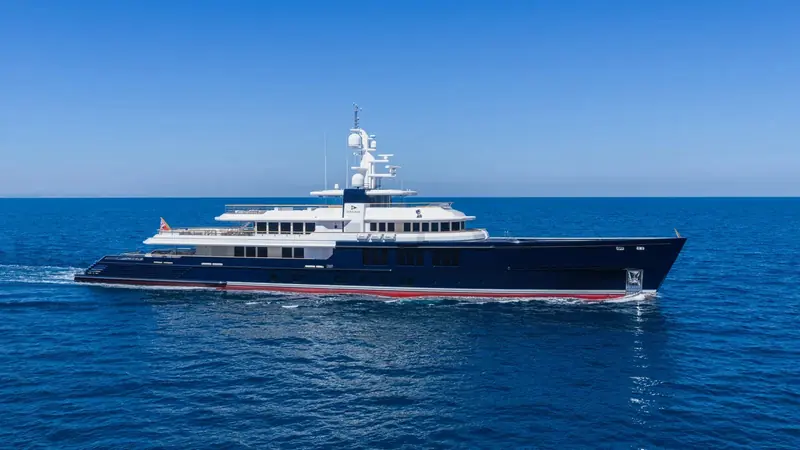
Cerulean is a 70-metre, 1,100 GT full-custom yacht CRN delivered to her owner in September 2026, engineered to a sailing enthusiast's brief for spearfishing, diving and cruising rather than the formal entertaining a boat this size is usually built around.
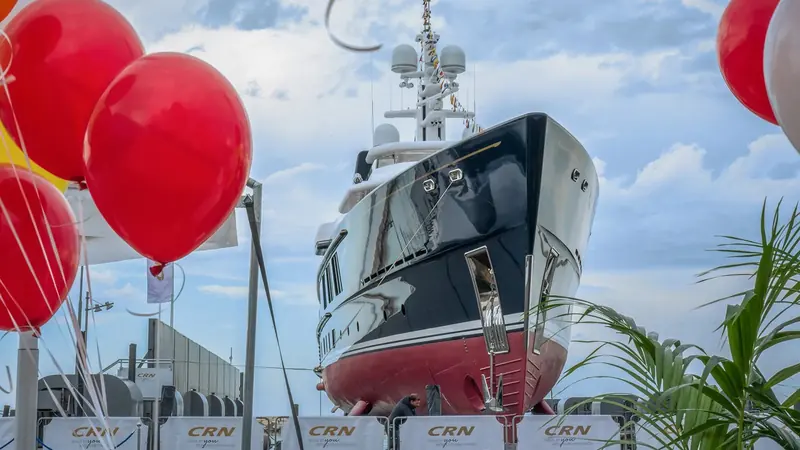
CRN, the Ferretti Group yard in Ancona, launched the yacht as Project Thunderball on 4 June 2026 and handed her over roughly three months later, following sea trials and final outfitting. She was sold in 2022, with construction starting in 2023, and Y.CO acted as owner's representative and project manager throughout the build. At 1,100 GT, Cerulean is CRN's seventh-largest yacht to date, but her brief runs against the pattern that size usually implies: the owner, described by the design team as a sailing enthusiast, wanted a boat he would actually use for diving and spearfishing, cruising between the Mediterranean, the Bahamas and Florida with a smaller sailing yacht in company rather than sitting at anchor as a static base.
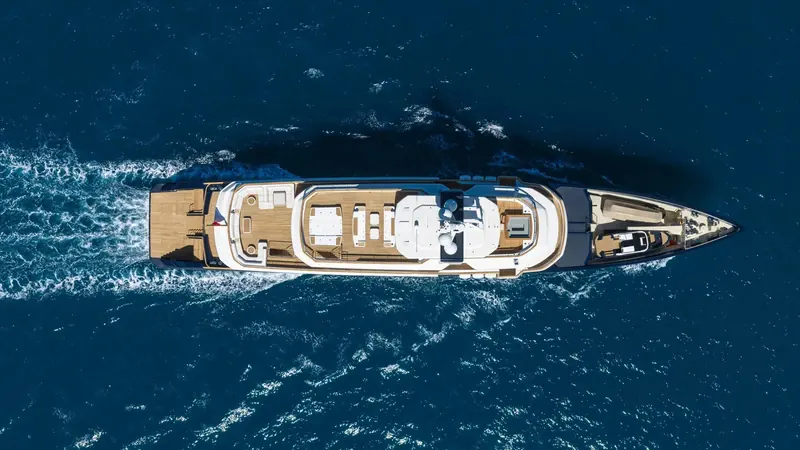
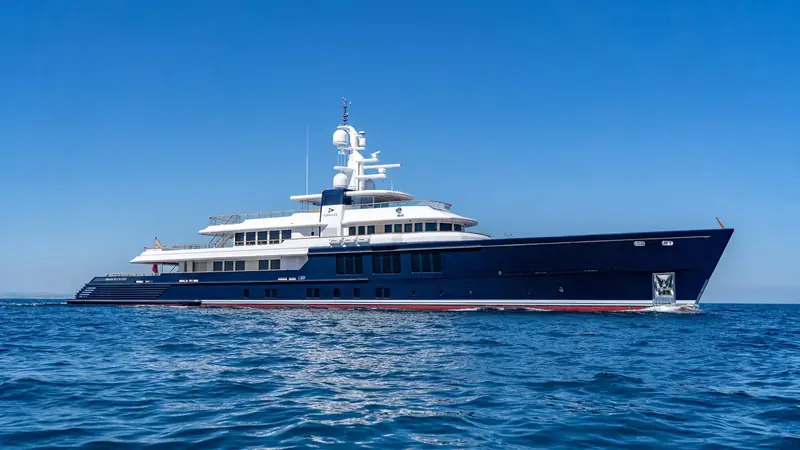
That brief shaped decisions most 70-metre owners never have to make. Vripack, responsible for exterior design and naval architecture, gave her a draught of just 3.2 metres, shallow for her length, so she can anchor closer to reefs and shorelines than a deeper-draught yacht of the same size could manage. Nauta Design handled the interior and outdoor living spaces. Twin MAN V12 engines rated at 1,213kW each give her a top speed of 15.5 knots and a 12-knot cruise, figures that read as modest next to faster full-custom yachts but that were never the point of this build. She carries five decks in all, with a tender garage forward on the foredeck holding two custom tenders alongside the dive and water-sports equipment the brief called for, visible in her aerial profile rather than tucked away out of sight.
What did CRN and Vripack actually change to fit the diving brief?
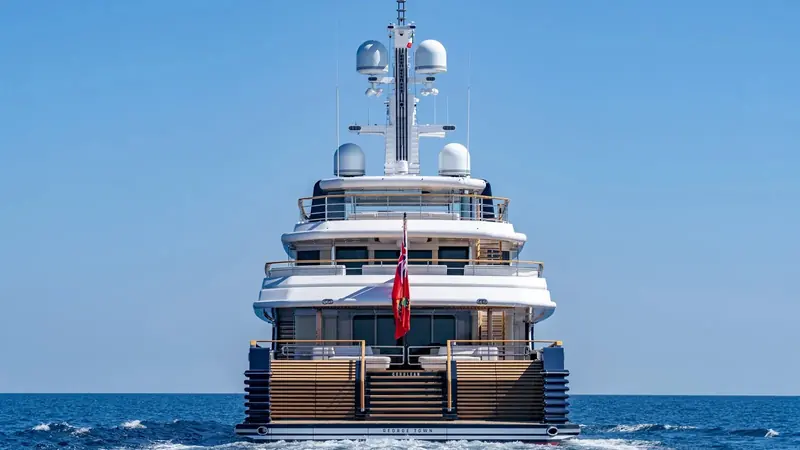
CRN's engineers dropped the bulbous bow after tank testing showed better efficiency without one, an unusual call at 70 metres, and fitted an Energy Storage System that lets Cerulean anchor and run silently on stored power rather than her generators.
Tank testing during design development showed the hull performed better without a bulbous bow, so CRN's engineers removed it, a choice YachtBuyer's reporting on the build flagged as unusual for a yacht of this size, where a bulbous bow is close to standard practice for range and fuel efficiency. The shallow draught and the bow decision both trace back to the same brief: a yacht that spends real time close to reefs, shallow anchorages and dive sites rather than one optimised purely for long-range cruising efficiency in open water. CRN validated the no-bulb hull the way any full-custom yard tests a departure from its usual formula: in the towing tank, against the loaded displacement and speed range the owner actually intended to run, rather than the higher speeds a bulbous bow is normally sized for.
The Energy Storage System CRN fitted manages onboard power flows, supports peak-shaving during high-demand periods, and lets the yacht anchor with her generators shut down, running lighting, systems and air conditioning on stored power instead. For an owner planning to spend nights at anchor over dive sites rather than in a marina, that buys quiet running at exactly the moments engine and generator noise would otherwise carry furthest across still water. None of this is unique to Cerulean among modern full-custom builds, but it is unusual to see it specified alongside a shallow-draught, no-bulb hull rather than the high-speed, deep-draught formula most 70-metre-plus yachts are still built to.
Where does Cerulean's slender, low-deck profile actually come from?
The owner asked Vripack for a limited-deck profile inspired by CRN's own The One, since renamed V2V, and the design team spent the project refining proportions by fractions rather than whole decisions.
Marnix J. Hoekstra, Vripack's co-creative director, described a design process built on small, repeated adjustments rather than big swings: "I still have those original drawings which, to an untrained eye, are just a lot of lines," he said, of a hull profile refined through the owner's insistence on details as fine as a superstructure line sitting, in Hoekstra's words, "one hair higher." The reference point for the whole exercise was The One, an earlier CRN full-custom yacht since renamed V2V, whose limited-deck, low-profile silhouette the owner wanted echoed rather than copied outright.
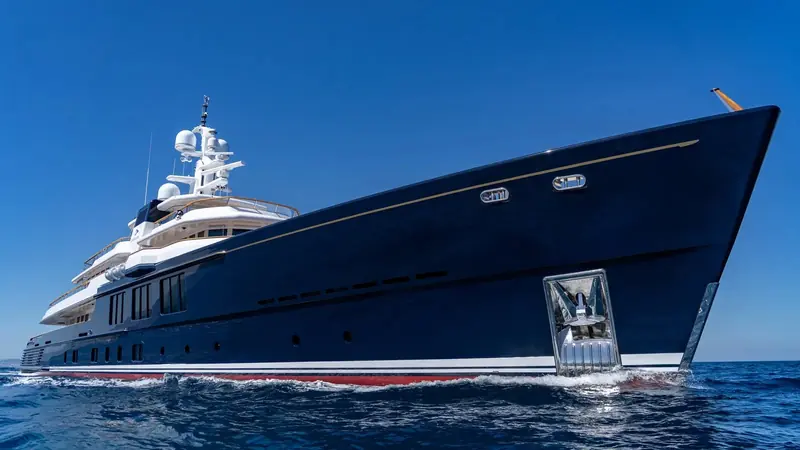
The result is a yacht CRN and Vripack both describe in terms of what it avoids as much as what it has: no stacked, boxy superstructure reading as a floating palace, instead an elongated bow and a slender running profile closer to a large sailing yacht's proportions than a typical motor yacht's. It is a harder brief to execute than it sounds, because every deck taken off the profile has to go somewhere else in the layout without shrinking the accommodation a 12-guest, 15-crew yacht is expected to carry. Vripack has built its reputation on exactly this kind of full-custom brief rather than a house style applied yacht after yacht, and Cerulean's profile is a deliberate departure from the taller, more stacked silhouettes CRN and its Ferretti Group stablemates more often deliver at this length.
What does this brief cost against a faster, more conventional 70-metre?
Cerulean trades top-end speed and guest density for shallow-water access and quiet anchoring, a trade CRN has not put a price on and that only makes sense for an owner who genuinely uses a yacht this size the way this one was built to be used.
CRN operates as one of several full-custom yards inside the Ferretti Group, alongside Riva, Pershing and Custom Line, and a project the scale of Cerulean represents years of yard capacity committed to a single owner's brief rather than a series build. No price has been made public for Cerulean, in keeping with CRN's usual practice on full-custom commissions, and the owner has not been named. What is public is the shape of the trade the brief demanded: a 15.5-knot top speed is slow next to the 18 to 20 knots more conventional 70-metre-plus full-custom yachts can reach, and 12 guests across six suites is a modest guest count for the gross tonnage, well below what a charter-oriented yacht this size would typically carry. Both numbers are the direct cost of the space the shallow draught, the dive-focused layout and the accompanying sailing yacht's support systems take up elsewhere in the design.
Cerulean is too newly delivered to have any independent owner or charter reports beyond the yard's and designers' own account of the build; nothing here is a report from anyone who has spent time aboard her. What the build does show is that CRN's full-custom order book now runs to yachts designed around how an owner actually intends to use the boat rather than around resale or charter appeal, a distinction that matters most to a buyer deciding whether to specify a similar brief rather than take a yard's standard formula off the shelf.
What is good, and what to watch
Strong points
- An actually distinct briefBuilt for diving, spearfishing and shallow anchorages rather than the charter-ready formula most 70-metre-plus full-custom yachts default to.
- Real engineering trade-offs, not stylingThe no-bulbous-bow hull and 3.2m draught are structural choices proven in tank testing, not surface changes to a standard platform.
- Silent, generator-off anchoringThe Energy Storage System lets her run overnight on stored power, a genuine benefit at the quiet dive anchorages the brief was built around.
What to watch
- Slow for her size15.5 knots top speed trails the 18 to 20 knots more conventional 70-metre full-custom yachts reach, a direct cost of the hull choices made.
- Low guest density for 1,100 GT12 guests across six suites is modest for the tonnage, meaning a charter or resale buyer gets less accommodation per metre than the class norm.
- No price disclosedCRN and Y.CO have not published a contract value, so a prospective owner has no public benchmark for what a comparable brief would cost.
Practical detail
| Length / gross tonnage | 70m (69.7m LOA), 1,100 GT |
|---|---|
| Beam / draught | 11m beam, 3.2m draught |
| Engines / speed | 2x MAN V12-1213kW; 15.5kn top, 12kn cruise |
| Guests / crew | 12 guests in 6 suites (1 owner's suite); 15 crew in 9 cabins |
| Exterior design / naval architecture | Vripack |
| Interior / outdoor living design | Nauta Design |
| Owner's representative / project management | Y.CO |
| Timeline | Sold 2022, construction started 2023, launched 4 June 2026, delivered September 2026 |
| Notable engineering | No bulbous bow after tank testing; Energy Storage System for silent, generator-off anchoring |
| What is not published | Contract price and the owner's identity have not been disclosed by CRN or Y.CO |
Questions this story answers
What happened?
CRN handed the 70-metre Cerulean to her owner in September 2026, three months after launching her from the Ferretti Group yard in Ancona. She was engineered around a sailor-owner's brief for a boat that dives, anchors close to shore and looks nothing like a floating palace, which matters to any owner weighing a full-custom build against the usual charter-friendly formula.
What is good about it?
An actually distinct brief. Built for diving, spearfishing and shallow anchorages rather than the charter-ready formula most 70-metre-plus full-custom yachts default to.
What should an owner or buyer watch?
Slow for her size. 15.5 knots top speed trails the 18 to 20 knots more conventional 70-metre full-custom yachts reach, a direct cost of the hull choices made.
Who reported this?
BOAT International, 15 September 2026, YachtBuyer, September 2026, Marnix J. Hoekstra, co-creative director, Vripack, CRN / Ferretti Group press material.
We do this for everyone who loves this world. The people who have spent their lives in it, and the people just discovering it. Yotters exists so that what we learn belongs to all of them.
Nobody pays us for this. No ads, no sponsors, nothing for sale. We just believe the world is a little better when knowledge is shared instead of kept.
If it gave you something today, tell us to keep going. Follow us, leave a like, or write a positive comment. We read every one, and they are what keeps us going.