Delta's Zembra Launches, a 499 GT Explorer Built to Carry a Sub
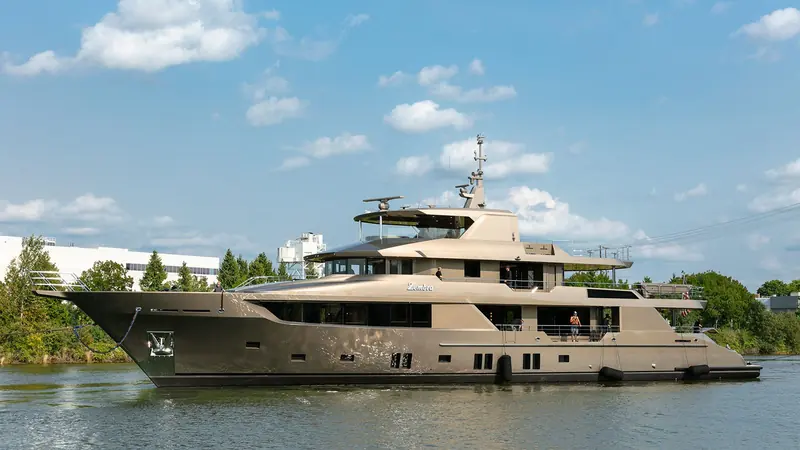
Why did Delta Marine design Zembra to stay under 500 gross tons?
Staying under 500 GT keeps Zembra out of the tonnage band where the international Large Yacht Code imposes heavier crew certification and manning requirements, letting Thomas run a smaller, less specialised crew while still carrying equipment normally seen on much larger explorers.
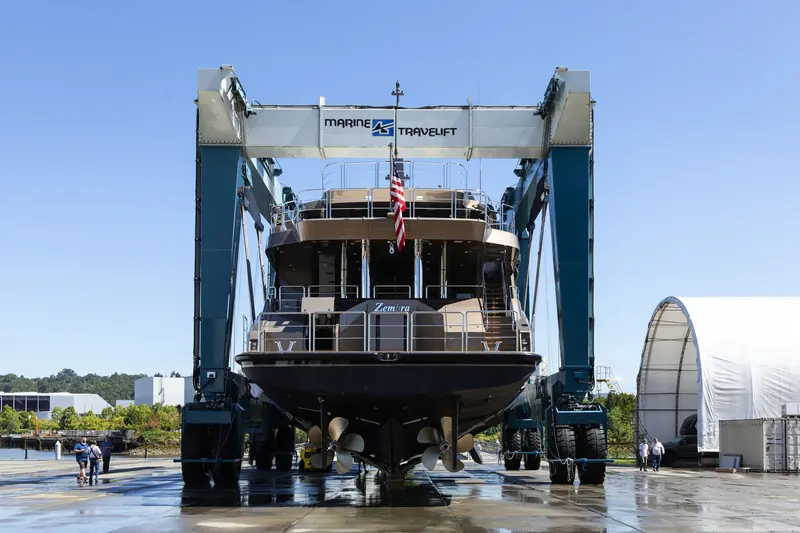
"If you look at all the gear on deck, it's really more comparable to a much larger yacht," Chris Jones, son of Delta co-founder Jack Jones, told SuperYacht Times. "So that's been one of the challenges throughout the design and construction process: how do we house all these really fun toys that the owner wants on a boat under 500 gross tons?" Delta optimised volume to land Zembra at exactly 499 GT, one ton under the threshold, while still finding room for a helicopter landing pad, a Williams 625 jet tender, personal watercraft, a remote-operated vehicle and the submarine itself.
Getting there took a rigorous weight-reduction programme as much as a volume calculation. The hull is E-glass composite, but carbon fibre is used extensively in the superstructure, built by Janicki, a Seattle supplier that also tools parts for Boeing on some of the largest five-axis milling machines in the world. Chief naval architect Randy Neureuter says the measures leave Zembra roughly 15 percent lighter than other Delta yachts built from the same mould, which matters directly for stability once the submarine, crane and deck toys are added back on top.
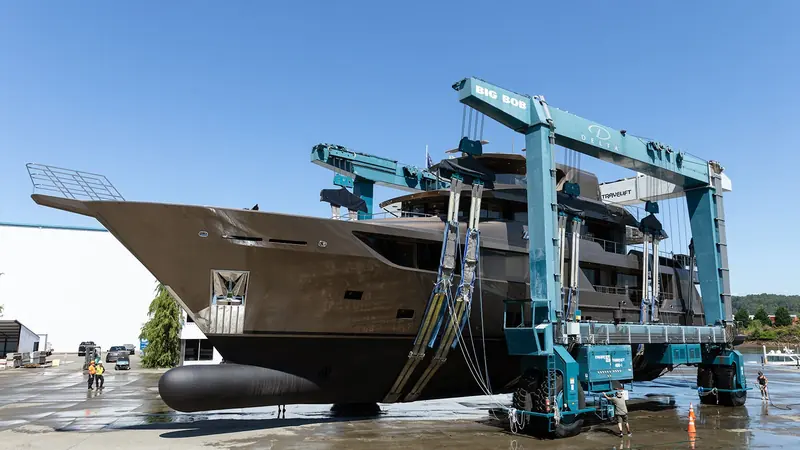
What toys and equipment does Zembra's 499 GT actually hold?
Zembra carries a three-person, 3,800-kilogram U-Boat Worx submarine, an ICON A5 amphibious light-sport aircraft, a helicopter landing pad, PWCs, an ROV and a Williams 625 jet tender, deployed through a custom crane that folds flush into the bridge deck overhang.
The submarine is the centrepiece. It launches and retrieves from the swim platform via a 4,500-kilogram-capacity gantry crane custom-built by Nautical Structures, whose boom extends nearly eight metres out of the deckhead, then folds away completely so it does not eat into headroom or spoil the yacht's lines. "It certainly hasn't come without its challenges," Delta project manager Born Syse told SuperYacht Times. "We've spent many hours on video calls with Nautical Structures to make sure the crane itself completely disappears inside the deckhead to maintain good head height and doesn't detract from the overall design." Integrating the crane required finite element analysis to spread its loads through carbon-fibre beams and local steel and aluminium reinforcement.
A dedicated support vessel backs the submarine up: JR Marine in British Columbia is building a custom 50-foot aluminium catamaran that doubles as a chase boat carrying extra diesel and as safety oversight and communications cover whenever the sub is in the water. Thomas, who is qualified to pilot both the submarine and the ICON A5 himself, asked for the whole system to be as unobtrusive as it is capable, in keeping with a family yacht rather than a research vessel.
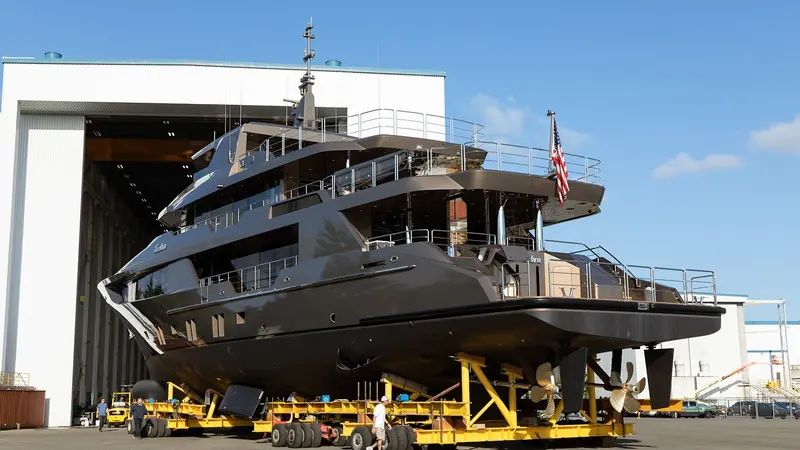
Who owns Zembra and why did he commission a fully custom yacht?
Steven Thomas, an orthopedic surgeon who grew up boating in Newport Beach, California, moved to a fully custom build after his family outgrew a smaller Inace-built yacht, sizing Zembra around his twelve grandchildren rather than around himself.
Thomas has owned a progression of yachts, including two Nordhavns before the Inace, and told BOAT International that his daughters eventually said "we're done" after years aboard the smaller boat, prompting the jump to Delta's largest and most complex build. Zembra, like every yacht he has owned, takes her name from a Tunisian island he glimpsed as a teenager and never forgot. His stated goal, in his own words, is "to take us on all these adventures" with the grandchildren, to the South Pacific, Brazil and the Mediterranean, and to experience those places "again through their eyes."
His brother, Roger Thomas, an interior designer better known for Wynn Resorts properties in Las Vegas, designed Zembra's interior, giving the build a family connection beyond ownership. Thomas rations his own time aboard deliberately: he says his wife "stipulated I only get 10 weeks a year on board," a detail that undercuts any read of Zembra as a full-time live-aboard rather than a vessel built for a fixed number of family trips a year.
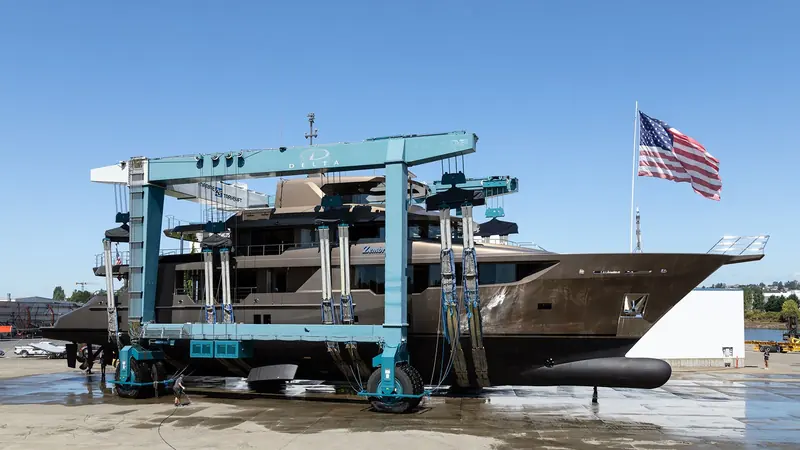
What did meeting US and international rules cost Zembra's design?
Dual US Coast Guard and Cayman Islands certification, chosen so Thomas can charter under US flag in American waters now and reflag foreign later for wider crew options, forced Zembra to meet both IMO Tier III and EPA Tier 4 emissions rules at once, a combination that stretched the hull and added engine-room space most single-flag yachts do not need.
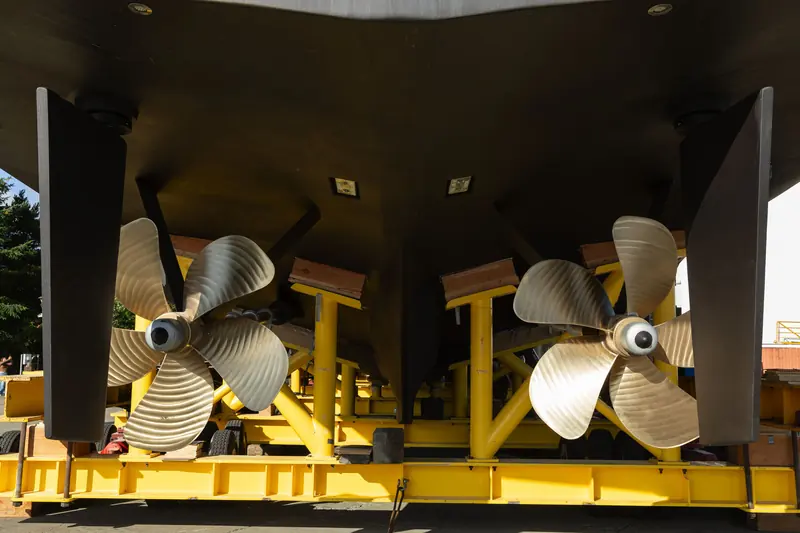
Marine engineer Dan Filonowich told SuperYacht Times that meeting two emissions regimes simultaneously, rather than the single standard most yachts of this size answer to, was one reason the project grew from an original 45 metres to 48 metres on the way to her final 46.3-metre length: the extra space went largely into engine-room equipment. The twin Caterpillar C32 main engines, rated at 1,200 horsepower each at 1,800 rpm, were chosen specifically because they are dual-rated for both standards, and the Kohler generators were deliberately sized under 130 kilowatts to stay inside Tier III limits without needing further after-treatment hardware.
Zembra also had to stay under 300 US regulatory tons, a separate threshold from gross tonnage that governs notice-of-arrival requirements for vessels entering US ports, while simultaneously satisfying international gross tonnage rules for worldwide operation. "We're very well versed in how to do all of these things," Filonowich said. "Delta has a history of working with class societies for over 30 years now, so all of these regulatory hoops we have to jump through have become kind of second nature." The dark bronze paint that gives Zembra her finish also drove separate engineering: awnings now span up to 60 percent of her upper decks for shade, sized against published data on how much hotter dark hulls run in direct sun.
Can anyone who isn't the owner charter Zembra?
Zembra is not for sale, but Northrop & Johnson will manage select charter weeks once she is formally delivered to Thomas, making her one of two current Delta builds the yard is, for the first time in over a decade, actively building with chartering in mind.
"Delta is excited to have two of its current in-build projects planning to enter the charter market," Delta vice-president Michelle Jones, daughter of the late Ivor Jones, told SuperYacht Times. "This not only allows us to share the story of their builds more openly, something we have not been able to do in over a decade, it also gives potential clients the opportunity to experience the quality of a new Delta yacht firsthand." The elevator connecting all decks, the wheelchair-accessible stateroom among Zembra's five, and the absence of raised sills between interior and exterior spaces were all specified with that eventual charter guest, not only the owner's family, in mind.
No charter rate has been published, and neither Delta nor Northrop & Johnson has said how many weeks a year will actually be offered once Thomas's own family use is scheduled around it. That is the honest limit of what is known: Zembra proves a submarine-and-seaplane platform can be built and dual-flagged for charter at 499 GT, but whether the charter side of that plan performs as intended will not be visible until bookings and reviews exist, and none do yet.
What owners and crew report
Thomas moved to a fully custom build once his family outgrew a smaller yacht
His daughters told him "we're done" after years aboard his Inace-built yacht, prompting the jump to a fully custom 46-metre platform sized around his twelve grandchildren.
BOAT International (owner profile, Dr Steven Thomas)The owner deliberately rations his own time aboard
Thomas says his wife "stipulated I only get 10 weeks a year on board," underscoring that Zembra is built as a scheduled family vessel rather than a full-time live-aboard for the owner himself.
BOAT International (owner profile, Dr Steven Thomas)
What is good, and what to watch
Strong points
- Real toy capacity at mid-size tonnageA submarine, amphibious plane, helicopter pad, jet tender and ROV together on a 499 GT hull is a spec list normally seen on 600-plus GT explorers, achieved through genuine weight-reduction engineering rather than just a bigger hull.
- Dual US/Cayman certificationLets Thomas charter under US flag in American waters immediately, with the option to reflag foreign for wider crew sourcing later, without a second build or a change of ownership structure.
- Accessibility built in, not retrofittedA wheelchair-accessible stateroom and sill-free deck transitions were specified from the start of the design, unusual on a custom explorer this size.
What to watch
- Cruise speed tops out at 12 knotsThe full-displacement hull and heavy toy payload mean Zembra is not built to cover ocean distance quickly; an owner wanting a fast passage-maker should look elsewhere.
- No hybrid or battery propulsionDelta kept a conventional twin-diesel drivetrain by design philosophy, so Zembra carries none of the quiet-running or emissions upside that newer explorer builds from other yards are adding.
- Charter economics are unprovenThis is one of the first Delta yachts built from the outset for charter alongside private use, so there is no track record yet for how a submarine-and-seaplane platform actually performs as a chartered asset, and no published rate to judge it against.
Practical detail
| Length / gross tonnage | 46.3m (152ft) / 499 GT |
|---|---|
| Builder / location | Delta Marine, Seattle, Washington |
| Hull / superstructure | E-glass composite hull / carbon-fibre superstructure (tooled by Janicki) |
| Engines / speed | 2x Caterpillar C32, 1,200hp each at 1,800rpm / 15.5kn top, 12kn cruise |
| Guests / cabins | 10 guests in 5 staterooms, one wheelchair-accessible |
| Toys carried | U-Boat Worx 3-person submarine, ICON A5 amphibious aircraft, helicopter pad, Williams 625 jet tender, PWCs, ROV |
| Interior design | Roger Thomas |
| Naval architecture | Delta Design Group (Randy Neureuter, chief naval architect) |
| Certification | US Coast Guard and Cayman Islands, dual-flagged; IMO Tier III and EPA Tier 4 emissions compliant |
| Charter management | Northrop & Johnson, select weeks after owner delivery |
| What is not published | Charter day-rate, cruising range and fuel capacity have not been released by Delta or the owner's team. |
Questions this story answers
What happened?
Delta Marine has launched the 46.3-metre explorer Zembra, a composite-hulled yacht engineered to carry a three-person submarine, an amphibious seaplane and a helicopter without crossing 500 gross tons. Her owner, orthopedic surgeon Steven Thomas, commissioned his first fully custom yacht after two Nordhavns and an Inace, and built her around his twelve grandchildren rather than himself. For an owner weighing a custom build against a production hull, Zembra is a working example of what a tonnage ceiling actually costs in engineering, and what it buys back in crew size and flag flexibility.
What is good about it?
Real toy capacity at mid-size tonnage. A submarine, amphibious plane, helicopter pad, jet tender and ROV together on a 499 GT hull is a spec list normally seen on 600-plus GT explorers, achieved through genuine weight-reduction engineering rather than just a bigger hull.
What should an owner or buyer watch?
Cruise speed tops out at 12 knots. The full-displacement hull and heavy toy payload mean Zembra is not built to cover ocean distance quickly; an owner wanting a fast passage-maker should look elsewhere.
What do owners and crew report?
His daughters told him "we're done" after years aboard his Inace-built yacht, prompting the jump to a fully custom 46-metre platform sized around his twelve grandchildren. (BOAT International (owner profile, Dr Steven Thomas))
Who reported this?
SuperYacht Times (Justin Ratcliffe, build report, How To Build It issue 9), Megayacht News, 28 August 2026, BOAT International (owner profile, Dr Steven Thomas), BOAT International, Superyacht Directory.
We do this for everyone who loves this world. The people who have spent their lives in it, and the people just discovering it. Yotters exists so that what we learn belongs to all of them.
Nobody pays us for this. No ads, no sponsors, nothing for sale. We just believe the world is a little better when knowledge is shared instead of kept.
If it gave you something today, tell us to keep going. Follow us, leave a like, or write a positive comment. We read every one, and they are what keeps us going.