Lurssen delivers 655m of yacht in a year, five hulls over 100m
Six hulls, 655 metres
The six are Deep Blue at 134.2m, Boardwalk at 117m, Nausicaa at 114.2m, O3 at 109m, Nixie at 102.4m and Odisea at 78.2m. Odisea was handed over on 13 March, built as project ACE 21. Boardwalk was the third delivery of the year and Nausicaa the fourth, with Nixie closing the run as the sixth. Added together the six come to 655 metres of completed yacht inside a single calendar year.
Peter Lurssen called delivering six yachts in a single year a remarkable achievement, and the production arithmetic backs the phrase up. The yard puts roughly four years of development and construction behind each custom hull, and hundreds of thousands of manufacturing hours. A six-hull year is therefore work begun across four separate earlier years arriving at the quay at once. It is a scheduling outcome as much as a capacity one, and it is not a rate the yard can simply repeat on demand.
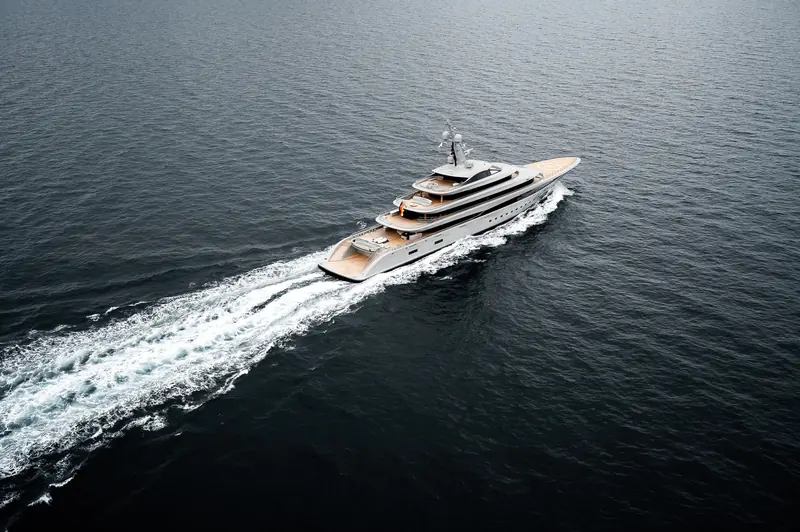
What five 100m hulls do to a very small population
The over-100m fleet is one of the few genuinely scarce asset classes left in yachting, and Lurssen sits at the centre of it. The yard has built more than a third of the world's 100 largest yachts, and has over 30 vessels above 100 metres in operation. Against a base that size, adding five more in twelve months is a measurable change rather than a rounding error. Owners at that length are used to being one of a very few, and the population just moved.
The practical effect cuts two ways for an existing owner. More 100m-plus tonnage afloat means more comparable hulls when a broker eventually values yours, which trims the scarcity premium a thin sample supports. It also means more competition for the handful of marinas that can physically take the length. Neither shift is dramatic over a single year, but both run in the same direction and both belong in a hold-or-sell decision.
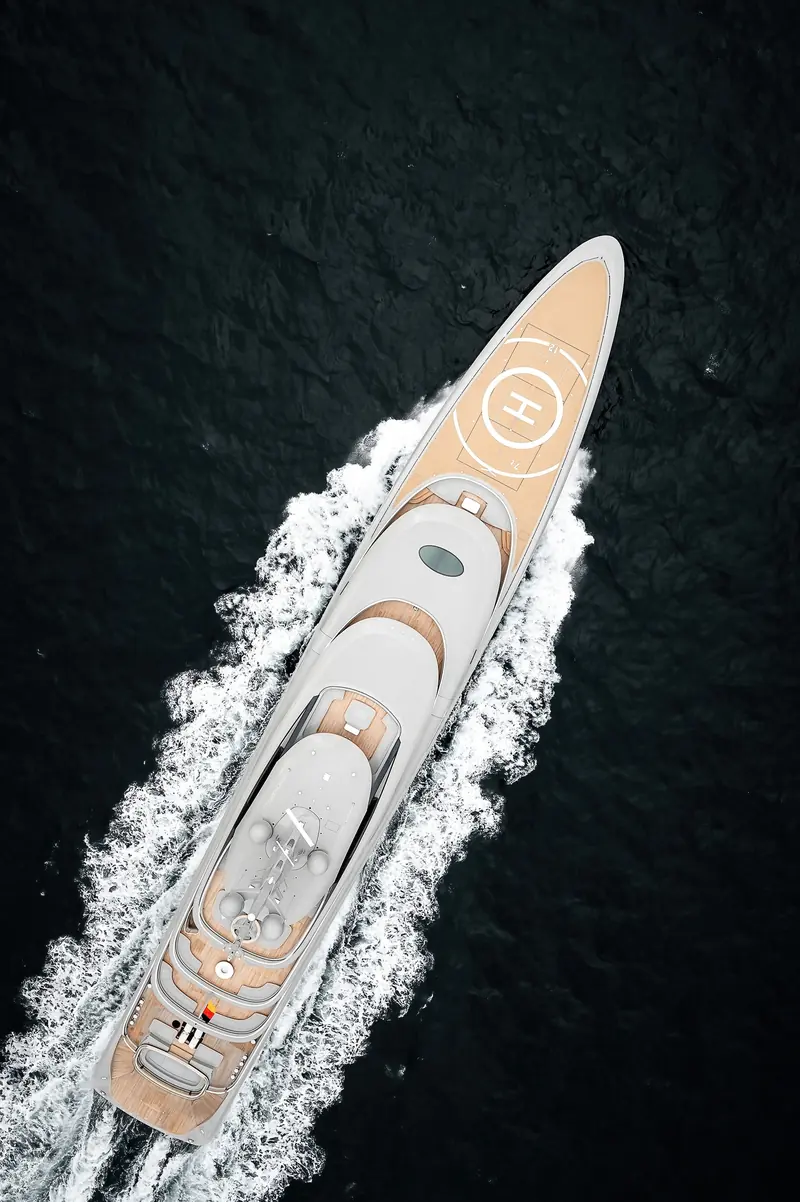
One yard, five design languages
The more striking feature of the year is how little the six look like each other. Nausicaa was drawn by Marc Newson as project COSMOS, and carries a continuous ribbon of glass around the guest deck. Boardwalk went the other way, a six-deck vessel by Frank Woll with interiors by Amy Halffman, dual helipads and layered pool terraces, built to an owner brief centred on long-range cruising. O3 came from Salt Ship Design and Espen Oeino outside with a Cristina Gherardi interior.
RWD drew two of the six. Odisea was the studio's first project with the yard, inside and out, and centres on a glass-walled main deck lounge with three-metre sliding doors opening onto a teak pool deck. Nixie, at 102.4m, gives its owner a six-metre aft pool and a 270 square metre beach club. For a buyer choosing a yard, that spread is the argument: the builder is not selling a house style, and the brief stays the owner's own.
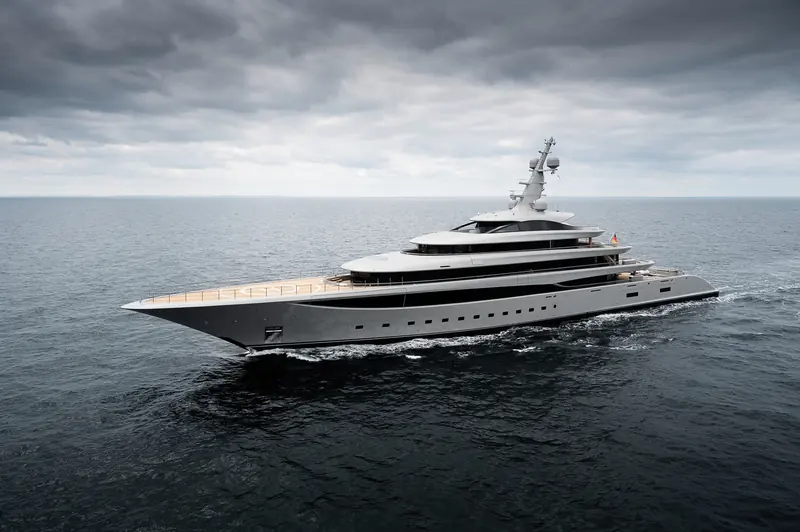
The engineering the hulls carry
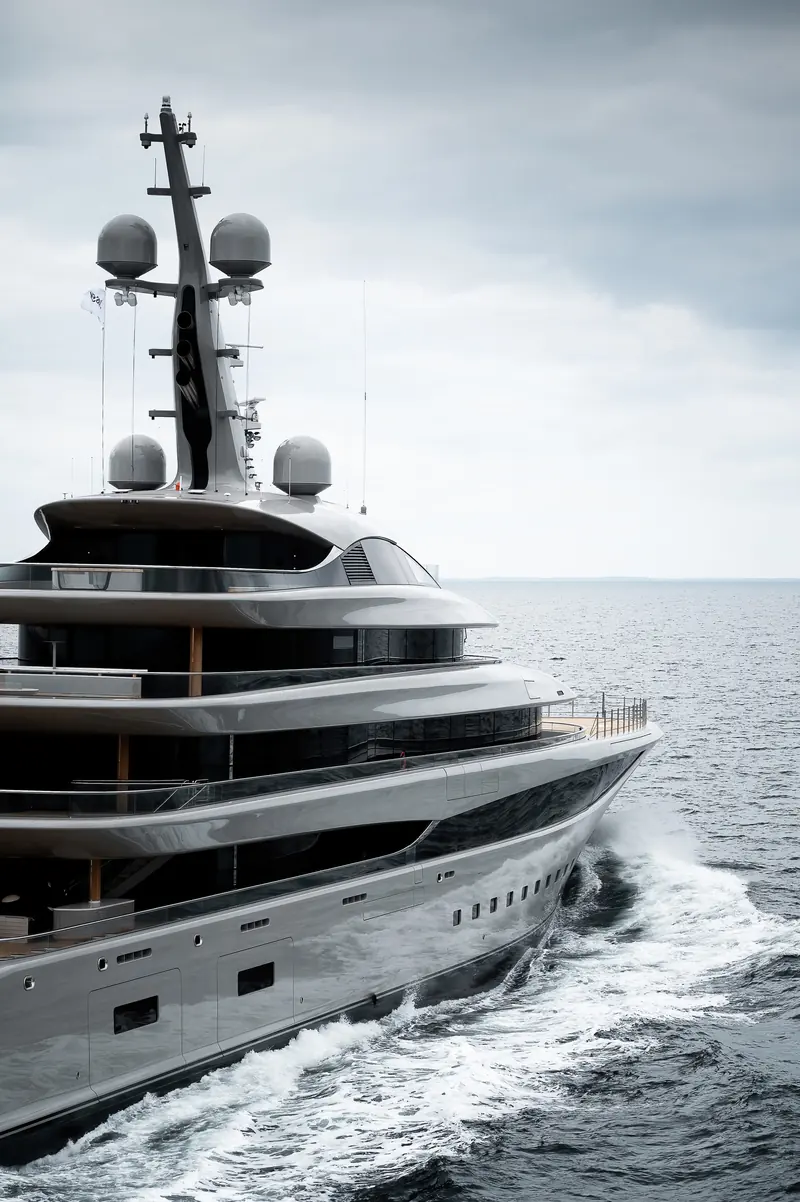
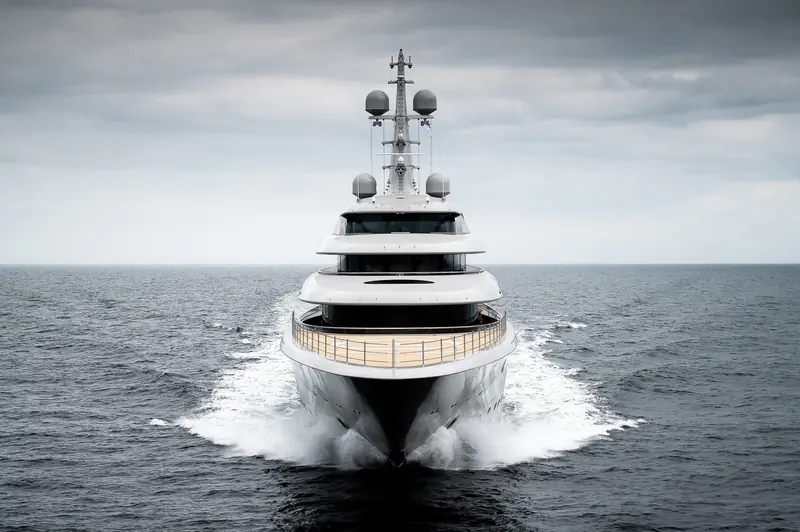
Nausicaa is the technically interesting one. She was built with a methanol fuel cell and an Ice Class 1D hull, which puts a 114m private yacht into cruising grounds most of her size cannot enter without a class notation she does not have. Nixie runs diesel-electric propulsion, and makes her global debut at the Monaco Yacht Show in September. Odisea carries a compact exhaust with a patented SCR system to meet emissions rules without surrendering the volume a conventional stack costs.
Nausicaa also holds a quieter lesson about the custom process. The delivered yacht stayed close to the digital concept drawn six years earlier, which is unusual on a project of that length and duration. Most 100m-plus builds absorb years of owner revisions, and each one costs money and delivery date. An owner reading the year for signal should note which projects held their brief and which did not, because that discipline is worth more than any single feature list.
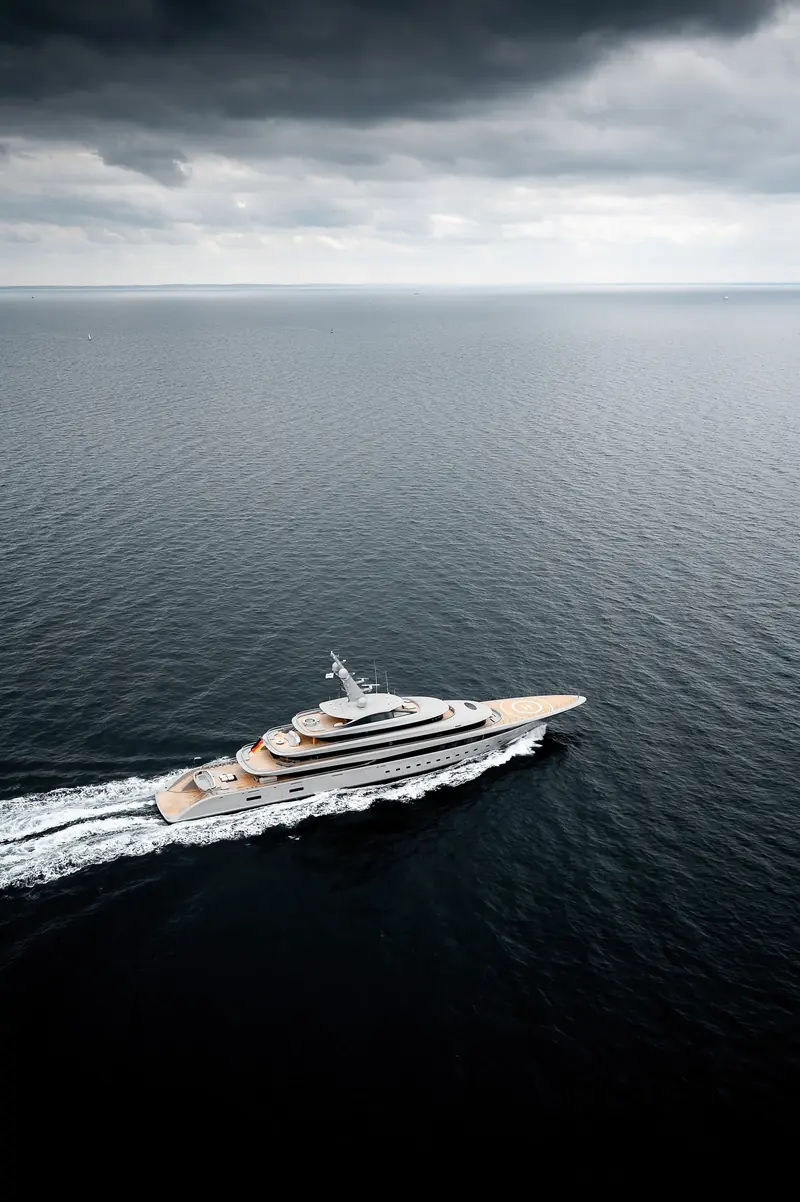
What an owner should take from it
The first read is on slots. Six completed hulls mean six freed build positions at a yard whose queue is the constraint most 100m-plus buyers hit first. The second read is on capability, since a yard that finishes five over-100m hulls in one year is demonstrating the engineering depth to hold a delivery date. Lurssen also builds its large-scale glass structures in-house, which is the sort of detail that decides whether an ambitious drawing survives to the water.
The third read is the least comfortable. A record delivery year is the top of a cycle that started four years ago, and it says nothing about what has been ordered since. The order intake that fills these six slots is the number worth watching over the next two seasons, and it will not be visible in a delivery photograph. Until it is, a six-hull year is evidence of what the yard did, not a forecast of what it will do.
What owners and crew report
The yard itself calls the year exceptional, not routine
Peter Lurssen's own description of delivering six yachts in a year as a remarkable achievement is the builder's account of its own record, not an independent one - but the four-year construction arithmetic behind each hull backs the claim up rather than just asserting it.
Peter Lurssen, via Marine Industry NewsNo named owner or captain from any of the six delivered yachts has spoken publicly about the boats themselves
Every account of Nixie, Nausicaa, Odisea, Boardwalk, O3 and Deep Blue in circulation is press coverage of the delivery event or the yard's own material - normal for yachts delivered within the same year, and not yet a gap worth treating as a defect.
desk research across Marine Industry News, BOAT International, SuperYacht Times and Superyachts.com
What is good, and what to watch
Strong points
- Five over-100m hulls in one year is a demonstrated capability, not a claimThe yard has built more than a third of the world's 100 largest yachts and already operates over 30 above 100 metres - this year's six add a measurable amount to a genuinely small population, verifiable against SuperYacht Times' own fleet tracking.
- The six hulls prove the yard is not selling one house styleMarc Newson's COSMOS, RWD's two projects, Salt Ship Design and Espen Oeino's O3 and Frank Woll's Boardwalk are five different design languages delivered in the same twelve months from the same production lines.
- At least one hull held its original brief for six yearsNausicaa's delivered form stayed close to the concept drawn six years earlier - unusual restraint on a project of that length, where most 100m-plus builds absorb years of costly owner revisions.
What to watch
- A record delivery year says nothing about what has been ordered sinceThe six hulls were begun across four separate earlier years; the order intake that will fill the freed slots is not visible in a delivery photograph and will not be confirmed for one to two more seasons.
- More large tonnage afloat cuts against existing owners as much as it favours new buyersA thicker population of 100m-plus comparables trims the scarcity premium a thin sample previously supported, which is a real cost to anyone planning to sell into that market soon.
- The one operational figure independently checked - the build timeline - is an average, not a guaranteeRoughly four years per custom hull is the yard's own planning figure; individual projects like the revision-heavy builds this piece itself contrasts with Nausicaa can run well past it.
Practical detail
| Typical build cost, 100m-plus custom | Roughly USD 1 million per metre as a rough industry benchmark for full-custom yachts above 70-80 metres, per Ocean Independence's cost guide - individual features (beach clubs, helipads, ice class, fuel cells) push well past that baseline, as several of these six show. |
|---|---|
| Typical build timeline | About four years of development and construction per custom hull, per Lurssen's own account - the reason a six-hull year draws on four separate earlier years of starts rather than one busy year. |
| Where the scarcity is tightest | Berths for the largest yachts in the Mediterranean's most requested ports, at the dates owners most want them - reported as a structural shortage, not a seasonal one, by Superyacht Guide's reporting on Mediterranean berth capacity. |
| What is not published | Neither Lurssen nor any outlet checked has released per-hull pricing for the six 2026 deliveries, or the yard's current order book - the two numbers an owner deciding whether to order now would actually need. |
Questions this story answers
What happened?
Lurssen closed a record twelve months with six custom deliveries, from the 78.2m Odisea in March to the 102.4m Nixie, which sailed on her maiden voyage on 26 June. Five of the six measure more than 100 metres, and together the year runs to 655 metres of finished hull. For anyone who owns at the top of the market, or intends to, the number says something useful about who can still build there.
What is good about it?
Five over-100m hulls in one year is a demonstrated capability, not a claim. The yard has built more than a third of the world's 100 largest yachts and already operates over 30 above 100 metres - this year's six add a measurable amount to a genuinely small population, verifiable against SuperYacht Times' own fleet tracking.
What should an owner or buyer watch?
A record delivery year says nothing about what has been ordered since. The six hulls were begun across four separate earlier years; the order intake that will fill the freed slots is not visible in a delivery photograph and will not be confirmed for one to two more seasons.
What do owners and crew report?
Peter Lurssen's own description of delivering six yachts in a year as a remarkable achievement is the builder's account of its own record, not an independent one - but the four-year construction arithmetic behind each hull backs the claim up rather than just asserting it. (Peter Lurssen, via Marine Industry News)
Who reported this?
Marine Industry News, Lurssen, BOAT International, SuperYacht Times, YachtBuyer, Superyachts.com.
We do this for everyone who loves this world. The people who have spent their lives in it, and the people just discovering it. Yotters exists so that what we learn belongs to all of them.
Nobody pays us for this. No ads, no sponsors, nothing for sale. We just believe the world is a little better when knowledge is shared instead of kept.
If it gave you something today, tell us to keep going. Follow us, leave a like, or write a positive comment. We read every one, and they are what keeps us going.