Mulder's Delta One Finishes a Refit, Nine Years After Launch
The flagship that made the case for a new line
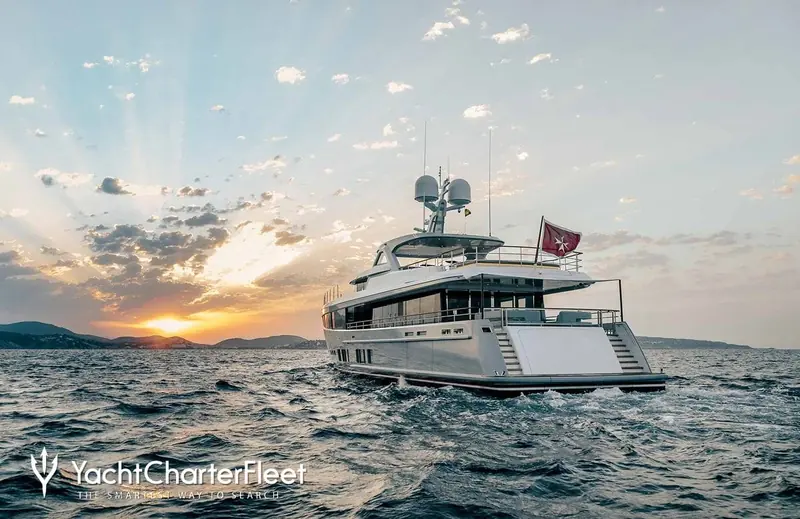
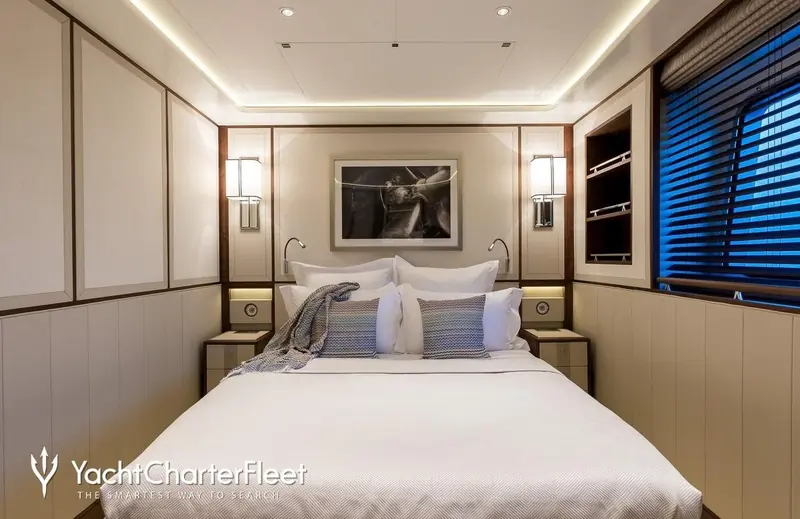
Delta One was delivered by Mulder Shipyard, the family yard in Zoeterwoude-Rijndijk in the Netherlands, in August 2017, as the first hull in a new 36-metre range the yard called the ThirtySix. She was built in aluminium to a design brief that kept her under 300 gross tons - 298GT as built - so a single owner-operator could run her without the crewing and paperwork a full-tonnage yacht demands, while still giving up nothing in guest space: five staterooms for up to ten guests, including a full-beam owner's suite forward with its own private seating area.
The exterior is by the British studio Claydon Reeves, with Vickers Studio brought in alongside them on the interior, and the naval architecture is Van Oossanen's, built around its patented Fast Displacement Hull Form - a hull shape designed to cut resistance at displacement speeds rather than chase a planing top end. Delta One completed sea trials off the Dutch coast in August 2017 in winds up to Beaufort force 6, and Mulder's own account of the trials used the word its owners would go on to hear again and again over the next nine years: she exceeded what a 36-metre of her tonnage was expected to do.
A category win judges called 'well-balanced'
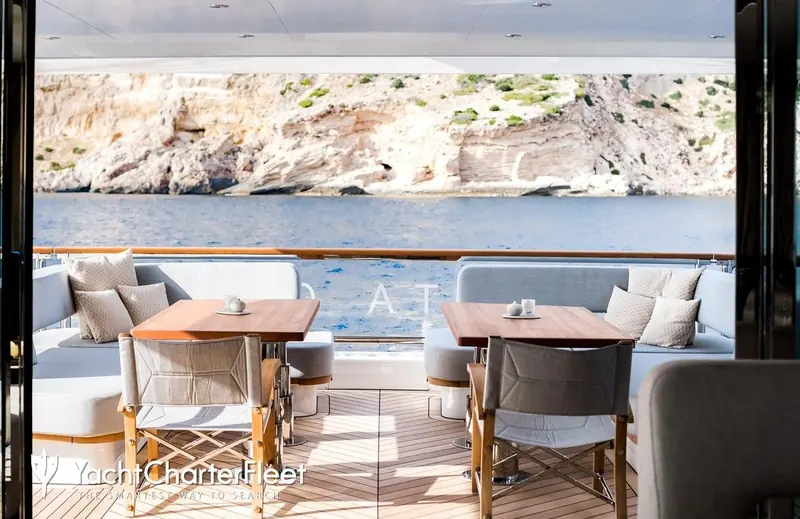
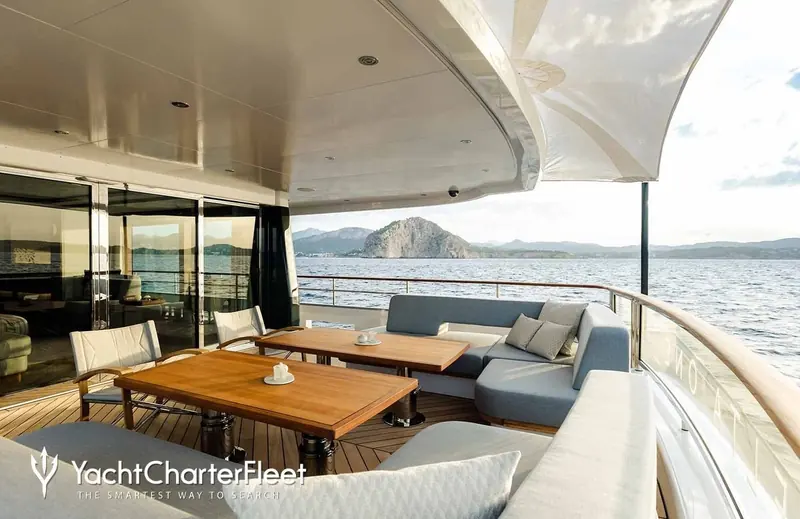
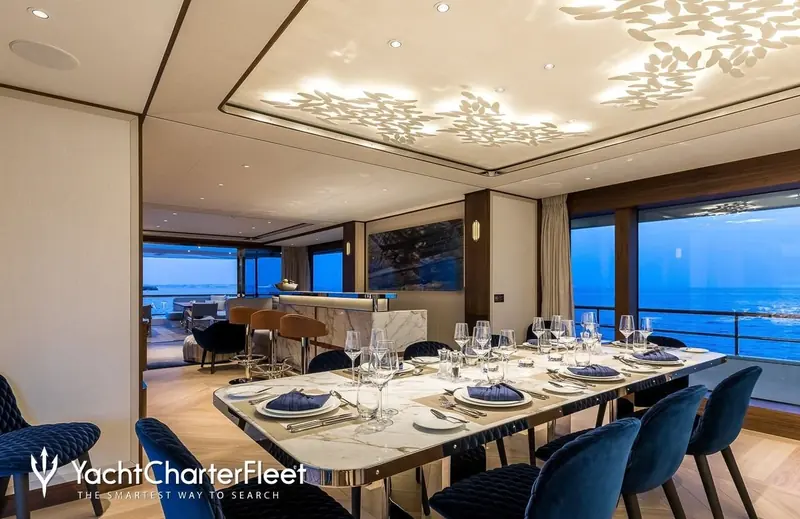
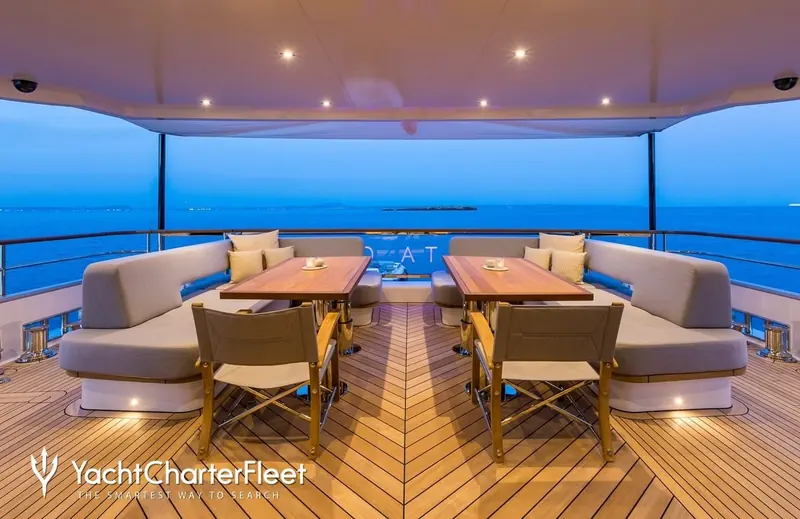
Delta One won her category, Displacement Motor Yachts Below 500GT, at the World Superyacht Awards 2018, presented at the Palazzo Vecchio in Florence that May. The judges' citation praised a well-balanced yacht with an attractive, masculine profile and the kind of features usually reserved for much larger boats - a beach club with easy access, a transverse garage for her tender, two shaded dining areas on deck, and interior windows large for her size. They also flagged something owners rarely see written down: fuel consumption of 73 litres an hour at 10 knots, a genuinely efficient number for a yacht that can also cruise at 15 knots and top out at 16.8.
That efficiency is a direct product of the FDHF hull and the aluminium build working together: aluminium saves weight the hull form then turns into range and low fuel burn rather than raw speed, on twin Caterpillar C18 diesels rated at 1,150hp each - a modest powertrain for a 36-metre, and one that a heavier steel-hulled equivalent could not run on. It is also why Mulder markets the ThirtySix on transatlantic range, even though the yard has not published a specific nautical-mile figure to back the claim.
Sold to a repeat client, then sent back to the yard
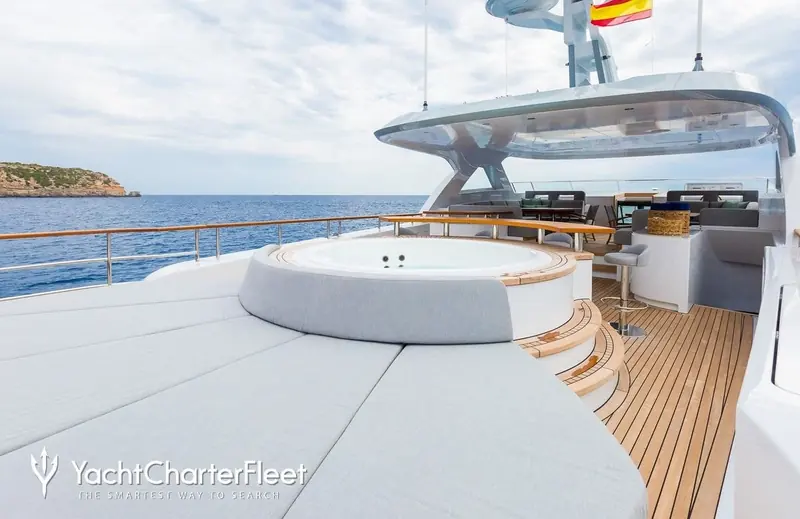
Delta One changed hands around May 2025, sold through Mulder's own brokerage department at an asking price of EUR 14.9 million to what the yard's side has described only as repeat Mulder clients - buyers who already knew the builder's other boats before choosing this one. The new owners kept her on the water rather than laying her up: she was based at Club de Mar in Mallorca and continued taking charter guests through the back half of the 2025 season, a working yacht rather than a purchase parked for a rebuild.
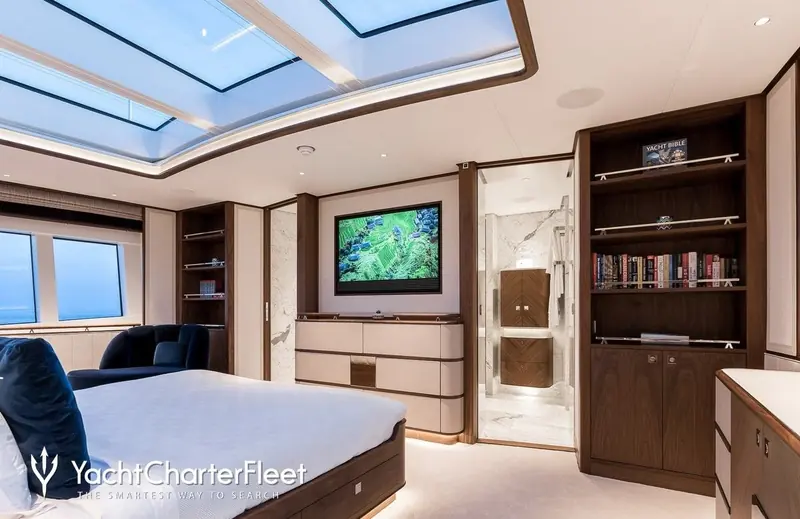
Roughly a year after that sale, Mulder confirmed in mid-August 2026 that Delta One had completed what it called an extensive refit at its own Zoeterwoude-Rijndijk yard, covering, in the builder's words, every technical system, every finish and every detail on board. Neither the exact scope nor the duration has been broken down publicly beyond many months, and no figure has been put on the cost - the yard has chosen to describe the refit by its thoroughness rather than its bill.
What a repeat owner's refit signals that a press release does not
A refit commissioned by the same buyers who chose to purchase the yacht in the first place, carried out at the builder's own facility rather than an independent refit house, is a different signal from a routine survey-driven repaint. It says the owners rate Mulder's own aftercare highly enough to send a boat they have owned for barely a year back to the yard for a top-to-bottom pass, rather than have independent yard quote the work or simply sell on and order new. For a small, family-run builder competing against much larger Italian and Dutch yards for repeat business, that is closer to a reference than any brochure line the yard could write itself.
It also lands at a point in Delta One's life that tests the ThirtySix concept on its own terms. Nine years in, a yacht designed around efficiency rather than headline top speed either ages into a smart, economical charter asset or starts looking undersized next to newer 36 to 40 metre builds chasing the same guests. Mulder's own answer, in committing yard time and reputation to a full refresh rather than letting her drift into the used-boat market unremarked, is that the concept still holds up - though that is the yard's judgement to make, not an independent one.
What this means for anyone weighing a refit against a new build
Delta One now heads into the Balearic charter season as a nine-year-old yacht with the systems and finishes of a much newer one, at a hull size and tonnage that keeps her inside the 300GT owner-operator threshold her original brief was built around - still five staterooms, still ten guests, still the aluminium FDHF hull that made her efficient in 2017 and makes her efficient now. Nothing published says whether the refit touched the two Caterpillar C18 engines themselves or was confined to systems and finishes around them, which is exactly the kind of question a buyer comparing her against a new-build ThirtySix would need answered before pricing either option.
What the case does establish, cleanly, is a benchmark most small yards never let the public see: that a repeat client, a year after paying EUR 14.9 million for a nine-year-old hull, judged a full refit at the builder's own yard worth doing rather than trading up. Mulder has not said what that refit cost, and until it does, the honest comparison anyone can draw against a new ThirtySix is qualitative rather than a line of figures - a known, efficient hull refreshed, against a new one bought at today's price.
What is good, and what to watch
Strong points
- An efficient hull that still holds up nine years onThe aluminium build and Van Oossanen's Fast Displacement Hull Form give Delta One 73 litres an hour at 10 knots and a 15-knot cruise on two modest 1,150hp diesels - genuinely low fuel burn for a 36-metre, and a large part of why Mulder still markets the ThirtySix on transatlantic range.
- A repeat owner's money is a stronger signal than a press releaseBuyers who already knew Mulder's other boats chose to send a yacht they had owned barely a year back to the builder's own yard for a full system-and-finish refresh, rather than have an independent yard bid the work or trade up to something new.
What to watch
- No cost or itemised scope has been publishedMulder describes the refit only as covering every system, every finish and every detail over many months; a buyer cannot tell from that whether the two main engines were rebuilt, replaced or left alone.
- Under 300GT and five cabins is a ceiling, not just an efficiency choiceThe tonnage cap that keeps Delta One in the owner-operator bracket also limits her guest count and volume against newer 36 to 40 metre builds competing for the same Balearic and West Mediterranean charter guests.
Practical detail
| Built | August 2017, Mulder Shipyard, Zoeterwoude-Rijndijk, Netherlands; first hull in the ThirtySix line; aluminium construction, 298GT |
|---|---|
| Design | Exterior by Claydon Reeves; interior by Claydon Reeves with Vickers Studio; naval architecture by Van Oossanen (Fast Displacement Hull Form) |
| Engines and performance | Twin Caterpillar C18, 1,150hp each; top speed 16.8 knots; cruising speed 15 knots at 67 per cent load; 73 litres per hour at 10 knots |
| Accommodation | Five staterooms, up to 10 guests, full-beam owner's suite forward; crew of 6 |
| Awards | Winner, Displacement Motor Yachts Below 500GT, World Superyacht Awards 2018 (Palazzo Vecchio, Florence) |
| Ownership | Sold via Mulder's brokerage department around May 2025, asking EUR 14.9 million, to repeat Mulder clients; based at Club de Mar, Mallorca |
| 2026 refit | Completed mid-August 2026 at Mulder's own yard; described by the builder as covering every technical system, every finish and every detail, over many months |
| What is not published | The refit's cost, its exact duration, and whether the main engines were touched or the work was confined to systems and finishes around them |
Questions this story answers
What happened?
Delta One, the first hull in Mulder Shipyard's ThirtySix line and a 2018 World Superyacht Award winner, has just finished a full refit at the same yard that built her - a year after she was sold on to a repeat Mulder client. For an owner weighing a refit against a new build, her case is a rare public data point on what a small yard's own aftercare actually looks like nine years in.
What is good about it?
An efficient hull that still holds up nine years on. The aluminium build and Van Oossanen's Fast Displacement Hull Form give Delta One 73 litres an hour at 10 knots and a 15-knot cruise on two modest 1,150hp diesels - genuinely low fuel burn for a 36-metre, and a large part of why Mulder still markets the ThirtySix on transatlantic range.
What should an owner or buyer watch?
No cost or itemised scope has been published. Mulder describes the refit only as covering every system, every finish and every detail over many months; a buyer cannot tell from that whether the two main engines were rebuilt, replaced or left alone.
Who reported this?
BOAT International, Yacht Harbour, Pressmare.
We do this for everyone who loves this world. The people who have spent their lives in it, and the people just discovering it. Yotters exists so that what we learn belongs to all of them.
Nobody pays us for this. No ads, no sponsors, nothing for sale. We just believe the world is a little better when knowledge is shared instead of kept.
If it gave you something today, tell us to keep going. Follow us, leave a like, or write a positive comment. We read every one, and they are what keeps us going.