Newell's Inkfish Lays a Keel, Then Orders a EUR700m Sister Ship
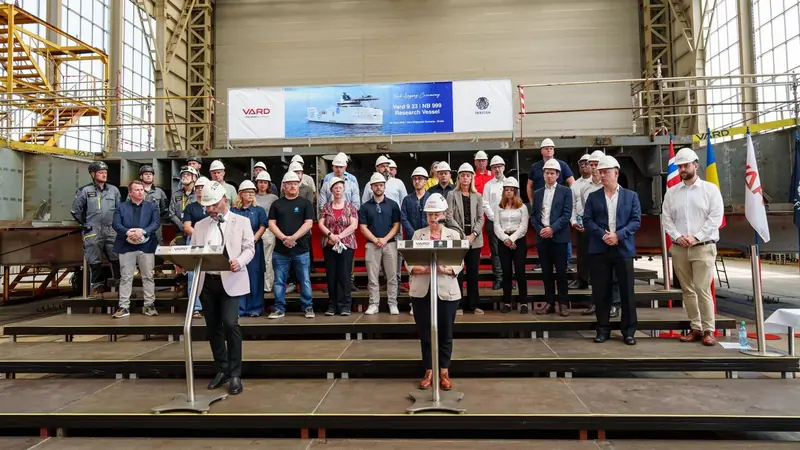
Vard laid RV6000's keel on 4 June 2026, its first purpose-built Inkfish hull
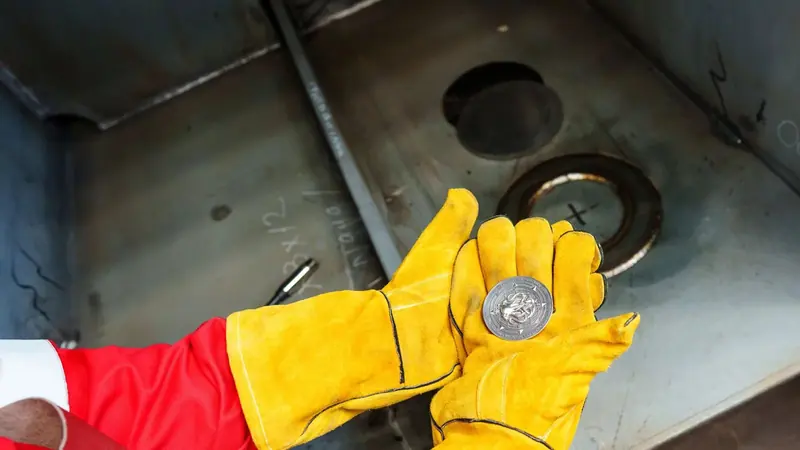
Vard laid the keel for RV6000, a 100-metre research vessel for Gabe Newell's marine research organisation Inkfish, on 4 June 2026 at the Norwegian group's hull yard in Braila, Romania. The ceremony followed the traditional form: a coin was set against the first steel plate before it was welded into the keel, watched by staff from Vard, Inkfish, the UK-based technical representative YTMC and the classification society DNV, under a banner naming the hull Vard 9 33 and yard number NB 999. It is the first vessel Inkfish has commissioned from the keel up - its two existing ships, Hydra and Dagon, both came into the fleet as conversions of existing hulls, not new builds.
The contract behind the hull was signed in July 2025 and is worth more than EUR 200 million. Vard's design runs 100 metres long with a 20.7-metre beam, a top speed of 15 knots and accommodation for up to 70 crew and scientists. Delivery is scheduled for the second quarter of 2028, which puts roughly two years of build and outfitting between the June keel-laying and the ship entering service - a normal span for a first-of-class research hull of this size, and one that leaves plenty of time for the kind of schedule slippage common on complex, non-repeat vessels.
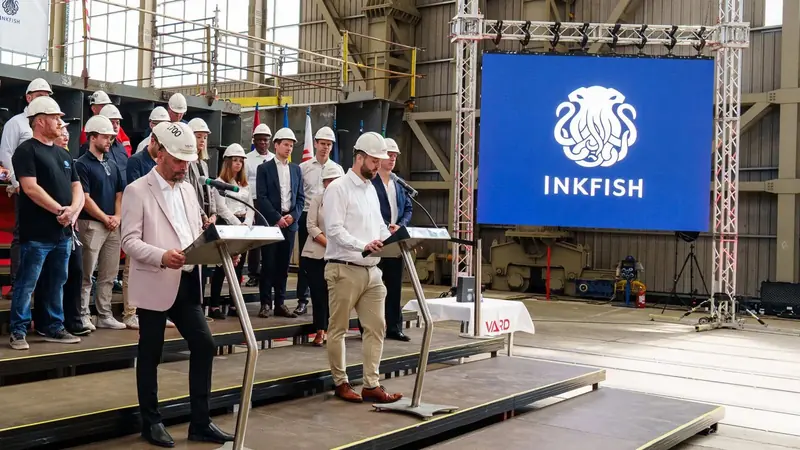
RV6000 is built to work to 6,000 metres, the depth that covers most of the seafloor
RV6000's working depth of 6,000 metres reaches roughly 98 percent of the world's ocean floor, stopping short only of the handful of hadal trenches that run deeper. The design centres on a gondola-mounted sensor suite for seafloor mapping, two manned submersibles plus remotely operated vehicle support rated to the full 6,000 metres, a stern-mounted A-frame for launch and recovery, and an active-heave-compensated crane capable of working to 2,500 metres. A hydroacoustic survey system handles high-resolution mapping, and the ship carries a helicopter deck alongside onboard laboratories, offices and workshops built for extended science expeditions rather than short charters.
That depth ceiling is also the line RV6000 cannot cross, which is precisely why Inkfish ordered a second, larger ship in the same announcement. The deepest points in the ocean - the Mariana Trench's Challenger Deep chief among them - sit closer to 11,000 metres, a zone only a handful of vessels and submersibles worldwide have ever reached. RV6000 was never meant to go there; it is built for the vast majority of the seafloor that ordinary research fleets can already reach only slowly and expensively, and Inkfish's own materials describe it as complementary to, not a replacement for, the ship built to go deeper.
RV11000's EUR700m contract is the largest single order in Vard's history
Vard's own account of the RV11000 order calls it the largest contract the yard has ever signed for a single vessel, and the largest order of its kind placed with any Norwegian shipyard. The contract, signed alongside the RV6000 keel-laying announcement, is worth close to EUR 700 million for a 162-metre, 28-metre-beam vessel built to the Vard 9 42 design and rated to operate at depths of 11,000 metres - full ocean depth, covering every trench on the planet. The ship is designed to carry a submarine hangar for launch and recovery of Inkfish's manned submersibles, a 40-metre coring system, up to 15,000 metres of fibre-rope lifting capacity, and accommodation for up to 130 crew and scientists, with a stated 12 hours of silent, battery-powered running for sensitive acoustic work.
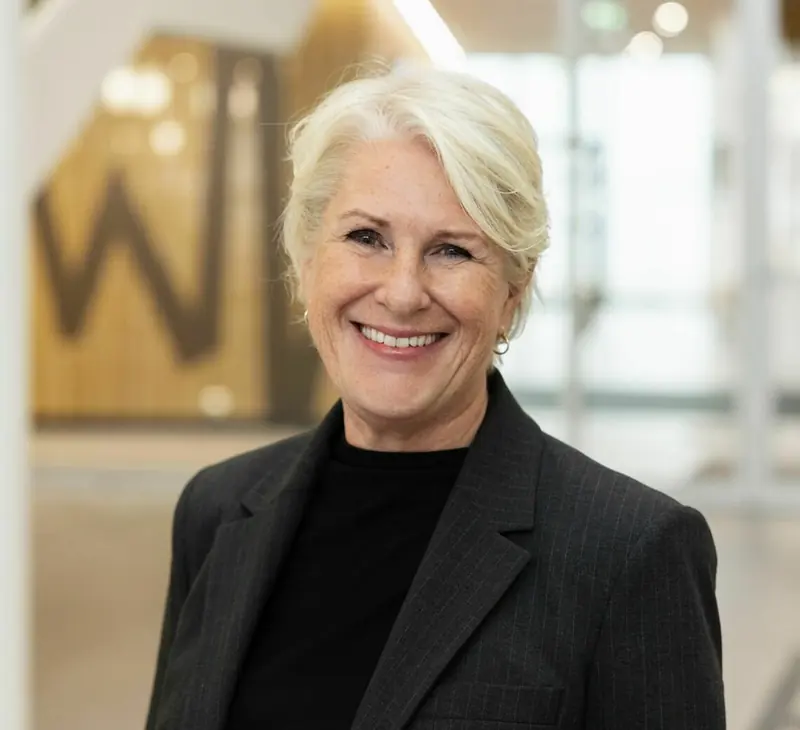
Vard chief executive Cathrine Kristiseter Marti said the yard was 'extremely proud that Inkfish has returned to Vard' for a second research vessel, and Rune Rodset, Vard's senior vice president for sales and marketing, called the RV11000 project 'not just another research vessel' but a new ambition level for the yard. Vard is part of the Fincantieri group, and both hulls follow the same production pattern: steel construction at Vard's Romanian yards - RV6000 at Braila, with Tulcea building the larger RV11000's hull - before the ships move to Vard's Norwegian yards around Alesund for outfitting and commissioning. RV11000 is scheduled for delivery in the first quarter of 2030, four years after RV6000's keel went in the water.
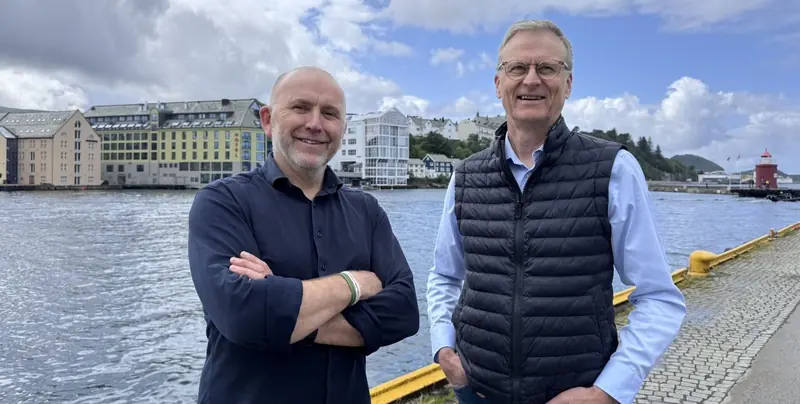
Why the owner cares: Newell is running a second build programme alongside his yachts
Gabe Newell already sits on both sides of the superyacht business - he took a majority stake in Oceanco on 1 August 2025 and now owns his 111-metre Leviathan and 93-metre dive-support conversion Draak, a two-ship system Yotters covered when Draak redelivered in June 2026. The Vard contracts show that yacht ownership is only part of what Newell is building: Inkfish, his separate marine research organisation founded in 2021, now has two purpose-built deep-ocean vessels on order worth close to EUR 900 million combined, on top of the two existing research ships, Hydra and Dagon, already in its fleet.
For an owner or a yard watching where this kind of capital actually goes, the pattern matters more than any single contract. Newell is not simply commissioning bigger toys - Inkfish states that all the data its ships collect is contributed to open-source scientific repositories, a philanthropic model closer to a research foundation than a private fleet. But the build programme still runs through the same commercial shipyards, on the same kind of multi-year contracts, that build superyachts, and it signals to those yards that ultra-high-net-worth individuals with an interest in ocean science are now a build category worth courting in their own right, separate from the charter and owner-use market the rest of the industry serves.
What is not published
Neither Vard nor Inkfish has broken out a cost for individual systems on either hull - the EUR 200 million-plus RV6000 figure and the nearly EUR 700 million RV11000 figure are both totals, with no published breakdown of what the submersible hangar, the coring system or the sensor suites cost on their own. Gabe Newell is not quoted directly in either company's announcement; the public statements come from Vard's executives and from Inkfish's Stu Buckle, who said the new vessel 'builds on earlier designs to deliver' greater reach for marine research, without elaborating on budget or contingency terms.
No independent sea trial or performance data exists for either ship, because neither has been launched - RV6000 is roughly two years from delivery and RV11000 nearly four, so every figure in this story, including the 15-knot top speed and the 11,000-metre depth rating, is the yard's or the client's own published number, not a verified result. The four-year gap between the two deliveries also means RV6000 will have a genuine service record before RV11000 is finished, which is the point at which claims about the larger ship's full-ocean-depth capability can actually be tested rather than taken on the strength of a press release.
What is good, and what to watch
Strong points
- Largest order in Vard's historyVard's own account calls the combined near-EUR-900-million programme the largest single-vessel order the yard has taken, and the largest of its kind for any Norwegian shipyard.
- Genuine capability stepRV11000's 11,000-metre rating reaches the hadal trenches RV6000 cannot, a real technical difference rather than a marketing number.
- A repeat customerInkfish has returned to Vard for a second research vessel, a stronger signal than a first-time order.
- First purpose-built hullRV6000 is Inkfish's first ship built from the keel up, after two conversions, Hydra and Dagon.
What to watch
- RV11000 remains unbuiltDelivery is scheduled for Q1 2030, nearly four years out, so its full-ocean-depth capability is still a promise, not a demonstrated result.
- No cost breakdownNeither company has published what any individual system costs, or what contingency exists if either build runs over.
- No independent performance dataEvery figure in this story, including speed and depth ratings, comes from the yard or the client, with no sea trial yet to confirm it.
- One owner's prioritiesHowever open its data policy, a privately funded research fleet still answers to Newell's own choices, not a public agency's mandate.
Practical detail
| RV6000 contract value | more than EUR 200 million, signed July 2025 |
|---|---|
| RV11000 contract value | nearly EUR 700 million, the largest single-vessel order in Vard's history |
| RV6000 specification | 100m LOA, 20.7m beam, 15kn top speed, up to 70 crew/scientists, ROV and submersible support to 6,000m |
| RV11000 specification | 162m LOA, 28m beam, 11,000m depth rating, submarine hangar, up to 130 crew/scientists |
| Delivery | RV6000 Q2 2028; RV11000 Q1 2030 |
| Builder | Vard (Fincantieri group) - hulls in Braila and Tulcea, Romania; outfitting at Vard's Norwegian yards near Alesund |
| What is not published | no system-level cost breakdown, no contingency terms, and no independent sea trial data for either hull |
Questions this story answers
What happened?
Vard laid the keel for a 100-metre deep-sea research vessel commissioned by Gabe Newell's Inkfish organisation on 4 June 2026, days after the same yard landed a EUR 700 million order from Newell for a second, far larger hull rated to the full ocean depth. For owners tracking where serious capital moves in the exploration-yacht world, it is the clearest sign yet that Newell is building a second fleet alongside the superyachts he owns through Oceanco.
What is good about it?
Largest order in Vard's history. Vard's own account calls the combined near-EUR-900-million programme the largest single-vessel order the yard has taken, and the largest of its kind for any Norwegian shipyard.
What should an owner or buyer watch?
RV11000 remains unbuilt. Delivery is scheduled for Q1 2030, nearly four years out, so its full-ocean-depth capability is still a promise, not a demonstrated result.
Who reported this?
Vard press office, Boat International, SuperyachtNews.com, Baird Maritime, DredgeWire.
We do this for everyone who loves this world. The people who have spent their lives in it, and the people just discovering it. Yotters exists so that what we learn belongs to all of them.
Nobody pays us for this. No ads, no sponsors, nothing for sale. We just believe the world is a little better when knowledge is shared instead of kept.
If it gave you something today, tell us to keep going. Follow us, leave a like, or write a positive comment. We read every one, and they are what keeps us going.