Oyster 825 Viva la Vida Capsizes, a Second Keel Failure
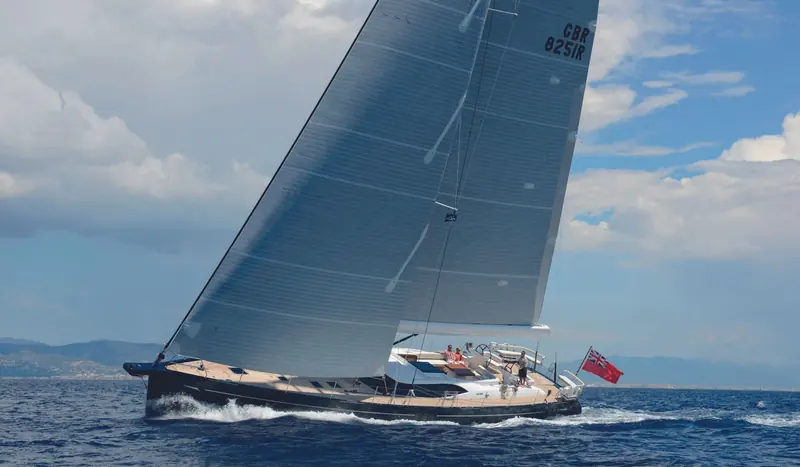
What happened to Viva la Vida at Hamilton Island Race Week?
Viva la Vida, an Oyster 825 sailed by Americans Barry and Susie Parkin, capsized in the Whitsunday Islands on 21 August 2026 after striking an object or the seabed during Hamilton Island Race Week, breaking her keel bulb roughly in half and losing most of her righting ability. All crew were rescued safely and the hull was still afloat, inverted, when the first photographs circulated.
Race Week's opening days ran in 20 to 25 knot trade winds with gusts above that, and Viva la Vida had started well: she won her first race in the Hamilton Island Blue Division on day one, the fleet's only US entry among close to 200 boats. The Parkins were making their Race Week debut aboard her and were also mid-way through the 2026-27 Oyster World Rally, a roughly 27,000-nautical-mile circumnavigation that has taken the 23-boat fleet through the Pacific to Australia this season.
According to accounts circulating among crews on Hamilton Island and reported first by the Italian sailing title Solovela on 21 August, the yacht struck an object or the seabed hard enough to shear the lead bulb at roughly half its height, cutting the keel's righting moment enough to capsize her. Neither Oyster Yachts nor race officials had issued a formal cause finding as this was written, and the salvage plan for the inverted hull had not been announced. Sailors discussing the loss on the YBW forum reached for the same comparison independently, before any outlet had drawn it in print: another 825 losing part of its keel, eleven years on from the last one.
Is this the same keel problem as the 2015 Polina Star sinking?
No. The two Oyster 825 keel incidents eleven years apart look like different failure modes rather than a repeat of the same defect: Oyster's 2015 investigation blamed a one-off internal hull-structure method used only on the early 825 hulls, while Viva la Vida's bulb loss is being described as impact damage to the bolted bulb itself.
Polina Star III, an extended Oyster 825, sank off Spain on 4 July 2015 after her keel and stub separated from the hull with no sign of impact. Oyster's own investigation found a possible weakness in the process used to build the 825's internal structure, a method the builder said had not been used on any other Oyster in roughly 40 years of building and would not be used again. The yard inspected the other 825 hulls then in build or delivered, reinforced the affected structure, and apologised to owners for the delay in publishing its findings.
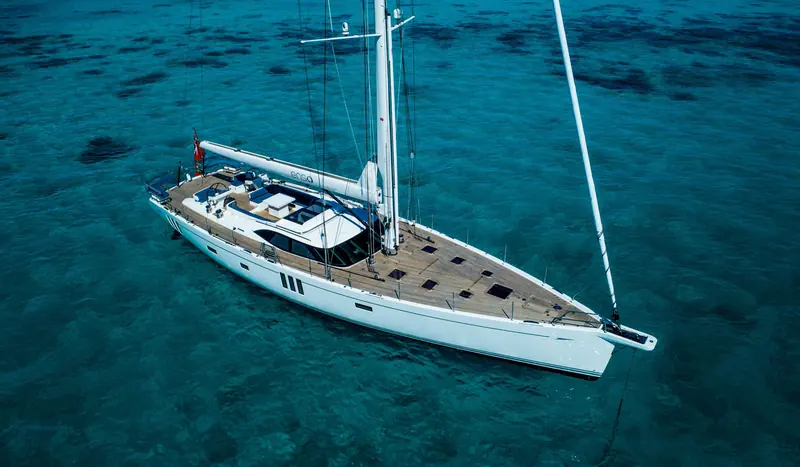
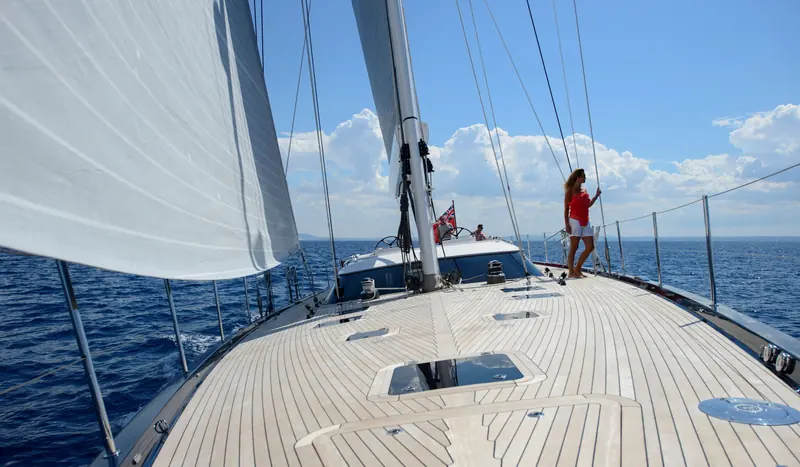
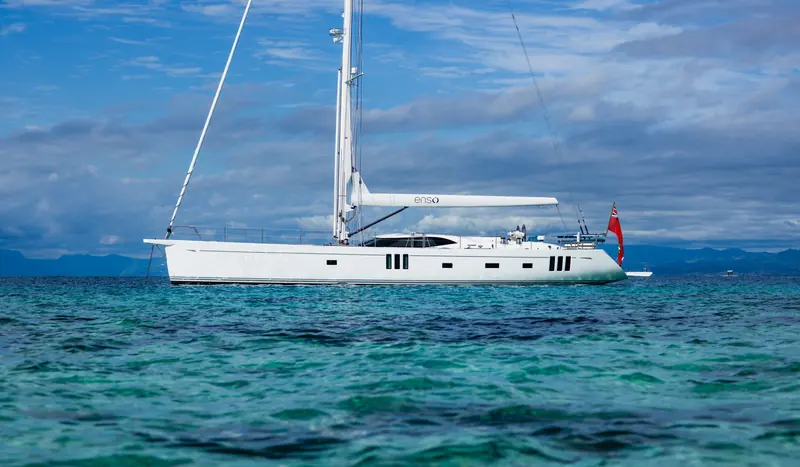
The Oyster 825 carries an L-shaped fin keel with a bolted lead bulb, designed by Humphreys Yacht Design. A bulb sheared by grounding or a hard strike is a mechanically different event from a bonded internal structure failing under sailing loads with no impact at all - which is exactly why one confirmed cause from 2015 cannot be assumed to explain 2026 without an inspection. Whether Viva la Vida's keel bolts themselves are sound, or were weakened by the same strike that took the bulb, is the open question a survey will have to answer before any insurer or broker can price the boat again.
Was Viva la Vida on the Oyster World Rally when this happened?
Viva la Vida is one of 23 Oysters entered in the 2026-27 Oyster World Rally, and the capsize happened not on an open-ocean leg but close to shore in the reef-strewn Whitsunday Islands, where the fleet had paused to race.
Long-range rally cruising is usually sold on open-ocean risk - weather, gear failure thousands of miles from a yard - and the Parkins had covered a large share of a 27,000-nautical-mile circumnavigation before this happened. Instead the incident came inshore, in a well-charted but rock-studded cruising ground, during a regatta rather than a passage.
For an owner planning a similar route, that is the more useful lesson than the keel metallurgy: pilotage risk in reef and rock-strewn anchorages does not go away because the yacht is built for blue water, and a boat that has just crossed an ocean untouched can still be caught out a few hundred metres from a marked channel. Race Week's own organisers have not yet said whether local hazards or a charted obstruction were involved.
What does this mean for the resale value and insurability of an Oyster 825?
Two keel-related incidents in eleven years, even from different causes, put a whole model on brokers' and underwriters' watch lists - and the last time it happened, the market's answer was extra inspection and a lower price, not a refusal to trade the model at all.
Hull and machinery underwriters already re-survey most cruising yachts on a 3 to 5 year cycle regardless of ownership change; a model with a public keel history tends to draw a mandatory ultrasonic bolt and bulb-attachment check on top of the standard scope at every renewal, an add-on independent surveyors already price at 20 to 30 percent over a base fee for comparable specialist testing on other hull types. A buyer's broker representing an 825 today should expect that line item, priced or not, to be raised in any negotiation from here. Agreed-value hull policies, the type most bluewater cruisers carry on a yacht doing an organised rally, are typically renegotiated at the same point a keel history surfaces, since the insurer's own valuation - not just the survey pass or fail - is what the owner is actually paying for.
The precedent is concrete rather than theoretical: Polina Star III was salvaged after her 2015 sinking, rebuilt to MCA Category 0 standard, renamed Champagne Hippy, and is on the market again through Northrop & Johnson at EUR 3,495,000, VAT paid - full disclosure of the keel history included in the listing. The model recovered a real, transactable price once the repair carried a class society's sign-off, which is the template Viva la Vida's owners and every other 825 owner now has reason to expect will apply to their own hulls too.
What should an Oyster 825 owner do after this incident?
Until Oyster or an independent surveyor confirms the cause, the practical step for any 825 owner is a haul-out inspection of the keel bolts and bulb attachment now, rather than assuming the 2015 fix already covers whatever caused this failure.
A bolted bulb sits below the waterline in a spot a routine antifoul haul-out does not actually open up - inspecting the bolts properly means pulling the boat specifically for that, with the keel unloaded, which is a different and more expensive job than a standard lift. For an 825 owner who has not had that specific inspection done since 2015, this incident is the reason to book it before the next passage rather than after. Oyster runs its own accredited network, marketed as Oyster Approved, for owners who want a yard already familiar with the model's build rather than a generalist surveyor meeting an 825 for the first time.
What is still unresolved is bigger than one owner's maintenance schedule: an official cause, a salvage and repair plan for Viva la Vida, and whether Oyster issues any fleet-wide guidance the way it did in 2015. The Oyster World Rally itself continues regardless - the other 22 boats are still on the water, and Race Week runs on without her.
What is good, and what to watch
Strong points
- Genuine offshore pedigreeThe 825 is a semi-custom design built for shorthanded ocean passages, the same reason owners like the Parkins choose it for a 27,000-nautical-mile circumnavigation rather than coastal cruising.
- The model's resale survives a keel event, properly documentedThe salvaged Polina Star III sold back into the market as Champagne Hippy at a real, published price once her repair carried MCA Category 0 certification - proof the type is not written off by one incident.
What to watch
- The bolted bulb sits where routine maintenance does not lookA standard antifoul haul-out does not open up the keel bolts or bulb attachment - checking them properly needs a dedicated, more expensive lift, which means damage from a slow grounding or bolt fatigue can go unnoticed between the inspections owners actually schedule.
- Two keel incidents in eleven years is now the model's public recordWhatever the two causes turn out to have in common, underwriters and brokers price the pattern, not the nuance - every 825 owner should expect extra scrutiny and cost at the next survey and the next sale, regardless of their own hull's history.
Practical detail
| Model and production years | Oyster 825, a semi-custom deck-saloon sloop delivered roughly 2011 to 2017, replacing the Oyster 82. |
|---|---|
| LOA / beam / draft | 25.15m / 6.31m / 3.42m, per Oyster Yachts and Boat-Specs.com. |
| Keel type | L-shaped fin keel with a bolted lead bulb, designed by Humphreys Yacht Design. |
| Typical resale asking price today | Roughly EUR 3.5m to 6m depending on condition, refit and keel history, per current brokerage listings. |
| The 2015 keel loss, resolved | Polina Star III sank in 2015 after a hull-structure defect; salvaged, rebuilt to MCA Category 0 and renamed Champagne Hippy, she is for sale through Northrop & Johnson at EUR 3,495,000 VAT paid. |
| What is not published | The confirmed cause of Viva la Vida's bulb failure, any Oyster or class-society statement, and the salvage or repair plan for the hull. |
Questions this story answers
What happened?
The Oyster 825 Viva la Vida capsized off Hamilton Island on 21 August 2026 after her keel bulb broke away mid-race, the second time in eleven years the model has lost part of its keel. For an owner weighing a bolted-keel bluewater yacht against the cost of extra survey, the gap between what caused the two failures matters as much as the fact there were two.
What is good about it?
Genuine offshore pedigree. The 825 is a semi-custom design built for shorthanded ocean passages, the same reason owners like the Parkins choose it for a 27,000-nautical-mile circumnavigation rather than coastal cruising.
What should an owner or buyer watch?
The bolted bulb sits where routine maintenance does not look. A standard antifoul haul-out does not open up the keel bolts or bulb attachment - checking them properly needs a dedicated, more expensive lift, which means damage from a slow grounding or bolt fatigue can go unnoticed between the inspections owners actually schedule.
Who reported this?
BOAT International, Solovela.net, MySailing, Yachting World, Oyster Yachts, Northrop & Johnson.
We do this for everyone who loves this world. The people who have spent their lives in it, and the people just discovering it. Yotters exists so that what we learn belongs to all of them.
Nobody pays us for this. No ads, no sponsors, nothing for sale. We just believe the world is a little better when knowledge is shared instead of kept.
If it gave you something today, tell us to keep going. Follow us, leave a like, or write a positive comment. We read every one, and they are what keeps us going.