What a Pre-Purchase Survey Actually Covers
What the survey actually inspects
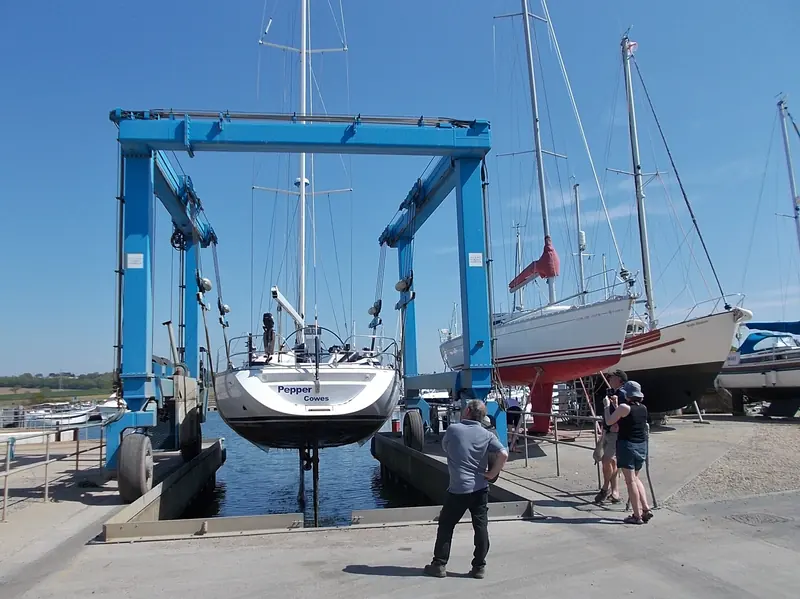
A pre-purchase survey runs in three phases: a dockside inspection of the deck, superstructure and interior systems; a haul-out inspection of the hull and underwater gear once the boat is lifted clear of the water; and a sea trial to watch everything perform under load. Each phase answers a different question, and a report that skips one of them is not a full survey, whatever the invoice calls it.
The dockside pass covers hardware, rigging, plumbing, electrical systems and safety equipment, and is where a surveyor first flags anything that looks like undisclosed damage or a repair done to a lower standard than the rest of the boat. The scope is bounded by what a visual inspection can reasonably reach: the YDSA's standard terms are explicit that a condition survey does not extend to hidden, unexposed or inaccessible areas, and gives no warranty on watertight integrity if the vessel is inspected only out of the water. A buyer who wants soft furnishings, cosmetic finish or full compliance certification checked needs to say so and pay for it separately - the standard scope does not include them by default.
The out-of-water hull inspection
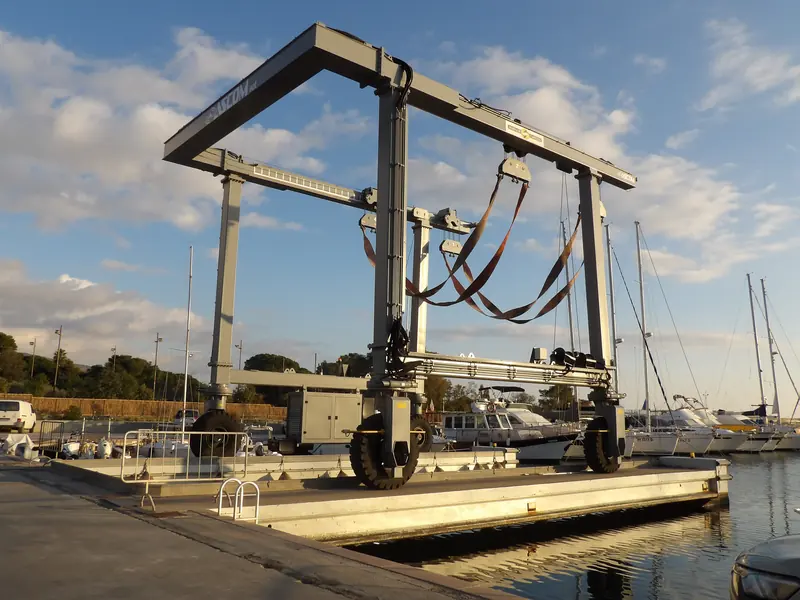
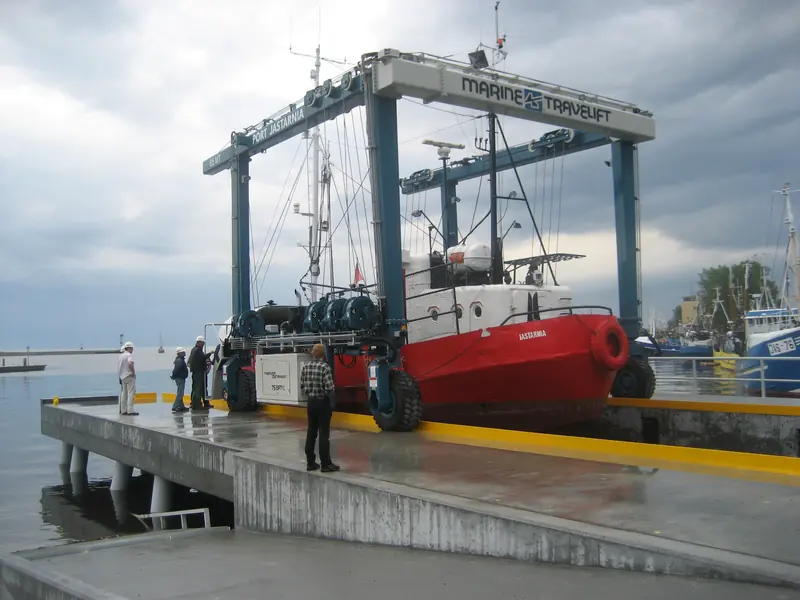
Lifted clear of the water is the only position from which a surveyor can actually see the hull, and it is where blistering, corrosion and prior repairs get found. On a fibreglass hull that means moisture meter readings across the underbody, hunting for the water intrusion behind osmotic blistering; on a metal hull it means ultrasonic thickness gauging at a grid of points, looking for corrosion that has thinned the plate below class or builder tolerance.
This is also where a surveyor reads the hull's history rather than just its current state - filled and faired repair patches, a keel that has been re-bolted, a rudder stock with play in it, anodes wasted faster than they should be for the boat's age. None of this is visible from a brokerage listing or a walk-through with the boat still afloat, which is the entire reason underwriters and buyers both insist the haul-out happens before, not after, a deal is signed.
The engine survey and the sea trial
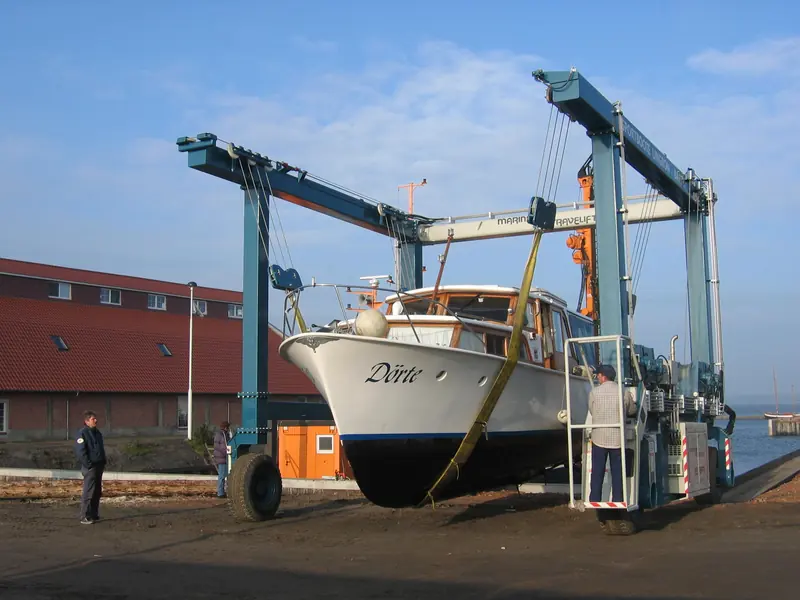
Engines get their own specialist, separate from the generalist surveying the hull, and the work is destructive in a small way: oil analysis to catch metal-in-suspension long before a bearing fails, compression testing cylinder by cylinder, and a load test that a static inspection cannot replicate. The sea trial is where all of it gets checked under way - engines through their speed range, steering and helm response, thrusters, autopilot, stabilisers and generators, run the way an owner would actually use them rather than idling at the dock.
The MYBA Memorandum of Agreement, the standard contract for yacht sales in Europe, treats the two very differently. A buyer who rejects the yacht after the sea trial has an unconditional right to walk away and get the deposit back. Rejection after the condition survey is not unconditional - it has to rest on defects the contract defines as operationally compromising or making the yacht unseaworthy, not just a long snag list. That asymmetry is why an experienced buyer's broker schedules the sea trial to happen first: it is the cheaper, faster way to kill a deal that was never going to work, before the more expensive haul-out and specialist testing are paid for.
What it costs and how long it takes
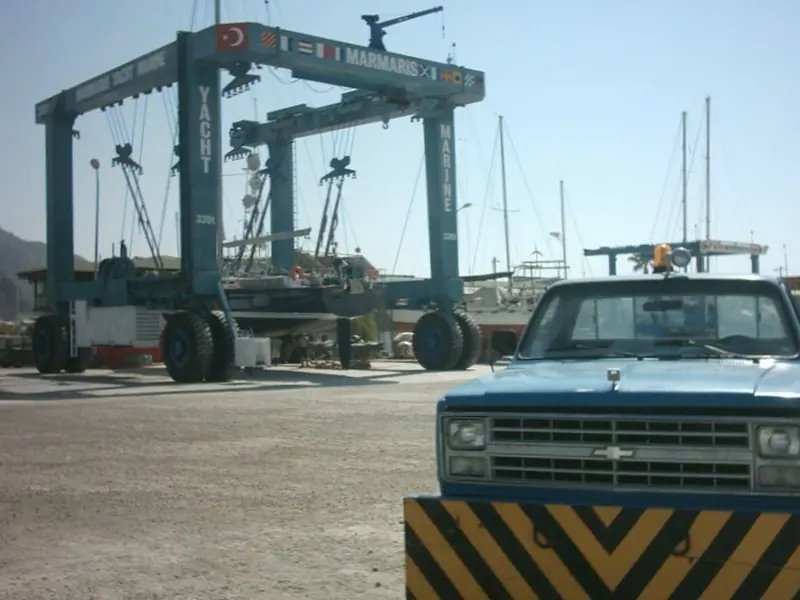
A full survey on a 40-metre yacht runs broadly USD 5,000 to 25,000 for the surveyor's own fee, before the costs the surveyor does not control: haul-out and lift fees of roughly EUR 2,000 to 8,000, sea trial fuel, and specialist testing - the engine surveyor, an oil lab, ultrasonic gauging - that can add another 20 to 30 percent on top. Smaller boats are commonly quoted per foot instead, at roughly EUR 20 to 50, but that formula stops being useful once a yacht is large enough that haul-out logistics, not hull length, drive most of the bill.
Timing scales with size rather than value: a straightforward 40-metre survey is commonly done in a day or two, and a large operation can complete a 40 to 160-metre yacht within about five working days by putting more than one surveyor on it at once. What is not published, and worth asking for directly, is a fixed quote before the haul-out is booked - most surveyors price by day rate plus expenses, so the final bill is only an estimate until the report is actually delivered.
Who commissions it, who pays, and what happens after
The buyer commissions and pays for the pre-purchase survey, not the seller and not the broker, and the MYBA contract is written to make that the default: fuel, transport to and from the lift and the cost of the survey itself all come out of the buyer's side unless the parties agree otherwise in writing. That matters because it is also the buyer's own surveyor, chosen and instructed by the buyer, with no duty to make the seller's boat look good.
Accreditation is not standardised globally the way classification is. In the United States, SAMS and NAMS are the two bodies insurers and lenders look for; in the UK, YDSA, IIMS or SCMS. None of them is the same thing as a classification society survey - class societies certify a vessel against the construction and safety standards of its class, working for the flag state and the vessel's own compliance record, while an independent surveyor works for whoever is paying the fee and has no institutional stake in the outcome. Underwriters then run their own clock on top of the sale: most hull and machinery policies call for a fresh condition and valuation survey every three to five years regardless of ownership, so the report a buyer commissions today is very likely to set the insurable value the day the purchase closes, and to be the number an underwriter refers back to at the next renewal.
What is good, and what to watch
Strong points
- Catches what no listing photo or walk-through can showOsmotic blistering, plate corrosion below tolerance, a re-bolted keel or a rudder stock with play in it are only visible with the boat lifted clear of the water - exactly the inspection a casual viewing skips.
- Sets the number that follows the boat afterwardThe condition and valuation figure a surveyor produces is very likely to become the insurable value the day the sale closes, and underwriters return to it at every renewal for three to five years.
What to watch
- The report only covers what was reachableEvery standard scope, YDSA's included, explicitly excludes hidden and inaccessible areas - a defect sealed behind a liner or a tank can pass a full survey undetected.
- The buyer bears the cost even on a walk-awayHaul-out, fuel and the surveyor's own fee are the buyer's under MYBA convention, so a deal that dies after the condition survey has already cost several thousand euros with nothing to show for it beyond the report itself.
Practical detail
| Surveyor's fee, 40m yacht | Roughly USD 5,000 to 25,000, day-rate plus expenses rather than a fixed quote - smaller boats are commonly priced at EUR 20 to 50 per foot instead, a formula that stops scaling sensibly past about 80 feet. |
|---|---|
| Haul-out and lift fee | Roughly EUR 2,000 to 8,000, billed separately from the surveyor and set by the yard, not the surveyor. |
| Specialist testing add-on | 20 to 30 percent on top of the base fee for engine oil analysis, compression testing and ultrasonic hull gauging where the boat's hull material or age calls for it. |
| Typical duration | 1 to 2 days for a straightforward 40-metre survey; larger operations can complete a 40 to 160-metre yacht within about 5 working days using more than one surveyor. |
| Who pays | The buyer, by MYBA convention - fuel, haul-out and the survey fee itself all sit on the buyer's side of the contract unless renegotiated in writing. |
| Insurance re-survey cycle | Most hull and machinery underwriters require a fresh condition and valuation survey every 3 to 5 years regardless of any change of ownership. |
| Not covered by a standard scope | Cosmetic finish, soft furnishings, and any hidden, unexposed or inaccessible area - the YDSA's own terms exclude all three, and a survey done only out of the water carries no warranty on watertight integrity. |
Questions this story answers
What happened?
Every serious yacht purchase runs through the same gate before money changes hands: an independent surveyor pulling the boat apart, on paper if not literally, to find what the listing photos cannot show. It is not one inspection but three - dockside, out of the water, and under way - and the report that comes out the other end is usually the single document that decides whether a deal closes, closes at a lower number, or dies.
What is good about it?
Catches what no listing photo or walk-through can show. Osmotic blistering, plate corrosion below tolerance, a re-bolted keel or a rudder stock with play in it are only visible with the boat lifted clear of the water - exactly the inspection a casual viewing skips.
What should an owner or buyer watch?
The report only covers what was reachable. Every standard scope, YDSA's included, explicitly excludes hidden and inaccessible areas - a defect sealed behind a liner or a tank can pass a full survey undetected.
Who reported this?
International Institute of Marine Surveying (IIMS), Yacht Designers and Surveyors Association (YDSA), MYBA (Mediterranean Yacht Brokers Association), YachtWorld, World Yacht Insurance, Society of Accredited Marine Surveyors (SAMS).
We do this for everyone who loves this world. The people who have spent their lives in it, and the people just discovering it. Yotters exists so that what we learn belongs to all of them.
Nobody pays us for this. No ads, no sponsors, nothing for sale. We just believe the world is a little better when knowledge is shared instead of kept.
If it gave you something today, tell us to keep going. Follow us, leave a like, or write a positive comment. We read every one, and they are what keeps us going.