A missing crane file now costs you at resale
What changed, and why it reaches your boat
SOLAS Chapter II-1 Regulation 3-13 entered into force on 1 January 2026, extending to onboard lifting appliances a survey regime long reserved for cargo handling gear. The confirmed scope covers deck cranes, engine-room and stores cranes, hose-handling cranes, appliances used to lift or move personnel, and davits that launch tenders, workboats and rescue boats. Dedicated life-saving launching appliances under the LSA Code are handled separately and fall outside it, as do mobile and non-permanent equipment. The guidelines sit in IMO circular MSC.1/Circ.1663, and while flag administrations decide how to treat appliances rated under 1,000 kg, some provisions apply whatever the safe working load.
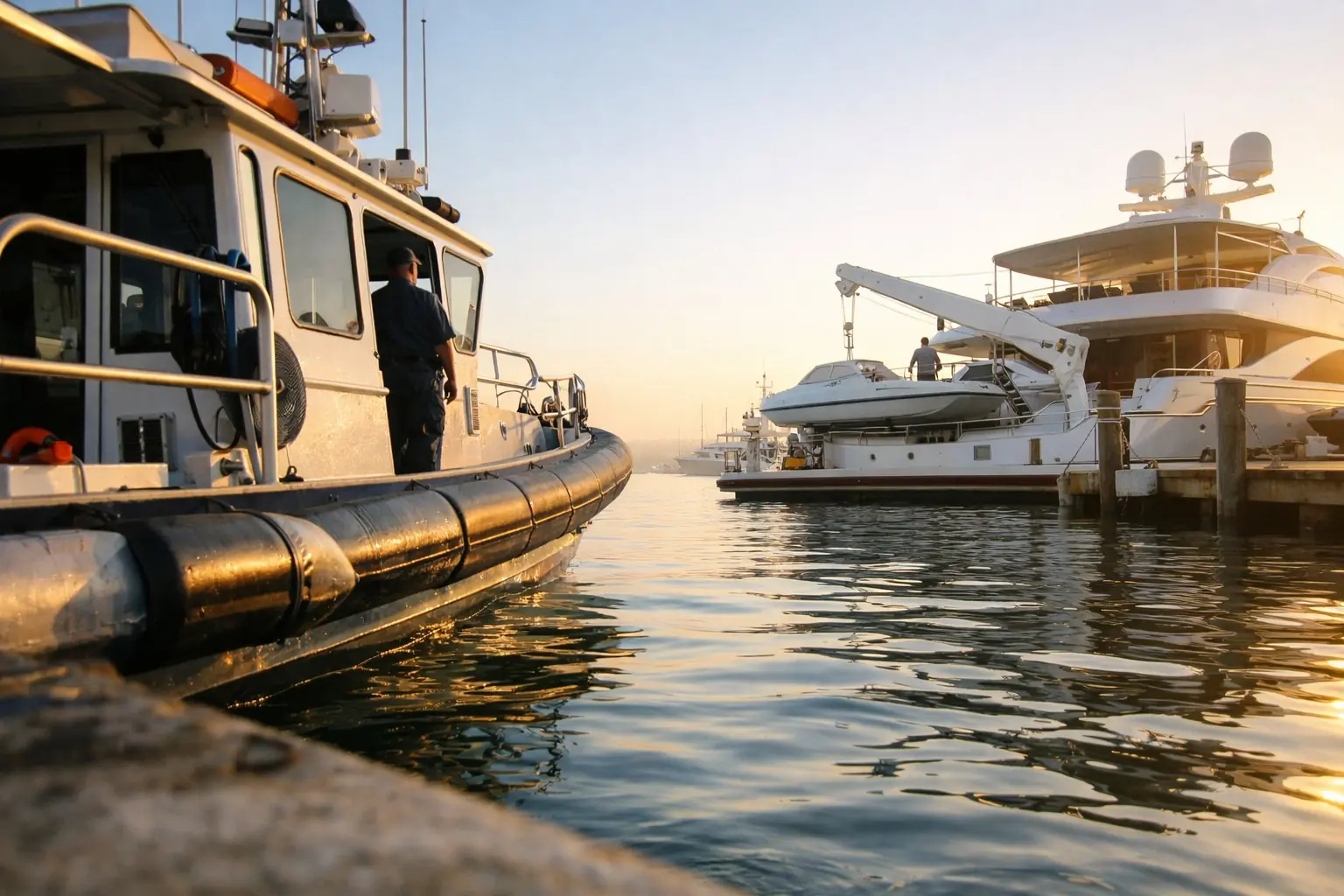
For the large-yacht fleet, which carries its SOLAS certification through the REG Yacht Code and class, this reaches equipment a 40-metre-plus yacht leans on every day. The crane that swings a limousine tender off the foredeck, the davit for the rescue boat, the provisioning crane on the aft deck, all of it once sat in a grey zone of manufacturer manuals and voluntary checks. From this year it sits inside statutory survey, judged against a written standard rather than a read of the day.
What the next survey will not wave through
For gear already aboard before 1 January, compliance is required by the first renewal survey falling on or after that date. Each appliance has to be load tested, thoroughly examined by a competent person, permanently marked with its safe working load, and entered in a Register of Ship's Lifting Appliances alongside Certificates of Test and Thorough Examination. Anything installed new from 1 January must be design approved and tested after fitting before its first use. DNV and Bureau Veritas describe the same core set of obligations.
The practical effect is that a 2026 renewal survey can no longer pass a crane because it works on the day. No safe working load stamp, no certificate and no register entry each count as a deficiency, and a deficiency can escalate into a detention or an insurer's query, either of which pulls the boat off her schedule. An owner whose survey falls this year is better off building the register and booking the load tests before the surveyor arrives.
Why a buyer will ask for the register
The rule also drops a concrete, checkable item into pre-purchase due diligence, a current lifting-appliance register and valid test certificates for every crane and davit aboard. A yacht built or last refitted without that documentation now needs load testing and re-marking to close the gap, and that work competes for the same scarce refit-yard berths and survey slots the market is already short on.
For a buyer, a thin or absent lifting file becomes a priced item, the way a survey coming due or a class certificate near expiry already is, useful leverage and a cost to budget. For an owner, the cheaper route is to treat 2026 as the year to get every crane and davit tested and filed, so the boat shows clean in a sale and the next survey is a formality rather than a scramble.
Questions this story answers
What happened?
From 1 January 2026 a new SOLAS rule treats a yacht's deck cranes, tender davits and stores cranes the way ships have long treated cargo gear, and the effect an owner feels is at the survey and in the sale. Gear now has to be load tested, marked with a safe working load and backed by certificates. A yacht that cannot produce a lifting-appliance register reads as a deficiency at the next renewal survey and loses ground at the negotiating table.
Who reported this?
DNV, Bureau Veritas, Lloyd's Register, IMO (SOLAS II-1/3-13, MSC.1/Circ.1663).
We do this for everyone who loves this world. The people who have spent their lives in it, and the people just discovering it. Yotters exists so that what we learn belongs to all of them.
Nobody pays us for this. No ads, no sponsors, nothing for sale. We just believe the world is a little better when knowledge is shared instead of kept.
If it gave you something today, tell us to keep going. Follow us, leave a like, or write a positive comment. We read every one, and they are what keeps us going.