The Maldives allows 275 days, and foreign flags can charter
The permit runs 90 days, and it stretches
The Maldives handles visiting yachts under the Foreign Tourist Vessel Regulation, 2024/R-2, and the shape of it is simple enough to plan a season around. A cruising permit comes from the Ministry of Tourism, and it has to be in hand either before the yacht arrives or within four days of inward clearance. It runs 90 days from that clearance. At 100 gross tonnes and above the permit costs USD 1,000, and below that threshold it is free. Clearance itself happens at one of three ports of entry, and which one you pick is a passage-planning decision rather than a formality.
Extending is where the number gets interesting. A yacht of 100 GT or more pays USD 100 a day to stay on past the initial 90, and a smaller one pays USD 50. Published summaries of the same regulation put the ceiling at 275 days in total, which is most of a year on one piece of paper, while one law firm's note on the regulation reads 365 days with the 275 as extension on top. That gap is not academic if you are planning a two-season Indian Ocean loop, and it is the first thing to have the agent confirm in writing. The documentation behind the permit is heavier above 100 GT: valid safety certificates, the captain's certificate of competency, minimum safe manning, hull, machinery, passenger and pollution cover, and an approval from the Ministry of Transport and Civil Aviation.
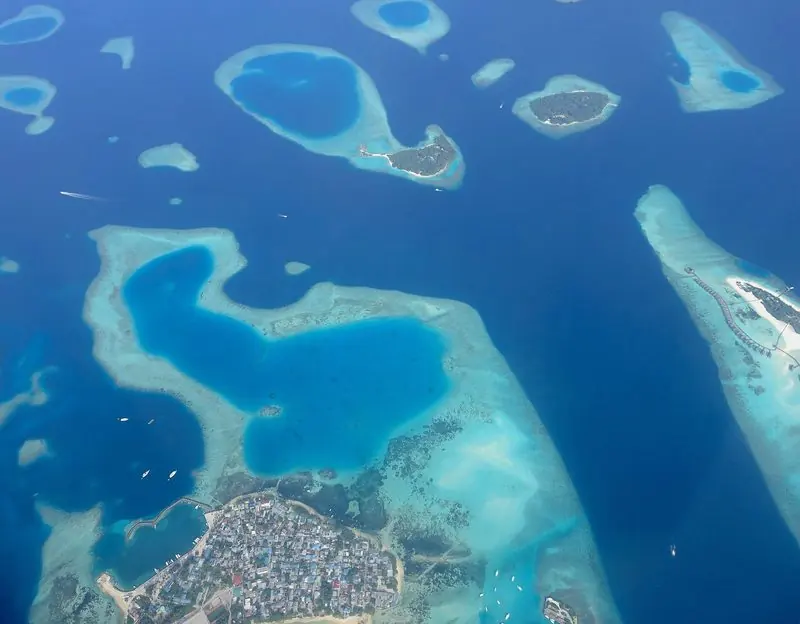
A foreign flag can carry paying guests here
This is the part that separates the Maldives from most of the places an owner already knows. The 2024 regulation renamed the old charter licence a passenger licence, and it is issued in the name of the appointed Maldivian agent rather than to the yacht, which is what makes it reachable for a foreign-flagged vessel at all. Any yacht carrying anyone beyond her own crew needs one. There is no equivalent route for, say, a United States flag wanting to work the French coast, and an owner who has watched a non-EU flag sit idle through a Mediterranean summer will recognise what that is worth.
The fee is a daily one, banded by length. Up to 20 metres it is USD 100 a day, to 35 metres USD 250, to 45 metres USD 400, and to 75 metres USD 550, with a surcharge of USD 5 per passenger on top. Above 75 metres the two published tables of the same regulation disagree, one showing USD 650 and the other USD 700, so a 90-metre programme should be costed with the agent rather than off a web page. Tax sits above all of it. Tourism goods and services tax has been 17 per cent since 1 July 2025, and green tax doubled to USD 12 per guest per night on 1 January 2025. Charters are written on MYBA terms with an advance provisioning allowance running 35 to 40 per cent, and that is where the fuel and the permits actually get paid.
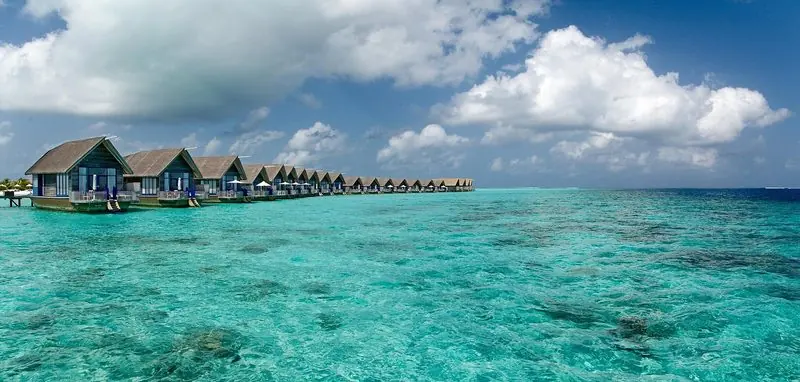
Zamani Islands, and 120 berths that do not exist yet
There is no purpose-built superyacht marina in the Maldives today. Every yacht in the archipelago lies at anchor and works off her tenders, which is pleasant in settled weather and wearing over a 60-day stay. Zamani Islands is the answer under construction: eight islands in South Male Atoll, roughly 21 nautical miles from the international airport, developed by the UAE-based Atoll Estates and drawn by Killa Design. The marina is planned at 60,000 square metres with 120 berths, and the residences on the estate are being sold with a berth attached, alongside a yacht club, crew facilities and provisioning.
The timetable is phased, and it is worth reading as a construction schedule rather than an opening date. The experiential resort is due in March 2026, the second and most expensive in October 2026, and the third in March 2027, for 475 keys across the three. Atoll Estates, founded by Amit Majumder and Dmitry Bourtov, has said it intends the place to run on renewable energy, using building-integrated photovoltaics, indoor farming and zero-waste handling. What has not been published is a berth tariff, a marina operator, or a date on which a visiting yacht can book a night. Until one of those exists, the correct planning assumption for this winter is still an anchor and a tender.
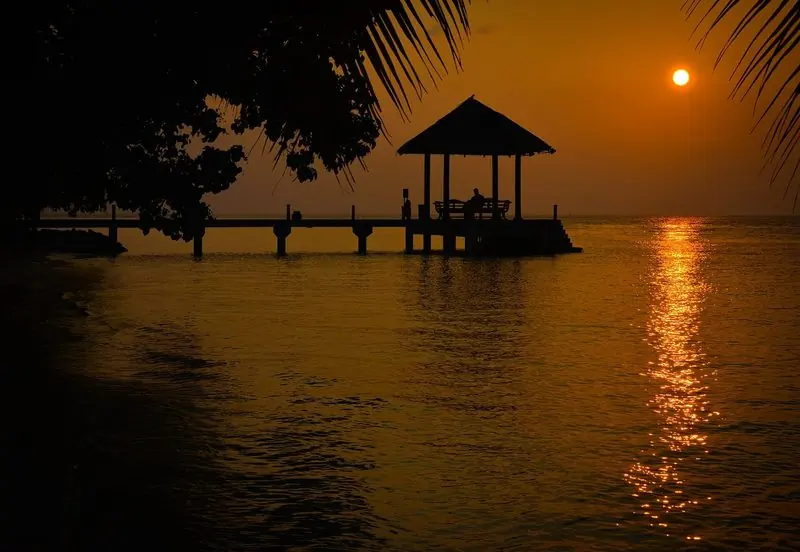
The season is a monsoon, not a calendar
December to March is the season, because that is when the northeast monsoon is established and conditions across the atolls are predictable. Water sits between 26C and 29C, and visibility in the good months reaches 20 to 30 metres. November and April are workable shoulders. May to October is the southwest monsoon, wetter and windier, and it is also the only window in which the plankton blooms that draw manta rays and whale sharks occur, which is why a few owners deliberately take the weather rather than avoid it.
Distances inside the country are longer than the map suggests. A week out of North Male covers the central atolls and little else. Reaching Baa or Raa properly wants 10 to 14 nights, and a northern itinerary through Noonu wants a fortnight. The channels between atolls carry real tidal streams and should be transited on a current plan rather than a guest schedule. Baa Atoll is a UNESCO biosphere reserve, Hanifaru Bay is snorkelling only, and several atolls and marine parks require their own authorisation, so the itinerary has to be checked against the protected areas before it is promised to anybody. Agents issue the boundaries as mapping files the bridge can open directly.
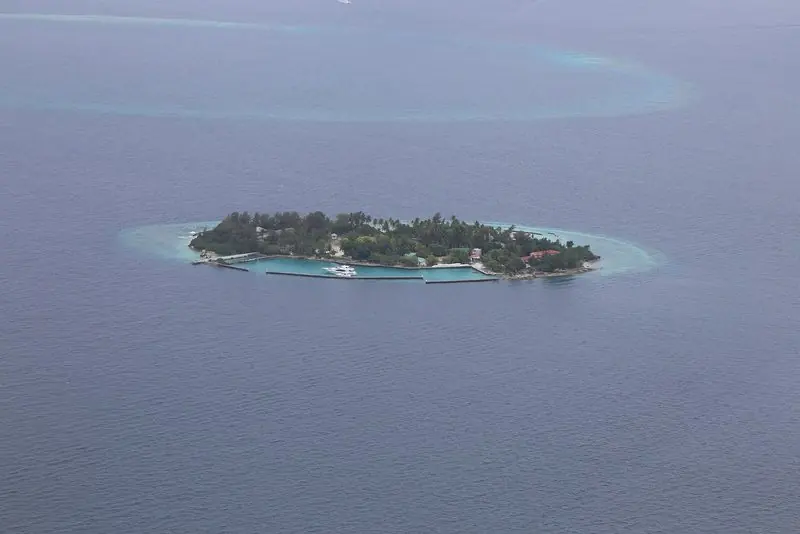
Fuel, landfall and the numbers nobody publishes
The three ports of entry are Male, Uligan in the far north and Addu in the far south, and the choice is a routing decision. Uligan is the natural first stop for a yacht coming down off the Red Sea route, and Addu suits an approach from the south or a departure into the wider Indian Ocean. The established agents keep offices at all three. Fuel is supplied duty-free straight to the vessel, by truck alongside in port and by barge at sea, arranged in advance with grade reports so the engineer can decide before anything is pumped. Outside the Male area both fuel and provisioning carry a logistics premium that shows up in the advance provisioning allowance rather than the brochure.
The honest gap is traffic. Asia Pacific Superyachts, which keeps offices in Male, Uligan and Gan and has handled yachts up to 147 metres, puts current visits above 50 a year with average stays of 45 to 60 days. An older CharterWorld account of the same destination counts roughly 40 superyachts in total. The two do not reconcile, no authority publishes an arrivals figure, and so anyone quoting Maldives superyacht traffic at you is quoting an agent rather than a register. The same caution applies to the marina. Nothing about Zamani Islands has been tested by a visiting yacht, and every number attached to it is the developer's own.
What owners and crew report
Traffic has gone from a handful to dozens
Mohamed Hameed, who founded Asia Pacific Superyachts Maldives, says the company saw a handful of visiting yachts a year when it started servicing them two decades ago, and puts the figure above fifty now, with boats typically staying 45 to 60 days.
The Islander (Mohamed Hameed, Asia Pacific Superyachts Maldives, December 2025)Clearance is quick if the paperwork lands first
Hameed has described arrival and departure formalities running 30 to 45 minutes, with the agent guiding the captain and crew through them, provided the documents are filed ahead of the yacht.
Visit Maldives (Mohamed Hameed, Asia Pacific Superyachts, October 2020)Very large yachts have already done it
Asia Pacific Superyachts lists the 126m Octopus, the 115m Pelorus and the 147m A+ among the vessels it has handled in the Maldives. CharterWorld separately names Octopus, Golden Odyssey, Mayan Queen and Serenity as visitors.
The Islander (December 2025) and CharterWorldNobody has used the marina, so nobody can report on it
Zamani Islands has never taken a visiting yacht. There is no independent account of its berths, its approach, its tariff or its service, and every figure published about it comes from the developer.
Yotters desk
What is good, and what to watch
Strong points
- You can actually stayNinety days extending well past the season on a single permit removes the clock that governs a European or Caribbean programme. For an owner who wants the boat in one cruising ground for a whole winter and a shoulder either side, this is the rare place that allows it on paper.
- A foreign flag can earnThe passenger licence is issued through a Maldivian agent and is open to foreign-flagged vessels. A flag that cannot legally take a paying guest on the French or Italian coast can take one here, which changes the arithmetic on a boat that would otherwise sit.
- Fuel is duty-free and comes to youBunkering is delivered to the vessel by truck in port or barge at sea, with grade reports in advance, and the duty-free status is a real saving over a Mediterranean fill.
- The cruising ground is genuinely rareTwenty-six atolls, water between 26C and 29C, and 20 to 30 metres of visibility in the settled months. Baa Atoll's biosphere status and the manta and whale shark seasons are things an owner cannot buy in the Med at any price.
What to watch
- There is nowhere to tie upNo purpose-built superyacht marina exists. Everything is at anchor and off tenders, which is a real operational and comfort cost over a long stay, and Zamani Islands is a construction schedule rather than a berth anyone can book today.
- Support is thin and centralised on MaleFuel and provisioning away from the Male area carry a logistics premium, and there is no meaningful refit or heavy-repair capacity in the country. A technical problem is a flight and a freight forward, not a yard.
- Getting there costs a seasonThe archipelago lies some 670km southwest of Sri Lanka. The delivery is the Red Sea route or a long southern passage, and the boat is then committed to the Indian Ocean for the year rather than dipping in.
- The published fees do not agree with each otherTwo summaries of the same 2024 regulation diverge on the extension ceiling and on the charter bands above 75 metres. A large programme cannot be budgeted from public sources and has to be priced by the agent.
- Every guest carries a daily taxGreen tax doubled to USD 12 per head per night in January 2025 and tourism GST rose to 17 per cent that July. On a full boat over a long charter these are not rounding errors.
Practical detail
| Cruising permit | USD 1,000 for a vessel of 100 GT and above, free below it. Valid 90 days from inward clearance, and it must be obtained before arrival or within four days of clearing in. |
|---|---|
| Extending the permit | USD 100 a day at 100 GT and above, USD 50 a day below. Published summaries put the ceiling at 275 days in total; one law-firm note says 365. Get the ceiling confirmed in writing before planning a season around it. |
| Passenger licence (charter) | A daily fee banded by length: USD 100 to 20m, USD 250 to 35m, USD 400 to 45m, USD 550 to 75m, plus USD 5 per passenger. Above 75m the two published tables diverge, USD 650 against USD 700. |
| Tax on a charter | Tourism goods and services tax 17 per cent since 1 July 2025. Green tax USD 12 per guest per night since 1 January 2025, doubled from USD 6. |
| Agent | Mandatory, and the agent company must be Maldivian-owned. A yacht that arrives without one is fined and required to leave. |
| Ports of entry | Male, Uligan in the far north, Addu in the far south. Uligan is the natural landfall off the Red Sea route. |
| Berths | None purpose-built today. Zamani Islands is to bring 120 to South Male Atoll, phased from 2026. Until then the fleet anchors and runs tenders. |
| Fuel | Duty-free to the vessel, by truck in port and by barge at sea, booked in advance with grade reports. Thin outside the Male area. |
| Season | December to March is the settled northeast monsoon, 26C to 29C water, 20 to 30 metres of visibility. November and April work. May to October is wet and windy, and it is when the mantas and whale sharks feed. |
| Itinerary lengths | Seven nights covers the central atolls out of North Male. Baa or Raa wants 10 to 14 nights. A northern run through Noonu wants a fortnight. |
| What is not published | No official count of superyacht arrivals, no berth tariff for Zamani Islands, no named marina operator, and no confirmed date on which a visiting yacht can book a night. |
Questions this story answers
What happened?
The Maldives issues a 90-day cruising permit that extends deep into the year, and it licenses foreign-flagged yachts to carry paying guests, which is a combination the Mediterranean does not offer. Zamani Islands, the country's first purpose-built superyacht marina, is meant to bring 120 berths to South Male Atoll in phases. For an owner deciding where the boat winters, the Indian Ocean now has paperwork worth planning around, and eventually somewhere to tie up.
What is good about it?
You can actually stay. Ninety days extending well past the season on a single permit removes the clock that governs a European or Caribbean programme. For an owner who wants the boat in one cruising ground for a whole winter and a shoulder either side, this is the rare place that allows it on paper.
What should an owner or buyer watch?
There is nowhere to tie up. No purpose-built superyacht marina exists. Everything is at anchor and off tenders, which is a real operational and comfort cost over a long stay, and Zamani Islands is a construction schedule rather than a berth anyone can book today.
What do owners and crew report?
Mohamed Hameed, who founded Asia Pacific Superyachts Maldives, says the company saw a handful of visiting yachts a year when it started servicing them two decades ago, and puts the figure above fifty now, with boats typically staying 45 to 60 days. (The Islander (Mohamed Hameed, Asia Pacific Superyachts Maldives, December 2025))
Who reported this?
Foreign Tourist Vessel Regulation 2024/R-2, Ministry of Tourism, Maldives, QVL Advisory, Riza and Co, Maldives Inland Revenue Authority, The Islander, Asia Pacific Superyachts, Seal Superyachts, Atoll Estates, YachtCharterFleet, CharterWorld.
We do this for everyone who loves this world. The people who have spent their lives in it, and the people just discovering it. Yotters exists so that what we learn belongs to all of them.
Nobody pays us for this. No ads, no sponsors, nothing for sale. We just believe the world is a little better when knowledge is shared instead of kept.
If it gave you something today, tell us to keep going. Follow us, leave a like, or write a positive comment. We read every one, and they are what keeps us going.