Two Siblings Built Celestia, a 45m Phinisi, to Reunite Their Family
A Crazy Idea, Pitched Mid-Lockdown
Jason Tabalujan, a private equity fund manager based in Jakarta, pitched his sister with a warning first: "I said, 'Hey, I have a crazy idea, do you want to hear about my crazy idea?'" The idea was building a yacht - specifically, a 45-metre traditional Indonesian phinisi to bring their pandemic-scattered family back together in the Coral Triangle waters both had grown up sailing. Jasmine Chong, a New York-based fashion designer, remembers her own reaction as pure disbelief: "I was like, 'I'm a fashion designer.' It felt crazy." Neither sibling had built a boat before, and the pandemic had already separated their extended family across Malaysia, Indonesia and Singapore - the same three countries their parents' families trace back to - for months at a stretch.
Tabalujan did not wait for full family buy-in before committing. He told the rest of the family about the project only once he had already sunk half his money into it, "at a point where it couldn't be stopped" - a deliberate tactic to keep a genuinely uncertain, expensive project from being talked out of existence before it had a hull. Chong, for her part, found something clarifying rather than reckless about starting a multi-year build during a period when nobody could travel anywhere: "There was something very nice about dreaming of this project," she has said of conceiving Celestia while locked down and unable to see the family the boat was meant to reunite.
Building in Bulukumba, Not Rotterdam
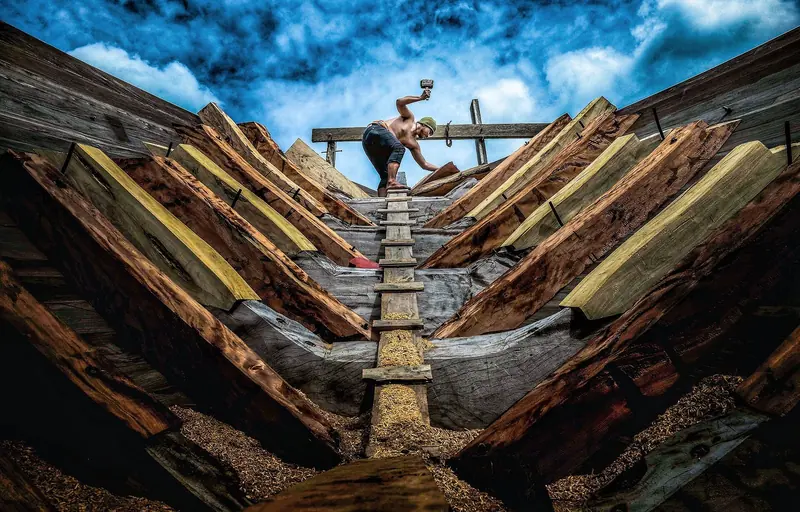
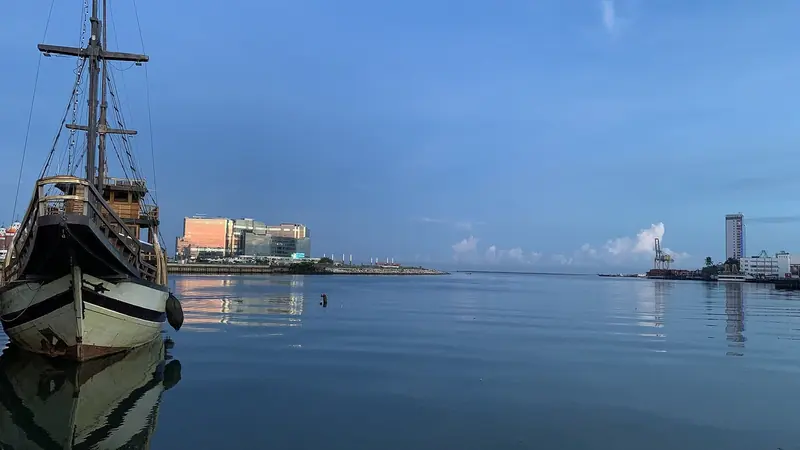
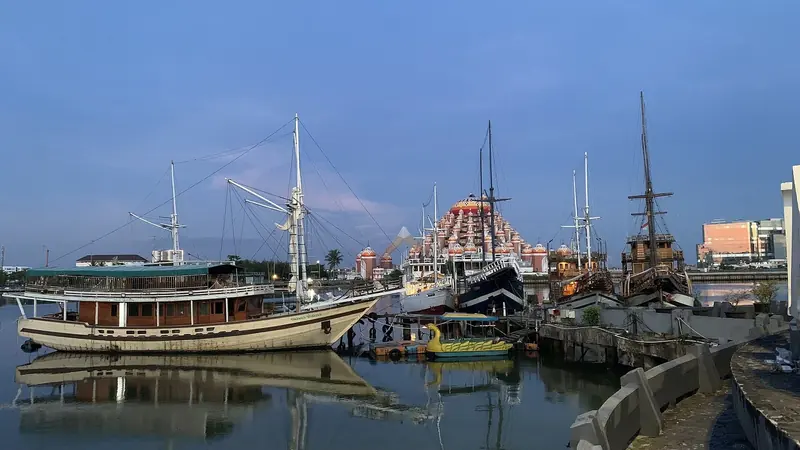
Celestia was not built in any of the yards this desk normally covers. It was hand-built in Bulukumba, on the South Sulawesi coast of Indonesia - the traditional home of Bugis phinisi shipbuilding, where two-masted wooden schooners have been laid down by hand, without formal naval-architecture drawings in the Western sense, for generations. That choice put the siblings' project inside a craft tradition rather than an industrial supply chain: no steel plate, no CNC-cut frames, no delivery-date guarantees from a yard used to building to a fixed program. The vessel launched in a traditional peluncuran ceremony in 2022, after a build timeline that stretched well beyond what a European or Turkish yard would quote for a comparable-sized new construction.
That trade-off is the real story behind Celestia for any owner considering the same route: a Bulukumba build buys authenticity, craft and a genuinely one-off vessel that no production yard could replicate, at the cost of the delivery predictability, warranty structure and standardised parts sourcing that come with a Western or Turkish steel yard. Neither sibling has published what the build cost, and there is no indication either treated the schedule as fixed - the project reads, by their own account, as something closer to a multi-year family commission than a yacht ordered off a spec sheet.
A Fashion Designer's Interior, Built Around Colour-Blindness
Creative direction on Celestia's interior fell to Chong specifically because Tabalujan is colour-blind - a practical division of labour between the two owners rather than a shared design-by-committee process. Chong approached the interior the way she approaches a garment: "A lot like making a dress, where you think about the fabric, what kind of material to use, how it's going to move," she has said, describing a fabric-first process that is unusual for a yacht interior and traces directly back to her day job. The result runs through hand-woven rattan panelling sourced from Java, hand-glazed traditional Balinese tiles in the wet areas, and tropical toile jacquard textiles that Chong designed herself rather than sourced from a marine upholstery catalogue.
None of those materials are typical superyacht-interior choices - rattan and glazed tile are humid-climate, regionally sourced materials that would be unusual specification on a Western-built yacht, and that is precisely the point of the project: Celestia was built to read as Indonesian rather than to read as a superyacht that happens to be cruising Indonesia. For an owner weighing a similar bespoke build, the lesson is that getting a genuinely regional design language onto a yacht requires putting an actual practitioner from that discipline - in this case a fashion designer, not a yacht-design studio - in charge of it.
Two Owners' Cabins and a Parents' Suite
Celestia carries seven cabins across her two masts and multiple decks, run by a crew of 17 drawn from Indonesia and other Bahasa-speaking regions. The layout's most telling detail is structural rather than decorative: twin, identical owners' cabins on the upper deck, one for Chong and one for Tabalujan, with neither sibling given a nominally superior primary suite - an unusual choice on a yacht with two owners, where one cabin is typically upgraded over the other. The main-deck cabin, meanwhile, was conceived specifically with their parents in mind, built around an expansive cushioned seating area where Chong says the family gravitates during their annual trips through the archipelago.
That cabin plan is effectively the whole thesis of the project rendered in square metreage: a boat designed to physically reunite a specific family rather than to maximise charter-guest capacity or resale appeal. Chong has described watching that plan work as designed - "This is the first of many happy moments on the boat," she said of an early family gathering aboard - and has spoken about the less obvious reward of genuine offshore darkness on the Coral Triangle routes: "How often do you really look up... In the city, you can't take in the stars."
From the Family's Boat to a Charter Fleet
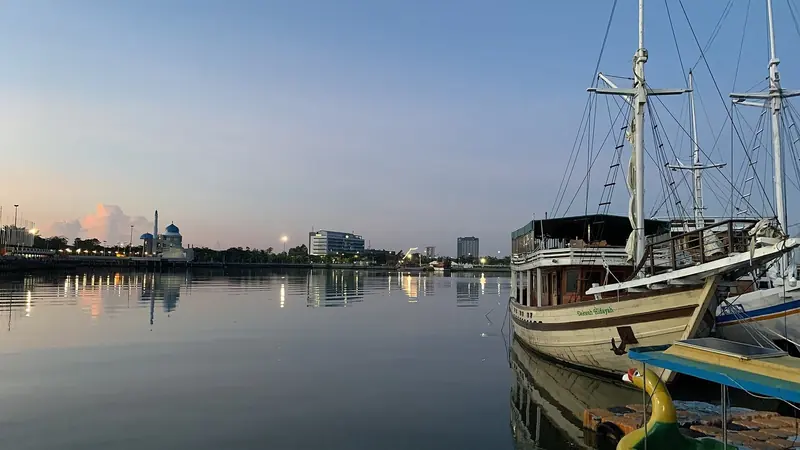
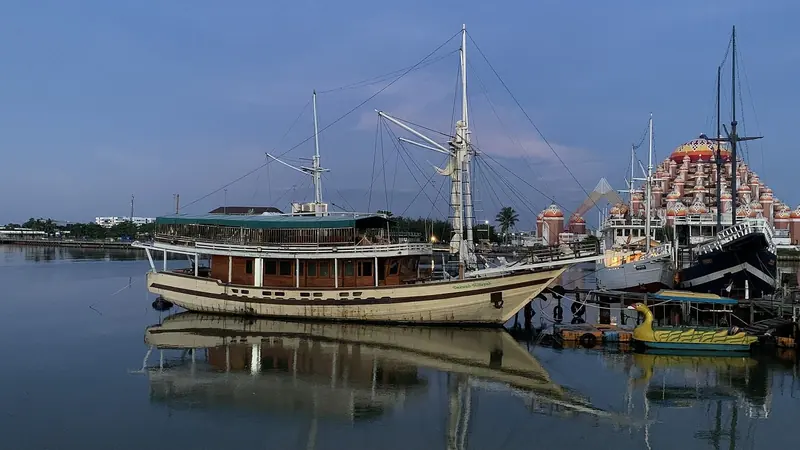
Celestia now charters commercially around the Coral Triangle, running routes through Komodo - including drift-dive sites like Shotgun - the Banda Sea's Jackpot site, known for hammerhead sharks, plus Run Island in the Maluku Islands and Sumbawa's northern coast. The yacht's profile has extended beyond direct charter bookings: a five-day sailing aboard Celestia was included in the celebrity gift bags at the 2024 Golden Globes, a marketing reach well beyond what a typical Indonesian phinisi charter operation achieves.
What is not published is any standard day or weekly charter rate, and neither sibling has disclosed what the build itself cost - the Golden Globes gift-bag placement is, on the public record, the only concrete pricing signal tied to the yacht at all. For an owner or prospective charterer comparing Celestia to a Western-built explorer yacht on the same Indonesian cruising grounds, that absence of a rate card is itself informative: this remains, four years after launch, a family yacht that happens to take paying guests, not a charter-fleet asset run to a published rate sheet.
What owners and crew report
The idea nearly didn't survive the pitch
Tabalujan floated it to his sister as 'a crazy idea,' and Chong's first reaction was that she was 'a fashion designer' with no business building a yacht - he only told the rest of the family once he had already committed half his money, 'at a point where it couldn't be stopped.'
BOAT International (owner interview, 2025)The interior process mirrored garment design
Chong described designing Celestia's interior as 'a lot like making a dress, where you think about the fabric, what kind of material to use, how it's going to move' - the same fabric-first instinct she uses in her fashion work, applied to rattan panelling and toile jacquard instead of cloth.
BOAT International (owner interview, 2025)Tabalujan's colour-blindness shaped the ownership split
Tabalujan is colour-blind, which is why creative direction on the interior went to Chong rather than being split evenly between the two owners - a practical division of labour rather than a design-by-committee approach.
BOAT International (owner interview, 2025)
What is good, and what to watch
Strong points
- A genuinely bespoke buildThe interior was designed by an actual fashion designer working fabric-first, not a yacht-design studio adapting a catalogue look, producing choices like hand-glazed Balinese tiles and Java rattan panelling a production yard would not offer.
- Built for a specific family, not a resale marketTwin identical owners' cabins and a main-deck suite conceived around the siblings' parents mean the boat solves a real family-logistics problem rather than chasing broad charter appeal.
What to watch
- No published economicsWithout a build cost or a standard charter rate, an owner considering the same route into Indonesian phinisi ownership has no public benchmark for what Celestia actually cost to build or to run.
- A single-region operating modelCelestia's Coral Triangle-only cruising ground and Bahasa-speaking crew make it a poor fit for an owner who wants one yacht that also works a Mediterranean or Caribbean season.
Practical detail
| Build location | Hand-built in Bulukumba, South Sulawesi, Indonesia - the traditional home of Bugis phinisi shipbuilding |
|---|---|
| Layout | Two-masted phinisi, seven cabins including twin owners' cabins and a main-deck cabin built for the siblings' parents |
| Crew | 17, drawn from Indonesia and other Bahasa-speaking regions |
| Charter routes | Indonesia's Coral Triangle - Komodo, the Banda Sea, Run Island and the Maluku Islands, and Sumbawa's north coast |
| What is not published | Neither the build cost nor a standard weekly charter rate has been made public; a five-day sailing gifted in the 2024 Golden Globes celebrity bags is the only pricing signal on record |
Questions this story answers
What happened?
Jasmine Chong, a fashion designer, and her brother Jason Tabalujan, a private equity fund manager, built the 45-metre phinisi Celestia in Bulukumba to bring their pandemic-scattered family back together in Indonesia's Coral Triangle. For an owner weighing a bespoke Indonesian sailing yacht against a Western-built explorer, Celestia is a working case study in what that route actually costs in time, creative control and family compromise.
What is good about it?
A genuinely bespoke build. The interior was designed by an actual fashion designer working fabric-first, not a yacht-design studio adapting a catalogue look, producing choices like hand-glazed Balinese tiles and Java rattan panelling a production yard would not offer.
What should an owner or buyer watch?
No published economics. Without a build cost or a standard charter rate, an owner considering the same route into Indonesian phinisi ownership has no public benchmark for what Celestia actually cost to build or to run.
What do owners and crew report?
Tabalujan floated it to his sister as 'a crazy idea,' and Chong's first reaction was that she was 'a fashion designer' with no business building a yacht - he only told the rest of the family once he had already committed half his money, 'at a point where it couldn't be stopped.' (BOAT International (owner interview, 2025))
Who reported this?
BOAT International, Megayacht News, The Peak Magazine.
We do this for everyone who loves this world. The people who have spent their lives in it, and the people just discovering it. Yotters exists so that what we learn belongs to all of them.
Nobody pays us for this. No ads, no sponsors, nothing for sale. We just believe the world is a little better when knowledge is shared instead of kept.
If it gave you something today, tell us to keep going. Follow us, leave a like, or write a positive comment. We read every one, and they are what keeps us going.