What 'New CA' on a Yacht Listing Actually Means
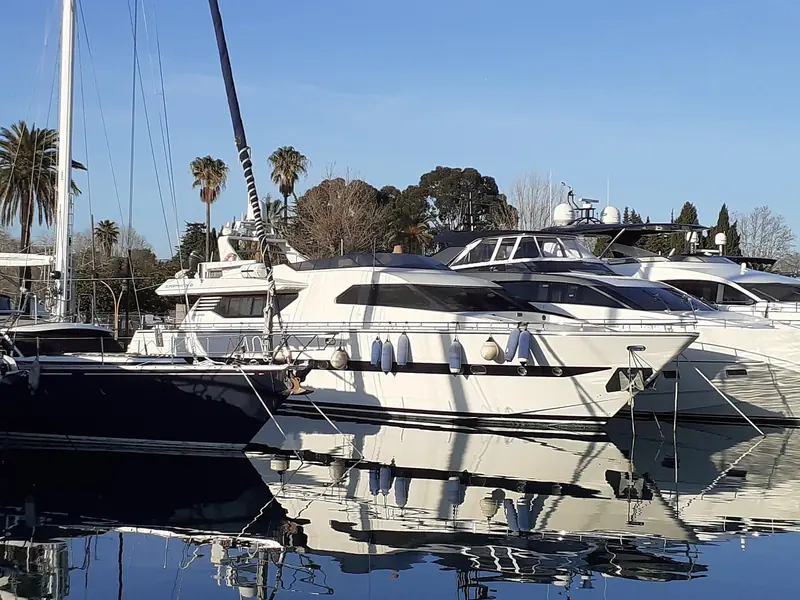
What does it mean when a yacht has a Central Agency?
A Central Agency is a worldwide exclusive mandate an owner gives one broker to manage a yacht's sale at an agreed price and set of conditions, usually for six to twelve months.
The Mediterranean Yacht Brokers Association, MYBA, maintains the standard form most European brokers use, and its own description of the agreement is blunt about what the owner gives up: the exclusive right to sell, worldwide, for the length of the mandate. In the United States the equivalent document is the International Yacht Brokers Association's Central Listing Agreement, built on the same logic even where the wording differs. Either way, the owner agrees not to list the yacht with anyone else and hands one broker, the central agent, control of marketing, price and the buyer conversation.
The trade-off is supposed to be effort. A broker who knows the commission is theirs alone if the boat sells is expected to spend real money on it: professional photography, placement on the big listing portals, inclusion in the broker's own outreach to qualified buyers, and the legwork of accompanying viewings on board. An open listing, where several brokers all have the right to sell the same yacht, removes that certainty, and the marketing spend on any one boat tends to shrink to match.

Can other brokers sell a yacht that already has a Central Agency?
Yes: a central agent is required to circulate the listing to a network of corresponding brokers, who can introduce buyers and earn a share of the commission, but every deal still has to run through the central agent.
Under the MYBA and IYBA systems alike, the central agent's job explicitly includes distributing the yacht's details, price and availability to other member brokers through the association's shared listing system, not hoarding the mandate. Those corresponding brokers can bring a buyer to the table and be paid for it, which is why the same yacht routinely turns up on several different brokerage websites at once even though only one firm holds the central agency. What they cannot do is negotiate or contract directly with the owner; every offer, however it originated, is routed back through the central agent.
A less common variant, a Joint Central Agency, puts two or more brokers in that exclusive role together instead of one, splitting the marketing workload and the eventual commission by prior agreement. Owners use it to widen a yacht's exposure across two firms' buyer networks without falling back to a full open listing, and it shows up in the trade press as JCA rather than CA.
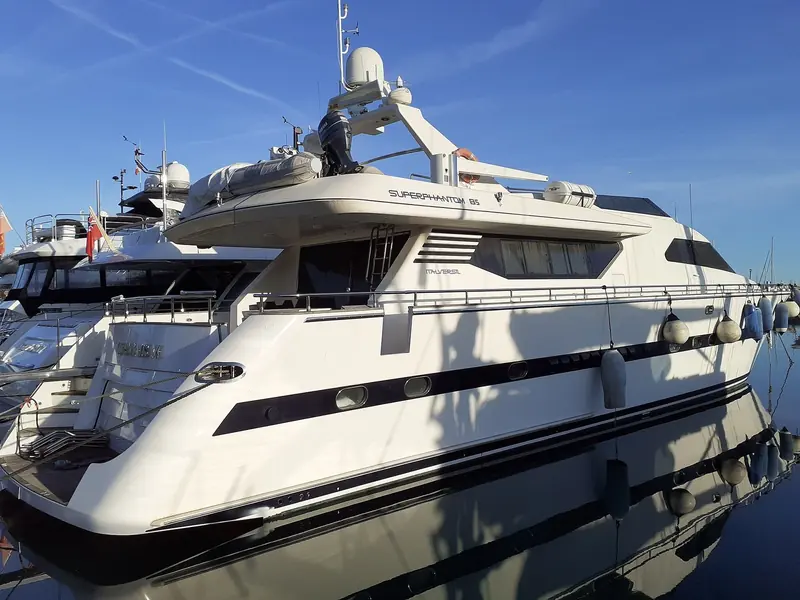
How is a yacht sale commission actually split?
The MYBA standard commission is 10 percent of the gross sale price, and that figure is meant to cover both the central agent and any corresponding broker who introduced the buyer, not stack on top of it.
That 10 percent is a starting point rather than a fixed rule. Owners of higher-value yachts routinely negotiate it down, sometimes on a sliding scale where the percentage steps lower as the price climbs, and an owner who already has a buyer lined up independently can carve that name out of the agreement as a reserved sale, paying no commission at all if that specific buyer ends up closing. What the standard form does not allow is the commission growing because two brokers were involved: the corresponding broker's cut comes out of the same 10 percent the central agent would otherwise keep in full.
Where MYBA and IYBA genuinely diverge is buyer protection after survey and sea trial, not commission math. Under a MYBA Memorandum of Agreement, the buyer can reject the yacht at their own discretion once the survey and sea trial are done, and silence is read as acceptance if the buyer misses the deadline to reject. The IYBA Purchase and Sale Agreement runs the opposite default: rejection has to rest on a defect actually found during inspection, and silence past the deadline is read as rejection, not acceptance. An owner choosing which standard contract to sell under is choosing which of those two defaults protects them.

What does it mean when a yacht's central agency changes?
A new central agency almost always means the previous mandate ran its course, six months to a year, without a sale, and the owner has either switched brokers, cut the price, or both.
That is why a 'new CA' headline in the trade press so often runs alongside a lower asking price on the same yacht: an owner who has just sat through a mandate that did not produce a buyer is, at the same moment, deciding whether the number was the problem, the broker was the problem, or both. Moving the mandate to a different firm is a way to reset the yacht's visibility, since a fresh central agency typically comes with fresh photography, a new placement push across the portals, and reintroduction to that broker's own buyer list, effectively restarting the clock on how stale the listing looks to a buyer who has been watching the market.
It is a genuinely useful market signal for a buyer to read, not just industry noise. A yacht cycling through its second or third central agency in as many years, especially alongside repeated price cuts, tells a prospective buyer that the asking price has been out of step with what buyers are actually willing to pay for some time, which is exactly the kind of yacht where a serious offer well under asking has a real chance of being taken seriously.
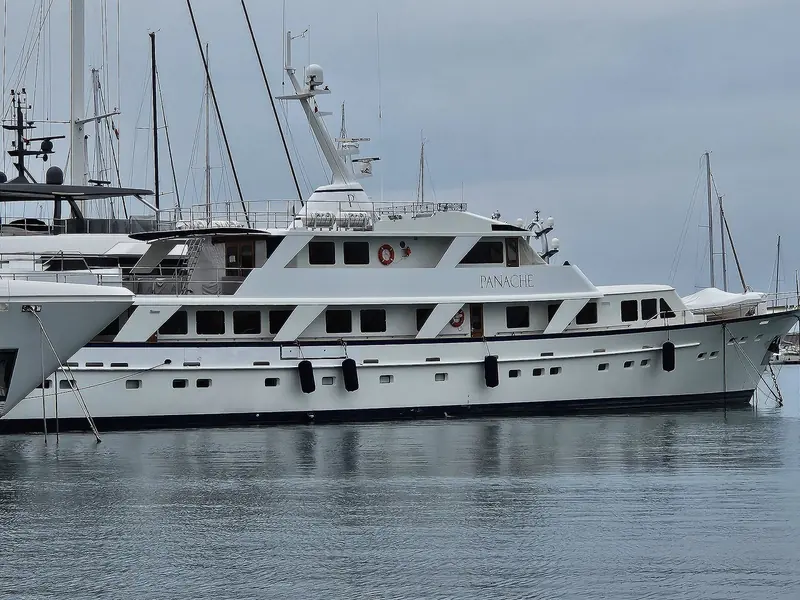
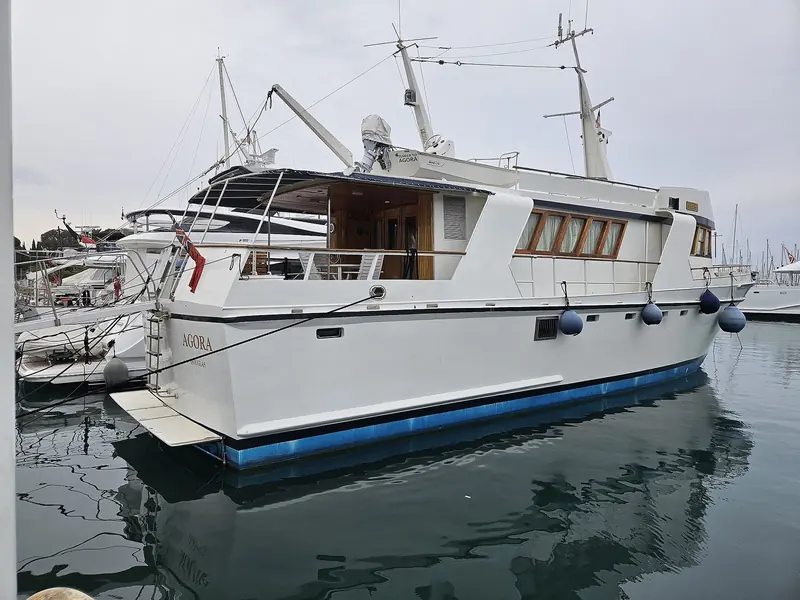
Does an owner still owe commission after the central agency agreement ends?
Yes, for a defined tail period, usually around twelve months: if the yacht sells to a buyer the broker introduced during the agreement, commission is still owed even though the central agency itself has expired.
Standard central listing agreements write this in explicitly, precisely to stop an owner from waiting out the mandate, then closing quietly with a buyer the broker had already found and introduced. The clause typically covers not just an outright sale but a donation, trade, lease or charter to that same introduced party, closing off the obvious workarounds. It is the reason a seller cannot simply let a central agency lapse and expect a clean break from every conversation the outgoing broker had already started.
None of this is published anywhere a browsing buyer can see; the mandate length, the commission rate actually agreed and the tail period are all private terms between owner and broker, and the trade press only ever reports the public facts, the price and the name of the firm now holding the listing. For an owner weighing whether to renew, switch, or go to a joint central agency, that is worth asking a prospective broker to put in writing before signing anything, rather than assuming the MYBA or IYBA standard applies unmodified.
What is good, and what to watch
Strong points
- Concentrates marketing effort where it countsA broker guaranteed the full commission on a sale has a direct incentive to fund professional photography, portal placement and buyer outreach that an open listing rarely gets.
- Standard forms reduce dispute riskMYBA and IYBA both publish tested agreements that spell out commission, rejection rights and the tail clause, so an owner is rarely negotiating those terms from scratch.
- A change of agent is a real, readable market signalA buyer who understands why 'new CA' headlines cluster with price cuts can use a yacht's brokerage history to judge how motivated a seller actually is.
What to watch
- The owner is locked to one broker's reach for monthsA weak or poorly connected central agent still holds exclusivity for the full 6 to 12 month term even if their marketing underperforms.
- The tail clause can outlast the relationshipAn owner who switches brokers mid-search can still owe commission to the outgoing agent if the eventual buyer was introduced during the earlier mandate.
- The commercial terms that matter most are never publicThe trade press reports price and broker name, not the commission rate actually negotiated or how long the mandate runs, so two 'new CA' headlines can describe very different deals.
Practical detail
| Standard commission | 10 percent of gross sale price under the MYBA form, split between the central agent and any corresponding broker who introduces the buyer |
|---|---|
| Typical mandate length | 6 to 12 months, averaging close to a year |
| Post-termination tail | Around 12 months; commission is still owed if a buyer the broker introduced during the mandate later buys, trades, leases or charters the yacht |
| MYBA vs IYBA on rejection | MYBA: buyer rejects at their discretion after survey and sea trial, silence past deadline reads as acceptance. IYBA: rejection needs an actual defect found at inspection, silence past deadline reads as rejection |
| Joint Central Agency (JCA) | Two or more brokers share the exclusive mandate and split the commission by prior agreement, reported in the trade press as JCA rather than CA |
| What is not published | The actual commission rate agreed, the mandate's exact length and the tail period are private terms; only the asking price and the current broker's name become public |
Questions this story answers
What happened?
Trade press runs a 'new CA' headline on a brokerage yacht several times a week, and it is rarely explained. A central agency is the exclusive mandate that puts one broker in sole charge of a sale, and a change of central agent is usually a quiet signal about how that first mandate actually went.
What is good about it?
Concentrates marketing effort where it counts. A broker guaranteed the full commission on a sale has a direct incentive to fund professional photography, portal placement and buyer outreach that an open listing rarely gets.
What should an owner or buyer watch?
The owner is locked to one broker's reach for months. A weak or poorly connected central agent still holds exclusivity for the full 6 to 12 month term even if their marketing underperforms.
Who reported this?
MYBA (Mediterranean Yacht Brokers Association), International Yacht Brokers Association (IYBA), BOAT International, Barche Magazine.
We do this for everyone who loves this world. The people who have spent their lives in it, and the people just discovering it. Yotters exists so that what we learn belongs to all of them.
Nobody pays us for this. No ads, no sponsors, nothing for sale. We just believe the world is a little better when knowledge is shared instead of kept.
If it gave you something today, tell us to keep going. Follow us, leave a like, or write a positive comment. We read every one, and they are what keeps us going.