39m Favor grounds at Woods Hole, all 13 aboard unhurt
What happened to the yacht Favor at Woods Hole?
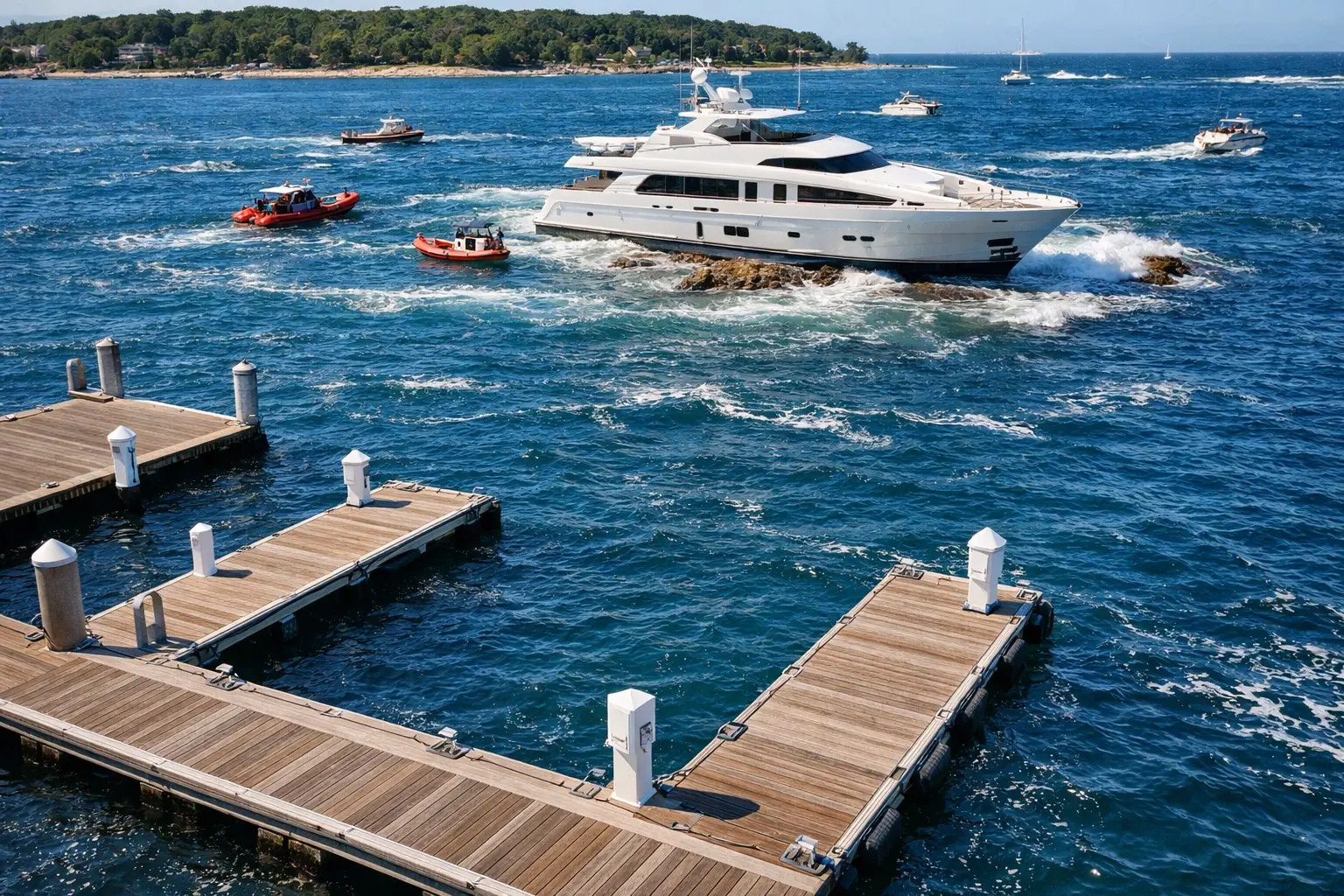
Favor, a 38.7-metre Crescent Custom motor yacht, ran aground in Woods Hole Pass on 17 July 2026 with 13 people aboard. All were unhurt, and the yacht was refloated and towed for inspection the same day.
The US Coast Guard reported that a 130-foot vessel went aground at about 11am on 17 July in Woods Hole Pass, near Falmouth. The yacht was identified as Favor, a 38.7-metre Crescent Custom built in 2000 to a Jack Sarin design, with accommodation for 10 guests in five cabins. Thirteen people were aboard, seven guests and six crew.
The Coast Guard, the Falmouth Fire Department and the Falmouth Harbormaster responded, and a safety zone was set around the yacht during recovery. The guests were evacuated with no injuries reported, the crew remained aboard to assist, and the yacht was refloated and towed to Great Harbor Anchorage for inspection. No cause has been stated by any official body, and none should be assumed.
Why is Woods Hole Pass dangerous for a deep-draught yacht?
The pass between Woods Hole and the Elizabeth Islands is narrow, heavily buoyed and runs strong tidal current, leaving little margin for a deep-draught hull, though that context is not itself a finding about what caused this grounding.
The pass between Woods Hole and the Elizabeth Islands is narrow, heavily buoyed and runs strong tidal current. It is a route local operators know well and one that leaves very little margin for a deep-draught yacht. That context is not a finding about this incident, it is why the stretch carries the traffic notices it does.
The response itself went the way it should. Guests off, crew aboard, safety zone set, yacht refloated and moved to sheltered water for survey. On a hard grounding those first hours decide whether the story stays a repair bill or becomes a total loss.
What does a grounding like this cost an owner after the tow?
A grounding follows a yacht through resale as a bottom survey finding, and it can cost a charter operator the weeks of a season the yacht was built to earn, which is why loss-of-use cover matters more than the repair bill itself.
A grounding follows a yacht through the rest of her life. Class and flag will want a bottom survey, and any structural finding lands in the record that a future buyer's surveyor reads. Favor is a 2000-built hull that was refitted in 2024 and works in the charter market, so the value question is direct: a fresh, well-documented repair is manageable, an undocumented one is a discount every time she is listed.
The other exposure is the season. A yacht out of service in late July loses the weeks she was built to earn, and a charter programme that goes dark mid-summer is difficult to restart before the autumn. Owners running commercial programmes should read this as a reminder to check what their loss-of-use cover actually pays, before they need it.
What is good, and what to watch
Strong points
- The emergency response followed the textbookGuests off first, crew kept aboard to fight flooding, a safety zone set by the Coast Guard, Falmouth Fire and the harbormaster, and the yacht refloated and towed to sheltered water for survey the same day. Nobody was hurt and the vessel did not need to be abandoned.
- Flooding was controlled, not just containedThe hull breach was managed with pumps and a Towboat US response boat before the tow, which is why this stayed a grounding-and-repair story rather than a sinking.
What to watch
- No official cause has been publishedNeither the Coast Guard nor Falmouth authorities had stated a cause as of the last report, and Woods Hole Pass is a known hazard for deep-draught yachts, so readers should not assume operator error or mechanical failure until an investigation says so.
- The repair record now follows the yacht permanentlyFavor is a 2000-built hull that was refitted in 2024 and works the charter market; whatever a class or flag bottom survey finds becomes part of the record a future buyer's surveyor reads, and an undocumented repair discounts her at resale every time.
Practical detail
| Vessel | Favor, 38.7 m Crescent Custom, built 2000 to a Jack Sarin design, refitted 2024 |
|---|---|
| People aboard | 13 total: 7 guests evacuated, 6 crew remained aboard to assist |
| Location and time | Woods Hole Pass, off Falmouth, Massachusetts, about 11am on 17 July 2026 |
| Response | US Coast Guard, Falmouth Fire Department and Falmouth Harbormaster; refloated and towed to Great Harbor Anchorage for inspection |
| What is not published | No official cause has been stated, and no repair cost, insurer, or survey finding has been made public |
Questions this story answers
What happened?
The 38.7-metre Crescent motor yacht Favor ran aground in Woods Hole Pass off Falmouth, Massachusetts on the morning of 17 July. Seven guests were taken off by responders and the six crew stayed aboard. No injuries were reported, and the yacht was later refloated and towed to Great Harbor for damage assessment. For owners, the interesting part starts after the tow.
What is good about it?
The emergency response followed the textbook. Guests off first, crew kept aboard to fight flooding, a safety zone set by the Coast Guard, Falmouth Fire and the harbormaster, and the yacht refloated and towed to sheltered water for survey the same day. Nobody was hurt and the vessel did not need to be abandoned.
What should an owner or buyer watch?
No official cause has been published. Neither the Coast Guard nor Falmouth authorities had stated a cause as of the last report, and Woods Hole Pass is a known hazard for deep-draught yachts, so readers should not assume operator error or mechanical failure until an investigation says so.
Who reported this?
US Coast Guard, BOAT International, Cape Cod Times.
We do this for everyone who loves this world. The people who have spent their lives in it, and the people just discovering it. Yotters exists so that what we learn belongs to all of them.
Nobody pays us for this. No ads, no sponsors, nothing for sale. We just believe the world is a little better when knowledge is shared instead of kept.
If it gave you something today, tell us to keep going. Follow us, leave a like, or write a positive comment. We read every one, and they are what keeps us going.