Zuckerberg's Launchpad stayed silent on a stranded skiff's call
A skiff runs dry off Point Highland
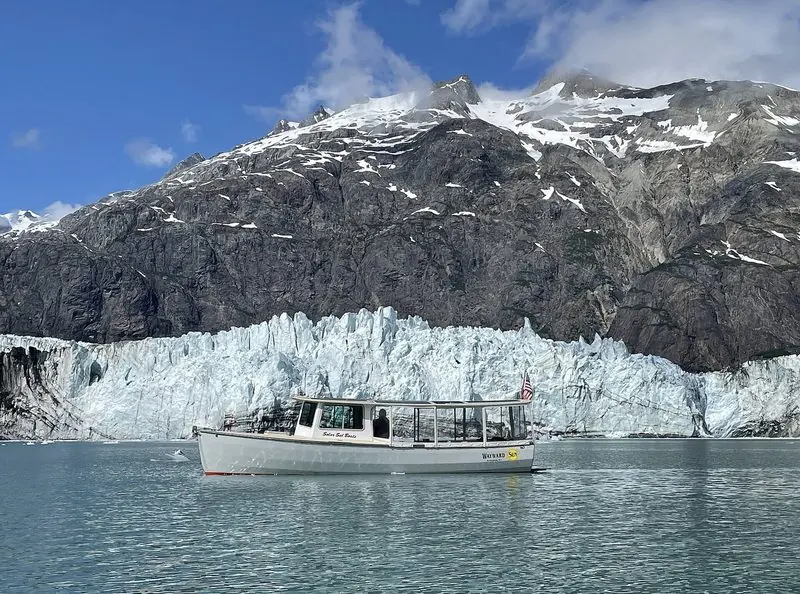
At 9:32pm on 3 August, a 21-foot Hewescraft skiff radioed the US Coast Guard from open water near Point Highland, roughly 85 miles south-southeast of Juneau on the run between Petersburg and Wrangell Narrows. Two women, a child and a dog were aboard, and the boat had run out of fuel with darkness setting in over the Frederick Sound approaches. The Coast Guard logged the call and, within the same channel traffic, alerted Launchpad, Mark Zuckerberg's 118-metre Feadship, anchored in the same stretch of the Inside Passage that has become her summer ground. No response came back from the yacht's bridge.
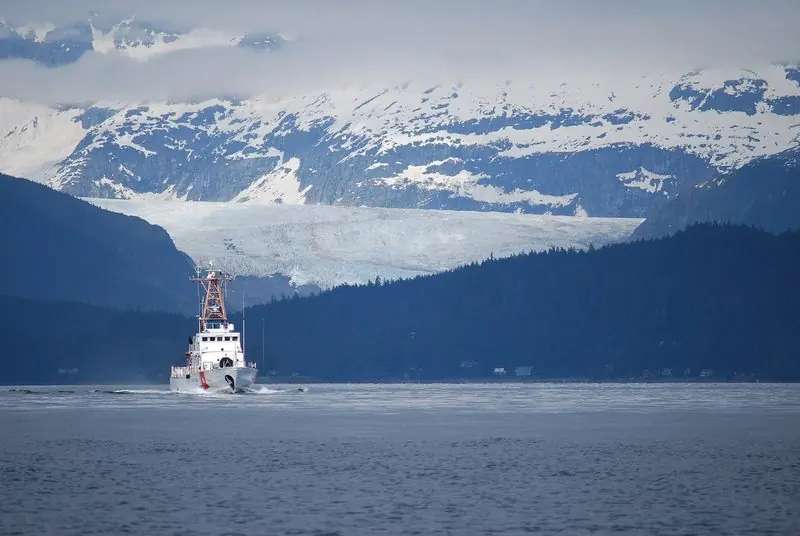
The call instead reached Wilderness Legacy, an 88-guest UnCruise Adventures expedition ship roughly ten miles further off, working a seven-night Alaskan itinerary out of Juneau. Her crew picked up the marine assistance broadcast, closed on the skiff's position and had it under tow within the hour. By 12:50am the skiff and its passengers were safely anchored in Farragut Bay, about nine miles east of where the engine had died, a little under three and a half hours after the first radio call. Nobody was hurt and neither vessel suffered damage; the story that followed was not about the rescue, which worked, but about the yacht that never answered it.
Not a distress call, the Coast Guard says
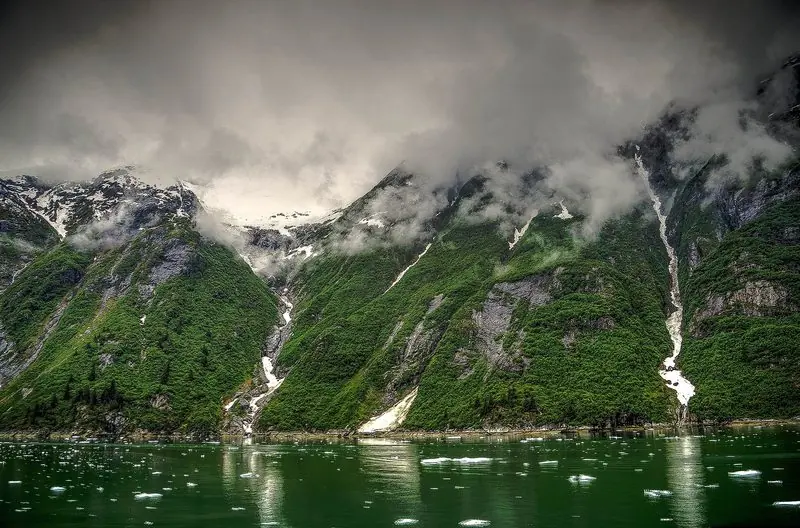
The distinction the Coast Guard draws matters more than it sounds. At 9:56pm, 24 minutes after the first contact, officials determined the skiff's crew were not in danger of loss of life and reclassified the call as a marine assistance request rather than a distress, broadcasting it on their behalf rather than issuing a Mayday. Under the International Convention for the Safety of Life at Sea, a vessel's master is obliged to proceed to the aid of anyone found at sea in genuine distress. A marine assistance request carries no equivalent legal compulsion; it is a courtesy broadcast, answered at a vessel's discretion, and that is the broadcast Launchpad is accused of letting pass.
That gap between distress and assistance is exactly why the story split into two arguments rather than one. To the Coast Guard and to Zuckerberg's own team, the classification settles the legal question: nothing bound Launchpad to respond, and nothing she did breached a maritime rule. To the passengers who watched a cruise ship do the work a nearby megayacht did not, the classification is beside the point. A family with a child and a dog was adrift after dark on a coast with no cell signal and no marina for miles, and the boat with the crew, the tenders and the range to close the distance in minutes stayed quiet regardless of what the radio traffic was legally called.
Zuckerberg's team: the assist was already underway
Brian Baker, the spokesperson for Zuckerberg and his wife Priscilla Chan, told Forbes that Launchpad's crew were already working the incident on a different radio channel from the one carrying the Coast Guard's public broadcast, which is the explanation he gave for why the yacht never replied on air. Baker also confirmed that Zuckerberg and Chan were not aboard at the time, a detail that matters to the owner's own exposure even if it does nothing for the optics of a 5,528 GT yacht sitting silent while a smaller ship did the towing. No further detail has been given on which channel the crew were using, whether a bridge watch heard the broadcast at all, or what, precisely, the crew did between 9:56pm and the moment Wilderness Legacy reported the tow underway.
The irony is that Launchpad and her support vessel Wingman, the 80-metre former Damen supply ship Zuckerberg bought in September 2025, were already a known presence on this coast. Both yachts spent July anchored in Auke Bay outside Juneau, part of a wider shift of large private yachts north as Mediterranean summer charter ran 20 to 30 per cent behind last year on broker estimates. A boat built for exactly this kind of remote, self-sufficient cruising, carrying her own helicopter deck, tenders and a dedicated support ship for the equipment a guest yacht cannot swallow, is the one a stranded family in the same water most needed to hear from.
A basketball court on the foredeck, and a radio channel missed
Wingman is not a small boat either: 80.1 metres, a crew of up to 40 in full support mode, a helipad, a dive centre and, according to owners who have posted footage of her, a basketball court on the foredeck. She was built by Damen as an offshore supply vessel before her 2022 conversion into what the yard has called its largest shadow yacht, and Zuckerberg bought her from New Zealand businessman Graeme Hart along with the name. Between the two vessels, Zuckerberg's Alaska flotilla runs well over 100 crew and a fleet of tenders and toys that dwarfs the resources of most Coast Guard stations on this coast, which is precisely why the non-response drew the reaction it did.
On Wilderness Legacy, a passenger named Michael Love said the ship's own captain noted over the intercom that Launchpad had been closer to the skiff than the cruise ship was, and had not responded; the remark drew what Love described as near-unanimous booing from passengers on deck. The account travelled fast, reaching Forbes, Rolling Out and a string of Alaska outlets within a day, and turning a routine assistance tow, the kind expedition ships in these waters perform without comment most weeks, into a story about a billionaire's yacht instead. Jeff Bezos' Koru has drawn similar scrutiny with her own shadow vessel Abeona; the pattern is becoming a fixture of how the largest private yachts are watched now, not just by other owners but by anyone with a phone on a passing ship.
What an owner takes from a quiet radio
Nothing here breaks a rule, and nothing here is likely to cost Launchpad or her owner anything in a legal sense; the Coast Guard's own classification sees to that. What it costs is reputational, and it is a cost every owner of a yacht this size is exposed to whether or not they were aboard. A megayacht anchored on a remote coast is, to everyone else on that water, the biggest and best-equipped vessel around, and the assumption that she is listening on Channel 16, the frequency the Coast Guard uses for exactly this traffic, is not an unreasonable one for a stranded family to make.
The practical lesson is narrower than the headlines: a support yacht built to run a megayacht's logistics should have someone monitoring the safety channel regardless of which channel the working crew happen to be using at the time, because the gap between the two is exactly what turned a three-and-a-half-hour tow into a week of coverage. For an owner who was not even aboard, that is an expensive way to learn that a quiet radio reads, to everyone watching, as an answer in itself.
What owners and crew report
The assist was already underway when the broadcast reached the boat
Launchpad's crew were working the incident on a separate radio channel from the Coast Guard's public broadcast, and Zuckerberg and Chan were not aboard at the time.
Brian Baker, spokesperson for Mark Zuckerberg and Priscilla ChanPassengers reacted before any official comment came
when the Wilderness Legacy's own captain noted over the intercom that the nearby megayacht had been closer to the stranded skiff than the cruise ship was, passengers responded with near-unanimous booing.
Michael Love, passenger aboard Wilderness Legacy
What is good, and what to watch
Strong points
- No law was brokenthe Coast Guard's own classification means Launchpad carried no SOLAS distress obligation to breach, and Zuckerberg's team says the crew responded on their own channel once they were aware.
- The family reached safety quicklyunder four hours from first call to safe anchorage, towed nine miles with no injuries and no damage to either vessel.
What to watch
- A 387-foot yacht within range said nothing for the better part of an hourwhile an expedition ship nearly ten miles further off did the work, a gap passengers on Wilderness Legacy noticed and booed when their own captain pointed it out.
- The explanation raises its own questiona support yacht built specifically to run a megayacht's logistics not monitoring the one channel the Coast Guard uses for exactly this kind of call is a gap in the setup, whatever the legal position turns out to be.
Practical detail
| SOLAS assistance duty | A vessel's master must proceed to the aid of anyone found at sea in genuine distress under the Safety of Life at Sea convention - but that duty attaches to a declared distress, not to the marine assistance request the Coast Guard issued here, which carries no equivalent legal compulsion. |
|---|---|
| The channel that mattered | The Coast Guard's public safety broadcasts run on VHF Channel 16; Zuckerberg's team says Launchpad's crew were working the incident on a different channel at the time, which is why the broadcast itself went unanswered. |
| How fast the actual rescue went | Wilderness Legacy had the skiff under tow within about an hour of the broadcast and anchored it safely in Farragut Bay by 12:50am - roughly three and a half hours after the first call, nine miles from where the fuel ran out. |
| What is not published | Neither the Coast Guard nor Zuckerberg's team has said whether Launchpad's bridge watch heard the broadcast on Channel 16 at all, the detail that would settle whether it was missed outright or simply not prioritised. |
Questions this story answers
What happened?
A 21-foot skiff ran out of fuel in the Alaska Inside Passage and radioed the Coast Guard for help; Mark Zuckerberg's 118-metre Launchpad, anchored nearby, never answered, and a cruise ship towed the family in three and a half hours later. The Coast Guard says the call was never classed as a distress, and Zuckerberg's team says the crew was already responding on a different channel when the broadcast went out - but for an owner, the episode is a lesson in what a superyacht's silence costs even when no rule was broken.
What is good about it?
No law was broken. the Coast Guard's own classification means Launchpad carried no SOLAS distress obligation to breach, and Zuckerberg's team says the crew responded on their own channel once they were aware.
What should an owner or buyer watch?
A 387-foot yacht within range said nothing for the better part of an hour. while an expedition ship nearly ten miles further off did the work, a gap passengers on Wilderness Legacy noticed and booed when their own captain pointed it out.
What do owners and crew report?
Launchpad's crew were working the incident on a separate radio channel from the Coast Guard's public broadcast, and Zuckerberg and Chan were not aboard at the time. (Brian Baker, spokesperson for Mark Zuckerberg and Priscilla Chan)
Who reported this?
Forbes, Alaska Beacon, Cruise Hive, U.S. Coast Guard, GeekWire.
We do this for everyone who loves this world. The people who have spent their lives in it, and the people just discovering it. Yotters exists so that what we learn belongs to all of them.
Nobody pays us for this. No ads, no sponsors, nothing for sale. We just believe the world is a little better when knowledge is shared instead of kept.
If it gave you something today, tell us to keep going. Follow us, leave a like, or write a positive comment. We read every one, and they are what keeps us going.