Storm Off Cyprus Kills a Rally Champion, Destroys a 1938 Yacht
What happened off Cyprus on 29 August 2026?
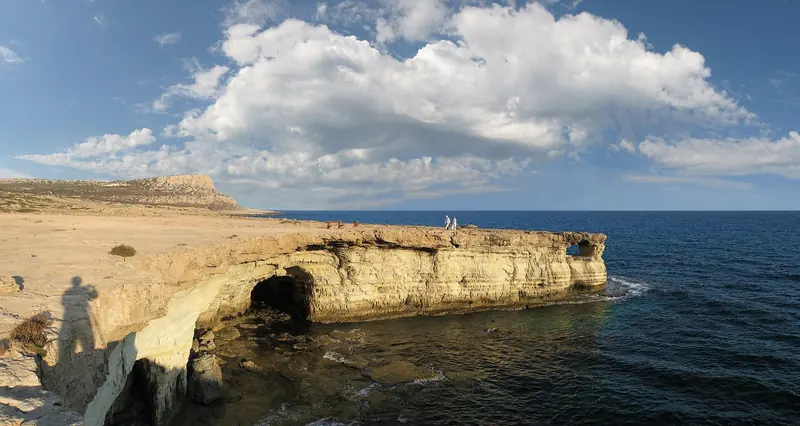
A storm hit the Cape Greco coast near Ayia Napa, Cyprus, at around 14:30 on Saturday 29 August 2026, and Cyprus' Joint Rescue Coordination Centre activated its national search and rescue plan, Nearchos, for three boats in danger; two were destroyed outright after being driven onto the rocks, and six people were rescued from the water.
The JRCC's response covered the anchorage off Cape Greco, on Cyprus's southeastern tip near Ayia Napa, where sudden, severe local weather turned an ordinary anchorage into a lee shore within a short window. Two of the three boats present were driven onto the rocks and destroyed: Perla Bianca, a Versilcraft Super Challenger, and Petsas I, a 30.5-metre Camper and Nicholsons classic. A third, the 24.37-metre Fairline 78 Squadron Phantom, was damaged but survived and left the area the following day.
Rescue crews recovered six people from the water during the operation, two of them by helicopter, according to Cyprus' JRCC. Local boats and police were first on scene before the coordinated search and rescue effort took over, and by the time it ended, five of the six people rescued were alive; the sixth, found trapped in wreckage and unconscious, did not survive the trip to hospital.
Who died in the Cape Greco storm, and how?
Dimis Mavropoulos, a 76-year-old Limassol businessman, died after staying aboard his own yacht, Perla Bianca, as the storm drove her onto the rocks, while his partner and daughter jumped clear and were airlifted to hospital.
Mavropoulos, his partner and his daughter were aboard Perla Bianca when the boat was driven onto the rocks by the storm's tall waves. The two women jumped into the water and were rescued by helicopter and taken to hospital for treatment; Mavropoulos was found by divers, trapped in the boat's wreckage, and was airlifted to hospital where he was pronounced dead. Cyprus Mail reported that he had told others the previous week he intended to stay on the water for another week despite warnings that the weather was worsening.
Born in Cyprus in 1949, Mavropoulos built his business career on the export of Cypriot agricultural produce to Britain before moving into real estate and investment. He was also a serious amateur racer, having competed since the late 1960s: he won the 1986 Cyprus Rally Championship and finished second that same year in the Rothmans International Cyprus Rally. In 2014 he founded the Cyprus Historic and Classic Motor Museum in Limassol to house his own car collection, an institution that has since grown into a working home for preserving and promoting the island's motoring history, and the same year he served as king of the Limassol carnival.
What was the Petsas I, and why does its loss matter?
Petsas I was a 30.5-metre classic motor yacht built in 1938 by Camper and Nicholsons, originally launched as Donna Bella to a design by Charles E. Nicholson and used as a spy vessel during the Second World War, and she was destroyed on the rocks the same afternoon Mavropoulos died, in a separate part of the same anchorage.
Petsas I's loss is being investigated separately from Mavropoulos's death, by Cyprus' Marine Accident and Incident Investigation Committee, as a non-criminal maritime-safety inquiry into how an 88-year-old vessel with that kind of documented history came to be destroyed in a single afternoon. Police and the Deputy Ministry of Shipping are running the parallel inquiry into Mavropoulos's death and the loss of Perla Bianca.
A yacht with Petsas I's specific documented provenance, a named 1938 build, a named original designer, and a Second World War service record, is not a routine loss: replacing the hull is possible, replacing that history is not. Neither investigation had reported findings as of this writing, and by Monday 31 August investigators had taken statements from four of the operation's survivors.
Could this storm have been anticipated, and was anyone required to leave?
The Cyprus Department of Meteorology's own bulletin had warned that the sea would be dangerous, with waves reaching 2.5 metres in eastern areas, hours before the boats were wrecked, and Cyprus has no equivalent to the departure restrictions Greece imposes on vessels during forecast severe weather.
Andreas Chrysanthou of the Cyprus Department of Meteorology confirmed the morning's sea bulletin had already flagged dangerous conditions for the eastern coast, with waves forecast to 2.5 metres, before the storm intensified further through the afternoon. Cyprus, unlike Greece, has no formal system of port or anchorage departure restrictions tied to a severe-weather forecast: Greek port authorities can and regularly do ground the small-craft fleet under a formal advisory once forecast conditions cross a stated threshold, a tool investigators say Cyprus simply does not have, which left the decision to leave, or to stay and ride it out, entirely with each boat's owner or master.
Dr Antonis Stylianou, a maritime law expert, said publicly that authorities should not need a tragedy to identify a regulatory gap that is already known. The Limassol Chamber's president, addressing Mavropoulos's death specifically, said he had felt he could cope with the conditions based on past experience, adding that the sea is unforgiving and demands respect. For any owner who keeps a yacht in the eastern Mediterranean through the shoulder-season storm window, both Petsas I's fate and Mavropoulos's decision to stay aboard are the same lesson from two different angles: a forecast is a warning, not a formality, and nothing currently obliges anyone in Cyprus waters to act on one.
What should a yacht owner take from the Cape Greco storm?
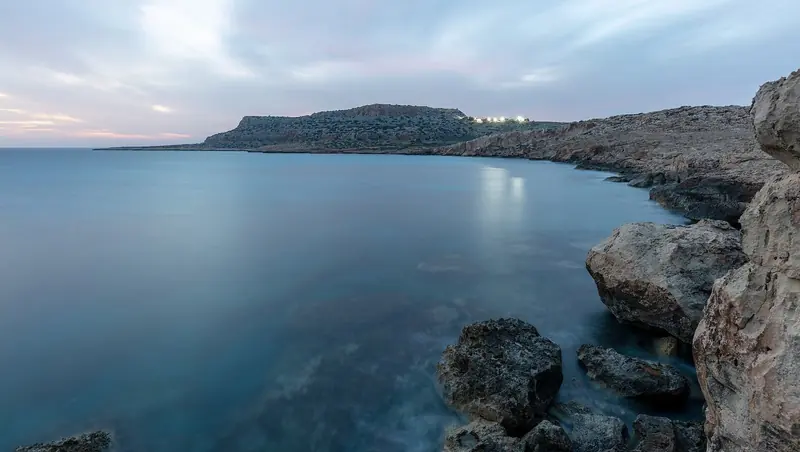
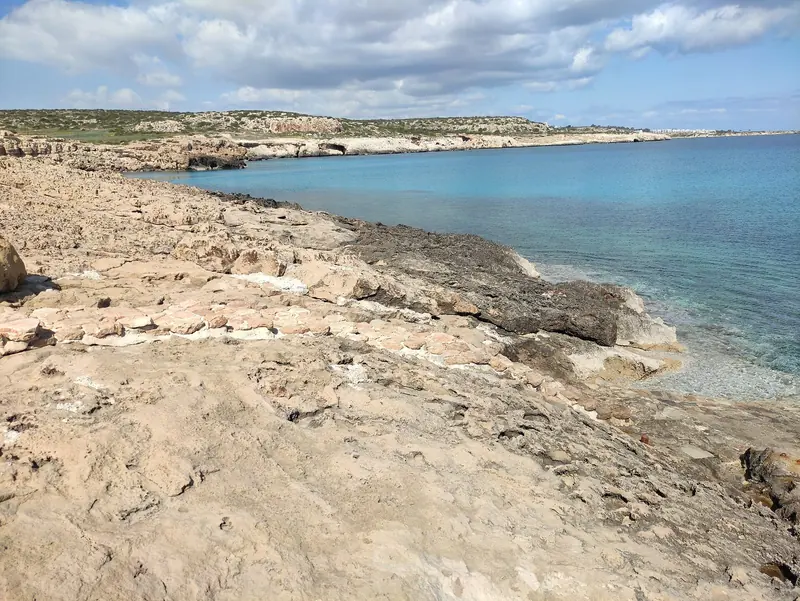
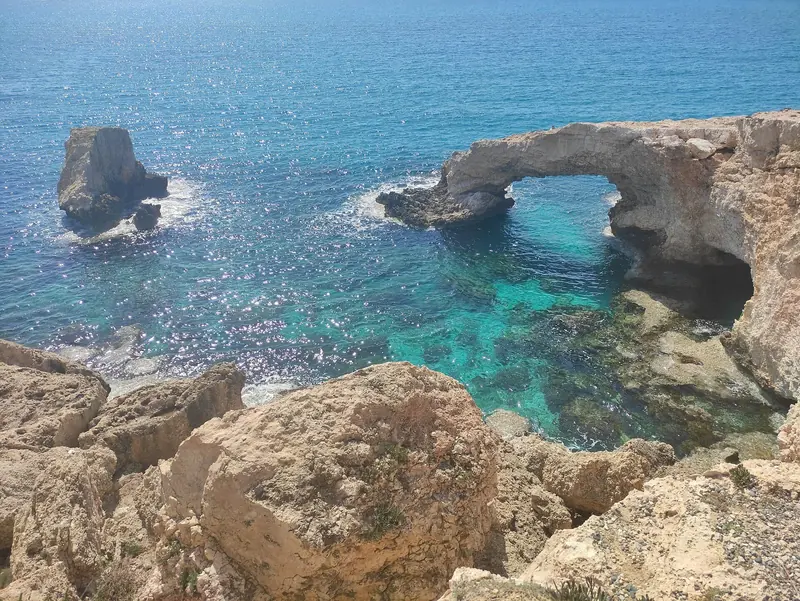
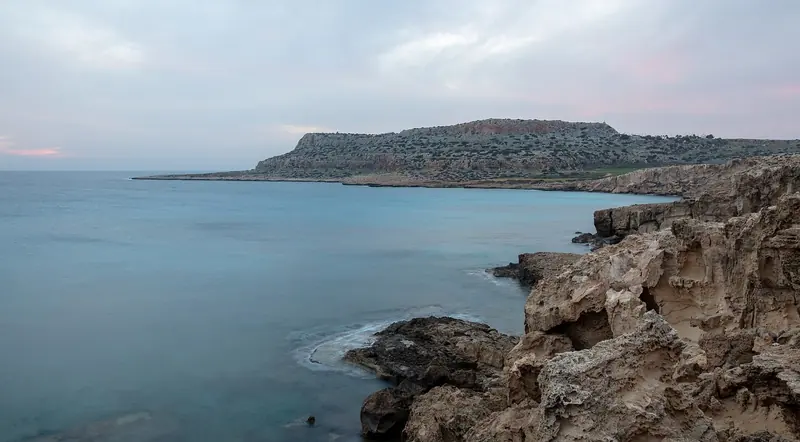
Cape Greco is an open, unprotected anchorage on Cyprus's exposed southeastern tip, exactly the kind of spot that turns into a lee shore the moment wind and sea swing onto it, and with no departure rule in force, the decision to stay through a forecast storm rests entirely on an individual owner's or master's own judgement and insurance cover.
The anchorage where all three boats were lost sits fully open to the sea on Cyprus's southeastern corner, offering little natural shelter once wind and swell turn onto the coast, which is exactly the geography that converts a routine forecast into a lee-shore emergency within hours rather than days. None of the reporting on this storm names a wind shift or a dragging anchor as the specific mechanical cause of either wreck, and neither investigation has published a finding, so the precise sequence that put Perla Bianca and Petsas I onto the rocks, rather than riding it out at anchor, remains open.
What is already clear is the economics an owner is left to weigh alone: with no rule compelling a yacht to leave an anchorage ahead of a forecast storm, and no insurance status published for either lost yacht, a total loss like this one falls entirely on whatever cover, or lack of it, the owner arranged in advance. For a yacht with Petsas I's documented history, that cover would need to account for a value no simple hull-and-machinery policy captures; for any owner keeping a boat in an open eastern Mediterranean anchorage through the shoulder season, the same forecast bulletin that Cyprus' own Met Office issued that morning is the only warning that will ever come before the decision has to be made.
What is good, and what to watch
Strong points
- The rescue operation saved five of six peopleTwo women were airlifted to hospital within the same operation that recovered Mavropoulos, and Phantom's crew got clear before she was seriously damaged.
- Two separate investigations opened within daysA criminal-adjacent inquiry into the death and a non-criminal maritime-safety inquiry into Petsas I are both underway rather than one folded review.
- A named maritime law expert is already pushing for a fixDr Antonis Stylianou called the regulatory gap a known deficiency, not a new discovery, which raises the odds of an actual rule change rather than a one-off statement.
- What was lost is precisely documentedPetsas I's build year, designer and wartime service are all on record, so the loss is measurable rather than vague.
What to watch
- The forecast existed and nobody was required to act on itThe Met Office's own bulletin flagged dangerous seas that morning, and Cyprus has no departure-restriction rule comparable to Greece's to force a decision.
- No findings yet from either investigationAs of this writing, no cause, no fault and no rule change has followed either inquiry.
- The anchoring decisions themselves are unexplainedReports describe both destroyed yachts as driven onto rocks from what were anchored positions, without saying why either stayed in an exposed spot as the forecast worsened.
- No insurance information is publicNeither Perla Bianca's nor Petsas I's insurance status has been reported, so what a total loss like this actually costs an owner is not known here.
Practical detail
| Where and when | Cape Greco, off Ayia Napa, Cyprus; storm hit around 14:30 on Saturday 29 August 2026. |
|---|---|
| The three boats | Perla Bianca (Versilcraft Super Challenger, destroyed), Petsas I (30.5m Camper and Nicholsons, built 1938, destroyed), Phantom (24.37m Fairline 78 Squadron, damaged, survived). |
| The rescue | Cyprus JRCC activated national plan Nearchos; six people recovered from the water, two by helicopter. |
| The fatality | Dimis Mavropoulos, 76, Limassol businessman, 1986 Cyprus Rally champion, founder of the Cyprus Historic and Classic Motor Museum; died after staying aboard Perla Bianca to try to save her. |
| The forecast | Cyprus Department of Meteorology's morning bulletin had warned of dangerous seas and waves to 2.5m in eastern areas, ahead of the storm. |
| The investigations | Police and the Deputy Ministry of Shipping (Mavropoulos's death and Perla Bianca); the Marine Accident and Incident Investigation Committee, a non-criminal inquiry (Petsas I). |
| The regulatory gap | Cyprus has no Greek-style rule restricting departures from anchorages ahead of forecast severe weather. |
| What is not published | Either investigation's findings, the insurance status of Perla Bianca or Petsas I, and official wind or wave readings at the anchorage itself, only the morning's forecast bulletin. |
Questions this story answers
What happened?
A storm drove three yachts onto the rocks off Cape Greco, Cyprus, on 29 August 2026, destroying two of them and killing Dimis Mavropoulos, the 76-year-old Limassol businessman, 1986 Cyprus Rally champion and founder of the Cyprus Historic and Classic Motor Museum, who stayed aboard his own yacht, Perla Bianca, to try to save her from the rocks. For any owner who moors in an exposed Mediterranean anchorage through shoulder-season storms, a 1938 Camper and Nicholsons classic wrecked beside him is a hard lesson in what an ignored forecast actually costs.
What is good about it?
The rescue operation saved five of six people. Two women were airlifted to hospital within the same operation that recovered Mavropoulos, and Phantom's crew got clear before she was seriously damaged.
What should an owner or buyer watch?
The forecast existed and nobody was required to act on it. The Met Office's own bulletin flagged dangerous seas that morning, and Cyprus has no departure-restriction rule comparable to Greece's to force a decision.
Who reported this?
Cyprus Mail, GreekReporter.com, Marine Industry News, Cyprus Joint Rescue Coordination Centre.
We do this for everyone who loves this world. The people who have spent their lives in it, and the people just discovering it. Yotters exists so that what we learn belongs to all of them.
Nobody pays us for this. No ads, no sponsors, nothing for sale. We just believe the world is a little better when knowledge is shared instead of kept.
If it gave you something today, tell us to keep going. Follow us, leave a like, or write a positive comment. We read every one, and they are what keeps us going.