ARES Yachts' first superyacht Simena asks USD 45m after one season
A patrol-boat yard's first superyacht
Ares Shipyard was founded in 2006 by the Kalafatoglu family on Turkey's Antalya Free Zone coast, and it built its reputation on military and commercial tonnage, not yachts. The company has delivered more than 230 vessels to over fifteen countries, working from an enclosed, air-conditioned production hall of roughly 40,000 square metres with four hangars and its own furniture factory, and a declared capacity to build up to 90 metres. That is an unusual pedigree for a superyacht brand: most new entrants arrive from design studios or from a family cruising background, not from a naval and commercial production line.
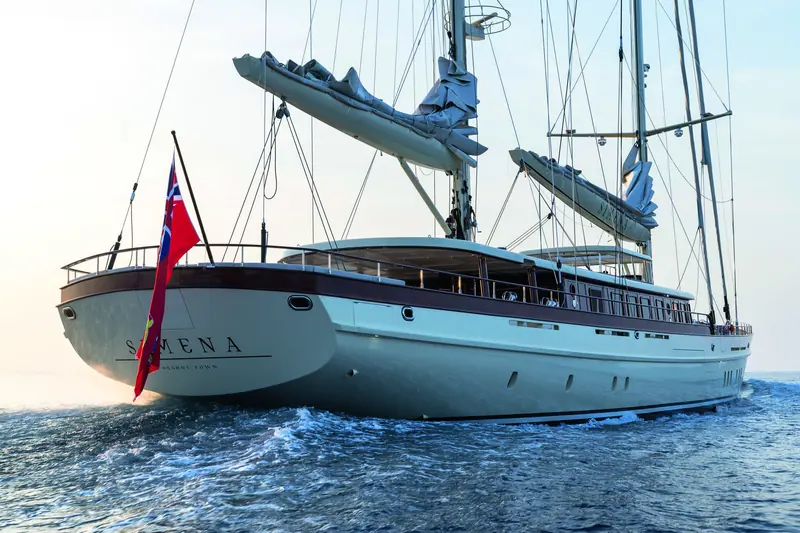
The company unveiled Ares Yachts, its superyacht brand, at the Monaco Yacht Show in 2023, and Simena is the flagship that brand needed to be taken seriously. Northrop and Johnson was appointed exclusive sales broker in April 2024, while the yacht was still in outfitting, with delivery then expected in early 2025. She launched in the summer of 2025, made her Monaco debut that September, and by the middle of 2026 had completed her first full Mediterranean cruising season. For a yard used to naval contracts and delivery specifications, building and then actually operating a yacht that owners judge on comfort, sound and finish is a different test, and Simena is the only data point Ares has.
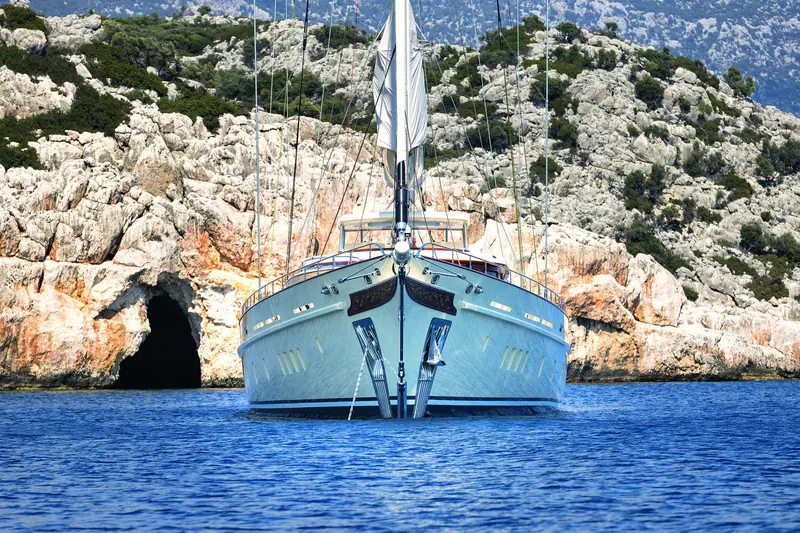
A hybrid drivetrain that has now done a season's work
Simena's propulsion, as specified by the yard, pairs a single diesel engine rated at 882 kW with a 220 kW electric motor, run through controllable-pitch propellers across six operating modes. She is classed RINA Charter Class C. The electric motor alone gives silent running to 6 knots, the diesel-electric combination gives a cruising speed of 11 knots and a top speed of 15 knots, and the yard quotes a 4,000 nautical mile range at the 11-knot cruise. That is a genuinely different proposition from a conventional sailing yacht's generator-and-genset setup: it is designed to let an owner sit at anchor or motor through a calm on stored and generated power rather than running a full diesel plant continuously.
What has not been independently confirmed is exactly how much of that power comes from the propeller acting as a generator once she is sailing above roughly 7 knots, a capability Ares and Boat International both describe but which no classification society figure has been published to verify. Boat International's report on the build also states Simena carries no dedicated battery bank, which if accurate means the electric running above depends on the generators and shaft generation rather than stored charge, a materially different engineering choice from a yacht built around a battery pack. A buyer should ask Ares directly for the class society's approved technical file rather than rely on press specifications, because the electric motor and generator figures given in different published accounts of this yacht do not fully agree with each other.
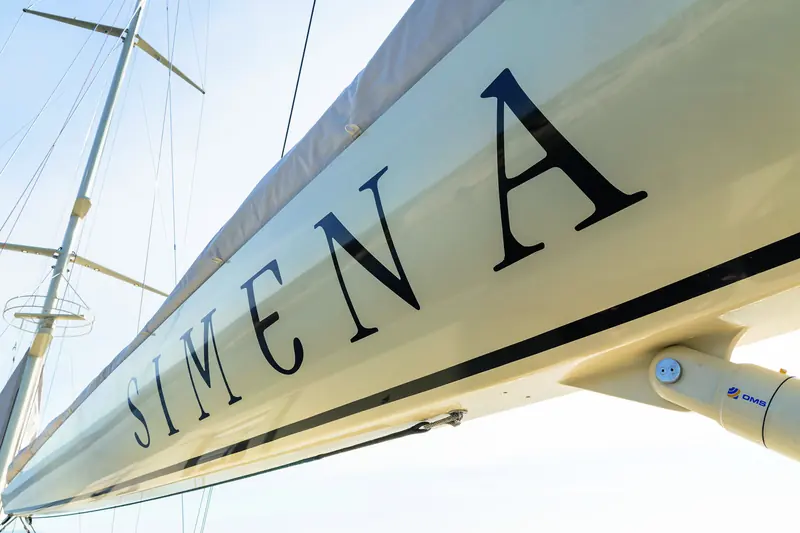
What her first season actually showed
The number that matters most is not a sea-trial peak but a season total: Simena logged roughly 3,250 nautical miles in the Mediterranean in her first full year of cruising, under her delivery captain, Paolo Martinuzzi. Boat International's account of that season records a sea-trial run of 16 knots in 20 knots of true wind at a 100-degree apparent angle, and cruising speeds of 8.5 to 9.5 knots in 13 to 16 knots of breeze off Saint-Tropez. Those are ordinary, checkable numbers for a 62-metre ketch rather than marketing peaks, and they matter because they were logged on charter grounds an owner would actually sail, not on a delivery passage or a flat-water trial day.
Ares Yachts has also secured a 4-star rating from the SEA Index, an environmental-impact scoring system independently verified by Lloyd's Register rather than self-declared by the yard. That distinction is the whole point of the certification: a rating checked by a classification society carries weight with charter brokers, some marinas and increasingly with flag and port authorities tightening emissions rules across the Mediterranean, in a way a yard's own efficiency claims do not. It does not by itself prove the hybrid system outperforms a conventional ketch of the same size on fuel burned per mile, a figure neither Ares nor Lloyd's Register has published, but it is independent evidence rather than a brochure line.
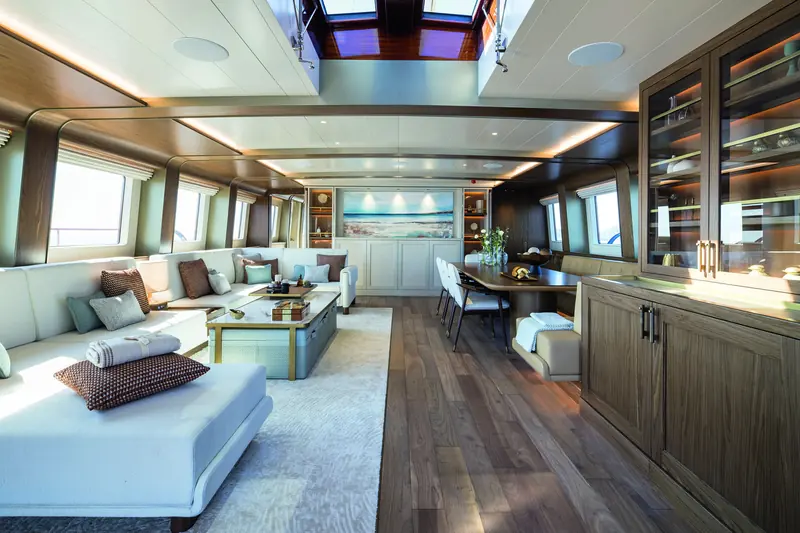
What USD 45 million buys, and what it does not yet prove
The asking price has stood at USD 45 million, about GBP 33.4 million, since Northrop and Johnson's mandate began in 2024, before the yacht existed as anything more than an outfitting hull. It has not moved since delivery, and there is no recorded sale yet to show whether the market treats a proven season as worth a premium, a discount, or nothing at all against that figure. For comparison, an owner shopping 60-metre-plus sailing yachts is mostly choosing between long-established names such as Perini Navi-built tonnage or Royal Huisman, where resale, parts support and a multi-hull track record are already priced in; Simena is the only Ares hull on the water, so none of that history exists to reassure a second owner.
That absence of history cuts both ways. A buyer takes on the risk of being an early adopter of a yard's engineering choices, with no sister ship's five-year maintenance record to check against. But the same buyer gets a yacht with a full season of real Mediterranean sailing behind her rather than a render or a static launch photograph, an independently verified environmental rating, and a shipyard with two decades of production discipline behind its first attempt at this market, which is a different risk profile from a true first-time boatbuilder. The honest reading is that Simena is being sold on operating evidence rather than pedigree, and USD 45 million is the price of deciding that evidence is enough.
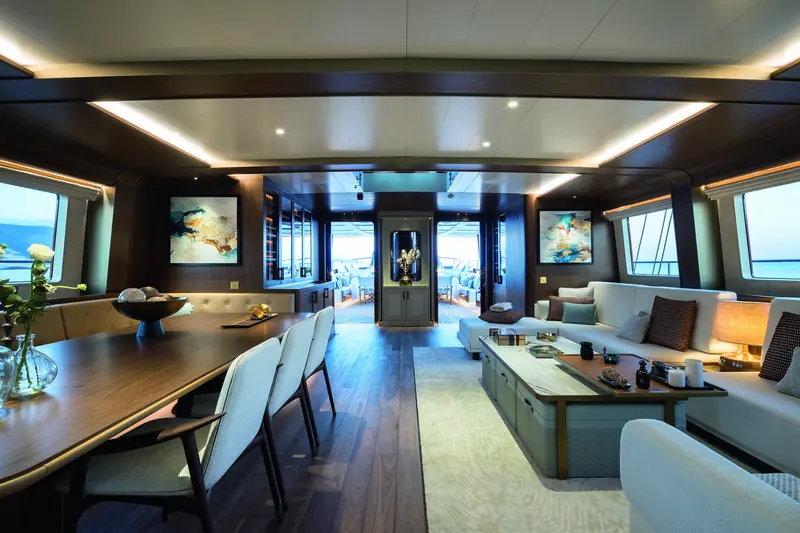
The build behind the numbers
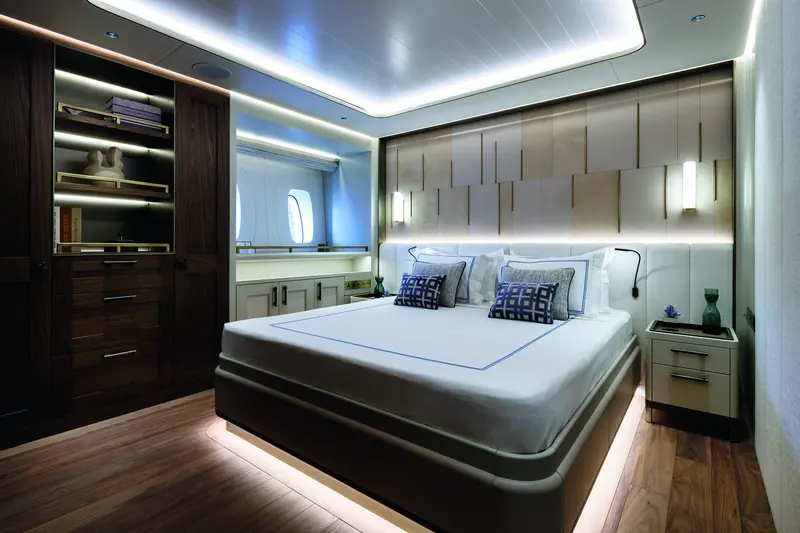
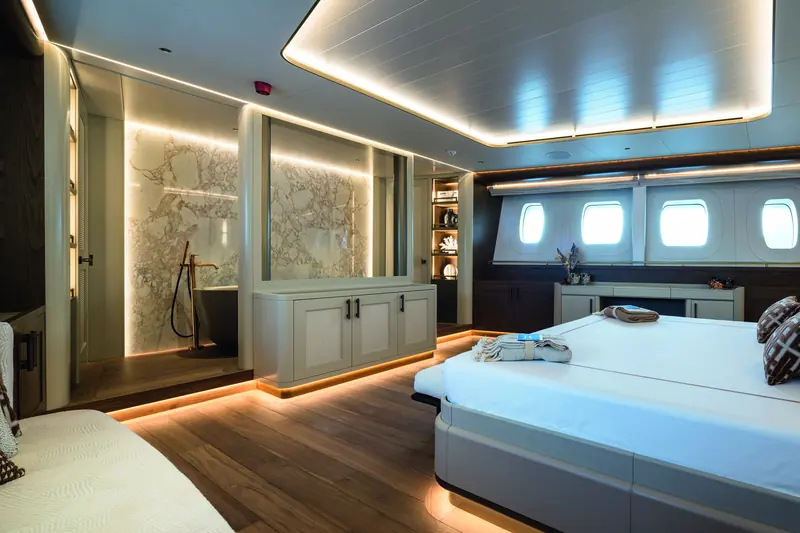
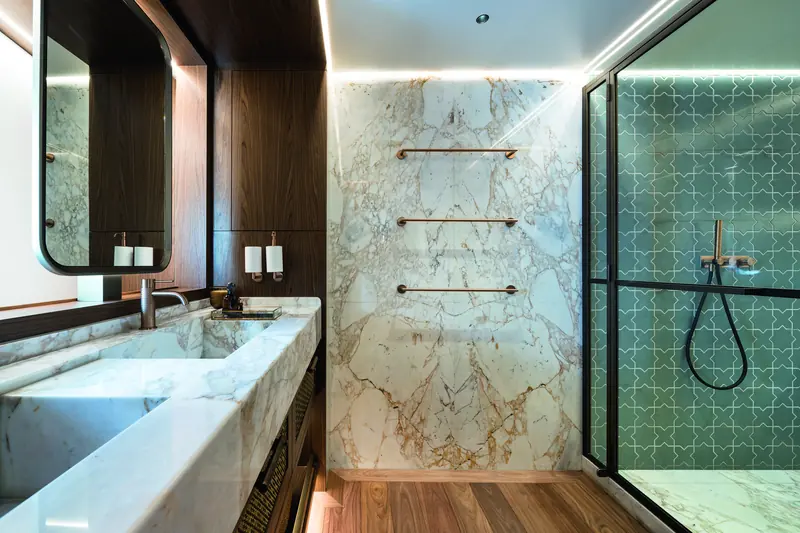
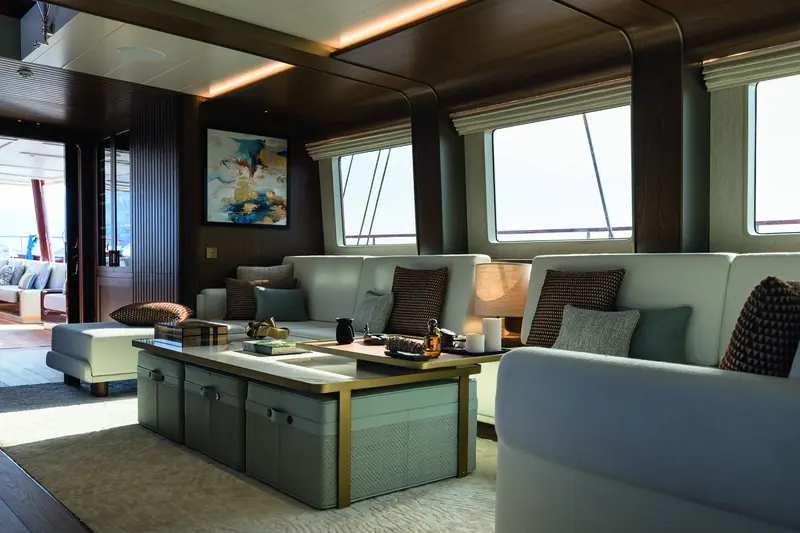
Naval architecture and exterior styling are by Taka Yacht Design, led by Tanju Kalaycioglu, with the interior handled by Design Unlimited under associate designer John Everett; masts and booms come from Dokar and the sail inventory from Doyle Sails. The ketch rig carries a mainmast of roughly 59 metres and a mizzen of about 49 metres, with a total working sail area in the region of 1,400 square metres, and the hull is steel with a carbon-epoxy superstructure to control weight aloft. Accommodation runs to 12 guests across 6 cabins with quarters for 9 crew, sized for private ownership rather than a charter-heavy program.
For anyone inspecting her now rather than reading the spec sheet, the practical checks after a first season are ordinary ones: rig tension and standing rigging wear after roughly a year under sail, generator hours against the manufacturer's service intervals, and the condition of the Doyle inventory after a full Mediterranean summer of use. None of that has been reported publicly, because Simena has not yet changed hands, and a survey rather than a press feature is where those answers actually live.
What owners and crew report
Helm performance holds up in real conditions, not just on paper
Sea trials reached 16 knots in 20 knots of true wind at a 100-degree angle; cruising off Saint-Tropez ran 8.5 to 9.5 knots in 13 to 16 knots of breeze
BOAT International (Captain Paolo Martinuzzi, July 2026)The powertrain was a deliberate weight and complexity trade-off
Ares chose a single diesel plus one electric motor over a larger battery installation to hold down weight aloft and mechanical complexity while still allowing silent running to 6 knots
BOAT International (Sahinkaya Orhun, Ares Yachts, July 2026)The interior was built for an owner, not a charter roster
Design Unlimited detailed the six-cabin interior to a private-ownership standard rather than the harder-wearing specification typical of a charter-focused build
BOAT International (John Everett, Design Unlimited, July 2026)
What is good, and what to watch
Strong points
- A season of real mileage, not a renderAbout 3,250nm logged in her first Mediterranean season backs the hybrid and speed claims with actual sailing time on real charter grounds, not a single delivery passage
- An independently checked environmental ratingThe 4-star SEA Index score is verified by Lloyd's Register, not self-certified by the yard, which carries more weight with brokers and increasingly with Mediterranean port authorities
- A shipyard with existing production disciplineAres Shipyard has delivered over 230 vessels since 2006; this is a new yacht type for an established builder, not a startup building its first hull of any kind
What to watch
- Still hull number oneNo sister ship exists yet to check resale pattern, parts support or a multi-year maintenance record against
- Published powertrain numbers do not fully agreeThe yard's own spec sheet and other published accounts of Simena give different electric motor and generator figures; a buyer should request the class society's approved technical file rather than rely on press specifications
- No market test of the price yetThe USD 45m ask has stood since before delivery in 2024 and has not moved since; without a completed sale there is no evidence the market agrees with it
Practical detail
| Asking price | USD 45 million (GBP 33.4 million), Northrop and Johnson exclusive, unchanged since the April 2024 broker mandate |
|---|---|
| Builder | Ares Yachts, Antalya Free Zone, Turkey - the superyacht brand of Ares Shipyard, founded 2006, 230+ military and commercial vessels delivered before this, first superyacht hull |
| Propulsion | One 882 kW diesel plus a 220 kW electric motor, six operating modes, RINA Charter Class C, silent electric running to 6 knots, 15-knot top speed, 11-knot cruise, 4,000nm range at cruise |
| Rig | Ketch, roughly 59m mainmast and 49m mizzen, about 1,400 square metres of sail (Dokar spars, Doyle Sails) |
| Accommodation | 12 guests in 6 cabins, 9 crew |
| What is not independently confirmed | Whether Simena carries a dedicated battery bank, the exact split between generator and shaft-generation power under sail, and any independent fuel-burn figure against a conventional ketch of the same size - none of this has been published by a classification society |
Questions this story answers
What happened?
Ares Shipyard built patrol boats and workboats for fifteen countries before it built a superyacht, and Simena, its 62-metre hybrid ketch, has now logged a full Mediterranean season and sits on the market through Northrop and Johnson at USD 45 million. Her hybrid drivetrain and Lloyd's Register-checked environmental rating are no longer claims on a spec sheet; a season of sailing has tested them. For a buyer weighing a debut yard's flagship against an established name, the question is whether one proven hull is evidence enough, and what the asking price says about how the market has judged that so far.
What is good about it?
A season of real mileage, not a render. About 3,250nm logged in her first Mediterranean season backs the hybrid and speed claims with actual sailing time on real charter grounds, not a single delivery passage
What should an owner or buyer watch?
Still hull number one. No sister ship exists yet to check resale pattern, parts support or a multi-year maintenance record against
What do owners and crew report?
Sea trials reached 16 knots in 20 knots of true wind at a 100-degree angle; cruising off Saint-Tropez ran 8.5 to 9.5 knots in 13 to 16 knots of breeze (BOAT International (Captain Paolo Martinuzzi, July 2026))
Who reported this?
BOAT International, Megayacht News, Northrop and Johnson, Ares Yachts.
We do this for everyone who loves this world. The people who have spent their lives in it, and the people just discovering it. Yotters exists so that what we learn belongs to all of them.
Nobody pays us for this. No ads, no sponsors, nothing for sale. We just believe the world is a little better when knowledge is shared instead of kept.
If it gave you something today, tell us to keep going. Follow us, leave a like, or write a positive comment. We read every one, and they are what keeps us going.