Azimut's Fly 70 Cuts Generator Noise 5dB Before Its Cannes Debut
What is the Azimut Fly 70, and why is it premiering at Cannes 2026?
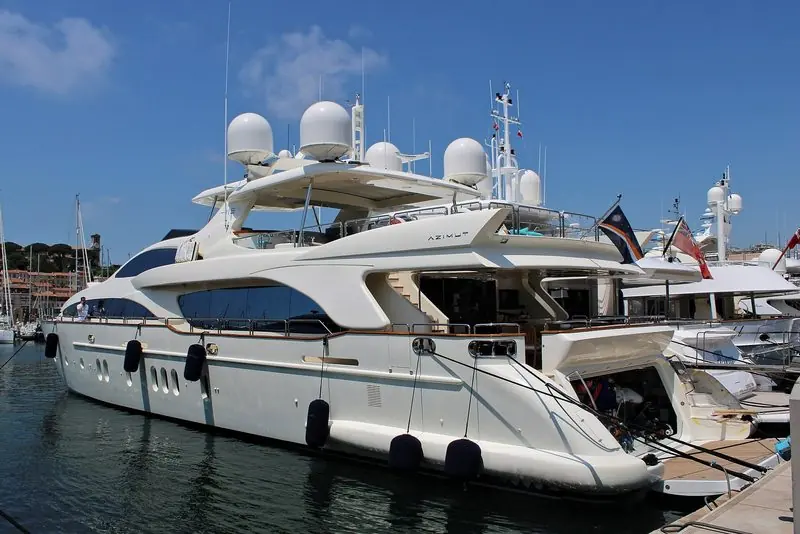
The Fly 70 is Azimut's new 21.47-metre flybridge flagship in the 70-foot bracket, built around carbon-fibre construction and a generator emissions system the yard says is new to this size of boat, and it will make its world premiere at the Cannes Yachting Festival running 8 to 13 September 2026.
Azimut confirmed the Fly 70's specification and Cannes debut on its own newsroom on 4 September 2026, four days before the show opens. The boat runs 21.47 metres (70 feet 5 inches) overall on a 5.46-metre (17-foot 1-inch) beam, with accommodation for four cabins plus one crew cabin. Twin Volvo Penta IPS 1350 pod drives push it to a claimed top speed of 31 knots, a figure independently reported by yachting outlets covering the same Cannes premiere. IPS is a forward-facing, steerable pod system rather than a shaft-and-strut arrangement, and its practical selling point for an owner has nothing to do with top speed: it lets the boat be driven and docked by joystick, without a bow thruster doing most of the work, which matters far more on a daily basis than the difference between 29 and 31 knots.
The hull and superstructure use what Azimut calls Carbon Tech Generation, extensive carbon-fibre application intended to shift weight out of the structure and put it back into interior volume without raising the boat's centre of gravity. That trade is the real point of building a 70-footer in carbon rather than pure GRP: more usable space at the same length and the same stability envelope, which is what an owner actually buys length for in the first place.
What does Azimut's Silent Technology Pure actually do at anchor?
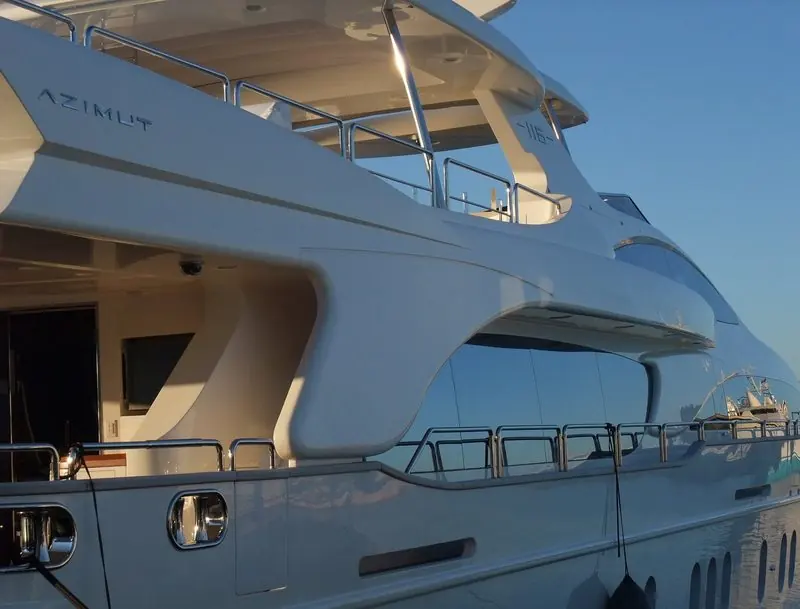
Azimut's new particulate filter and silencer system, fitted to the generator line and branded Silent Technology Pure, cuts particulate emissions by 95 percent and generator noise by more than 5 dBA, a change aimed squarely at the hours a yacht spends at anchor rather than underway.
Most performance claims on a new flybridge model are about the engines that move the boat. This one is about the engine that does not: the generator that keeps air conditioning, galley equipment and house power running once the main engines are off and the anchor is down. Azimut says the filter and silencer combination removes 95 percent of particulate emissions and cuts audible generator noise by more than 5 dBA, a reduction large enough to register to a person sitting on the aft deck rather than only on a sound meter.
The commercial logic is straightforward even if the yard has not framed it that way. Marinas and anchorages across the Mediterranean have been tightening at-berth emissions and noise expectations for several seasons, and a generator that runs quieter and cleaner at anchor is a genuine point of difference for an owner comparing flybridge yachts in the same bracket, most of which still run stock generator installations with no comparable filtration.
What layout choices does an owner make on the Fly 70's cockpit?
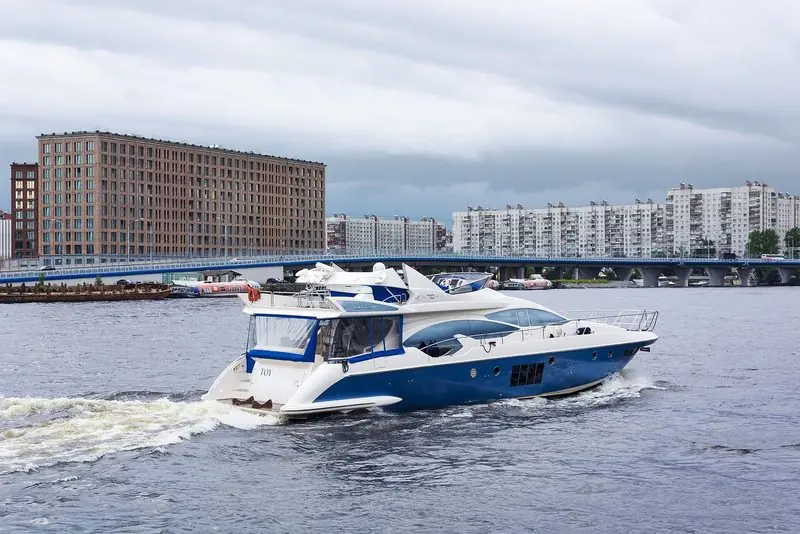
Azimut offers the Fly 70 with two distinct aft-deck configurations built on the same hull: an Extended Terrace cockpit with an eight-seat dining table behind a transparent aft parapet, or a Beach Cockpit with a synchronised transom that drops to create a lowered, water-level sunpad.
This is the part of the brief an owner actually signs off on, because it changes how the boat is used rather than how it is built. The Extended Terrace configuration keeps the aft deck as formal entertaining space, with the transparent parapet preserving sightlines to the water while still enclosing an eight-person dining area. The Beach Cockpit trades that formality for a synchronised opening transom and a bench that lowers to sit at the waterline, turning the same square footage into a swim platform extension for a family that anchors more than it dines.
Azimut has not published which configuration will be on the boat displayed at Jetee Sud in Cannes, and the two options are not both fitted to a single hull; an owner chooses one at order. That is a genuine trade rather than a marketing flourish, and it is the kind of decision this desk expects buyers to weigh against how they actually use a boat rather than how a brochure photographs it.

What does the flybridge and interior of the Azimut Fly 70 look like?
The flybridge runs a 360-degree open plan with a forward sundeck, a central C-shaped dinette and wet bar, and an aft terrace under a fibreglass hardtop, while the interior, credited to designer Fabio Fantolino alongside exterior designer Alberto Mancini, leans on stone and suede rather than gloss.
Alberto Mancini penned the exterior lines, which Azimut describes as sporty but built for family use rather than outright performance styling. Fabio Fantolino handled the interior, which Azimut characterises as refined eclecticism: a main deck with dual counter-facing sofas set against panoramic glazing, finished in brown suede and custom carpeting, with a Green River marble coffee table and a Taj Mahal marble dining surface. Those material choices are Azimut's own description of the boat it is showing at Cannes, not yet an independent reviewer's account.
The flybridge itself is built for genuine open-air use rather than a token sundeck: forward sunpad, a C-shaped dinette with its own wet bar amidships, and a separate aft terrace, all under a hardtop whose vertical uprights are the one exterior styling detail Azimut is calling out ahead of the show. On a 70-footer, three distinct social zones across two decks is a meaningful use of the length, and it is the kind of layout that only works if the carbon-fibre weight saving described above actually holds up at sea.
What has Azimut not published yet, and what is the real trade-off on the Fly 70?
Azimut has not published a price, a cruising speed, or an independent sea trial for the Fly 70, and the honest trade is that its two headline advances, the carbon hull and the generator filtration, are both real but neither has been tested outside the yard's own claims.
Nobody outside Azimut has driven this boat yet. The 31-knot top speed comes from the yard and has been repeated by outlets covering the same press release, not measured independently; there is no published cruising speed, range, or fuel burn at the time of writing, and no price has been announced. That is normal for a boat four days from its own world premiere, but it means an owner deciding today is buying a specification sheet and a design brief, not a sea trial. The Fly 70 also sits inside a wider Azimut Fly range that already runs from smaller flybridge models up through the Grande line, so a buyer comparing it against a sistership two or three sizes down is really comparing how much of the carbon-and-filtration package they are willing to pay to move up a size bracket, not choosing between two unrelated boats.
The trade underneath the announcement is real. A carbon hull and a filtered, silenced generator both add cost to build, and Azimut has not said whether the Fly 70 carries a premium over a comparable GRP flybridge in the same length bracket from its own range or a rival's. What it buys in return is a boat that should run quieter at anchor than almost anything else in its class and free interior volume a heavier hull would not allow, if the yard's own numbers hold once independent trials start after Cannes.
What is good, and what to watch
Strong points
- Genuinely new at-anchor techA 95pc cut to particulate emissions and a 5dB+ noise reduction on the generator line addresses the hours a yacht is actually occupied at anchor, not just underway performance.
- Carbon construction buys real volumeAzimut's stated rationale, more interior space at the same length without raising the centre of gravity, is a legitimate use of carbon fibre rather than a marketing label.
- A real layout choice, not a cosmetic optionThe Extended Terrace and Beach Cockpit configurations serve genuinely different ownership styles, formal entertaining versus swim-at-anchor family use, on the same hull.
What to watch
- Every number is the yard's ownTop speed, emissions and noise cuts all come from Azimut's own release four days before the boat's public debut; no independent sea trial exists yet.
- No price and no cruising speed publishedAn owner cannot yet weigh the carbon-and-filtration premium against a comparable flybridge because Azimut has not said what the Fly 70 costs or how it performs at cruise, only at top speed.
- The noise fix only helps at anchorSilent Technology Pure addresses generator noise and emissions; it says nothing about underway noise or performance, which most buyers in this bracket weigh just as heavily.
Practical detail
| Length overall | 21.47m / 70'5" |
|---|---|
| Beam | 5.46m / 17'1" |
| Accommodation | 4 cabins plus 1 crew cabin |
| Engines | Twin Volvo Penta IPS 1350 |
| Top speed | 31 knots (yard-stated, not independently trialled) |
| Construction | Carbon Tech Generation (carbon-fibre hull and superstructure) |
| Generator emissions cut | 95pc reduction in particulate emissions (Azimut claim) |
| Generator noise cut | More than 5 dBA reduction (Azimut claim) |
| World premiere | Cannes Yachting Festival, 8-13 September 2026 |
| Not yet published | Price, cruising speed, range, and any independent sea trial |
Questions this story answers
What happened?
Azimut will unveil the Fly 70 as a world premiere at the Cannes Yachting Festival on 8 September, and the news is not the size but a particulate filter and silencer built into the generator line. For an owner who spends evenings at anchor, a claimed 95 percent cut to soot and a 5 dB drop in noise is the kind of spec that shows up in how the boat actually feels, not just on a data sheet.
What is good about it?
Genuinely new at-anchor tech. A 95pc cut to particulate emissions and a 5dB+ noise reduction on the generator line addresses the hours a yacht is actually occupied at anchor, not just underway performance.
What should an owner or buyer watch?
Every number is the yard's own. Top speed, emissions and noise cuts all come from Azimut's own release four days before the boat's public debut; no independent sea trial exists yet.
Who reported this?
Azimut Yachts (official newsroom, 4 September 2026), Skipper on Deck (Cannes 2026 new-launches coverage), ActuNautique (3 September 2026).
We do this for everyone who loves this world. The people who have spent their lives in it, and the people just discovering it. Yotters exists so that what we learn belongs to all of them.
Nobody pays us for this. No ads, no sponsors, nothing for sale. We just believe the world is a little better when knowledge is shared instead of kept.
If it gave you something today, tell us to keep going. Follow us, leave a like, or write a positive comment. We read every one, and they are what keeps us going.