Azimut's Largest-Ever Yacht Sells Seven Hulls Before Cannes
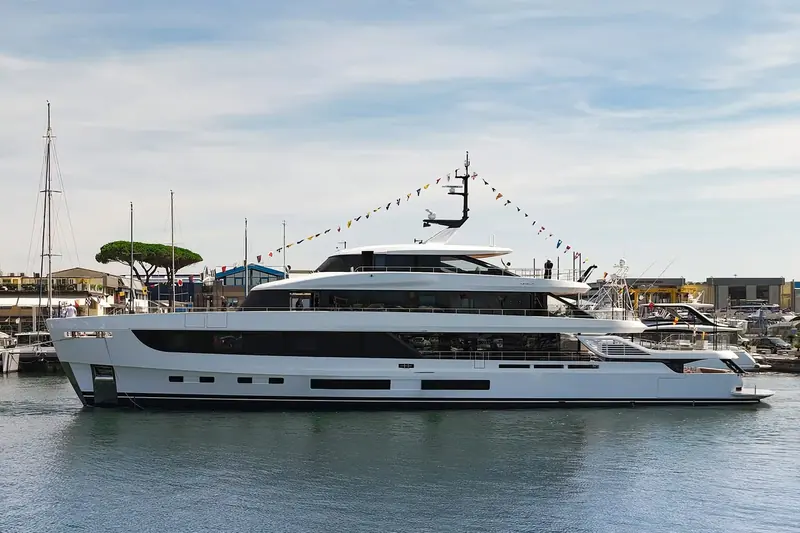
What is the Azimut Grande 44M and why does it matter that it is the flagship?
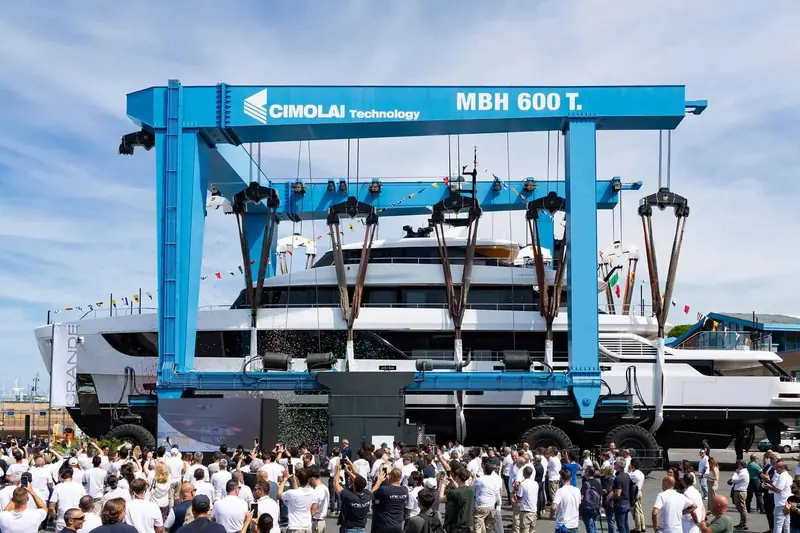
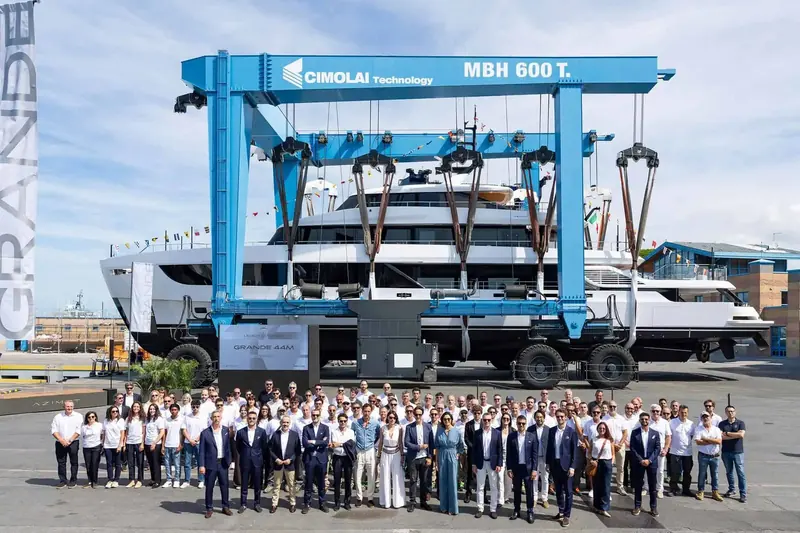
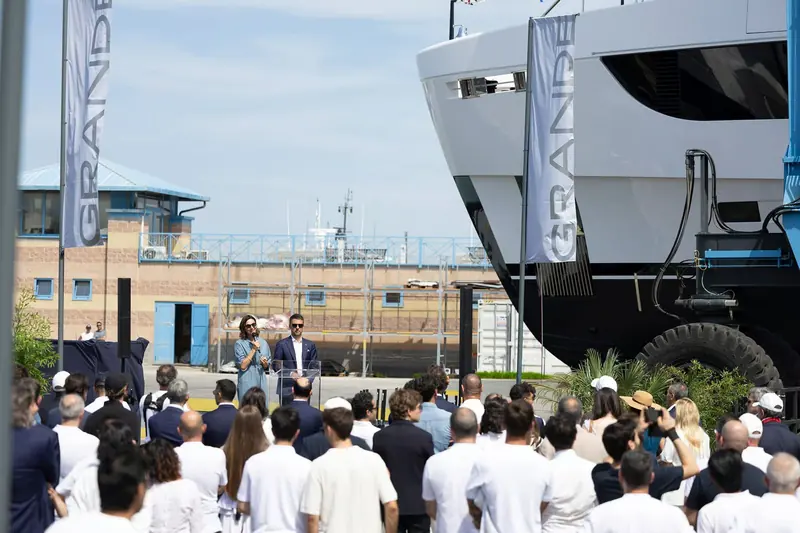
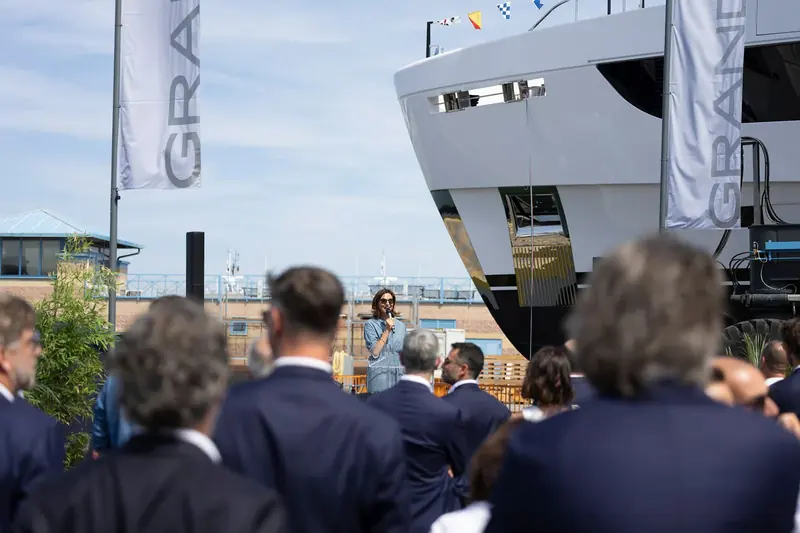
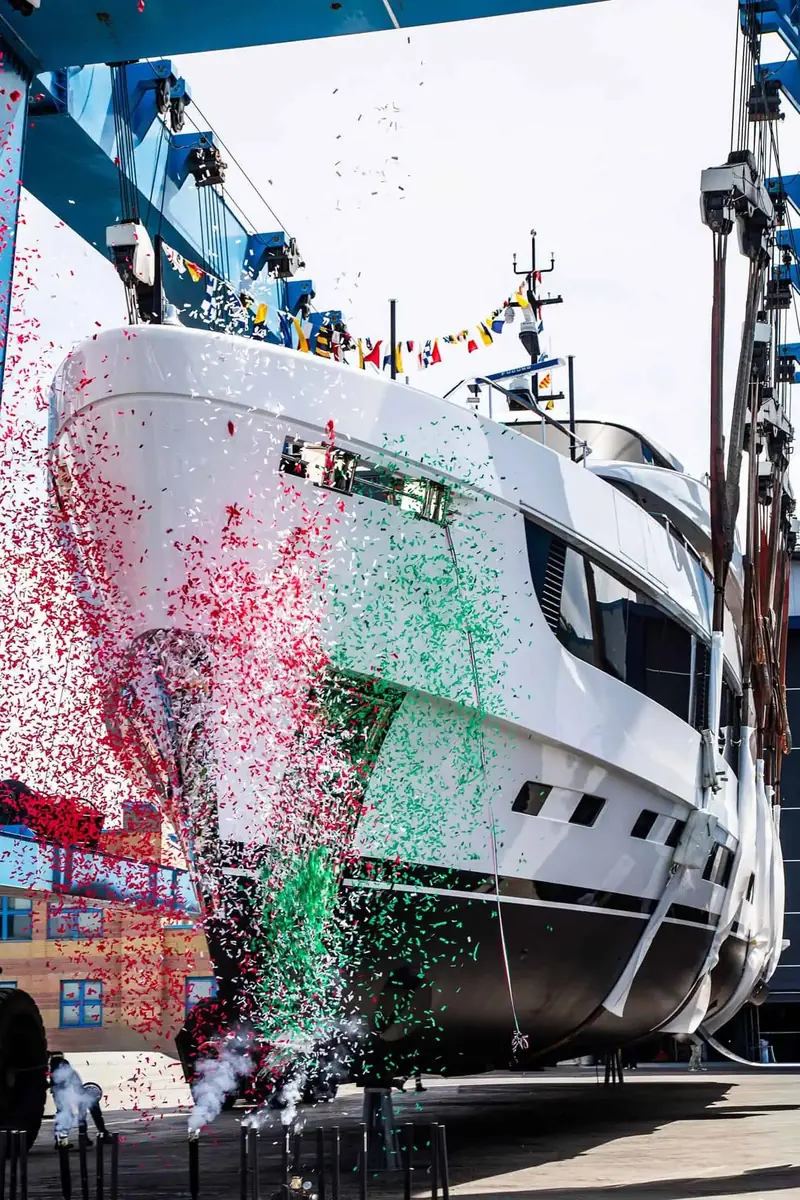
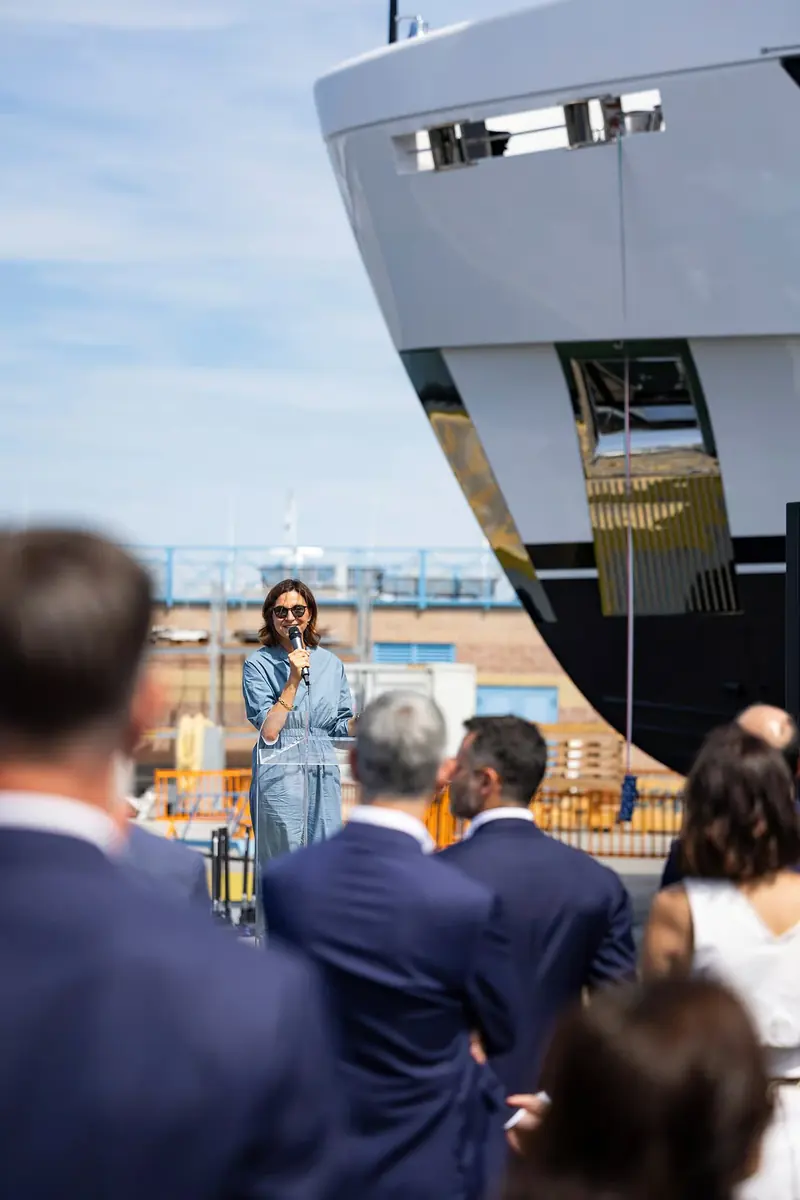
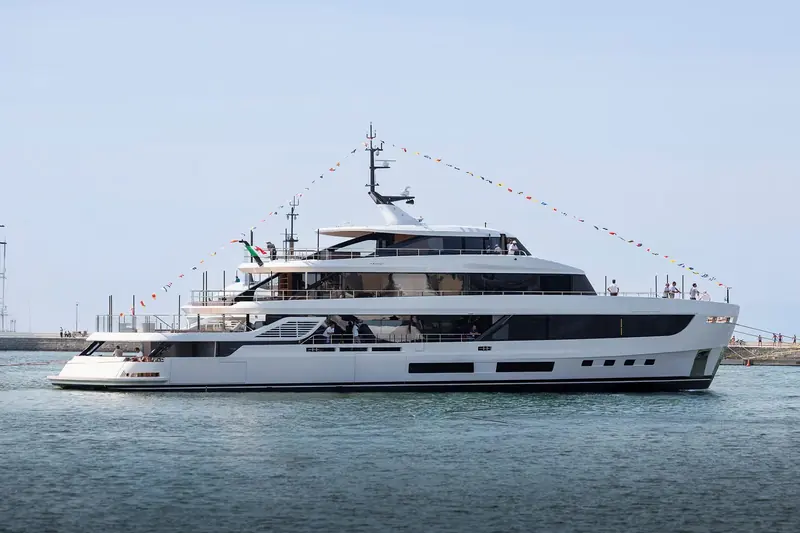
The Grande 44M is a 43.85-metre, 499 GT motor yacht that entered the water at Azimut's Viareggio yard on 9 July 2026, and it is the largest vessel the 55-year-old builder has ever put to sea under its own name.
Azimut has built past the 40-metre mark before with the Grande range, but the 44M sits above every earlier hull by both length and gross tonnage, and the yard is treating it as a statement of what its own R&D department can now do rather than another size variant. Seven hulls were sold to end clients before the boat had made a single public appearance, according to Azimut's own figures repeated by BOAT International and Pressmare - a pre-sell rate that tells a buyer the efficiency pitch below is landing with people who had only a naval architect's drawing to judge it by. She is booked for her public debut at the Cannes Yachting Festival, 8 to 13 September 2026, carrying the working name Shabby for her first owner.
Exterior lines are by Alberto Mancini, who has drawn several recent Azimut Grande models, with interior architecture by M2 Atelier - a split between two established, unrelated studios rather than the single-studio approach some smaller yards use, which is the more conventional arrangement at this size and generally buys a wider range of finish options rather than a single unified vision.
What does the Grande 44M's Dual Mode hull and Hull Vane foil actually do?
The Dual Mode hull pairs a fast-displacement forward section with a semi-planing aft section so the boat is efficient both loafing at low speed and pushing toward its 17-knot top end, and a carbon-fibre Hull Vane foil bolted under the stern trims the wake to cut drag at speed.
Most planing or semi-planing hulls are tuned for one speed range and burn more than they need to outside it - efficient at cruise but wasteful loitering into an anchorage, or the reverse. Azimut's R&D department, working with P.L. Ausonio Naval Architecture, designed the forward sections to behave like a displacement hull at low speed and the aft sections to plane as speed builds, which is the same logic explorer-style hulls use but applied to a yacht built to still do 17 knots. The Hull Vane is a separate, bought-in piece of engineering: a fixed foil under the transom, developed by the Dutch firm of the same name and already used on commercial and offshore-support vessels, that suppresses the stern wave a hull pushes up at speed and converts some of that wasted energy back into forward thrust.
Azimut built its Hull Vane in carbon fibre rather than the steel most commercial applications use, cutting it from roughly 1,500kg to 400kg - material choice that matters here because a foil hung off the stern is exactly the wrong place to be carrying dead weight on a yacht. The combined claim, repeated by both Azimut and Pressmare, is up to 30% lower CO2 emissions than a traditional hull of similar size; no outlet in this desk's research has published an independent test confirming that figure, so it stands as the yard's own number until a sea trial report does.
What does the Grande 44M's mild hybrid system actually deliver?
The hybrid system buys silent, generator-off hours at anchor - roughly three to four hours by day and eight to ten overnight - not electric cruising range, and an owner expecting to motor any real distance on batteries alone will be disappointed.
Two 50kW electric motors run as shaft generators, feeding a 188kWh battery room that Azimut says can be specified up to 230kWh, developed with Asea Nautica. A full recharge takes about two hours running at 15 knots. That is a genuinely useful feature at anchor - no generator noise or exhaust while guests are aboard for the evening, and no fuel burned doing it - and it is a real, measured spec rather than a marketing gesture toward electrification. It is not a hybrid propulsion system in the sense a plug-in hybrid car buyer would recognise: nothing in the published material describes the boat getting under way, docking or holding position on battery power alone for any meaningful duration.
Thirty square metres of solar panels top up the batteries further without running an engine at all, which stretches the anchor-silent window rather than adding propulsion range. The distinction matters to a buyer weighing the 44M against a full hybrid or diesel-electric yacht from another yard: this is an efficiency and comfort feature layered onto a conventional twin-diesel powertrain, not a different way of moving the boat.
What is the Grande 44M's accommodation and owner's-deck layout like?
The 44M gives its owner an entire dedicated upper deck with private terraces fore and aft, a break from the shared-deck arrangement on Azimut's smaller Grande models, plus a mezzanine level with a see-through pool positioned between the main and lower decks.
BOAT International's directory lists the boat for ten guests across five cabins; Azimut's own release, in different material, references five to six cabins with five crew, a discrepancy this desk could not fully reconcile from public sources and that a serious buyer should have the yard confirm in writing against a specific hull's general arrangement rather than the marketing deck plan. What both sources agree on is the four-deck architecture, one more than the traditional three-deck arrangement Azimut has used on smaller Grande models, freeing the whole upper deck for the owner rather than sharing it with guest cabins or crew circulation.
The bow veranda seats twelve for dining, there is a private media room, and guest spaces are described as reconfigurable rather than fixed - useful on a yacht this size, where owners increasingly ask for cabins that can flip between guest and crew use by season. Over 50% of the structure is carbon fibre, saving about eight tonnes in the upper sections specifically, which is what makes a fourth deck and a dedicated owner's level possible without the stability penalty extra height would otherwise cost.
What should a buyer verify before pricing the Grande 44M against a comparable flagship?
No price, cruising speed or range has been published for the Grande 44M, and no independent sea trial exists yet - every performance figure in circulation as of this writing originates with Azimut itself.
Top speed is quoted at 17 knots on twin MAN diesels, per BOAT International's directory, but cruising speed and range are both absent from every source this desk checked, which is unusual for a flagship this far into its pre-sale campaign and worth asking the yard to supply directly before signing. Basic dimensions are not perfectly consistent either: length overall appears as 43.85 metres in BOAT International's canonical listing and as 43.6 metres in Azimut's own release, a small but real discrepancy a buyer should have resolved against the specific hull number rather than either published figure.
Against that, the substantiated parts of the story hold up under two independent sources each: the Dual Mode hull and Hull Vane combination, the 188kWh battery and its anchor-silent hours, the carbon-fibre weight savings and the seven pre-sales are all confirmed by both Azimut's own material and independent trade coverage. The honest position for now is that the efficiency engineering is real and documented, the performance numbers that would let a buyer compare her running cost against a Sanlorenzo SD-series or Ferretti's Custom Line range are not yet public, and the first independent word on how she actually handles will come out of her own water at Cannes this week.
What is good, and what to watch
Strong points
- The efficiency engineering is real, named and independently corroboratedthe Dual Mode hull and the Hull Vane foil are specific, attributable pieces of naval architecture, not vague marketing language, and both are confirmed in Azimut's release and independent trade coverage
- Seven hulls sold on drawings alonebuyers committed before any public showing, which is a stronger market signal than pre-orders taken after a Cannes reveal
- A genuinely dedicated owner's deckthe fourth deck, made possible by the carbon-fibre weight savings, gives the owner private fore and aft terraces rather than a shared upper level
What to watch
- 'Mild hybrid' is not electric propulsionthe battery buys three to four hours of engine-off silence at anchor, not any distance under way on electric power alone - a buyer expecting hybrid cruising range will be disappointed
- No cruising speed, range or price is public yetonly top speed and the engine make are published; a buyer cannot yet compare running costs against a rival flagship
- No independent verification existsevery performance and efficiency figure in circulation, including the 30% CO2 claim, originates with Azimut; there is no outside sea trial or survey yet
- Basic specifications disagree across the yard's own materiallength is given as both 43.85m and 43.6m, and cabin/crew counts differ between BOAT International's listing and Azimut's release
Practical detail
| Length overall | 43.85m per BOAT International's directory; Azimut's own release states 43.6m - not reconciled in public material |
|---|---|
| Beam | 8.65m |
| Gross tonnage | 499 GT |
| Engines | Two MAN diesels |
| Top speed | 17 knots |
| Cruising speed / range | Not published by the yard or in trade coverage seen |
| Guests / cabins | 10 guests, 5 cabins per BOAT International's directory; Azimut's own material separately cites 5-6 cabins and 5 crew - not reconciled |
| Hull technology | Dual Mode hull (Azimut|Benetti R&D with P.L. Ausonio Naval Architecture) plus a carbon-fibre Hull Vane foil (400kg, against roughly 1,500kg in steel) |
| Hybrid system | Two 50kW electric shaft-generator motors, 188kWh battery (expandable to 230kWh), full recharge in 2 hours at 15 knots, 3-4 hours silent anchor time by day and 8-10 hours overnight |
| Construction | Over 50% carbon fibre by structure, saving roughly 8 tonnes in the upper decks |
| Solar | 30 square metres of panels |
| Exterior / interior design | Alberto Mancini / M2 Atelier |
| Launched | 9 July 2026, Viareggio; world debut Cannes Yachting Festival, 8-13 September 2026 |
| Units sold pre-debut | Seven |
| Price | Not published |
| Not published | No independent sea trial, fuel-burn table or survey exists yet; every figure above originates with Azimut |
Questions this story answers
What happened?
Azimut launched the Grande 44M at Viareggio on 9 July, the biggest yacht the yard has ever built, and seven buyers signed before anyone outside the company had seen her run. For an owner comparing flagships, the real news is not the length record but what the Dual Mode hull and the carbon Hull Vane foil actually change about how a 44-metre motor yacht burns fuel across a full day's cruising.
What is good about it?
The efficiency engineering is real, named and independently corroborated. the Dual Mode hull and the Hull Vane foil are specific, attributable pieces of naval architecture, not vague marketing language, and both are confirmed in Azimut's release and independent trade coverage
What should an owner or buyer watch?
'Mild hybrid' is not electric propulsion. the battery buys three to four hours of engine-off silence at anchor, not any distance under way on electric power alone - a buyer expecting hybrid cruising range will be disappointed
Who reported this?
BOAT International, Azimut Yachts, Pressmare, YachtBuyer.
We do this for everyone who loves this world. The people who have spent their lives in it, and the people just discovering it. Yotters exists so that what we learn belongs to all of them.
Nobody pays us for this. No ads, no sponsors, nothing for sale. We just believe the world is a little better when knowledge is shared instead of kept.
If it gave you something today, tell us to keep going. Follow us, leave a like, or write a positive comment. We read every one, and they are what keeps us going.