Bering Turns First 110 Hull, a 33m Explorer at 299 GT
What actually happened to the Bering 110's first hull on 26 August 2026?
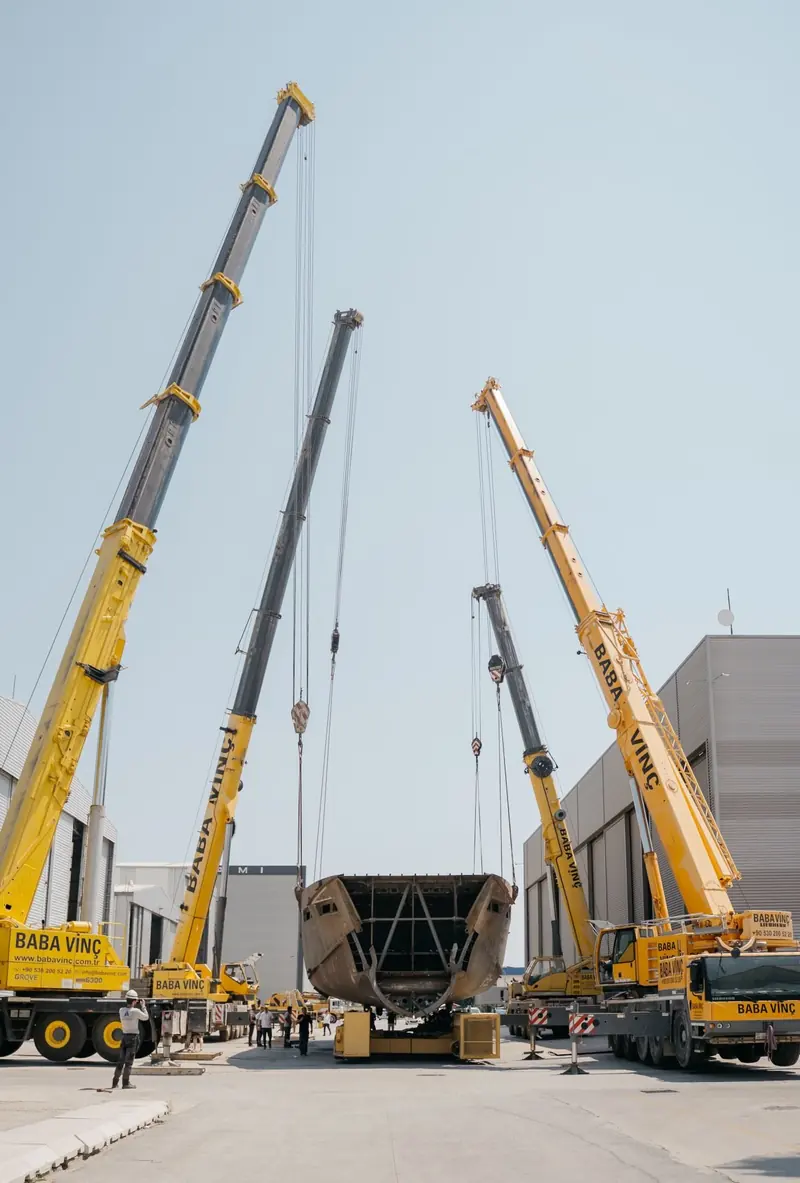
Bering Yachts turned the first hull of its new 110 model upright in its Antalya yard on 26 August 2026, the stage where a steel hull built inverted is lifted and flipped the right way up for outfitting. The yacht is not launched, floated or anywhere near delivery.
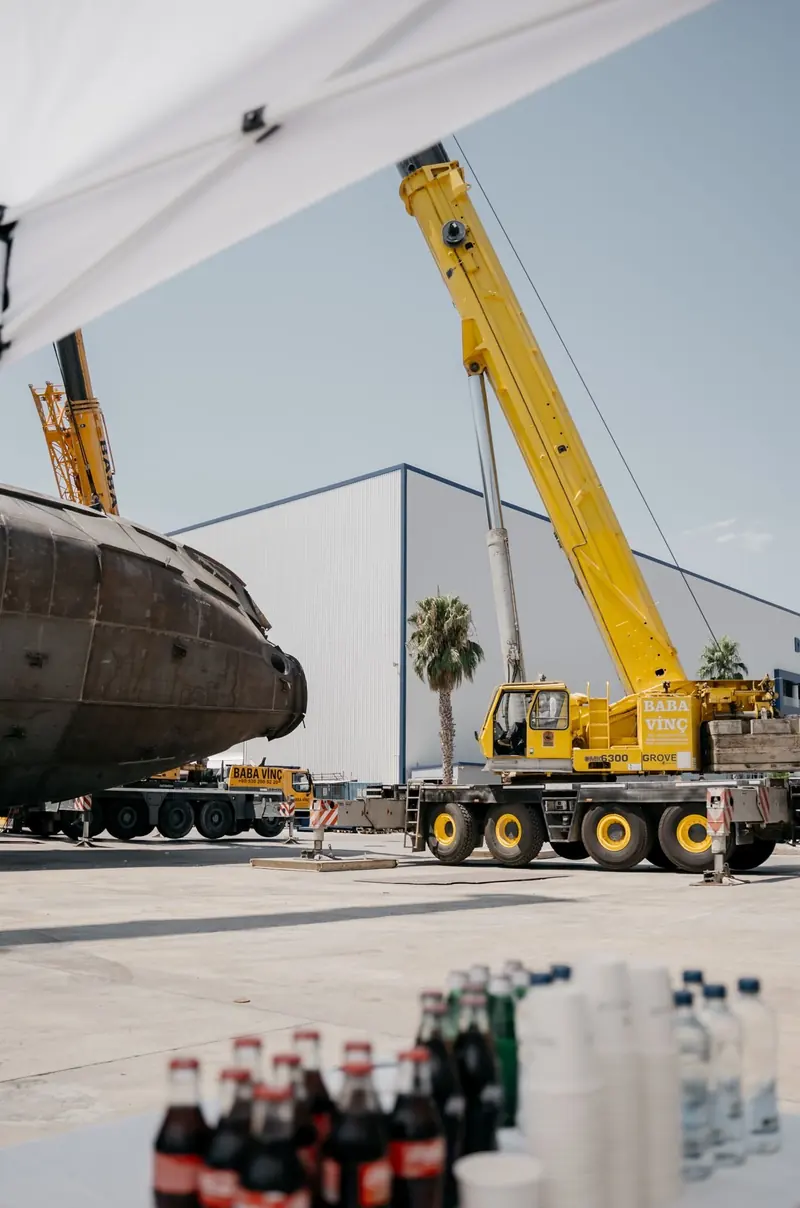
A steel expedition hull is built upside down because welding an inverted deck and bottom plating is faster and produces a flatter, more even hull shape than building it right-side up from the start. Bering's own account of the milestone, published the same day, shows three mobile cranes taking the hull's full weight for the lift, then rotating it through 180 degrees before setting it down the right way for the next phase. Founder and chief executive Alexei Mikhailov called it a step toward a boat "for people who choose real exploration, long voyages far from shore and a genuinely comfortable life on board," framing the milestone in the language of Bering's own explorer identity. Red Yacht Design's Fatih Surekli, who drew both the exterior and interior concept, added that the shape is now visible for the first time outside a rendering.
What follows is the aluminium superstructure, the systems runs for power, plumbing and navigation, then interior outfitting - the stages that actually determine how the yacht performs and lives aboard, none of which have started. BOAT International, covering the same milestone independently, put a 2027 delivery on the project; Bering's own release names no date. An owner tracking the build should treat the turnover as proof the hull exists and nothing more - the render on Bering's website and the boat that eventually floats are still two different objects until sea trials close the gap.
How big is the Bering 110, and why does 299 GT matter?
The Bering 110 measures 33.1 metres with an 8.2 metre beam and is reported at 299 gross tons, one tonne under the 300 GT line that trips stricter international certification. Crossing it would mean stability, load-line and life-saving-appliance standards written for unrestricted ocean service, plus a mandatory International Radio Safety Certificate that smaller yachts do not need to carry.
Bering's own figures put the hull's fuel capacity at 48,000 litres, a range beyond 5,000 nautical miles, and a cruising speed of roughly 10 knots with a half-load top speed of 13 knots. Accommodation is set at 10 guests across five cabins with five crew, a ratio that leans toward long-stay comfort rather than turning the boat over quickly at anchor. The 299 GT figure comes from BOAT International's report of the hull turnover; Bering's own material for the model does not state a gross tonnage figure directly, so the exact margin below 300 GT should be read as reported rather than confirmed twice over.
Staying under 300 GT is a design choice with real running-cost consequences: yachts above that line answer to a different, more demanding safety and documentation regime under international convention, which raises both build cost and the ongoing paperwork a captain and management company carry. Whether Bering targeted the threshold deliberately or arrived there by other design constraints is not something either Bering's release or BOAT International's coverage states, and this desk found no quote confirming intent either way.
Who is Bering Yachts and what is its track record building explorer yachts?
Bering Yachts was founded in 2007 by Alexei Mikhailov and Alexander Obidin, building its first all-metal hull in Foshan, China before relocating production to Antalya, Turkey in 2017. The 110 extends a steel and aluminium expedition range the yard has built for almost two decades.
The company's account of its own history describes the first boat drawing enough buyer interest after delivery that subsequent orders followed, turning a single vessel into a production range; Bering now runs a semi-custom model across several hull sizes, letting owners adjust cabin count, galley layout and hull colour on later boats in a series without commissioning a fully bespoke design each time. The yard is headquartered administratively in North Carolina, with the physical build yard in Antalya, a split common among Turkish-built expedition and explorer brands selling mainly to European and North American owners. The range already runs from the 65 up to the 145-foot flagship, with the 77 established as one of Bering's most-ordered sizes; the 110 fills a gap between the mid-range models and the flagship, at a length Bering has not previously offered as a standard series.
That track record is the strongest case for ordering into an unfinished series: an owner buying hull two or three of the 110 is buying into a design and build process Bering has already run, on other hull sizes. It does not substitute for a sea trial of this specific model, which does not exist yet.
What will the Bering 110 be like to live aboard, based on the interior concept Bering has shown?
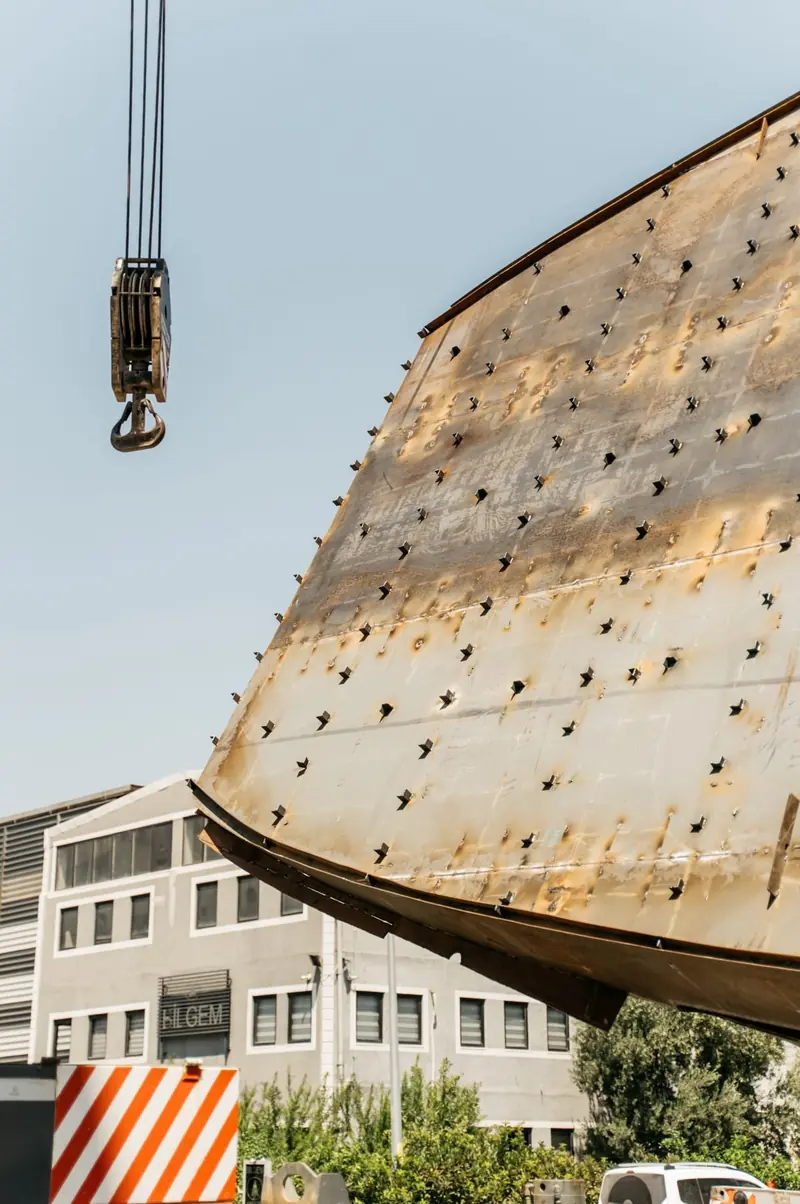
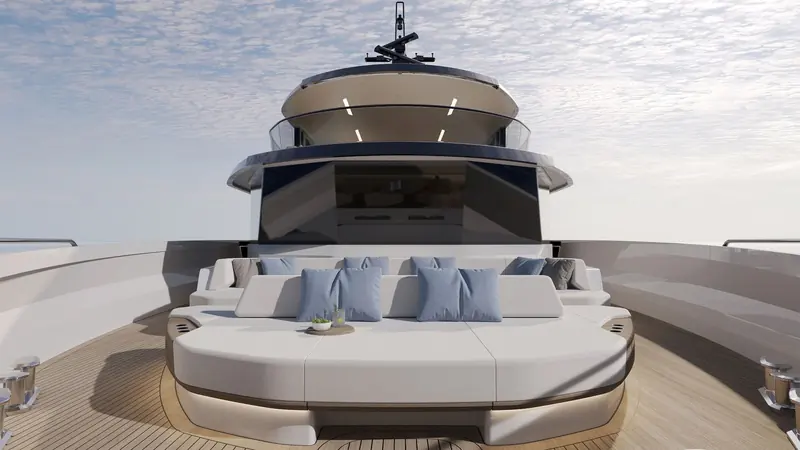
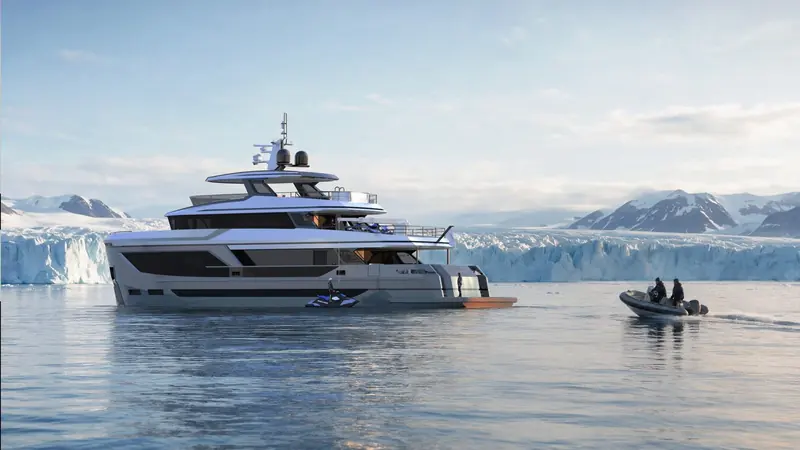
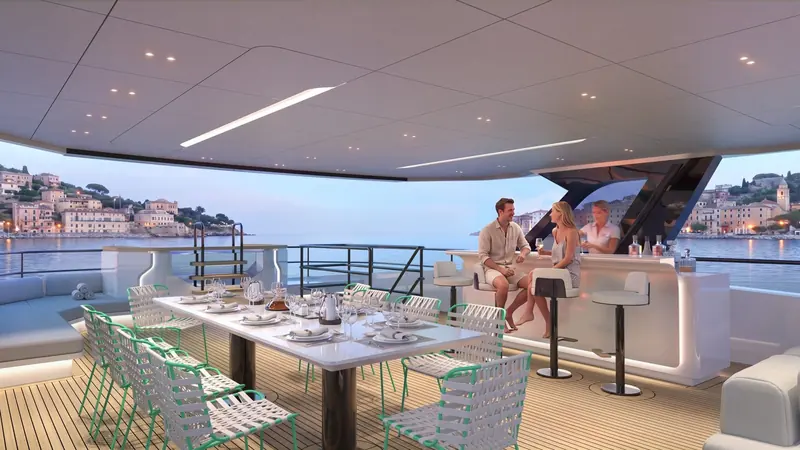
Bering and Red Yacht Design revealed interior renderings for the 110 in April 2026 describing a restrained, "introspective" aesthetic built around natural materials, a deliberate contrast to the yacht's bold expedition exterior. None of it has been built yet; the hull that exists today is bare steel.
The concept draws, in Bering's own description, on Far Eastern principles of simplicity and balance, aiming for a calm, residential atmosphere set against the segment's usual brighter, more nautical interiors. Surekli's brief covered both exterior styling and the interior concept, giving the boat a single design authorship instead of splitting the work between separate studios, which Bering frames as part of what makes the 110 feel resolved as one object.
Material choices, lighting and the real proportions of a room only settle once outfitting starts, which by Bering's own account has not begun on this hull. An owner should treat the renderings as a statement of design intent, worth weighing against Bering's past interiors, and wait for photographs of the finished cabins before judging the result.
Is it worth ordering a Bering 110 before the first hull is finished?
An owner ordering now is buying an established builder's newest expedition design roughly a year or more before the first hull is proven, with no independent trial, no confirmed delivery date and no published price to weigh against it. That is the ordinary trade on any new semi-custom series.
The case for ordering early is straightforward: earlier hulls in a production series typically get first pick of the yard's build slots and the most room left to adjust layout before steel is cut, and Bering's own history suggests the 110 will follow the same buyer pattern as its earlier models, where demand for the type built out a range from a single hull. The case for waiting is just as straightforward: nothing published so far - not the 5,000 nautical mile range, not the 13-knot top speed, not the 299 GT figure - has been checked against the boat in the water, and every one of those numbers currently comes from Bering or from press coverage of Bering's own material.
No independent owner report exists for the 110 because no hull has been delivered; that is a normal state for a boat still a year or more from completion. The renderings, the range claim and the 299 GT figure are all worth weighing, but none of them are yet a fact an owner can check against a boat that floats.
What is good, and what to watch
Strong points
- Genuine long-range hull48,000 litres of fuel and a quoted 5,000-plus nautical mile range put real ocean crossings within reach at 33 metres, a distance few yachts this size are built to cover unrefuelled.
- A builder with almost two decades in exactly this nicheBering has built steel and aluminium expedition yachts since 2007 and has delivered enough hulls across its range that the 110 is a refinement of a known formula, not a first attempt.
- Semi-custom flexibilityHull colour, galley layout and cabin count can still move on later hulls in the series, the usual Bering trade for owners who want an expedition yacht shaped to them without a fully bespoke build.
What to watch
- No independent trial data existsEvery speed, range and fuel figure published so far is Bering's own; the boat is roughly a year or more from being in the water to test any of it against.
- A slow yacht by planing-hull standardsA quoted 10-knot cruise and 13-knot top speed at half load is normal for a trawler-style explorer but far off the 15 to 20 knots a planing yacht this size would offer, a real trade for an owner who also wants to cover ground quickly between anchorages.
- Price and firm delivery date undisclosedNeither Bering's own release nor BOAT International's coverage names a contract price, and Bering has not itself confirmed the 2027 delivery date reported elsewhere.
Practical detail
| Length overall | 33.1m (108.6ft) |
|---|---|
| Beam / draught | 8.2m / 2.4m |
| Gross tonnage | 299 GT (per BOAT International; not stated in Bering's own release) |
| Range | 5,000+ nautical miles |
| Fuel capacity | 48,000 litres |
| Cruise / top speed | ~10 knots cruise, 13 knots top (half load) |
| Guests / crew | 10 guests, 5 crew |
| Builder / designer | Bering Yachts (Antalya, Turkey) / Red Yacht Design |
| Hull turnover date | 26 August 2026 |
| Delivery | Not given by Bering; BOAT International's earlier report cites 2027 |
| Price | Not published |
| What is not independently verified | No sea trial has taken place; every performance figure published so far is the builder's own |
Questions this story answers
What happened?
Bering Yachts turned the first hull of its new 110 model in its Antalya yard on 26 August 2026, the stage where a steel expedition hull built upside down is lifted and flipped upright for outfitting. At 299 GT the design sits one tonne under a regulatory line that adds cost and certification the moment a yacht crosses it, a detail that matters more to the next owner signing for hull two than the render does.
What is good about it?
Genuine long-range hull. 48,000 litres of fuel and a quoted 5,000-plus nautical mile range put real ocean crossings within reach at 33 metres, a distance few yachts this size are built to cover unrefuelled.
What should an owner or buyer watch?
No independent trial data exists. Every speed, range and fuel figure published so far is Bering's own; the boat is roughly a year or more from being in the water to test any of it against.
Who reported this?
Bering Yachts, BOAT International, Red Yacht Design.
We do this for everyone who loves this world. The people who have spent their lives in it, and the people just discovering it. Yotters exists so that what we learn belongs to all of them.
Nobody pays us for this. No ads, no sponsors, nothing for sale. We just believe the world is a little better when knowledge is shared instead of kept.
If it gave you something today, tell us to keep going. Follow us, leave a like, or write a positive comment. We read every one, and they are what keeps us going.