55m Steel FDHF
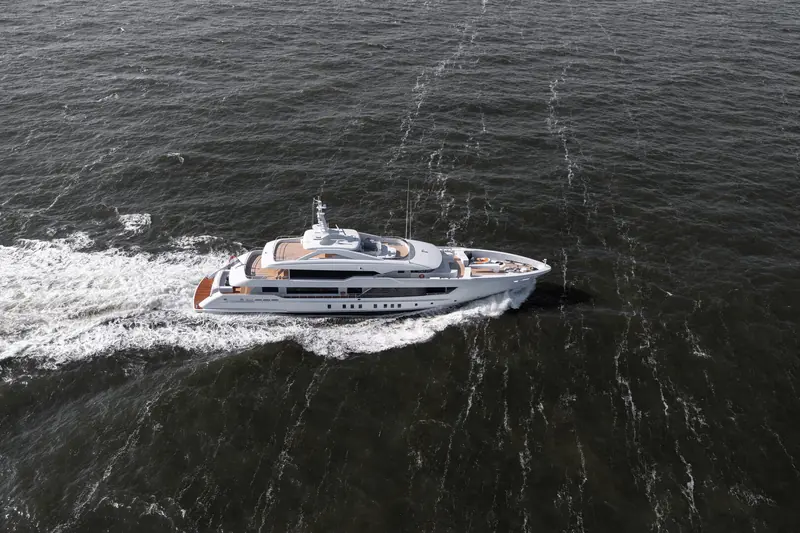
| LOA | 55 m |
|---|---|
| Beam | 9.6 m |
| Gross tonnage | about 760 GT |
| Top speed | 15.5 knots |
| Range | about 4,500 nm at 13 knots |
| Engines | two MTU 8V 4000 M63, 1,360 hp each |
| Hull | steel FDHF, aluminium superstructure |
| Design | Omega Architects exterior, Bannenberg & Rowell interior |
The steel side of the FDHF story
The 55 metre Steel FDHF is Heesen's answer for owners who want the Van Oossanen hull in steel rather than aluminium. It sits in the yard's spec-built Heesen Series, which means hulls are begun on the yard's own account and offered to buyers at an advanced stage. That approach shortens the road to launch and lets an owner start from a proven platform. The class has sold repeatedly, a sign the numbers add up for real programmes.
Steel changes the character compared with the fast aluminium boats. It brings weight and a lower top speed, and in return it gives a planted feel in a seaway that many long-range owners prefer. At around 760 GT over 55 metres she carries more volume than her length suggests. This is a boat built to be lived aboard for weeks at a time. That volume makes her a practical base for long spells away from marinas.
Efficiency before top end
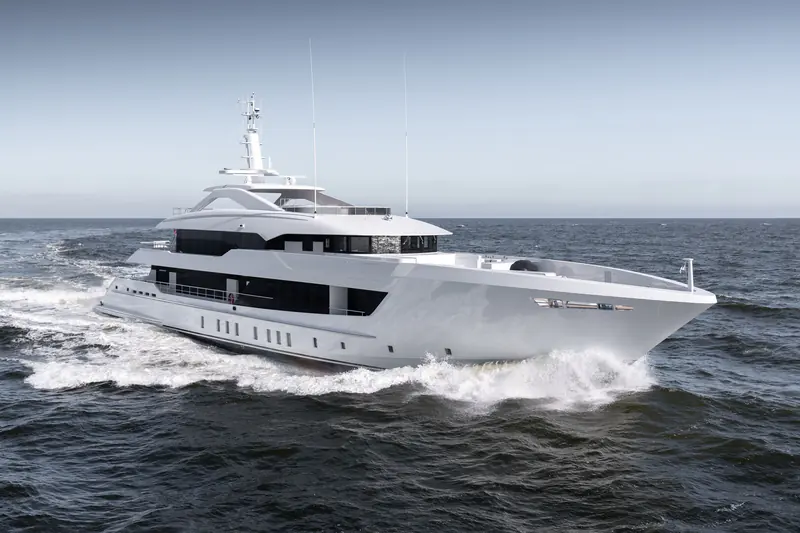
The hull is a Fast Displacement Hull Form developed by Van Oossanen, married to an aluminium superstructure to keep weight up high in check. Here the FDHF serves economy and comfort more than a high top end, and she runs to about 15.5 knots. Two MTU 8V 4000 M63 diesels of 1,360 hp each supply the power and meet IMO Tier III. That is a modest installation for the size, chosen for range over sprint.
The reward is stamina. With fuel tankage near 98,890 litres she covers about 4,500 nautical miles at a 13 knot cruise, which puts most ocean routes within reach. The FDHF keeps resistance low at those displacement speeds, so the engines work gently and burn less. For an owner planning long passages, the sums favour this hull over a thirsty planing design. Running the mains gently at cruise is what stretches those figures so far.
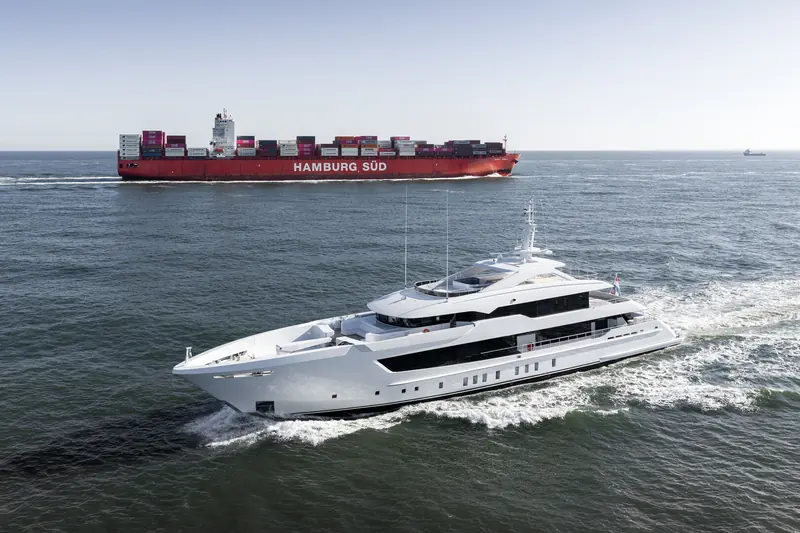
The Van Oossanen hull in steel, built for long-range comfort and economy.
Omega styling on a working platform
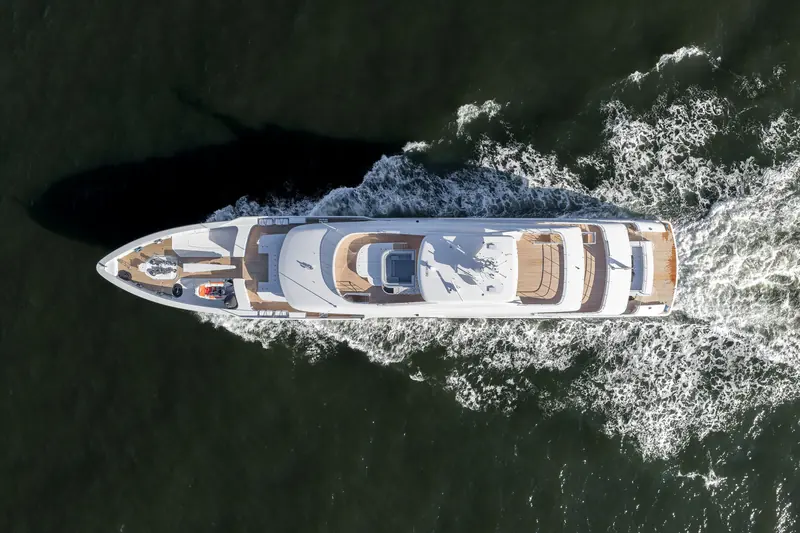
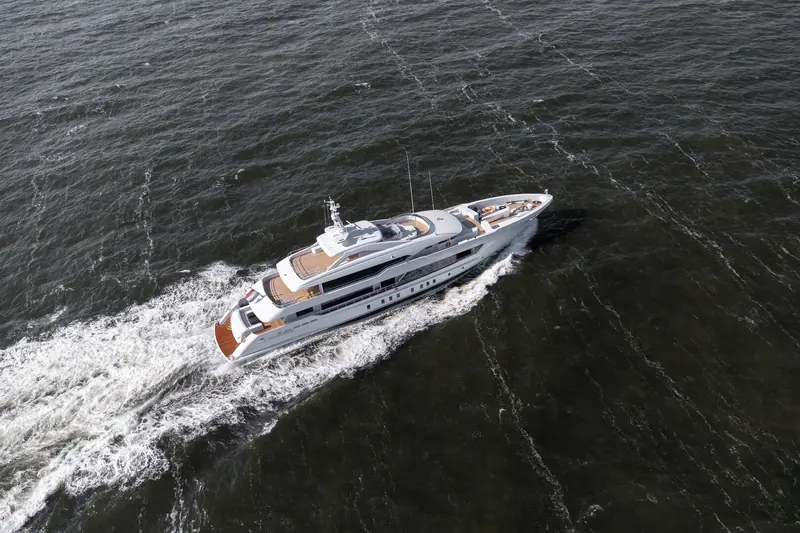
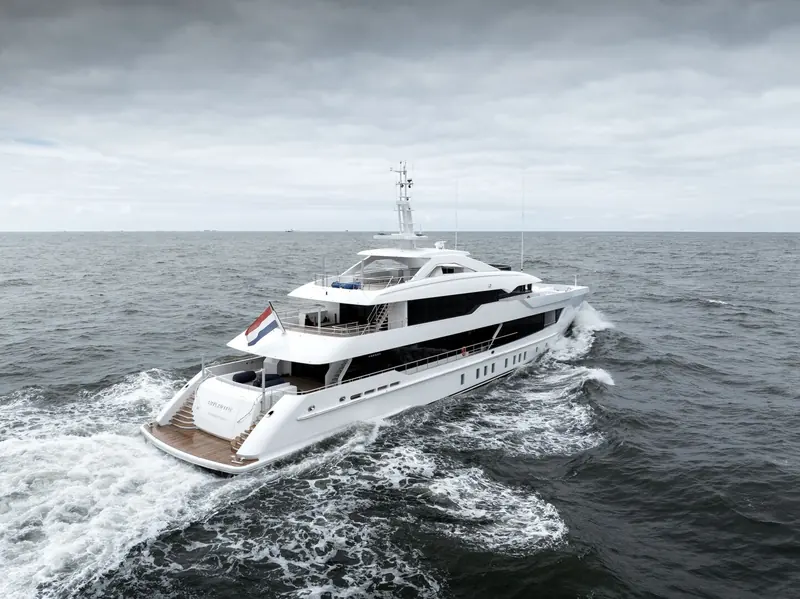
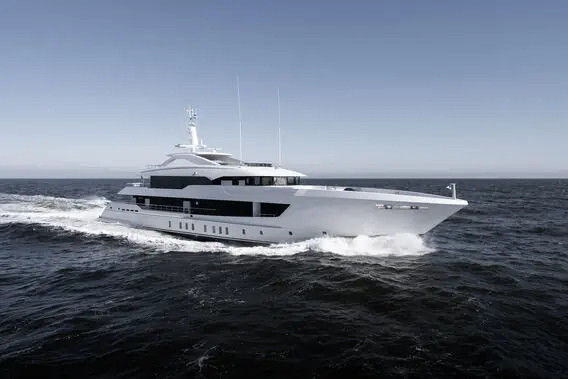
Omega Architects shaped the exterior, giving the steel 55 a profile that stays close to the Heesen family look. The volume is generous and the lines are calm, with long glazed runs that keep the interior bright. There is real deck area to work with, from a sizeable sun deck to sheltered aft lounging near the water. The styling suits a yacht meant for extended cruising more than dockside display.
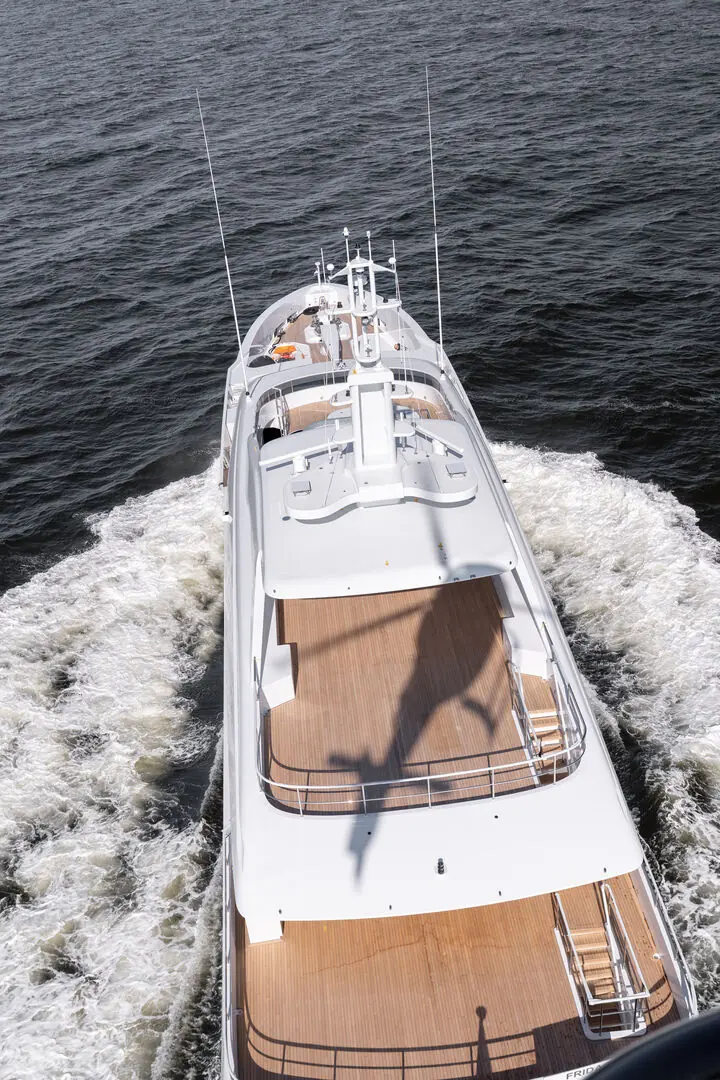
Practical touches shape the outside as much as looks. The layout leaves room for tenders and water toys without cramping guest space, which matters on long trips away from marinas. Shade and shelter are planned so the decks stay usable in varied weather. This is exterior design in service of time actually spent aboard. Tender stowage is planned so launching does not eat into the sunbathing areas.
Bannenberg and Rowell inside
Bannenberg & Rowell Design handled the interior of the class, working to the volume that steel and a full-beam layout allow. Accommodation runs to six staterooms for twelve guests, supported by cabins for a crew of around thirteen. The extra tonnage shows up as ceiling height and generous social spaces rather than tight corridors. Owners can personalise finishes because the boat is taken from the series at an early enough stage. Six staterooms across the guest decks give a family and their guests room without crowding.
The brief for a long-range yacht is comfort that lasts. Materials are chosen to wear well through months of use, and the guest cabins are sized for genuine liveaboard time. Large windows keep the sea present throughout the guest deck. The overall feel is a calm, residential one that suits weeks between ports. Storage is generous throughout, which matters when a yacht is provisioned for long legs.
Built for range, ready to personalise
Mechanically the 55 Steel keeps things straightforward, with Tier III diesels and a systems package aimed at reliability far from a shipyard. Heesen has led the market on hybrid propulsion, though this class is offered in a conventional diesel form. The steel hull and its Lloyd's classification make her a serious tool for remote cruising. Simplicity here is a feature for owners who value dependable running. Heesen's 2017 delivery Home showed how far a Fast Displacement hull can be pushed toward quiet running.
The buyer is different from the speed-chasing aluminium client. This owner wants big volume and long range, and is happy to trade a few knots for a settled ride. Buying from the spec series means a shorter wait and a lower risk than a full custom build. For a family planning long seasons afloat, the 55 Steel is a sensible, capable base.
Questions owners ask
How big is the Heesen 55m Steel FDHF?
LOA: 55 m. Beam: 9.6 m.
Who is the Heesen 55m Steel FDHF for?
An owner planning long ocean seasons who values steel strength and big interior volume over top speed, and who wants the shorter lead time of a spec-built Heesen Series hull he can still finish to his own taste.
Design
| Exterior | Frank Laupman / Omega Architects |
|---|---|
| Interior | Varies by hull (Moskito shown: Bannenberg & Rowell. Vida: Reymond Langton) |
| Naval architecture | Van Oossanen Naval Architects (Fast Displacement Hull Form) |
Who it is for: An owner planning long ocean seasons who values steel strength and big interior volume over top speed, and who wants the shorter lead time of a spec-built Heesen Series hull he can still finish to his own taste.