Jubilee
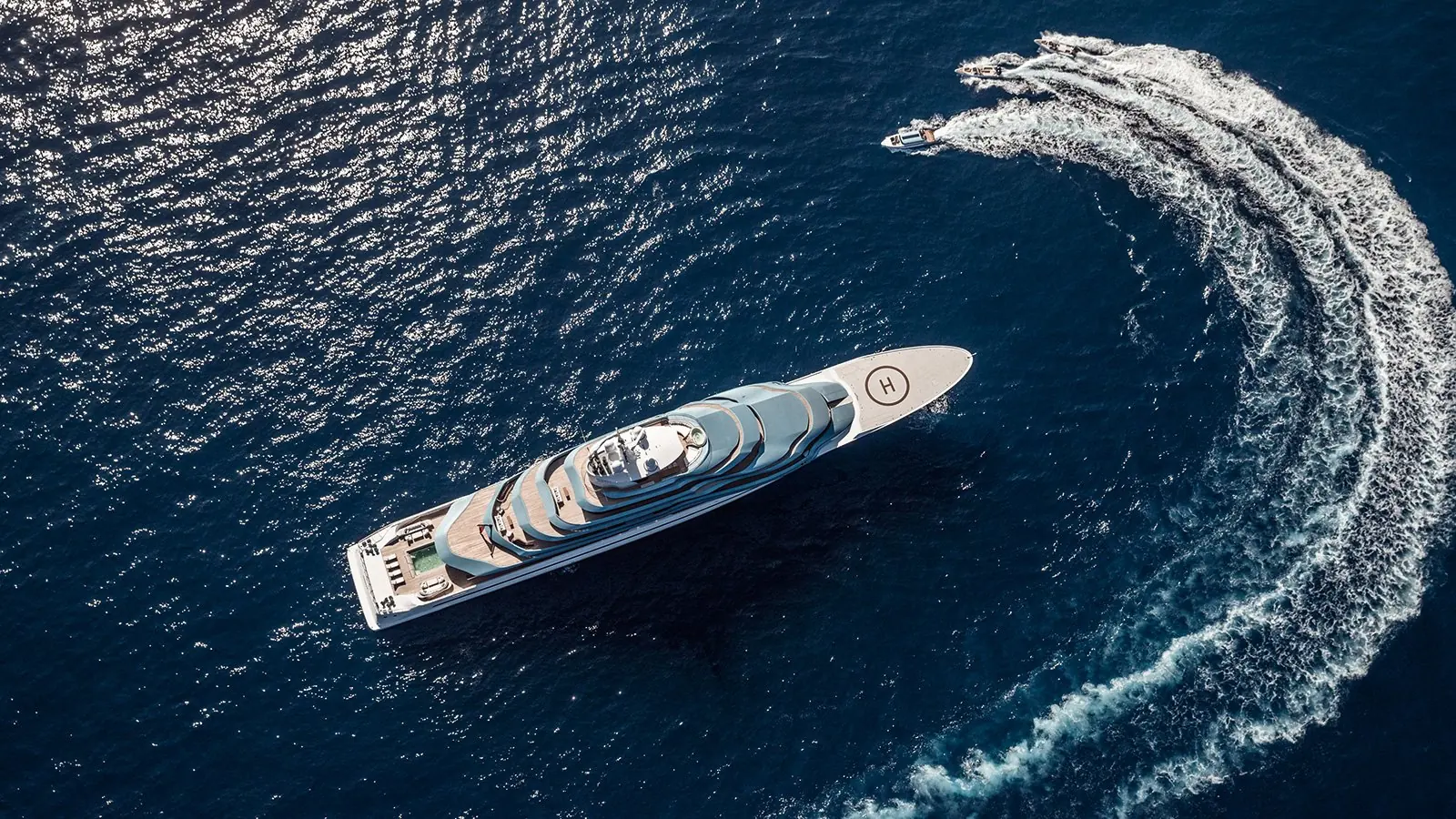
| Builder | Oceanco, Alblasserdam, Netherlands |
|---|---|
| Length | 110 metres (110.1 m) |
| Type | motor yacht |
| Delivered | 2017, later renamed Kaos after a Lurssen refit |
| Gross tonnage | approximately 4,500 GT |
| Exterior design | Igor Lobanov, original interior Sam Sorgiovanni |
| Distinction | largest yacht built in the Netherlands at delivery |
| Performance | two MTU diesels, top speed around 18.5 knots, range around 5,000 nautical miles |
The largest yacht the Netherlands had built
When Jubilee was delivered in 2017 she topped both the length and volume tables for Dutch construction. At 110 metres and around 4,500 GT she carried more interior space than yachts that matched or exceeded her length. That combination made her the flagship of Oceanco's output at the time. She set a national record that the yard would only break itself a few years later with Koru.
Her arrival also signalled the yard's confidence with very large motor yachts of conventional layout. Where later projects leaned on efficiency programmes, Jubilee was about scale and interior volume handled cleanly. She gave Oceanco a headline vessel to point to during a competitive period among Dutch and German builders. The record mattered commercially as much as it did technically.
Lobanov's trick of the eye
The exterior design by Igor Lobanov is built around an illusion. Curved lines and glass panels set into the bulwarks make the yacht read as though it carries more deck levels than it does. From the quay the effect is a long and lean profile that hides much of her true bulk. The styling turns a very large hull into something that looks lighter than its tonnage suggests.
A sky blue superstructure accent set the yacht apart from the white fleet around her. Six decks rise across a hull whose flowing lines were meant to disguise the sheer height involved. The design intent was a sense of movement even at rest. The blue accent has since become one of the details most associated with the original Jubilee. That visual ambition became one of the most discussed aspects of the boat when she launched.
Glass and curves drawn to hide just how large she really is.
Scale handled with care
Jubilee's engineering challenge was volume rather than novelty. Moving around 4,500 GT at a useful speed meant two large MTU diesels driving her to a top speed near 18.5 knots. Her range of roughly 5,000 nautical miles gave her genuine ocean capability rather than coastal limits. The naval architecture was handled by Oceanco with the studio Azure.
The original interior included careful provision for wheelchair access throughout the main spaces, which is uncommon at this level and points to a specific owner brief. Delivering that without compromising the styling required close coordination between the interior and the naval side. The result was a yacht whose accessibility was designed in rather than added afterward. Detail of that kind is often what separates a custom build from a large standard one.
An interior built for gathering
The original interior by Sam Sorgiovanni favoured contemporary comfort across the yacht's considerable volume. A main saloon of around 135 square metres gave a single very large social space rather than a series of smaller rooms. A pool deck with a built-in aquarium sat above a beach club, a hammam and a gym with access to the water through a fold-down transom. The layout was arranged for entertaining large groups.
Accommodation on the original configuration ran to a substantial guest count spread across the decks, supported by a large crew. The scale allowed multiple VIP suites in addition to the owner's spaces. The volume on offer meant few of the compromises smaller yachts force on their layouts. Life aboard was designed around the water as much as the interior. Later, under new ownership, a Lurssen refit reworked both the interior and the exterior styling.
From Jubilee to Kaos
Jubilee changed hands in 2018 in what was reported at the time as one of the year's largest yacht sales. The new owner sent her to Lurssen in Hamburg for a year-long refit, after which she emerged renamed Kaos. Sam Sorgiovanni restyled the exterior and Reymond Langton created a new interior. The Oceanco hull remained, but her public identity shifted with the new name.
That second life is common for landmark yachts, which tend to move between owners who each reshape them. For Oceanco the value lies in having built the original record-setter. The Jubilee chapter is the one that established the hull and the national record. Everything since has been written on top of that foundation.
Questions owners ask
How big is the Oceanco Jubilee?
Builder: Oceanco, Alblasserdam, Netherlands. Length: 110 metres (110.1 m).
Who is the Oceanco Jubilee for?
An owner who wants maximum interior volume and a landmark profile, with bespoke touches such as full accessibility designed into the build.
Design
| Exterior | Lobanov Design (Igor Lobanov) |
|---|---|
| Interior | Sorgiovanni Designs (Sam Sorgiovanni) |
| Naval architecture | Azure Naval Architects / Oceanco |
Who it is for: An owner who wants maximum interior volume and a landmark profile, with bespoke touches such as full accessibility designed into the build.