D-Marin's New Owner Targets 50 Marinas, Wired With Sensors
What exactly did InfraVia buy when it acquired D-Marin?
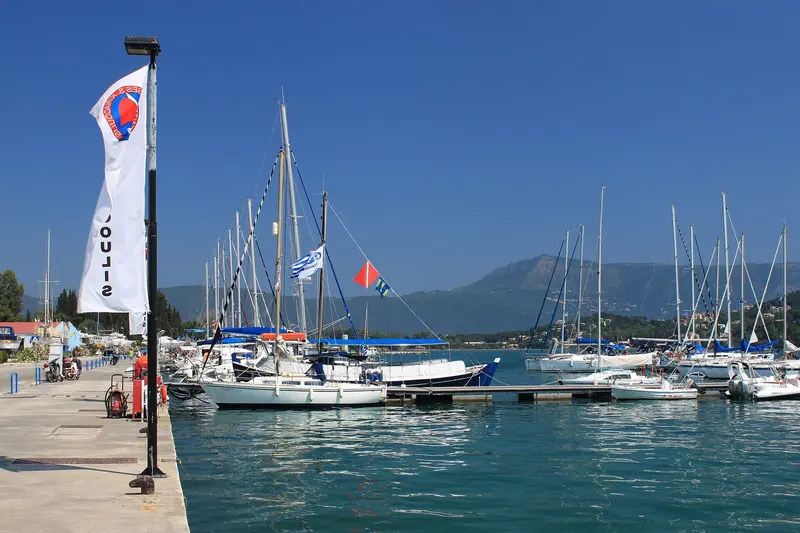
InfraVia Capital Partners bought Europe's largest premium marina operator: 28 marinas across nine countries with more than 14,300 berths, over 1,000 of them built for superyachts, plus twelve boatyards servicing 2,500 yachts a year.
The deal was announced on 6 July 2026, with InfraVia acquiring D-Marin from CVC Capital Partners VII, which had owned the group since 2020. Neither side disclosed the price, though outside reporting on the transaction has put it in a range of roughly EUR 1,000 million to EUR 1,500 million. CVC senior managing director Ozgur Onder and partner Istvan Szoke both signed off with a version of the same line, that D-Marin was "uniquely positioned for continued success in its next chapter." Goldman Sachs and Clifford Chance advised CVC; Morgan Stanley and White & Case advised InfraVia, the scale of banking and legal firepower on both sides an indicator of how seriously private capital now treats marina infrastructure.
D-Marin's footprint runs across Turkey, Croatia, Greece, the UAE, Spain, Italy, France, Malta and Albania, serving more than 50,000 customers a year. InfraVia chief executive Vincent Levita and partner Athanasios Zoulovits both frame the marina sector as resilient and under-consolidated, which is the thesis behind the acquisition: buy the platform now, keep buying marinas into a market InfraVia calls fragmented. D-Marin's own chief executive, Oliver Dorschuck, described the sale as a foundation for "our next chapter of growth" rather than an exit, language that points toward the same management staying in place through the transition.
Why is a marina operator investing in sensors rather than concrete?
D-Marin has already spent more than EUR 10 million building a proprietary technology platform, and it is rolling out 10,000 berth-side sensors that track bilge water, heat, smoke, GPS position and unauthorized entry on every boat that plugs in.
The sensor push runs through Sens4Boat, a Croatian company D-Marin acquired in 2022 that had already fitted monitoring systems to 500 to 700 boats before the deal. Chief commercial officer Dean Smith, speaking to Marine Industry News, said the group has built its own pedestal design specifically so the sensors connect through the same app owners already use to manage their berth, rather than bolting on a separate system. He also said boat owners have shown little resistance to app-based marina technology, a claim that runs against the received idea that a yacht-owning, often older clientele resists new interfaces.
The commercial logic is straightforward: a bilge or smoke alert sent to an owner's phone before a problem becomes a claim is worth more to D-Marin's insurance and liability position than almost any dockside amenity. It also gives D-Marin something CVC-era investors and now InfraVia can point to as differentiated infrastructure, not just real estate with a view. Whether the sensor rollout reaches all 28 marinas evenly, or concentrates first on the newest and highest-margin superyacht berths, was not addressed in the interview.

How does D-Marin keep 28 marinas from feeling like a single chain?
The group runs every marina against one 150-chapter internal playbook, called the D-Marin Way, but Smith says the explicit goal is the opposite of uniformity: "We don't want to McDonald's-ise our marinas."
That playbook covers everything from sewage handling and desalination to accounting and health and safety, the unglamorous mechanics that make a marina function the same way whether it sits in Sibenik or Muscat. Layered on top, D-Marin says it deliberately preserves what Smith called "local flavour," keeping regional staff, local partnerships and site-specific character rather than replacing them with a single house style. Folding a newly bought marina fully into that system, Smith said, takes one to two years, which sets a real timeline on how long a freshly acquired site takes to match the standard of D-Marin's older marinas.
Smith also described the group's approach to partnerships as playing "to our strengths" rather than building every service in-house, which is consistent with buying Sens4Boat's sensor technology rather than developing it from scratch. For an owner, the practical read is that a D-Marin marina bought yesterday is not automatically a D-Marin marina in the full sense; the standardized safety and operational backbone likely arrives quickly, but the polish that comes from two years of local integration does not.
What is the most recent addition to the network?
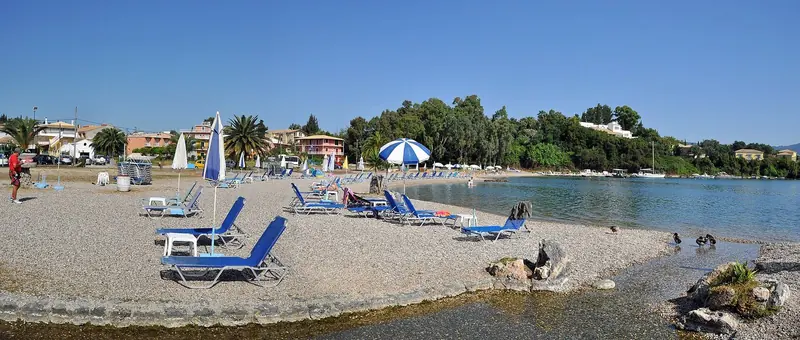
D-Marin bought a marina in Olbia, Sardinia in June 2026, and the group says a dedicated superyacht dock is planned two to three kilometres away, adding large-vessel capacity to a Mediterranean cruising ground that has historically been short of it.
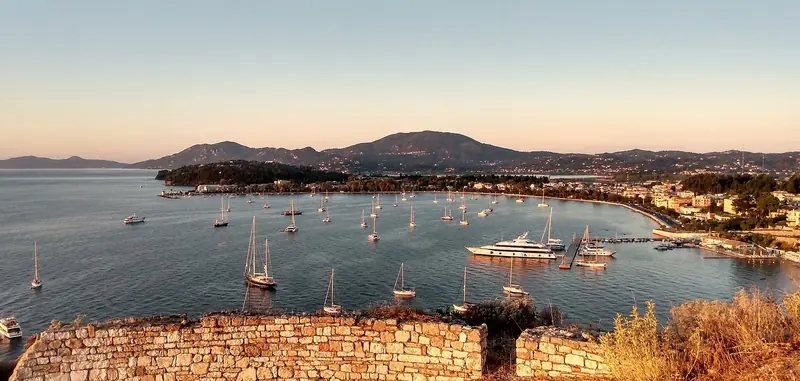
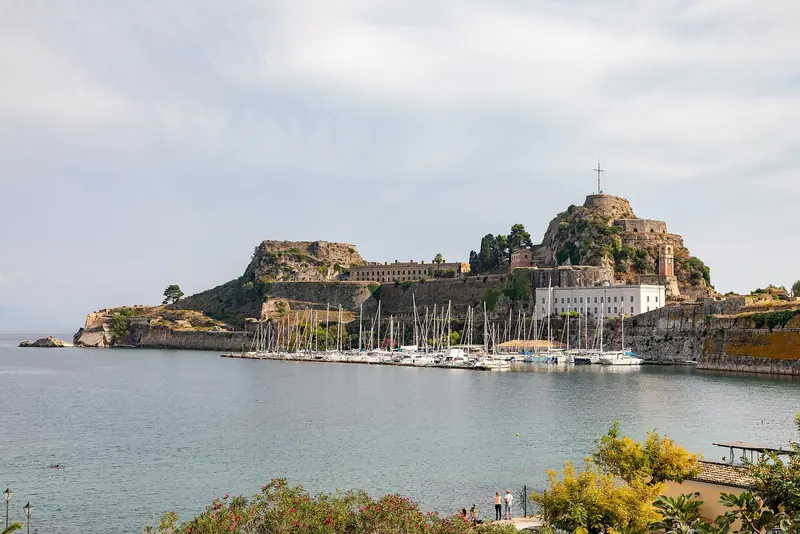
The Olbia acquisition sits inside a wider push into Italy, alongside D-Marin's redevelopment of Gouvia Marina in Corfu, an EUR 8.5 million project that has already been completed. Sardinia's northern coast, and the Costa Smeralda in particular, is one of the busiest superyacht cruising grounds in the Mediterranean each summer, and berth scarcity there has pushed owners toward anchoring off rather than docking. A dedicated superyacht facility a few kilometres from Olbia's existing marina would be a direct answer to that shortage, though D-Marin has not given a timeline for construction or a berth count for the planned dock.
The Corfu project is a useful marker of what D-Marin actually delivers once it commits capital to a site: new pontoons, upgraded utilities and, in Gouvia's case, a marina that can now handle the larger yachts increasingly cruising the Ionian. It is also the kind of redevelopment an owner can inspect directly this season, rather than take on faith from a press release, since the work there is finished rather than promised.

What should an owner choosing a berth take from all this?
A D-Marin berth now comes with a genuinely funded technology and safety layer and a documented operating standard, but neither the sale price nor D-Marin's underlying financial performance has been made public, so an owner has no independent number to weigh against what the marina charges.
The growth plan, from 28 marinas to a stated target of 50 within roughly five years, is built on acquiring existing marinas in a fragmented market rather than building new berths from scratch, which is faster for InfraVia's return but does not necessarily mean more superyacht capacity arriving in popular cruising grounds any time soon. Owners berthing at a marina D-Marin has held for years, like Gouvia in Corfu, should expect the fullest version of the standard: sensors, app integration and the local staff relationships Smith described. Owners at a marina bought in the last year or two, like Olbia, are berthing during the integration window Smith himself put at one to two years.
None of this is disclosed to a berth-holder at the point of booking, and no published figures let an owner judge whether D-Marin's fees reflect the scale of investment behind them or simply reflect what a consolidated, private-equity-owned network can charge in ports with few comparable alternatives. What is verifiable is the direction of travel: more sensors, more standardization, and a buyer in InfraVia whose stated specialty is exactly this kind of infrastructure platform.
What is good, and what to watch
Strong points
- Scale with a stated local identity28 marinas run to one operating standard, the 150-chapter D-Marin Way, while CCO Dean Smith says the group deliberately avoids "McDonald's-ising" individual marinas' character.
- Real capital behind the technologyOver EUR 10 million already spent on a proprietary operating platform, plus a 10,000-sensor rollout via the 2022 Sens4Boat acquisition, ahead of any new capital InfraVia adds.
- A buyer with matching infrastructure pedigreeInfraVia specializes in transport and maritime infrastructure and says it wants to accelerate digitalization and pursue further acquisitions like the June 2026 Olbia marina.
What to watch
- No published financialsNeither CVC nor InfraVia disclosed a deal value or D-Marin's revenue, so an owner has no public benchmark for whether berthing fees reflect the business's actual profitability.
- Integration takes years, not monthsD-Marin's own commercial chief says folding a newly acquired marina into its systems and standards takes one to two years, so a marina bought recently, like Olbia, will lag the standard of an older site like Gouvia.
- Growth by acquisition, not new capacityThe expansion plan leans on buying existing marinas in a fragmented market rather than building new berths, so the marina count rising to 50 does not guarantee more superyacht berths in the cruising grounds that need them most.
Practical detail
| Marinas today | 28, across 9 countries (Turkey, Croatia, Greece, UAE, Spain, Italy, France, Malta, Albania) |
|---|---|
| Total berths | 14,300+, over 1,000 built for superyachts |
| Boatyards | 12, servicing 2,500+ yachts a year |
| Annual customers | 50,000+ |
| Deal announced | 6 July 2026, InfraVia Capital Partners acquiring from CVC Capital Partners VII |
| Deal value | Undisclosed; outside reporting estimates EUR 1,000m-1,500m |
| Growth target | 50 marinas within roughly five years, up from 28 |
| Tech investment | EUR 10m+ on a proprietary platform, plus a 10,000-sensor rollout via Sens4Boat |
| What is not published | The sale price and D-Marin's revenue or profit figures; neither CVC nor InfraVia has disclosed either |
Questions this story answers
What happened?
InfraVia's takeover of Europe's largest premium marina operator closed the headline stage in July, but the growth plan and the sensor rollout it is paying for only surfaced this week in a detailed interview. For an owner deciding where a superyacht berths for the season, the choice of operator is starting to matter as much as the choice of port.
What is good about it?
Scale with a stated local identity. 28 marinas run to one operating standard, the 150-chapter D-Marin Way, while CCO Dean Smith says the group deliberately avoids "McDonald's-ising" individual marinas' character.
What should an owner or buyer watch?
No published financials. Neither CVC nor InfraVia disclosed a deal value or D-Marin's revenue, so an owner has no public benchmark for whether berthing fees reflect the business's actual profitability.
Who reported this?
CVC Capital Partners, InfraVia Capital Partners, Marine Industry News (Dean Smith interview, 28 August 2026), D-Marin.
We do this for everyone who loves this world. The people who have spent their lives in it, and the people just discovering it. Yotters exists so that what we learn belongs to all of them.
Nobody pays us for this. No ads, no sponsors, nothing for sale. We just believe the world is a little better when knowledge is shared instead of kept.
If it gave you something today, tell us to keep going. Follow us, leave a like, or write a positive comment. We read every one, and they are what keeps us going.