Ferretti's order book falls to EUR 564.9m and guidance is cut
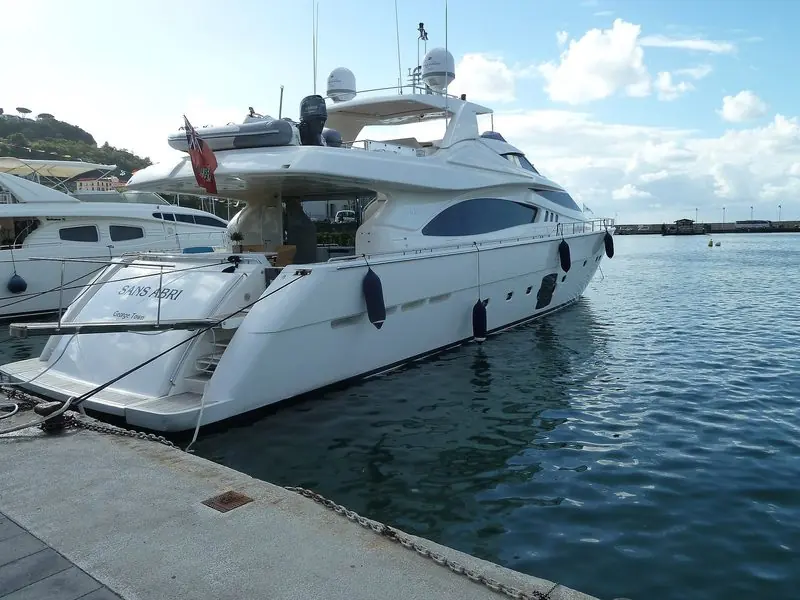
The numbers the board signed off
Ferretti's board approved the consolidated results to 30 June 2026 on 31 July. Net revenues from new yachts came in at EUR 585.6m, down 5.6 per cent from EUR 620.4m a year earlier. Adjusted EBITDA fell to EUR 92.5m, with the margin at 15.8 per cent against 15.9 per cent. Net profit was EUR 37.9m, down 13.1 per cent from EUR 43.6m. Total net revenue, including brokerage and service, was EUR 604.2m, off 5.3 per cent.
The shape of the half matters more than the headline drop. Revenue fell 8.0 per cent in the first quarter and 2.9 per cent in the second, so the rate of decline more than halved as the period went on. The margin held within twenty basis points of last year, which is the part a buyer should read first: the group is discounting far less than the revenue line suggests. Ferretti also paid its ordinary dividend of EUR 0.11 a share. This is a slowdown in orders, not a company in trouble.
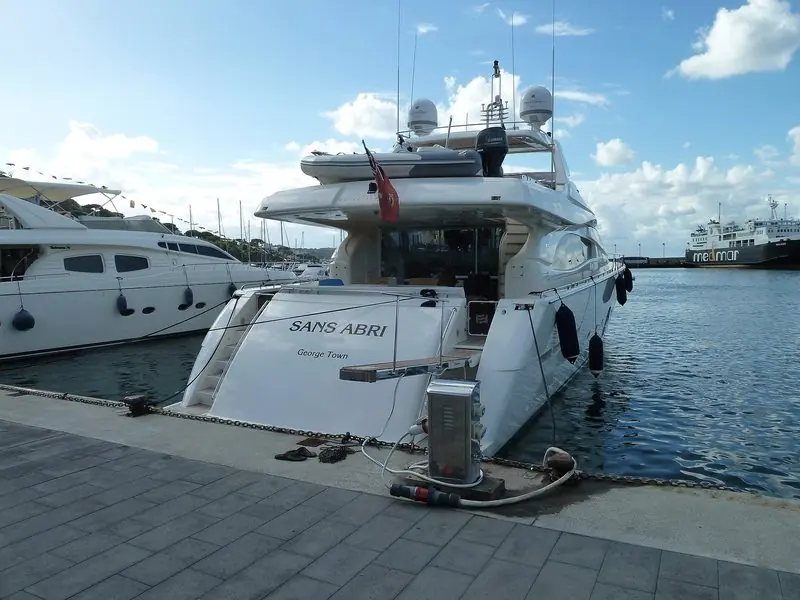
A book a quarter smaller
The backlog is where the half really shows. Ferretti's net order backlog stood at EUR 564.9m at 30 June 2026 against EUR 760.8m at the same point in 2025, a fall of 25.7 per cent. Order intake over the six months was EUR 341.4m, down from EUR 467.3m, a drop of 27 per cent. Those two numbers move together for a reason: a group that builds largely in series burns through backlog on a fixed rhythm, so intake that falls faster than deliveries pulls the book down quickly.
One caveat is worth carrying into any comparison. Ferretti reports a net backlog, the value still to be recognised, and that is not the measure other yards quote for a gross order book. Azimut Benetti's EUR 2.5bn figure, which has pushed some new builds toward 2029, counts a different thing on a different basis. Read against its own history, Ferretti's book has gone from comfortable to workable in twelve months.

Why the guidance came down
The group cut its 2026 outlook the same day. New-yacht revenue is now guided to EUR 1.200bn to EUR 1.240bn, against EUR 1.250bn to EUR 1.265bn before. Adjusted EBITDA moves to EUR 186m to EUR 197m from EUR 203m to EUR 210m, and the margin range to 15.5-15.9 per cent from 16.2-16.6 per cent. Capital expenditure was trimmed to EUR 60m to EUR 65m from EUR 70m to EUR 75m.
Ferretti described the revision as prudential, citing geopolitical uncertainty with particular reference to the Middle East, and a macroeconomic backdrop that keeps lengthening how long buyers take to decide and to negotiate. The regional split earlier in the year showed how uneven that is: in the first quarter, intake from the Americas fell 87 per cent and from the Middle East and Africa 33.9 per cent, while Europe rose 28.2 per cent. The capex cut is the line to watch, because that is the yard's own spending on the sheds and equipment that build future slots.
What a thinner book buys an owner
For a buyer, a shrinking backlog is leverage. When intake drops 27 per cent at a group that builds in series across Riva, Pershing, Custom Line, Itama and Mochi Craft, unsold slots appear in a schedule that was fully spoken for two years ago. That shows up first as availability, then as flexibility on specification, and only then as price. A model that meant a 2029 handover when ordered in 2024 is a much shorter wait today.
The same fact reads differently if you already own one. Softer pricing on new hulls presses down on what a two or three year old example of the same model fetches, and brokerage takes its cue from the new-build price list. The offset is that Ferretti is holding its margin and its dividend rather than buying volume with discounts, which limits how far that pressure travels. Delivery risk, the thing that actually hurts, is not the issue here: the question is what the boat is worth afterwards, not whether it arrives.
A first full test for new management
This is the first half-year the group has reported under a new team. Stassi Anastassov became chief executive at the shareholders' meeting on 15 May 2026, succeeding Alberto Galassi after twelve years, with Tan Ning as chairman. The handover followed a contested governance year, and the new management has inherited a sound balance sheet and a commercial problem that is not yet solved.
The autumn decides how this reads by December. Cannes in September and Monaco at the end of that month are where a large share of the year's contracts are signed, and the question is whether the second quarter's moderation carries into the order book. If intake stabilises through the shows, the cut guidance will look like housekeeping. If it does not, the capex trim will start to shape what the yards can offer in 2028 and beyond.
What owners and crew report
The order slowdown is commercial, not financial, in the CEO's own words
Stassi Anastassov, who took over as chief executive on 15 May 2026, told analysts the group is "operating in a more challenging market environment than in recent years" and that its "challenge today is therefore primarily commercial rather than financial" - language a prospective buyer negotiating a delivery slot should read as the company's own admission of where the leverage now sits.
Stassi Anastassov, Ferretti Group CEO, via Confindustria Nautica's H1 2026 results statement
What is good, and what to watch
Strong points
- The margin held while volume fellEBITDA margin slipped only twenty basis points to 15.8 per cent even as revenue and orders both dropped, and the ordinary dividend of EUR 0.11 a share was still paid - a group discounting far less than the headline revenue drop suggests.
What to watch
- The backlog is shrinking faster than the business built on itNet backlog fell 25.7 per cent against a 5.6 per cent revenue decline, meaning today's steady margin is being produced from a pipeline that is thinning much faster than current trading - without a rebound in intake at Cannes and Monaco, the current numbers will not hold into 2027-28.
- The order collapse is regionally concentrated, not evenly spreadFirst-quarter intake fell 87 per cent in the Americas and 33.9 per cent in the Middle East and Africa even as Europe rose 28.2 per cent, a concentration this single half-year report cannot rule out getting worse in one region while looking fine on average.
Practical detail
| H1 2026 net revenue | EUR 585.6m, down 5.6 per cent year on year |
|---|---|
| Adjusted EBITDA | EUR 92.5m, margin 15.8 per cent |
| Net profit | EUR 37.9m, down 13.1 per cent |
| Net order backlog at 30 June 2026 | EUR 564.9m, down 25.7 per cent from EUR 760.8m a year earlier |
| Order intake H1 2026 | EUR 341.4m, down 27 per cent from EUR 467.3m |
| Revised FY2026 guidance | Revenue EUR 1.200-1.240bn (was EUR 1.250-1.265bn); adjusted EBITDA EUR 186-197m (was EUR 203-210m); capex EUR 60-65m (was EUR 70-75m) |
| What is not published | No brand-level backlog split between Riva, Pershing, Custom Line and CRN, and no update yet on whether the 87 per cent Q1 fall in Americas intake has recovered |
Questions this story answers
What happened?
Ferretti closed the first half of 2026 with a net order backlog of EUR 564.9m, down from EUR 760.8m a year earlier, and cut its full-year guidance the same day. Order intake fell 27 per cent to EUR 341.4m. For anyone weighing a Riva, a Pershing, a Custom Line or a CRN, a thinner book is the first thing that moves a delivery date and a price.
What is good about it?
The margin held while volume fell. EBITDA margin slipped only twenty basis points to 15.8 per cent even as revenue and orders both dropped, and the ordinary dividend of EUR 0.11 a share was still paid - a group discounting far less than the headline revenue drop suggests.
What should an owner or buyer watch?
The backlog is shrinking faster than the business built on it. Net backlog fell 25.7 per cent against a 5.6 per cent revenue decline, meaning today's steady margin is being produced from a pipeline that is thinning much faster than current trading - without a rebound in intake at Cannes and Monaco, the current numbers will not hold into 2027-28.
What do owners and crew report?
Stassi Anastassov, who took over as chief executive on 15 May 2026, told analysts the group is "operating in a more challenging market environment than in recent years" and that its "challenge today is therefore primarily commercial rather than financial" - language a prospective buyer negotiating a delivery slot should read as the company's own admission of where the leverage now sits. (Stassi Anastassov, Ferretti Group CEO, via Confindustria Nautica's H1 2026 results statement)
Who reported this?
Ferretti Group, Teleborsa, Il Sole 24 Ore, SoldiOnline, TipRanks, Confindustria Nautica, Ferretti Group H1 2026 results statement, 3 August 2026.
We do this for everyone who loves this world. The people who have spent their lives in it, and the people just discovering it. Yotters exists so that what we learn belongs to all of them.
Nobody pays us for this. No ads, no sponsors, nothing for sale. We just believe the world is a little better when knowledge is shared instead of kept.
If it gave you something today, tell us to keep going. Follow us, leave a like, or write a positive comment. We read every one, and they are what keeps us going.