France's bill 2968 would bar 50m yachts, fines up to 15pc
What bill 2968 actually says
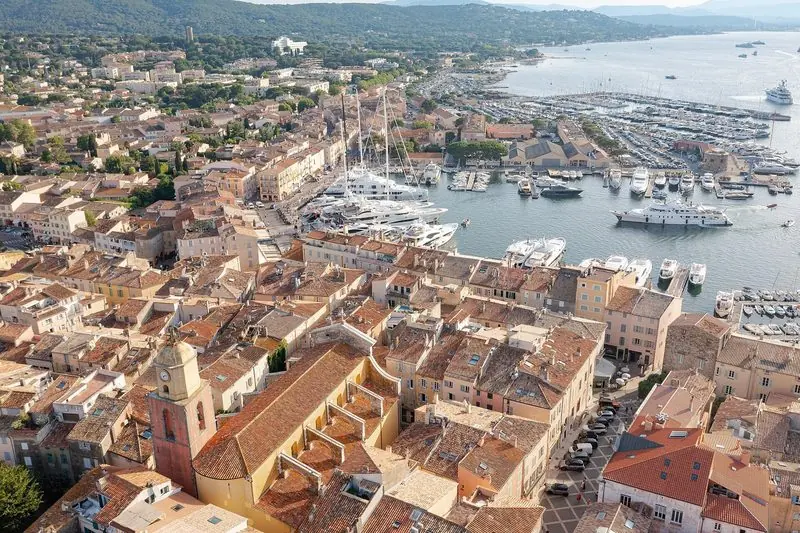
The text was registered at the Assemblee nationale on 23 June 2026 as proposition de loi number 2968, titled visant a interdire l'acces et l'usage des superyachts dans les eaux et ports francais. The lead signatory is Thomas Portes, a deputy for La France Insoumise, signing with other members of his group. The operative threshold is a total length of 50 metres. Any pleasure vessel at or above it would be refused access to French seaports, refused a berth, and refused permission to anchor in French waters.
The single exception is a maritime emergency, which leaves the right of refuge intact and nothing else. The sponsors rest their case on four points: the fuel burn of the largest yachts, the use of publicly funded port infrastructure for private leisure, anchor damage to Posidonia oceanica meadows, and ownership held through offshore structures. The file went to the commission du developpement durable et de l'amenagement du territoire. It has no examination date and no rapporteur, and the dossier records one document, the bill itself.
The penalty schedule is the unusual part
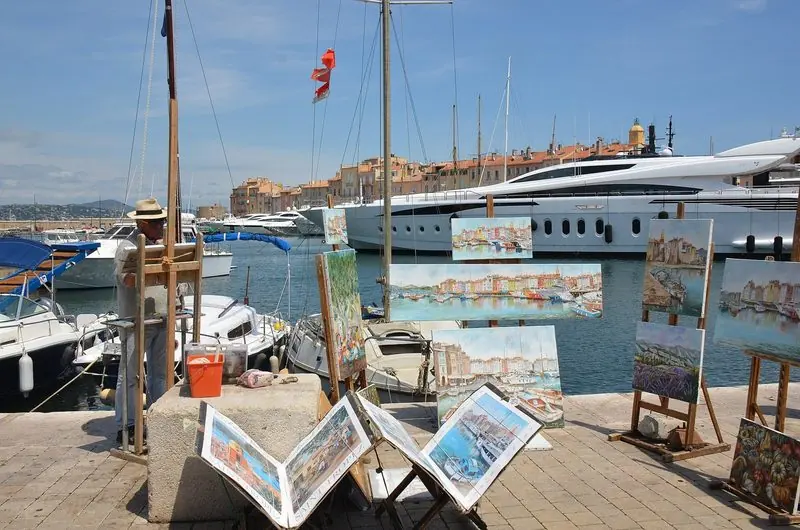
Most access rules of this kind carry a fixed fine. This one sets the penalty as a proportion of the vessel's assessed value, from 1 per cent to 15 per cent, so the sanction scales with the boat rather than with the offence. On a yacht assessed at EUR 60m that is a range from EUR 600,000 to EUR 9m for a single breach.
Two further sanctions sit behind the fine. The state could confiscate the vessel and put it to what the text calls general-interest use, and it could impose an exclusion of five to ten years that follows the owner rather than the hull, keeping any other yacht in the same ownership out of French waters. The bill also asks for disclosure of ultimate beneficial owners and transparency on crew employment contracts. Those two clauses would touch an owner who never intended to bring a 50-metre yacht to France.
What a 50-metre owner would lose
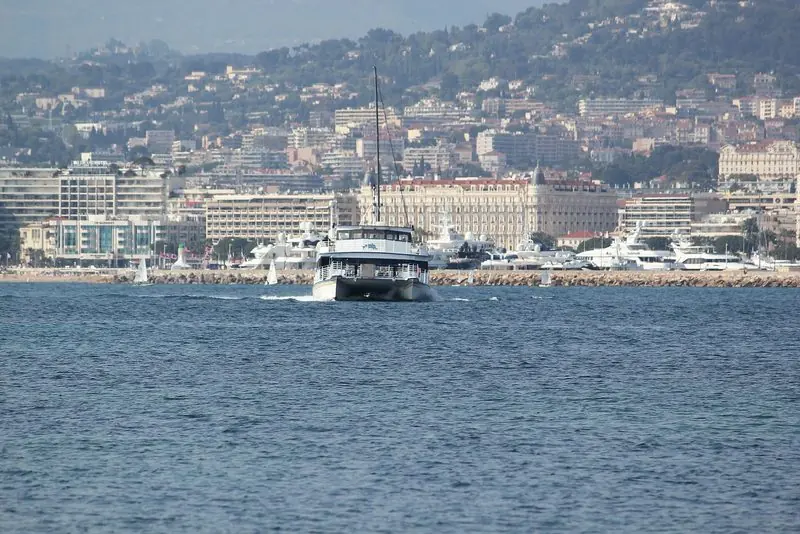
The Riviera is not one port, it is the working centre of the Mediterranean season. The Riviera Yachting Network counts 40 ports along the French Mediterranean coast that take yachts, from Marseille round to Menton, and reckons half the world's yacht fleet is on that coastline in summer. Antibes, Cannes, Golfe-Juan and Saint-Tropez are the addresses at stake. An owner shut out of them keeps Italy and Spain, and loses the coast the charter market prices highest.
The refit exposure is larger and less obvious. The same body puts more than a quarter of the world's refits of yachts over 30 metres in the south of France, and estimates that a yacht absorbs about 10 per cent of its value each year in servicing and maintenance. French yachting turnover runs above EUR 2bn, more than half generated in the south. A 50-metre exclusion would move that work to Barcelona, Genoa and the Dutch yards, and the technical supply chain with it.

A hard line at 50 metres creates a cliff
A binary threshold does what binary thresholds always do. A yacht of 49.99 metres would be untouched and one of 50.01 metres excluded, and the difference in build cost between them is close to nothing. SuperYacht24 reported the obvious industry response, that the measure would mainly generate demand for hulls sitting just under the line rather than cut the emissions the sponsors are aiming at. The trade already builds to legal thresholds as a matter of routine, most visibly around the 500 GT mark.
For a buyer weighing a resale today the question is narrower than the politics. If a length threshold of this kind ever entered French law, the market would split into hulls with Riviera access and hulls without, and the second group would carry a discount that has nothing to do with the yacht. That is the strongest argument the industry has against the bill, because the split would arrive without the environmental effect the text is written to achieve.

The odds are long and the signal is the point
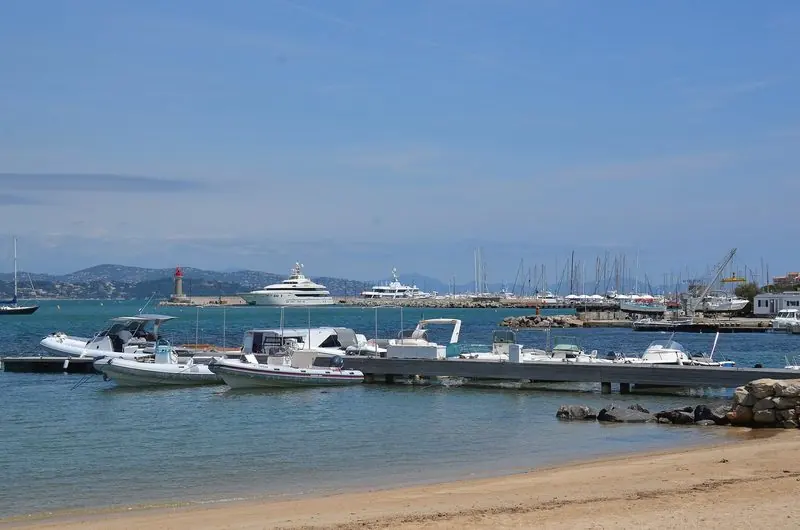
A proposition de loi from an opposition group faces a scheduling problem before it faces a vote. Government business fills most of the parliamentary calendar, and a text like this one reaches the floor mainly through the reserved day each group is allotted. Bill 2968 has no government backing on the record, no examination date and no committee report. It is a statement of position rather than a threat to anyone's cruising plans.
The part worth watching is not the ban. It is that a 50-metre line and a beneficial-ownership disclosure requirement now sit in a French parliamentary document with a number on it, which is where durable rules tend to begin. Owners in that band have nothing to do operationally, and the boats booked into Antibes and La Ciotat this autumn will go as planned. The next visible step, if there is one, is the appointment of a rapporteur.
What owners and crew report
The sponsor's stated aim is removal, not regulation
The bill is presented in climate terms, with confiscated vessels described as available for reuse in activities of greater public benefit. That framing matters more than the drafting, because it is what a future, softer text would inherit.
Thomas Portes, deputy, La France Insoumise (June 2026)The trade's objection is proportionality, not the principle
The industry response leads on time in French waters and engine hours rather than disputing the emissions arithmetic, which concedes the ground on which a narrower measure could later be built.
SuperYacht24 (July 2026)No owner has commented on the record
The desk found no named 50-metre owner or captain responding publicly to bill 2968. The reaction on file is from trade bodies and the press, not from the people it would bind.
Yotters desk
What is good, and what to watch
Strong points
- The odds against it are genuinely longAn opposition private member's bill sitting in committee with no date and no government support. The overwhelming majority of such texts are never examined, let alone passed.
- The threshold is at least legibleFifty metres is a number an owner can measure himself against without a survey, an emissions audit or a lawyer, which is more than can be said for most proposed environmental tests.
- The economic counter-case is already assembledEUR 6.1bn and 100,000 jobs, with regional detail, is the sort of figure that has defeated tourism-tax and mooring proposals in France before.
- It tells an owner where the argument is goingThe bill's value to a reader is as a marker. A length-based restriction has now been written down and given a number in a national parliament, which is the stage before anything softer gets drafted.
What to watch
- A threshold survives the bill that carried itOnce 50 metres is on paper it is available to any later drafter - a berthing tariff, a fuel duty band, a local anchoring rule. Bills die; numbers get reused.
- The fine is indexed to the asset, not the offenceA penalty set as a percentage of assessed value means the same act costs a 90-metre owner ten times what it costs a 50-metre owner, and it makes the valuation itself the thing that is litigated.
- The Riviera is not easily substitutableAn owner who plans around losing French ports loses Antibes, Cannes, Saint-Tropez and Villefranche in one move. Italy and Spain absorb the boats but not the yard, crew and provisioning network built around them.
- We have not read the textEvery specific in the penalty schedule here is trade reporting of a document the desk could not obtain in full. Treat the 1 to 15 per cent band as reported rather than confirmed.
Practical detail
| The text | Proposition de loi no. 2968, "visant a interdire l'acces et l'usage des superyachts dans les eaux et ports francais", 17th legislature. |
|---|---|
| Registered | 23 June 2026, at the National Assembly. |
| Who put it down | Thomas Portes with colleagues from La France Insoumise, a group in opposition. It is a private member's bill with no government backing. |
| Where it sits now | Referred to the Commission du developpement durable et de l'amenagement du territoire. No examination date has been set and no slot has been allocated. |
| The threshold | Total length of 50 metres or more. There is no tonnage, emissions or usage test - length alone. |
| What would be barred | Port access, berthing and anchoring in French territorial waters, with an exception for maritime emergency. |
| The penalty schedule | A fine of 1 to 15 per cent of the vessel's assessed value, confiscation of the vessel, and exclusion from French waters for five to ten years, as reported by SuperYacht24 and carried by the trade press. |
| What that band means in money | On a yacht assessed at EUR 80m the fine runs from EUR 800,000 to EUR 12m for a single entry. The assessment method is not set out in the coverage. |
| What the industry puts at stake | Yachting revenue of EUR 2.6bn in Provence-Alpes-Cote d'Azur and EUR 6.1bn nationally, supporting around 100,000 jobs. |
| The industry's emissions answer | That the fleet is in French waters under two months a year and runs main engines under two and a half hours a day on average, which it argues makes a full ban disproportionate. |
| What is NOT published | The desk could not obtain the article-by-article text from the Assembly dossier page, which carries the title and the committee referral only. The penalty band, the confiscation power and the five to ten year exclusion all come from trade reporting rather than from a text we have read. No impact assessment has been published and no valuation method for the "assessed value" the fine is calculated on has been described. |
| What to do about it now | Nothing legal. The useful move is to know what the 50-metre line would cost you if it were ever borrowed by a tax, a port tariff or a berth allocation rule, which is where thresholds of this kind usually end up. |
Questions this story answers
What happened?
A private member's bill registered in the National Assembly on 23 June would close French ports, berths and anchorages to any pleasure vessel of 50 metres or more, with fines running to 15 per cent of the yacht's assessed value. It sits in committee with no date for examination and its sponsors are in opposition, so it is unlikely to reach the statute book. The number is what an owner should read, because 50 metres is a line a large part of the delivered fleet has already crossed.
What is good about it?
The odds against it are genuinely long. An opposition private member's bill sitting in committee with no date and no government support. The overwhelming majority of such texts are never examined, let alone passed.
What should an owner or buyer watch?
A threshold survives the bill that carried it. Once 50 metres is on paper it is available to any later drafter - a berthing tariff, a fuel duty band, a local anchoring rule. Bills die; numbers get reused.
What do owners and crew report?
The bill is presented in climate terms, with confiscated vessels described as available for reuse in activities of greater public benefit. That framing matters more than the drafting, because it is what a future, softer text would inherit. (Thomas Portes, deputy, La France Insoumise (June 2026))
Who reported this?
Assemblee nationale, SuperyachtNews, Maritime Journal, SuperYacht24, IBI News, Riviera Yachting Network.
We do this for everyone who loves this world. The people who have spent their lives in it, and the people just discovering it. Yotters exists so that what we learn belongs to all of them.
Nobody pays us for this. No ads, no sponsors, nothing for sale. We just believe the world is a little better when knowledge is shared instead of kept.
If it gave you something today, tell us to keep going. Follow us, leave a like, or write a positive comment. We read every one, and they are what keeps us going.