Balearic Law Would Cap Every Yacht Over 12m at 10 Knots Inshore
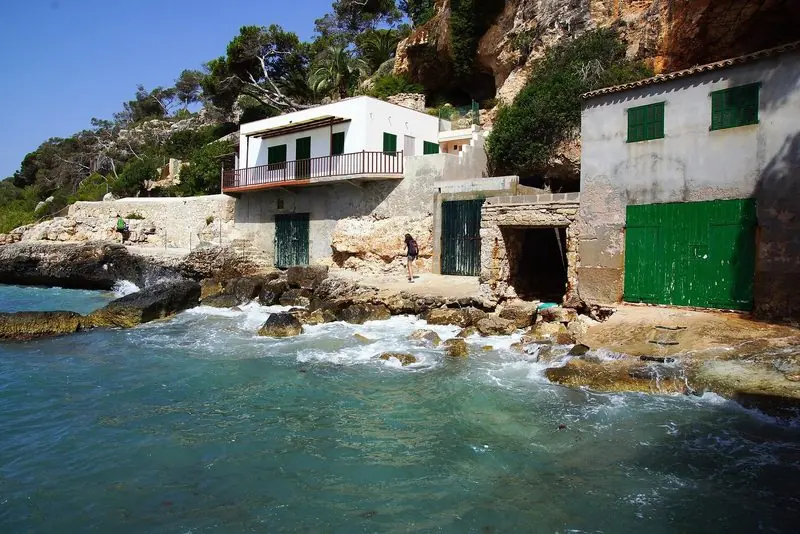
What does the Balearic Islands' new 10-knot rule cover?
Article 49 of the draft Llei de costes caps any vessel over 12 metres, plus jet skis, at 10 knots inside a band running one nautical mile out from the entire coastline of Mallorca, Ibiza, Menorca and Formentera.
The government approved the draft on 25 June 2026, at a press conference in Ibiza led by president Marga Prohens and Juan Manuel Lafuente, the minister for the Sea and the Water Cycle. It went to the regional parliament for scrutiny, the deadline for amendments closed on 4 September 2026, and a final floor vote is scheduled for this autumn. The one-mile band is measured from the coastline itself, not from the 12-mile territorial limit, so it covers the water column most yachts actually use: the approach to a marina berth, the run past a headland, and almost every anchorage a charter guest would recognise by name.
Commercial passenger vessels, merchant ships and public-service craft are exempt, because they already answer to international maritime speed and collision rules rather than a regional coastal law. A large private yacht is not. Owners who assumed a tender restriction would stop at jet skis and small runabouts are reading the wrong law: the 12-metre threshold catches the yacht herself on any approach, and it catches a shadow-boat tender the moment she is built to that length. It also sits on top of an existing rule, not instead of one: Guardia Civil guidance already requires every vessel to keep at least 200 metres clear of a designated public bathing area, life jackets worn and no alcohol at the helm. The new one-mile band does not replace that 200-metre bathing-zone rule, it wraps a far larger and previously unregulated stretch of water around it.
Why is the Balearic government introducing a speed limit now?
Lafuente has framed the restriction as a safety measure for the water immediately off the beach, not a broader anti-yachting policy, telling reporters at the June announcement that speed itself is not the target, only where it happens.
"Anyone who wants to speed should do so, but a mile away from the coast," Lafuente said, presenting the rule alongside unrelated provisions in the same bill that protect pre-1988 beach bars from demolition and hand event-licensing power to individual town halls. The pairing matters for how an owner should read it: this is a general coastal-management law, assembled after the Balearic government took over coastal jurisdiction from Madrid at the end of 2022, and the speed article is one clause inside it rather than a yacht-specific crackdown.
The stated rationale is congestion and near-miss risk in the narrow water where swimmers, paddleboarders, tenders and jet skis already share space with arriving and departing yachts through the height of the summer season. Marine-protected areas inside the islands, including stretches with posidonia seagrass meadows, already carry tighter local rules than the new one-mile band and are unaffected by it either way. The backdrop is a season that gave the government a concrete case to point to: a hired motorboat capsized off s'Estanyol on 18 August 2026 in worsening conditions, killing one of six people aboard, and Pedro Gil, chairman of the Balearic Islands Charter Operators' Association, used the aftermath to call for better-trained operators and consistent safety briefings rather than a blanket ban. Separately, and on a national rather than regional timetable, Spain tightens who may take a rental motorboat out at all from 1 October 2026, closing the exemption that let craft under 5 metres with 15 hp or less operate without a certificate of competence.
How big are the penalties, and will anyone actually enforce them?
The bill classes a breach as a serious offence carrying a fine of between EUR 3,000 and EUR 300,000, scaled to the risk created and the damage done, but neither the draft nor the ministry has published the patrol resources that would catch a breach in the first place.
That range is wide by design: a jet ski cutting inside the line on a quiet Tuesday and a 40-metre motor yacht crossing an anchorage at speed on a August Saturday are not meant to draw the same number. Ara Balears, the regional outlet that has tracked the bill since its June announcement, reported the government's own account of the law as covering speed limits and a streamlining of coastal-activity permitting in the same breath, without a dedicated enforcement budget attached to either.
That absence is the detail an owner's shore team should weight more heavily than the headline number. A fine schedule with no stated patrol capacity behaves, in the first season at least, like a rule enforced by complaint and by chance encounter with the Guardia Civil's maritime service rather than by routine monitoring - which does not make a breach cost-free, but does mean the real early risk is a witnessed incident near a crowded beach club, not a speed camera.
Is the Balearic speed law certain to pass this year?
No: the Prohens government does not hold a guaranteed parliamentary majority for the bill and needs the far-right Vox party's votes to carry the autumn floor vote, which keeps the final text open to negotiation even though the amendment window has closed.
A closed amendment period narrows what can change but does not fix the outcome - a minority government still has to hold a coalition together through the vote itself, and a law built from several unrelated provisions, coastal speed limits bundled with beach-bar protections and permitting reform, gives any negotiating partner more than one lever to pull for a concession elsewhere in the text.
Until that vote happens the 10-knot line is a draft, not a rule in force: the law takes effect the day after publication in the official bulletin, which under the current timetable is unlikely to land before the 2027 charter season opens. An owner planning a 2026 Balearic itinerary this autumn is planning against a bill, not yet a statute.

What should an owner or captain actually do differently?
Nothing changes for this season, but every Balearic passage plan drawn for 2027 onward should assume the one-mile band is live, because the region is following a wider Mediterranean pattern rather than inventing an isolated rule.
France has run a comparable restriction for decades: a 300-metre band off the entire coast, including every island and rock, capped at 5 knots year-round, tighter in distance than the Balearic proposal but stricter in speed and already routine for any captain who has worked the French Riviera. A Balearic captain used to holding 15 to 18 knots on the final approach into Palma or Ibiza Town will need a new default for the last mile, and a tender crew used to planing in from the mother yacht will need a slower, longer final leg past the swim zones the rule is written to protect.
The practical fix costs nothing and is available now, ahead of any vote: build the one-mile line into the passage plan as a standing waypoint, brief it to relief captains and charter guests the way a no-wake zone is briefed today, and treat the EUR 3,000 to EUR 300,000 range as the ceiling a court could reach rather than a fine schedule with a fixed tariff, since none has been published.
What is good, and what to watch
Strong points
- Matches an existing Mediterranean normFrance has run a 300-metre, 5-knot coastal band for decades; the Balearic version is a wider, slightly faster variant of a rule captains already work under on the French Riviera.
- Targets the water where the actual risk sitsThe one-mile band covers the approaches, headlands and anchorages where yachts, tenders, jet skis and swimmers already share space in high summer, rather than restricting open water no one contests.
What to watch
- No published enforcement resourceNeither the draft nor the ministry has attached a patrol budget to the speed article, so first-season compliance likely rests on complaint and chance encounter rather than routine monitoring.
- Passage is not guaranteedThe government lacks a majority without Vox, and the bill bundles the speed limit with unrelated beach-bar and permitting provisions that give any negotiating partner leverage to reopen the text before the autumn vote.
Practical detail
| Speed limit | 10 knots (18.5 km/h) |
|---|---|
| Zone | Within 1 nautical mile (1.85 km) of the Balearic coastline |
| Vessels covered | All vessels over 12 metres LOA, plus jet skis and similar craft |
| Exempt | Commercial passenger vessels, merchant ships, public-service vessels |
| Fine range | EUR 3,000 to EUR 300,000, scaled to risk and damage |
| Draft approved by government | 25 June 2026, Ibiza |
| Amendment deadline in parliament | 4 September 2026 |
| Final floor vote | Scheduled for autumn 2026 |
| In force | Day after publication in the official bulletin, following the floor vote |
| What is not published | No stated patrol or enforcement budget attached to the speed article |
Questions this story answers
What happened?
The Balearic government's draft coastal law sets a 10-knot limit within one nautical mile of Mallorca, Ibiza, Menorca and Formentera for any vessel over 12 metres, with the amendment window now closed and a floor vote due this autumn. For an owner used to running a tender in on the plane or holding station off a beach club, the rule reaches almost every yacht that has ever anchored there, and the fines on paper run as high as EUR 300,000.
What is good about it?
Matches an existing Mediterranean norm. France has run a 300-metre, 5-knot coastal band for decades; the Balearic version is a wider, slightly faster variant of a rule captains already work under on the French Riviera.
What should an owner or buyer watch?
No published enforcement resource. Neither the draft nor the ministry has attached a patrol budget to the speed article, so first-season compliance likely rests on complaint and chance encounter rather than routine monitoring.
Who reported this?
SuperyachtNews, Ara Balears, Isla Mallorca Magazine, Balearic Ministry for the Sea and the Water Cycle.
We do this for everyone who loves this world. The people who have spent their lives in it, and the people just discovering it. Yotters exists so that what we learn belongs to all of them.
Nobody pays us for this. No ads, no sponsors, nothing for sale. We just believe the world is a little better when knowledge is shared instead of kept.
If it gave you something today, tell us to keep going. Follow us, leave a like, or write a positive comment. We read every one, and they are what keeps us going.