Italy Lets Private Non-EU Yachts Charter Without Going Commercial
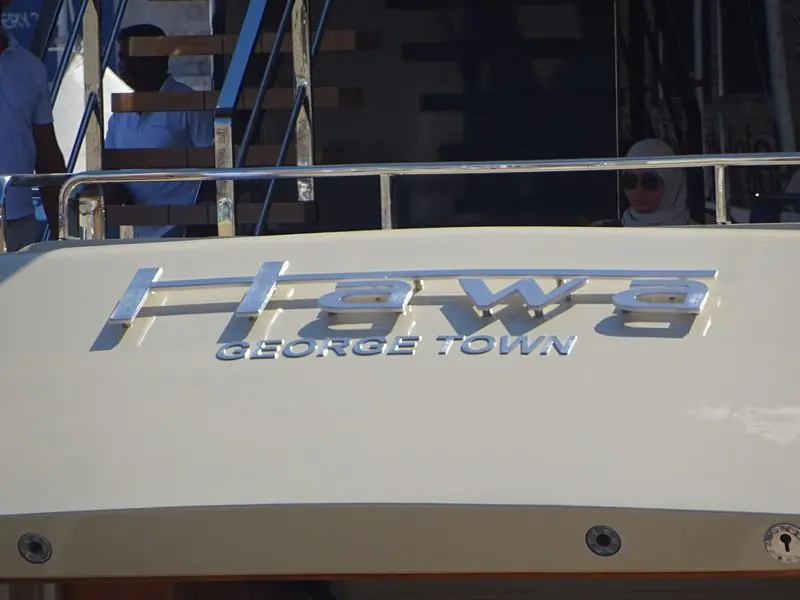
What did Italy's ADM Circular 11/2026 change for non-EU yacht owners?
Circular No. 11/2026, issued by Italy's Customs and Monopolies Agency (ADM) on 15 May 2026, lets a privately registered, non-EU-flagged yacht already in Italy under Temporary Admission carry out limited, occasional charter activity without converting to full commercial status, provided the owner registers for Italian VAT, adds commercial charter insurance for the chartered periods, and keeps records separating private time from chartered time.
Temporary Admission (TA) is the customs status that lets a non-EU-flagged yacht cruise EU waters, including Italy's, without paying import VAT on the vessel itself, on the condition the boat stays in private use. Until this circular, that condition was treated as absolute: the moment a TA yacht took a single paying charter guest, Italian customs viewed the private-use basis as broken. ADM's circular does not remove that principle, but it creates a defined, documented path around it - a formal route, in the language used by yacht charter trade press covering it, for certain privately registered, non-EU-flagged yachts under Temporary Admission to run occasional charter activity without losing their underlying private status.
The practical shift is procedural rather than a tax cut: the yacht itself keeps its duty-free TA import status, but the charter income is treated separately and taxed on its own terms. An owner who wants to use it has to set up a chartering entity registered for Italian VAT, run commercial-grade insurance alongside the yacht's normal private cover for however many weeks are chartered, and hold documentation that clearly marks which days were private and which were commercial. None of that existed as a defined process before 15 May 2026; owners and managers either avoided Italian charter altogether on a private-flagged hull or navigated it case by case with no formal circular to point to.
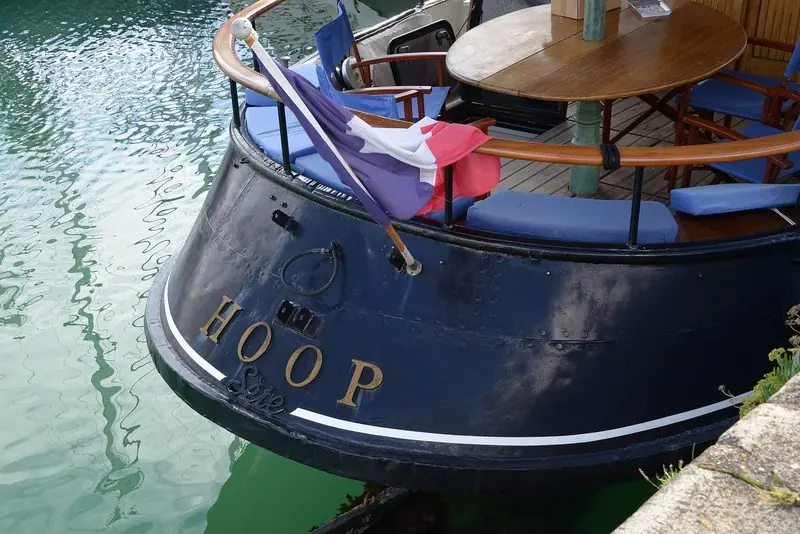
Why couldn't a private, non-EU-flagged yacht charter in Italy before this circular?
Temporary Admission has never permitted commercial use, so before Circular 11/2026 a non-EU-flagged yacht that wanted to charter even a single week in Italian waters had to go through full commercial importation, declaring import VAT at Italy's standard 22 per cent rate on the vessel and re-registering its customs status entirely - a cost and a process most owners weighing a handful of charter weeks a year judged not worth it.
The EU's Temporary Admission regime, set out in Commission Delegated Regulation (EU) 2015/2446, caps private-use TA at 18 months and is explicit that the relief is for private cruising, not commercial operation. That left a non-EU owner with two options if any charter income was wanted: convert the yacht to full commercial registration, which brings VAT on the vessel itself along with commercial safety, manning and certification standards that apply whether or not the boat charters that week, or stay private and simply not charter in Italian waters at all. Both options were unattractive to an owner who wanted the boat mostly for private use with the option of a few chartered weeks to offset running costs.
Some owners chartered informally anyway, accepting the compliance risk; others avoided Italy specifically and based their charter seasons in jurisdictions with an established Yacht Engaged in Trade, or YET, regime instead. Italy had no equivalent mechanism of its own until this circular, which is why trade press and maritime law firms have spent the summer of 2026 characterising it as filling a genuine gap rather than adjusting an existing one.
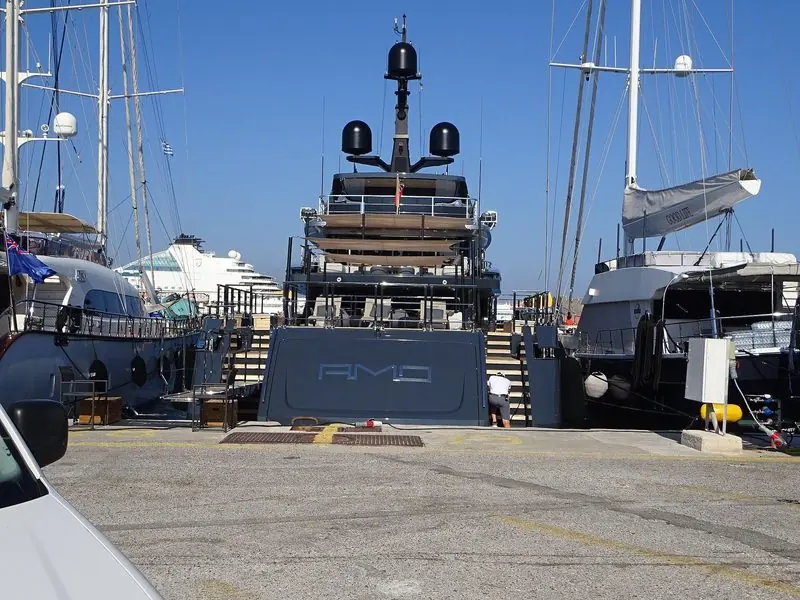
Which flag states qualify for Italy's new charter route, and which don't yet?
The new route is only as useful as an owner's own flag state's existing YET framework: Cayman Islands-flagged yachts of 24 metres and over can charter for up to 84 days a calendar year under Cayman's established YET regime, Marshall Islands-flagged private yachts can obtain charter certification through their own registry, and Isle of Man-flagged yachts cannot use the Italian route at all yet, because Italy is not currently among the cruising areas the Isle of Man's YET designates.
ADM's circular works by recognising a foreign flag state's own charter framework rather than inventing an Italian one from scratch, so the practical detail an owner needs sits with the registry, not with Rome. Cayman is the clearest case: qualifying Cayman-flagged yachts of 24 metres and above may already charter for up to 84 days per calendar year under Cayman's YET rules, and Italy's circular gives that existing entitlement somewhere to actually be used. Marshall Islands-flagged private yachts have a comparable path to obtain their own charter certification through their registry.
Isle of Man is the clear exception, and it matters because Isle of Man is a common flag choice for private yachts in exactly this size range: its YET framework designates specific cruising areas where chartering is permitted, and Italy is not currently one of them, so an Isle of Man-flagged owner gets nothing from this circular until that changes. No source covering the circular has reported a date or commitment for Italy to be added, so an Isle of Man owner considering Italian charter should treat the route as unavailable rather than pending.
What does an owner have to register, pay and insure to use the new route?
Using the route means registering the chartering entity for Italian VAT, currently 22 per cent, and accounting for it on the charter fee; adding commercial charter insurance on top of the yacht's standard private cover for the chartered weeks; and meeting the same safety, certification and manning standards a fully commercial charter yacht would for those weeks - the saving is avoiding a full commercial import of the vessel itself, not avoiding the normal cost of running a charter.
The yacht's own duty-free Temporary Admission status is preserved, which is the actual benefit: an owner is not declaring import VAT on the boat's value just to charter it a few weeks a year. Everything downstream of that is unchanged from what any charter yacht in Italy has to do. Italian VAT registration and payment are, in the words of the legal commentary tracking the circular, integral to the procedure, not an optional extra, and it is the chartering entity, not the owner personally, that has to be VAT-registered and account for the tax collected on each booking.
Insurance is the other real cost most private policies do not already cover: a standard private-use yacht policy typically excludes commercial charter risk, so an owner using this route needs a commercial rider or a separate policy for the chartered periods specifically, not a blanket annual upgrade. Manning, safety equipment and certification standards for the chartered weeks track what a commercial vessel would need, and the paperwork trail distinguishing private days from chartered days is what an ADM inspection would actually check, according to the practitioners writing about it this summer.
What has ADM's circular not settled, and what should an owner check before using it?
ADM has not published a single Italy-wide cap on charter days independent of each flag state's own YET rules, no fee schedule beyond the standard VAT obligation has been published, and the consistent advice from the law firms that have tracked the circular since May is to get a bespoke read for a specific flag, yacht and itinerary rather than rely on a generic summary of it.
Stephenson Harwood, one of the firms that has published guidance on the circular, describes the route as sitting at the intersection of EU customs law, Italian VAT, insurance regulation and each flag state's own requirements - four separate bodies of rule that an owner's team has to satisfy simultaneously, none of which the circular itself simplifies on its own. PG Legal's own coverage, updated as recently as 7 August 2026, is similarly careful to note what the circular does not specify: no tonnage threshold independent of the flag's own YET rules, and no published penalty schedule for getting the private-versus-charter documentation wrong.
No yacht owner has yet gone on record using the new route; the coverage so far is entirely from law firms and trade press reading and interpreting the circular for clients who are considering it, which is normal for a rule three months old and is not, on its own, a reason to doubt it works as described. The honest state of it for an owner today is that the pathway exists and is real, but the specific numbers that matter for any one yacht - the flag's own day cap, the VAT registration timeline, the actual cost of a charter-period insurance rider - are still a conversation with a lawyer and an insurer, not a published table anyone can read off the circular itself.
What is good, and what to watch
Strong points
- Closes a long-standing grey areaFormalises what owners and managers were previously doing informally or avoiding, with an actual documented procedure behind it now.
- No full commercial conversion requiredAn owner keeps the yacht's private Temporary Admission status and duty-free import basis while still being able to charter a limited number of weeks.
- Built on each flag's own established machineryCayman and Marshall Islands owners can use YET regimes their own registries already operate, rather than a brand-new Italian bureaucracy from a standing start.
What to watch
- Not every flag qualifies yetIsle of Man-flagged yachts are excluded until Italy is added to its designated cruising areas, with no reported date or commitment for that to happen.
- The underlying obligations do not disappearVAT registration, commercial insurance and full safety and manning standards for the chartered weeks are all still required; the route removes one specific cost, not the general cost of running a charter.
- No fee schedule or Italy-wide day cap has been publishedEvery firm covering the circular recommends bespoke advice for a specific flag and itinerary rather than treating it as a fixed, published set of numbers.
Practical detail
| What changed | ADM Circular No. 11/2026 (15 May 2026) lets private, non-EU-flagged yachts under Temporary Admission charter occasionally in Italy without converting to full commercial status |
|---|---|
| Before this circular | Temporary Admission never permitted commercial use; chartering in Italy meant full commercial importation and import VAT on the vessel |
| Qualifying flags confirmed so far | Cayman Islands (24m+, existing YET regime); Marshall Islands (charter certification via registry) |
| Flag excluded so far | Isle of Man - Italy is not currently a designated cruising area under its YET framework |
| Charter duration example | Up to 84 days per calendar year for Cayman-flagged yachts 24m and over, under Cayman's own YET cap; no separate Italy-wide cap has been published |
| VAT | Chartering entity must register for Italian VAT (standard rate 22 percent) and account for it on the charter fee |
| Insurance | Commercial charter insurance required for the chartered periods, in addition to the yacht's standard private cover |
| Maximum private-use Temporary Admission period | 18 months, under EU Regulation 2015/2446, Article 217(e) |
| What is not published | No Italy-wide charter-day cap independent of flag state, no fee schedule beyond VAT, and no confirmation of whether or when Isle of Man will be added |
Questions this story answers
What happened?
Italy's Customs and Monopolies Agency has closed one of Mediterranean yachting's oldest grey areas: a private, non-EU-flagged yacht can now charter occasionally in Italian waters without converting to full commercial registration. For an owner who wanted to recoup a few weeks of running costs a season without the expense and paperwork of a full commercial conversion, that used to mean an unattractive choice between doing it informally or not doing it at all - Circular No. 11/2026 gives a documented third option, though only some flag states can use it so far.
What is good about it?
Closes a long-standing grey area. Formalises what owners and managers were previously doing informally or avoiding, with an actual documented procedure behind it now.
What should an owner or buyer watch?
Not every flag qualifies yet. Isle of Man-flagged yachts are excluded until Italy is added to its designated cruising areas, with no reported date or commitment for that to happen.
Who reported this?
Italian Customs and Monopolies Agency (ADM), PG Legal (Gianfranco Puopolo), Stephenson Harwood, YachtCharterFleet (Anna Ingles, 24 August 2026).
We do this for everyone who loves this world. The people who have spent their lives in it, and the people just discovering it. Yotters exists so that what we learn belongs to all of them.
Nobody pays us for this. No ads, no sponsors, nothing for sale. We just believe the world is a little better when knowledge is shared instead of kept.
If it gave you something today, tell us to keep going. Follow us, leave a like, or write a positive comment. We read every one, and they are what keeps us going.