Hakvoort's Explorer Flagship Scout Rejoins the Market at EUR 95m
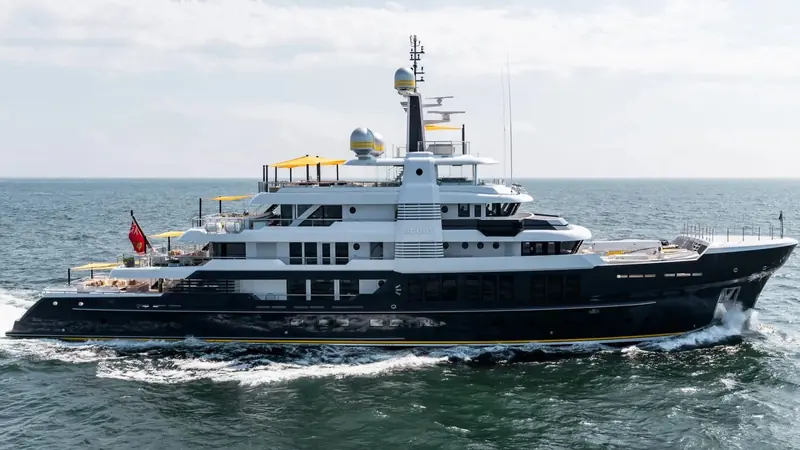
The yard's biggest yacht, on the market for the first time
Scout has just been listed for sale by Fraser brokers Josh Gulbranson and Stuart Larsen, asking EUR 95,000,000. It is her first appearance on the market: Royal Hakvoort delivered the 63.7-metre, 1,416 GT yacht to owners James Berwind and his partner Kevin Clark in April 2019, under the project name Project BRIO, and she has not changed hands since. Berwind, an architect by training, and Clark named her after one of their rescue dogs; the couple say they spend around seven months of every year aboard, cruising with Brio and a second dog, Scout.
By length and by volume, Scout is the largest yacht the Dutch yard has built since it was founded a century ago, a record that has stood since her launch in December 2018. That matters to a buyer weighing her against newer, larger-volume tonnage from Oceanco or Amels: Hakvoort has never built past this size, so there is no bigger sister ship to compare her against and no production line she was pulled from. She is a one-off, built to a single owner's brief, which is both the appeal and the constraint for whoever buys her next.
Built to look like she had another life before she was a yacht
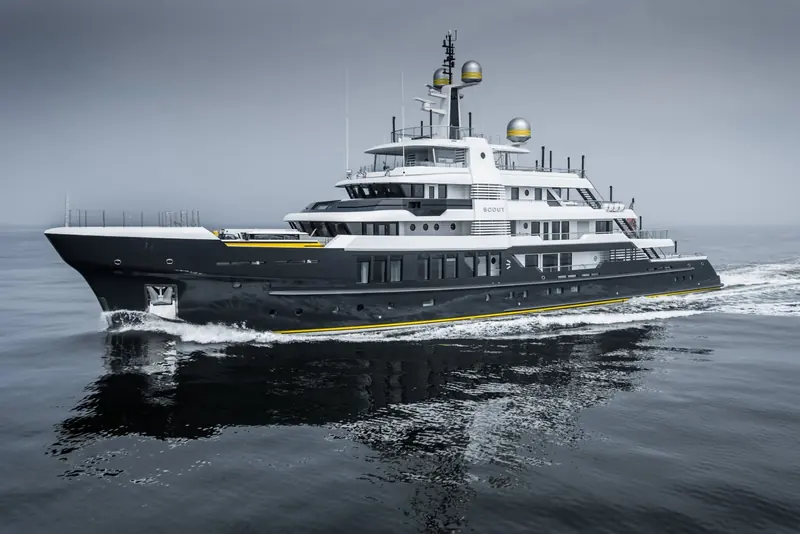
The brief Berwind gave exterior and interior designer H2 Yacht Design, led by Jonny Horsfield, was for a boat that looked like a conversion from a working commercial vessel rather than a yacht built to be one. Diana Yacht Design supplied the ice-classed steel hull and naval architecture, and getting the rugged, riveted-plate look the owner wanted took roughly 80,000 work-hours of metal reconstruction at the yard, according to Hakvoort's own account of the build. Horsfield has said plainly that Berwind wanted the boat to look as though she had lived a previous life before conversion, and the finished yacht keeps that logic below decks as well as above: exposed bulkhead lighting, porthole motifs in the guest bathrooms and a ship's clock by the crew door.
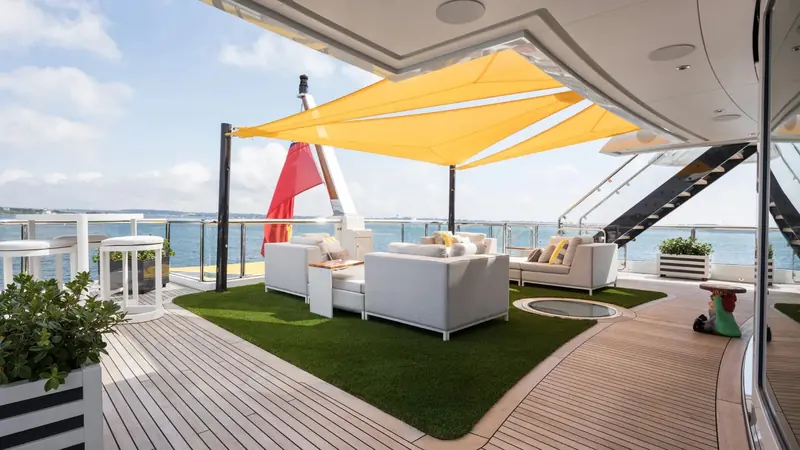
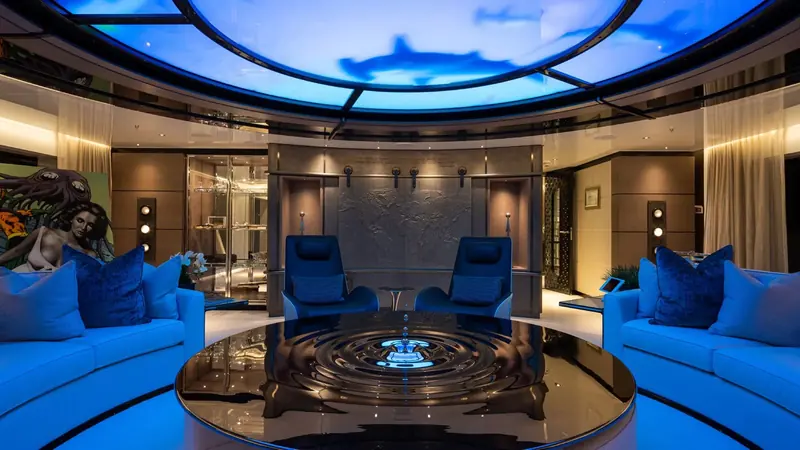
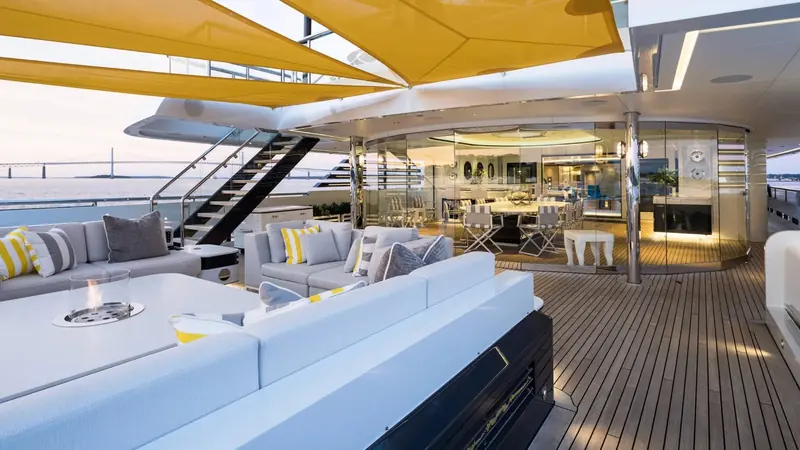
The interior draws openly on Jules Verne's Twenty Thousand Leagues Under the Sea and Fritz Lang's Metropolis, most visibly in the main saloon, where a backlit ceiling panel and collaged artwork by the artist William Steiger carry the theme through in place of the more conventional art collections yachts this size usually carry. There is no formal dining room; guests eat instead at a long communal table under sail-like yellow shade canopies on the aft deck, a choice Horsfield and the owners built the whole social plan of the yacht around rather than treating as a compromise.
A genuine world cruiser, not just explorer styling
What separates Scout from the growing crowd of yachts built merely to look like explorers is the engineering underneath the styling. Her hull is ice-classed steel, not the aluminium or GRP construction most explorer-styled yachts use above a workboat-grade paint job, and Fraser's own listing describes her as commercial-grade rather than explorer-styled. Twin Caterpillar 3512C diesels give a combined 3,148hp, enough for a top speed of 15.2 knots and a 12.5-knot cruise, and a fuel capacity of 159,000 litres gives her a listed range of 6,300 nautical miles at 12 knots - genuinely transatlantic, and well beyond what most yachts marketed as explorers can manage without a fuel stop.
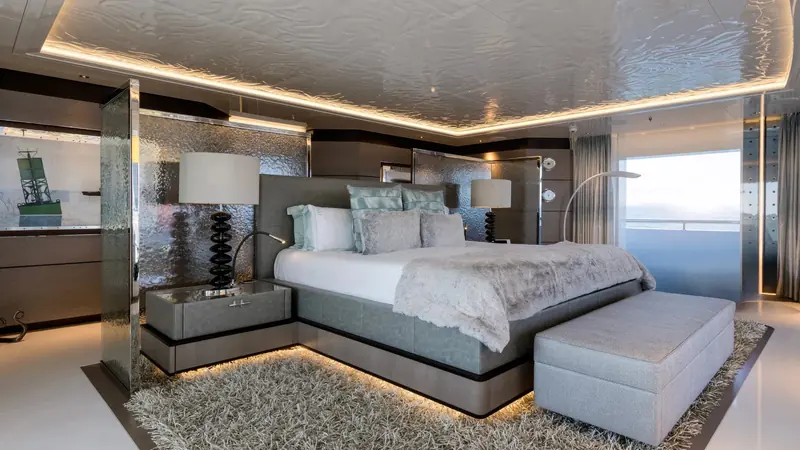
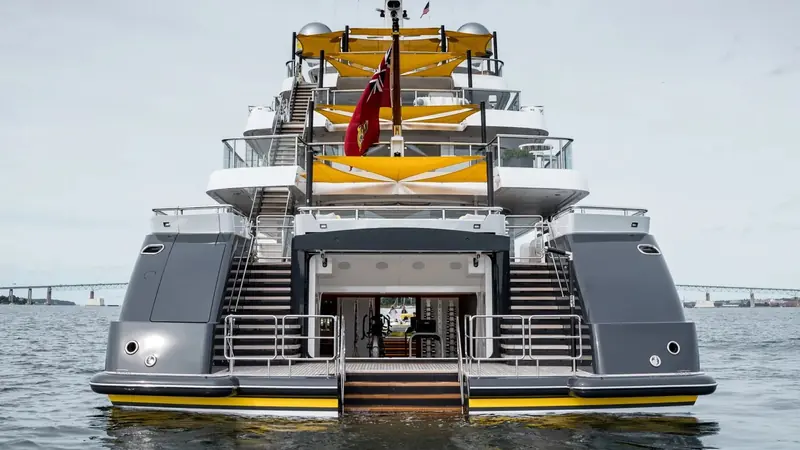
She sleeps 16 guests across seven cabins - one owner's suite, two VIP, two double and two double/twin plus pullman berths - with 16 crew in nine cabins, a crew ratio that reflects how much of the yacht's running is built around long-range, self-sufficient cruising rather than short Mediterranean charter hops. A helipad sits on the mooring deck and the transom opens into a full tender garage, currently home to two custom tenders that lower to beach-club mode at anchor.
Seven years aboard, in the owners' own words
Berwind and Clark have spoken about Scout's design and use in interviews with Boat International, the most detailed public record of how the yacht is actually lived in rather than how she was marketed at launch. "We want to enjoy the sea and the fresh air and travel with our dogs," Berwind has said of the yacht's purpose, and Clark has described the pair's approach to the design brief as deliberately informal: "We didn't have a need to conform and we don't take ourselves that seriously." Berwind has also described the compromises the layout forced on the design team - when he insisted the sundeck carry a day head and an elevator while staying fully open, Horsfield's solution was to move both outboard, tucked into the yacht's flanks rather than her centreline.
Asked whether the unconventional brief, which added time and cost to the build, was worth it, Berwind's answer was unambiguous: "Did we actually save a lot of time? No. But I would absolutely do this again." No independent charter guest or broker sea-trial report has been published since her 2019 delivery, so beyond the owners' own account there is no outside verification of how she performs at sea or how the ice-classed hull has held up over seven years of use; a buyer evaluating her will be relying on Fraser's listing and Hakvoort's own record until a survey is commissioned.
What EUR 95m buys, and what the market still has to tell
Hakvoort has never disclosed what Scout cost to build, and neither Berwind nor Fraser has said whether EUR 95,000,000 represents a profit or a loss against that figure - unlike this month's other headline superyacht sale, the Feadship Moonrise, whose owner's build cost and asking price are both on the public record, Scout's financial history is simply not published. That gap is itself useful information for a buyer: it means there is no comparable transaction to benchmark the asking price against, because Hakvoort has built nothing else this size and Scout has never previously changed hands.
The test the listing sets is less about Scout specifically than about the explorer segment she sits atop: whether the market will pay a premium for real ice-classed, commercial-grade construction over the explorer-styled aluminium yachts now built in volume by yards like Sanlorenzo and JFA, which cost less to build and cruise faster but cannot match her range or hull strength. A quick sale near the asking price would suggest genuine construction still commands a premium over styling; a long stay on the market or a significant reduction would suggest the opposite.
What owners and crew report
Built for long stretches aboard, not weekend charter
Berwind and Clark say they spend roughly seven months a year aboard with their dogs, and designed the layout around that use rather than short-term guest turnover.
Boat International (owner interview)The unconventional brief was worth the extra time it cost
Berwind has said the informal, no-formal-dining layout took longer and cost more to design than a standard yacht, but that he would make the same choice again.
Boat International (James Berwind)Design compromises were solved, not accepted
When Berwind insisted the sundeck carry a day head and an elevator while remaining fully open, designer Jonny Horsfield's fix was to move both outboard into the yacht's flanks.
Boat International (Jonny Horsfield, H2 Yacht Design)
What is good, and what to watch
Strong points
- Genuine ice-classed steel constructionCommercial-grade engineering under an explorer look, rather than aluminium or GRP dressed to resemble one.
- Real range6,300nm at 12 knots and full transatlantic capability, beyond most yachts marketed as explorers.
- Clean ownership historyOne owner since delivery, no charter wear, no resale flips to explain away.
- A genuine one-offThe largest yacht Hakvoort has built in a century in business, with no sister ship and no production line behind her.
What to watch
- Cruising speed12.5 knots is slow next to a planing yacht of similar length, a direct tradeoff for the range and hull strength.
- No formal dining roomThe casual, director's-chair social plan will not suit every buyer used to a conventional formal layout.
- Lower guest density16 guests across 7 cabins on a 63.7-metre hull is fewer than a standard-layout yacht this size typically carries.
- No independent verification since deliveryNo published sea trial or survey since 2019; every figure in this listing is Hakvoort's or Fraser's own.
Practical detail
| Asking price | EUR 95,000,000, first time on the market since her 2019 delivery |
|---|---|
| Broker | Fraser Yachts (Josh Gulbranson and Stuart Larsen) |
| Range | 6,300 nautical miles at 12 knots on 159,000 litres of fuel - transatlantic capable |
| Speed | 15.2 knots top, 12.5 knots cruise, from twin Caterpillar 3512C diesels totalling 3,148hp |
| Built | Royal Hakvoort, Netherlands; launched December 2018, delivered April 2019; ice-classed steel hull, aluminium superstructure |
| Accommodation | 16 guests in 7 cabins; 16 crew in 9 cabins |
| What is not published | The original build cost, whether the asking price represents a profit, and any independent sea-trial or survey report since delivery - every performance figure here is Hakvoort's or Fraser's own |
Questions this story answers
What happened?
Scout, the 63.7-metre ice-classed explorer that is the largest yacht Royal Hakvoort has built in its century of business, is for sale for the first time since her 2019 delivery. Her only owners are asking EUR 95m through Fraser, a test of what a genuinely commercial-grade world cruiser is worth against the explorer-styled yachts that only look the part.
What is good about it?
Genuine ice-classed steel construction. Commercial-grade engineering under an explorer look, rather than aluminium or GRP dressed to resemble one.
What should an owner or buyer watch?
Cruising speed. 12.5 knots is slow next to a planing yacht of similar length, a direct tradeoff for the range and hull strength.
What do owners and crew report?
Berwind and Clark say they spend roughly seven months a year aboard with their dogs, and designed the layout around that use rather than short-term guest turnover. (Boat International (owner interview))
Who reported this?
Fraser Yachts brokerage listing (Josh Gulbranson and Stuart Larsen), Boat International, "64m Hakvoort explorer yacht Scout rejoins the market", 12 August 2026, Boat International, "Scout: The 64m Hakvoort explorer inspired by Twenty Thousand Leagues Under the Sea" (owner and designer interviews), Royal Hakvoort Shipyard, Scout project record, YachtBuyer, Scout specification sheet.
We do this for everyone who loves this world. The people who have spent their lives in it, and the people just discovering it. Yotters exists so that what we learn belongs to all of them.
Nobody pays us for this. No ads, no sponsors, nothing for sale. We just believe the world is a little better when knowledge is shared instead of kept.
If it gave you something today, tell us to keep going. Follow us, leave a like, or write a positive comment. We read every one, and they are what keeps us going.