ICE Yachts Launches Its First Carbon ICE 80, Named Mavi
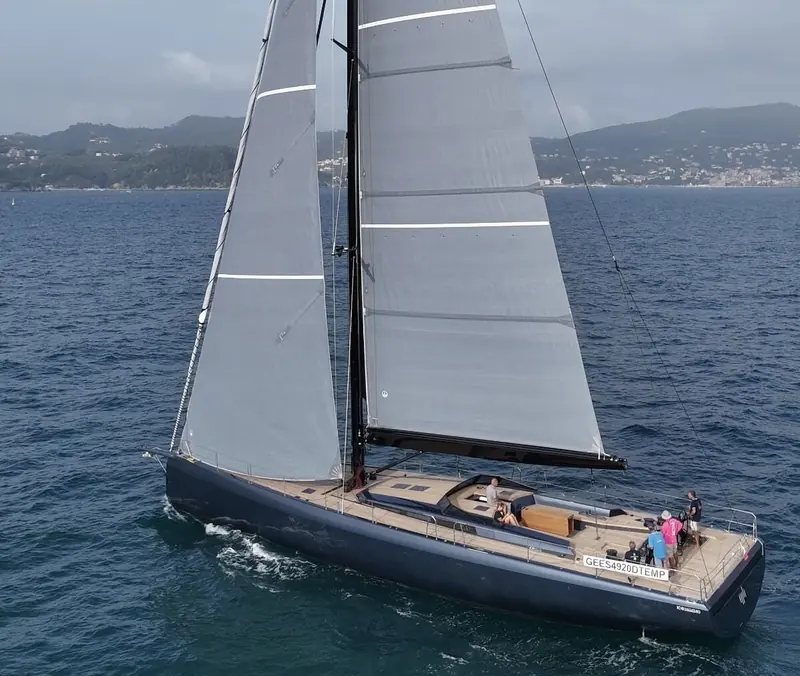
What is Mavi, and who built her?
Mavi is the first hull of ICE Yachts' new 24-metre ICE 80, launched this week at the builder's Salvirola shipyard in Lombardy, Italy, as an all-carbon sailing yacht designed with Felci Yacht Design.
ICE Yachts is a relatively young name in bluewater carbon cruisers, but the ICE 80 is not a first attempt at working with Felci Yacht Design. Umberto Felci's studio has run the naval architecture, structural design, layout and interior styling on ICE hulls for roughly ten years, a run that includes the smaller ICE 70 the yard already has in the water. On the ICE 80, Felci's office carried that same scope again, adding the coachroof and deck design, while ICE Yachts' own technical office engineered the systems and ran production at Salvirola.
The yard is treating the ICE 80 as its new flagship, and Mavi as the proof of it before a wider public debut. Trade coverage of the model line has pointed to the Cannes Yachting Festival, which opens on 8 September 2026, as the plan for a first public showing, alongside a second new model, the ICE 70 Sport. That would put a finished, floating hull in front of buyers within days of launch rather than months, which matters for a yard trying to establish a flagship rather than simply sell one boat.
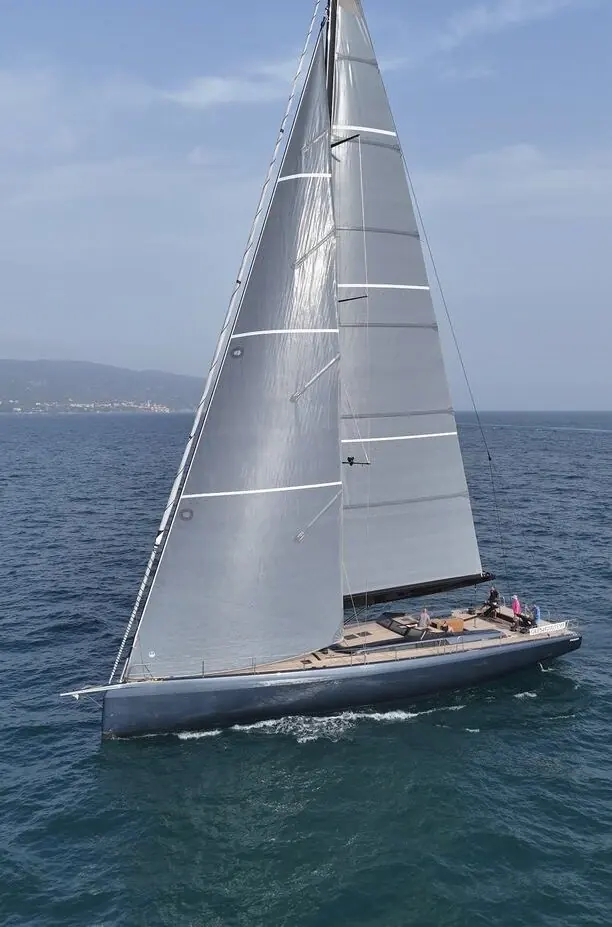
How is the ICE 80 built, and what does that construction buy an owner?
The ICE 80's hull, deck and structure are built entirely from carbon fibre and epoxy resin using a one-shot vacuum infusion process, which the yard and Felci Yacht Design credit for a light displacement of 37.6 tonnes on a 24-metre waterline.
A one-shot infusion lays the full structure in a single cure rather than bonding separate carbon panels afterward, which is the more labour-intensive route most production carbon boats still take. It costs more in tooling and time at the mould stage, but it removes the secondary bonds that are usually the first place a structure shows its age, and it is part of why a 24-metre hull comes in at 37.6 tonnes light displacement with roughly 12 tonnes of that as ballast. That ballast ratio, at close to a third of the boat's total weight, is what lets a hull this light still stand up to a full working sail plan rather than needing to reef early.
The keel is telescopic rather than fixed, extending the draught from about 3.1 metres retracted to 4.8 metres down, a spread that covers both a thin-water anchorage and open-water performance sailing on the same boat without swapping keels. A double-rudder arrangement is standard, with a single rudder available to order, and the hull carries chamfered edges and a beveled deck-to-hull transition that Felci's office has described as a deliberately restrained take on a performance shape, built for offshore passages rather than round-the-cans racing.
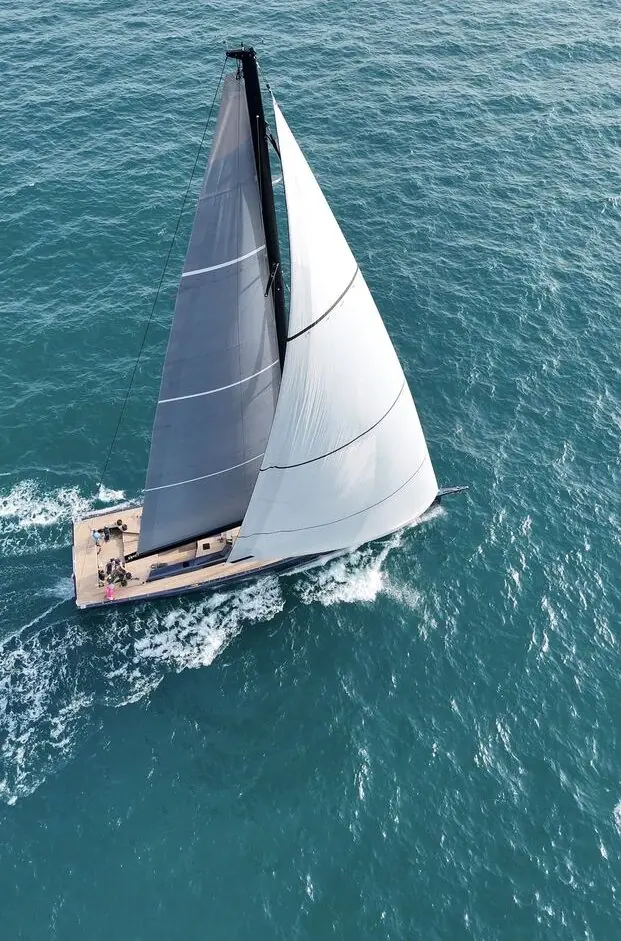
How is Mavi's deck and interior laid out?
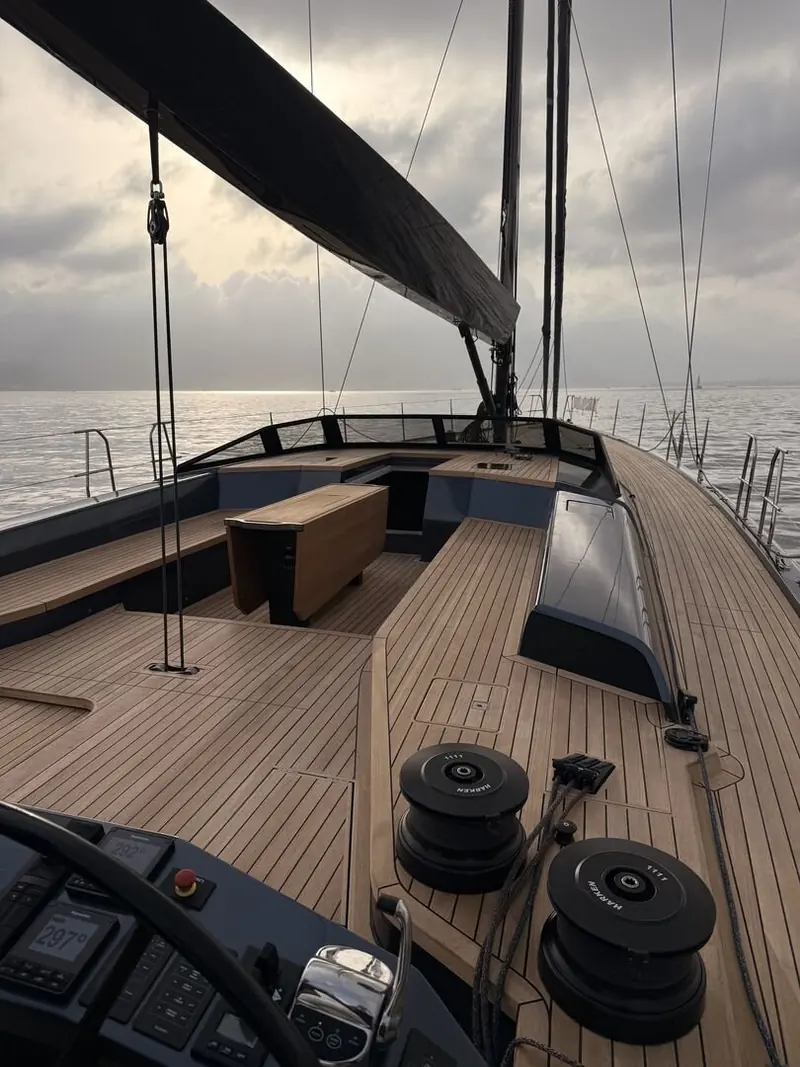
Mavi's deck runs two separate cockpits, a forward working cockpit for sail handling kept apart from an aft guest cockpit, above an interior arranged for an owner and two VIP guests with a separate four-person crew area.
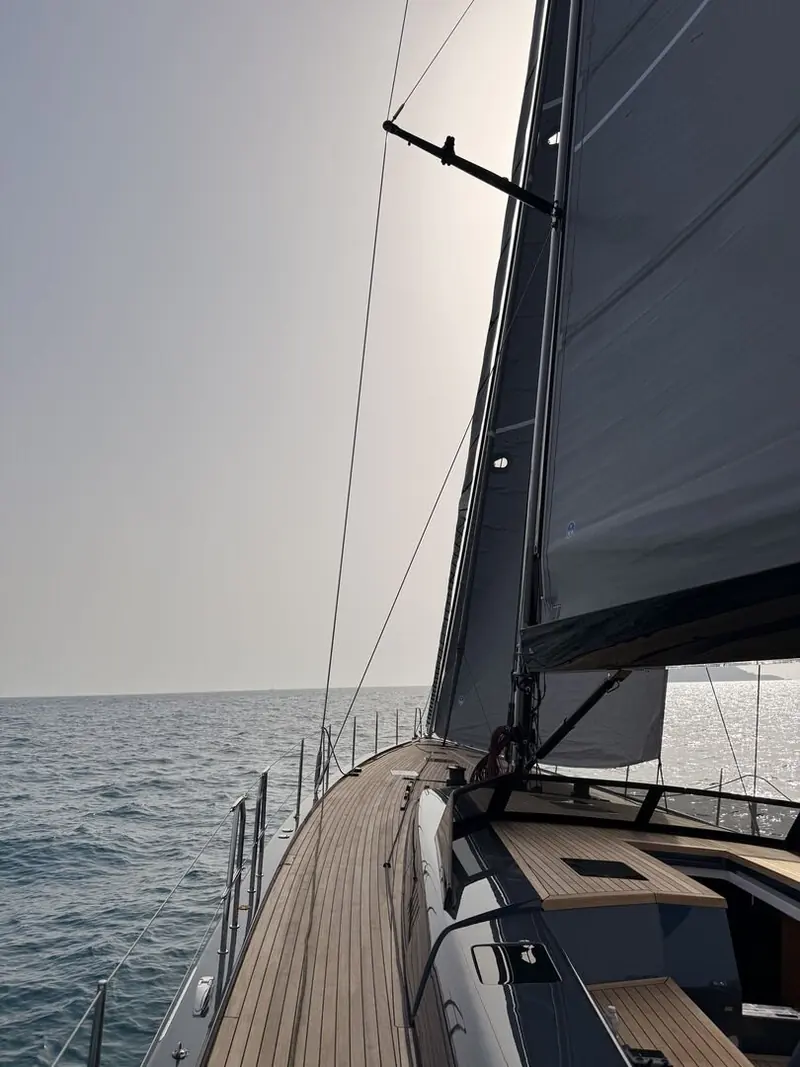
The twin-cockpit layout is the clearest owner-facing decision on the boat: line handling, winches and the companionway to the navigation station stay forward, out of the way of anyone sitting aft of the wheels. Wide, uncluttered side decks run the length of the boat, and a low coachroof keeps sightlines open from the aft cockpit rather than boxing it in. Accommodation below is built around an owner's suite plus two VIP cabins, one forward and one aft of the saloon, with a separate galley and an independent-entry navigation station forward of the crew quarters.
Crew are housed apart from guests in two double cabins, putting four crew aboard on a boat this size, which is a working ratio for an owner who plans to cruise long distances rather than day-sail with a skeleton crew. Aft, a folding bathing platform opens off a closed cockpit, and the stern carries a garage sized for a 3.5-metre tender, small by superyacht standards but consistent with a 24-metre performance hull that is prioritising sailing numbers over toy storage.
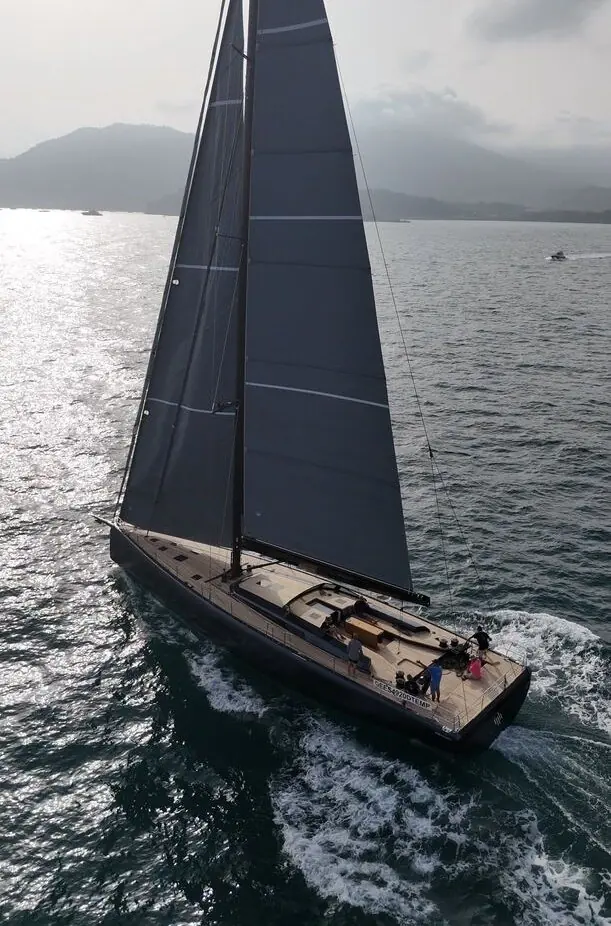
Why is ICE Yachts launching now, and what else is it bringing to Cannes 2026?
ICE Yachts is bringing both the ICE 80 and a new ICE 70 Sport to the Cannes Yachting Festival in September 2026, using the show to introduce the flagship alongside an update to its existing smaller model.
Launching a flagship right before a major festival is a familiar move, but it is a more pointed one for a yard the size of ICE Yachts, which does not have the volume of a production builder to fall back on if a launch slips. Getting Mavi wet and sailing in the weeks before Cannes gives the yard sea time to work through any early snags before the boat sits at a public dock under scrutiny, rather than presenting a static hull that has never left the yard basin.
Pairing the ICE 80 with an ICE 70 Sport at the same show also signals where ICE Yachts wants to sit in the market: a full-carbon specialist offering two related sizes rather than one flagship and a gap below it. For a buyer comparing yards, that is a more useful signal than the launch of a single hull, since it points to a design office and a production line committed to the segment rather than a one-off.
What don't we know about Mavi yet, and is she worth watching?
ICE Yachts has not published a price, a top speed, or any sea trial performance numbers for Mavi, so everything beyond her construction and layout remains the yard's own description rather than an independently measured result.
That gap is normal for a hull days out of the shed rather than a defect specific to this yard. No price has been published for Mavi or for the ICE 80 as a model, which is standard for a full-custom build priced against an individual specification rather than a catalogue figure. No sea trial results, polar numbers or fuel and water endurance figures have been released either, and no owner or charter guest has spoken about the boat, because none has had the chance to yet.
What a buyer can weigh today is the pedigree rather than the performance: a ten-year working relationship between ICE Yachts and Felci Yacht Design, a construction technique the yard has already proven on the smaller ICE 70, and a deck plan that reads as considered rather than a stretched version of a smaller boat. The open questions, real speed under sail, ride comfort offshore, and where the finished price lands against full-custom rivals from yards like Baltic or Wally, will only be answered once Mavi has logged sea miles and a second or third hull has sold.
What is good, and what to watch
Strong points
- A decade-long design partnership, not a one-offFelci Yacht Design has run naval architecture and interiors on ICE hulls for about ten years, including the smaller ICE 70 already in service, so the ICE 80 is a scaled continuation rather than an unproven pairing.
- Construction built for longevity, not just launch weightThe one-shot vacuum infusion process avoids the secondary bonds that age fastest on a carbon hull, at the cost of more time and tooling at the mould stage.
- A deck plan that separates work from leisureTwin cockpits keep line handling and winches forward, away from an aft guest area, on a boat sized for a genuinely small owner's party plus two VIP cabins.
What to watch
- No performance numbers exist yetICE Yachts has not released a top speed, polar diagram, or fuel and water endurance figures for Mavi, so every claim about how she sails is still unverified.
- No price is publicAs a full-custom build, Mavi's price has not been disclosed, and no ICE 80 catalogue price exists for a buyer to benchmark against.
- A small tender garage for the sizeA 3.5-metre tender garage is modest next to motor yachts and even some sailing yachts near 24 metres, a trade-off of prioritising sailing performance over toy storage.
Practical detail
| Length | 24m (excluding bowsprit) |
|---|---|
| Beam | 6.52m to 6.53m |
| Draught | 3.1m retracted to 4.8m extended, telescopic keel |
| Light displacement | 37.6 tonnes, including about 12 tonnes of ballast |
| Hull and deck | Full carbon fibre and epoxy resin, one-shot vacuum infusion |
| Engine | Single Cummins diesel (model and output not published) |
| Guests | Owner's suite plus 2 VIP cabins |
| Crew | 2 double cabins (4 crew) |
| Tender garage | Sized for a 3.5m tender |
| Designer | Felci Yacht Design (naval architecture, structure, layout, interior, coachroof and deck) |
| Builder | ICE Yachts, Salvirola, Italy |
| Not published | Price, sea trial speed and polar data, range, and any independent owner or charter review |
Questions this story answers
What happened?
The first hull of ICE Yachts' new ICE 80 line left the builder's Salvirola yard this week under the name Mavi, a 24-metre carbon sloop built with Felci Yacht Design on a construction technique the yard has used for a decade. For a buyer weighing a full-custom fast cruiser against a production one, she is the clearest read yet on what that partnership can deliver at 24 metres, though with no sea trial figures or price yet on the record.
What is good about it?
A decade-long design partnership, not a one-off. Felci Yacht Design has run naval architecture and interiors on ICE hulls for about ten years, including the smaller ICE 70 already in service, so the ICE 80 is a scaled continuation rather than an unproven pairing.
What should an owner or buyer watch?
No performance numbers exist yet. ICE Yachts has not released a top speed, polar diagram, or fuel and water endurance figures for Mavi, so every claim about how she sails is still unverified.
Who reported this?
SuperYacht Times, Yacht magazine, ICE Yachts, Felci Yacht Design.
We do this for everyone who loves this world. The people who have spent their lives in it, and the people just discovering it. Yotters exists so that what we learn belongs to all of them.
Nobody pays us for this. No ads, no sponsors, nothing for sale. We just believe the world is a little better when knowledge is shared instead of kept.
If it gave you something today, tell us to keep going. Follow us, leave a like, or write a positive comment. We read every one, and they are what keeps us going.