Isoclima, the Glass Behind Superyacht Walls, Changes Owners
What happened to Isoclima Group, and who bought it?
Isoclima Group, the Italian glass, polycarbonate and acrylic manufacturer whose structural glazing appears on several recent superyachts, has passed from pan-European private equity firm Stirling Square Capital Partners to a consortium of two Italian growth-capital vehicles, Fondo Italiano d'Investimento and The Equity Club, in a deal whose financial terms were not disclosed.
The transaction was signed in January 2026 and structured through two vehicles: Fondo Italiano Consolidamento e Crescita II, known as FICC II, which is Fondo Italiano d'Investimento's fund for growing established Italian manufacturers, and TEC Glass, an investment vehicle set up specifically for this deal by members of The Equity Club, a club-deal platform that pools capital from multiple investors rather than concentrating control with one sponsor. BOAT International's BOATPro trade desk, whose marine-specific coverage of the closing ran on 3 September 2026, reported the acquisition as completed, with Isoclima acquired in full from Stirling Square. GlassOnline.com's industry coverage, published 8 January 2026 when the agreement was first announced, put Isoclima's annual revenue at approximately EUR 150 million with more than 1,000 employees across six production facilities in Italy, the United States and Croatia.
Neither the purchase price nor the debt structure behind it has been made public, which is normal for a private transaction of this size but leaves owners and yards with no way to judge how much leverage the new ownership is carrying into a business that supplies safety-rated glazing. Stirling Square had held Isoclima for several years as part of a buy-and-build strategy that included acquisitions in the United States and the Balkans; this sale hands the company to buyers whose stated mandate is different in kind, not just in name, from a typical pan-European buyout fund looking for an exit within five to seven years.
What does Isoclima make, and where would a yacht owner encounter its glass?
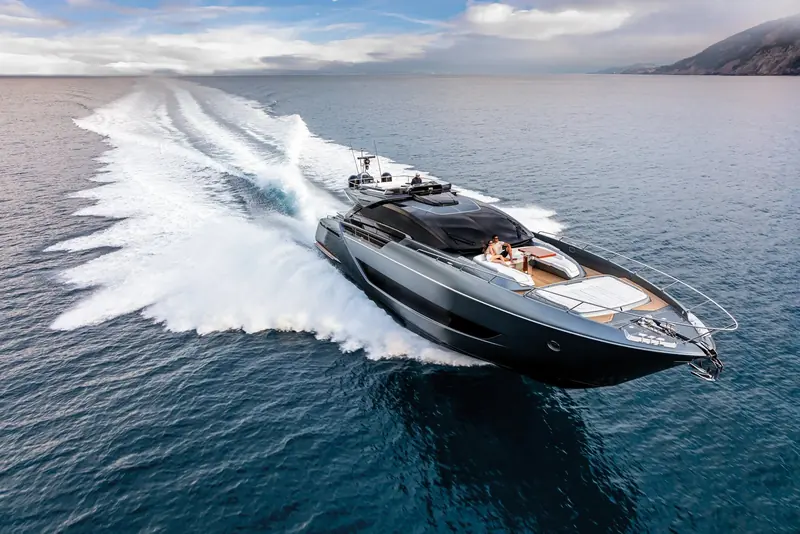
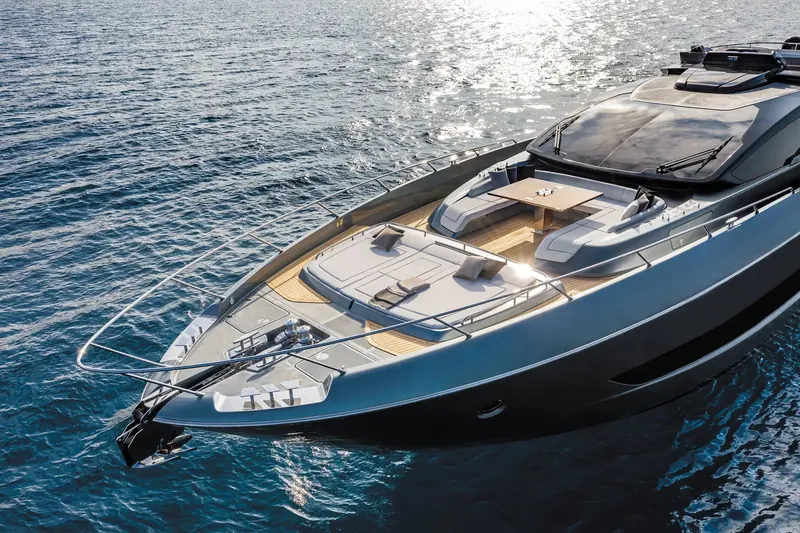
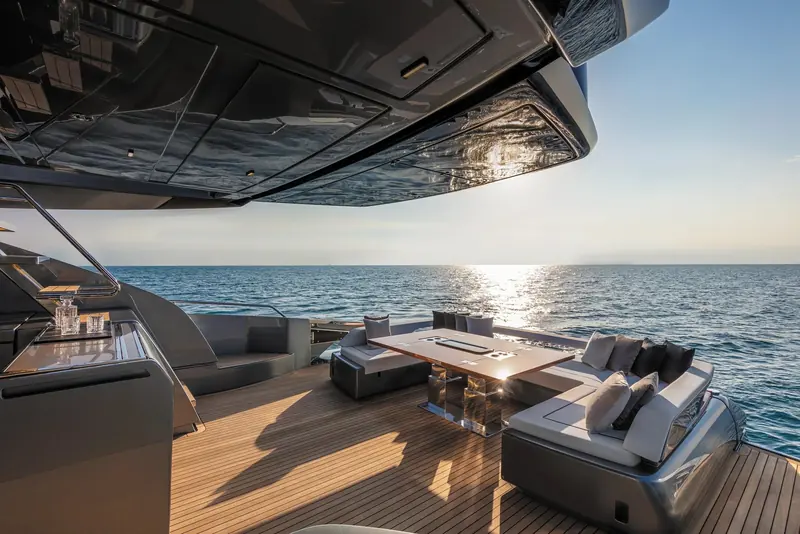
Isoclima was founded in 1977 in Este, near Padua, as a maker of bullet-resistant glazing, and has since grown into a specialist in large-format structural and safety glass for aerospace, defence, high-performance automotive, rail and architectural projects, with yachting as one of several verticals it now serves; BOAT International specifically credits its glass on the Riva 88 Folgore.
The company's origin is security glass: it was the first manufacturer in Europe to combine glass and polycarbonate into bullet-resistant glazing, a technical base that later extended into armoured-vehicle and defence work. It built out its footprint through acquisition rather than only organic growth, buying Dlubak Specialty Glazing Corporation and Global Security Glazing in the United States in November 2021, adding manufacturing in Pennsylvania and Alabama, and separately acquiring Lipik Glas in Croatia to extend its European production base. Those six plants, spread across Italy, the US and Croatia, are the ones now changing hands as a group rather than being split up in the sale.
On the water, Isoclima's relevant product is structural bonded glass: load-bearing or near-load-bearing glazing engineered to hold its shape and integrity in a hull or superstructure, rather than glass that simply fills a hole in an already-strong frame. That is the technology behind the floor-to-ceiling and lower-deck glass walls that have become one of the clearest signatures of a big new-generation superyacht's owner's brief, the kind of feature seen on builds like Feadship's 103-metre Ulysses, with more than 1,000 square metres of exterior glass across 20 sliding doors, or Lurssen's 134-metre Deep Blue, whose unconventional lower-deck glasswork was one of the first things spotted when her exterior was finally revealed. Isoclima did not build either of those yachts' glass by confirmed public record, but it is precisely this category of large-format structural marine glazing that the company specialises in, and yachting is one vertical among several rather than the business the buyers are principally paying for.
Why did an Italian growth fund buy Isoclima instead of another international buyer?
FICC II exists specifically to keep well-run Italian manufacturers under Italian ownership while they keep growing, and TEC Glass spreads that stake across a club of investors rather than one controlling sponsor, which is a structurally different bet from the buyout-and-flip model Stirling Square represented.
Fondo Italiano d'Investimento's public mandate for FICC II is to back mid-sized companies in sectors it considers 'Made in Italy' excellence and hold them through a longer growth phase rather than a fixed short exit window. TEC Glass, the second vehicle in the deal, was formed specifically by participants in The Equity Club's club-deal programme, which lets a group of investors take a direct stake in a single target rather than buying into a diversified fund. Put together, the buyer side of this transaction is built to keep Isoclima's ownership concentrated in Italian growth capital rather than passing through another international financial sponsor's five-to-seven-year hold cycle.
What has not changed, at least as announced, matters as much as what has: chief executive Liviana Forza remains in place, and there is no public statement about closing or relocating any of the six existing plants. For a yard or an owner's project office with an active order that specifies Isoclima glazing, that continuity is the practical detail that counts more than the identity of the shareholder on paper. What neither buyer has said anything about is future investment specifically in the marine and yachting side of the business, as opposed to the larger aerospace, automotive and defence markets Isoclima also serves, so it remains an open question whether yacht-grade glazing gets a larger or smaller share of capital under the new structure.

Does this change anything for an owner mid-build, or buying a yacht that already has Isoclima glass?
Nothing changes at the yard-facing level today, since the plants, management and product range are unchanged, but a PE-to-PE ownership change at a safety-critical, hard-to-substitute glazing supplier is exactly the kind of upstream event a project manager should be raising with the yard, not discovering later.
For an owner with a build in progress that specifies large structural glass, the practical step is simple: ask the yard's procurement team, directly, whether the glazing contract for the project sits with Isoclima, and whether that contract carries any change-of-control protection or is simply a standing commercial relationship that now depends on a new owner's priorities. For an owner or buyer looking at a resale yacht already fitted with Isoclima glazing, the equivalent question is about long-term parts and warranty support: a specialist supplier that has changed hands twice in under five years, first into Stirling Square's ownership and now out of it, is not a reason to walk away from a deal, but it is a reason to have the management company confirm who currently holds the technical relationship and spares pipeline for that glass.
None of this is unique to Isoclima. Large-format structural glass, battery and hybrid-drive components, and other specialised systems that have become standard features of an ambitious owner's brief increasingly sit with a small number of suppliers who themselves cycle through private equity ownership on a schedule that has nothing to do with the yachting calendar. The lesson for an owner drafting a brief with ambitious glazing, this year or in years to come, is to treat the supplier's own corporate stability as part of the specification conversation with the yard, not an afterthought to be raised only if something goes wrong.
What is good, and what to watch
Strong points
- A growth mandate, not a flipFICC II's stated purpose is funding continued growth at established Italian manufacturers rather than a fixed short exit window, which argues against near-term cost-stripping.
- Management and footprint unchangedChief executive Liviana Forza stays in place and all six plants continue as announced, so existing yard contracts have no stated disruption.
- Diversified beyond yachtingMarine is one of several end markets alongside aerospace, automotive, rail and defence, which insulates Isoclima from a downturn in yacht demand specifically.
What to watch
- Financial terms undisclosedWithout a stated price or debt load, owners and yards cannot judge how much leverage the new owners are carrying into a safety-critical supplier.
- A second ownership change in under five yearsIsoclima has now moved from independent, to Stirling Square, to this consortium, a pattern worth watching for a further handover on a similar timeline.
- No stated marine investment planNeither buyer has said anything publicly about future investment specifically in yacht-grade glazing versus the larger markets Isoclima also serves.
Practical detail
| Buyer | Fondo Italiano d'Investimento (via FICC II) and The Equity Club (via TEC Glass) |
|---|---|
| Seller | Stirling Square Capital Partners |
| Deal terms | Not disclosed |
| Announced / reported closed | 8 January 2026 (agreement) / 3 September 2026 (BOATPro marine trade coverage) |
| Isoclima annual revenue | approximately EUR 150 million |
| Employees | over 1,000 |
| Production facilities | 6, across Italy, the United States and Croatia |
| Founded | 1977, Este, near Padua, Italy |
| Chief executive | Liviana Forza, retained |
| Named marine reference | Glass supplied for the Riva 88 Folgore |
| Not yet disclosed | Purchase price, debt structure, and any marine-specific investment plans from the new owners |
Questions this story answers
What happened?
Isoclima Group, the Italian manufacturer whose structural glass shows up in the vast glazed walls of the newest superyachts, has been sold by its private equity owner to a consortium built around keeping it Italian. The deal itself changes little today, but a change of hands at a niche, safety-critical supplier is exactly the kind of event an owner specifying ambitious glazing should ask their yard about.
What is good about it?
A growth mandate, not a flip. FICC II's stated purpose is funding continued growth at established Italian manufacturers rather than a fixed short exit window, which argues against near-term cost-stripping.
What should an owner or buyer watch?
Financial terms undisclosed. Without a stated price or debt load, owners and yards cannot judge how much leverage the new owners are carrying into a safety-critical supplier.
Who reported this?
BOAT International BOATPro News (Conor Feasey, 3 September 2026), GlassOnline.com (8 January 2026), USGlass Magazine, Fondo Italiano d'Investimento company statement.
We do this for everyone who loves this world. The people who have spent their lives in it, and the people just discovering it. Yotters exists so that what we learn belongs to all of them.
Nobody pays us for this. No ads, no sponsors, nothing for sale. We just believe the world is a little better when knowledge is shared instead of kept.
If it gave you something today, tell us to keep going. Follow us, leave a like, or write a positive comment. We read every one, and they are what keeps us going.