RP120
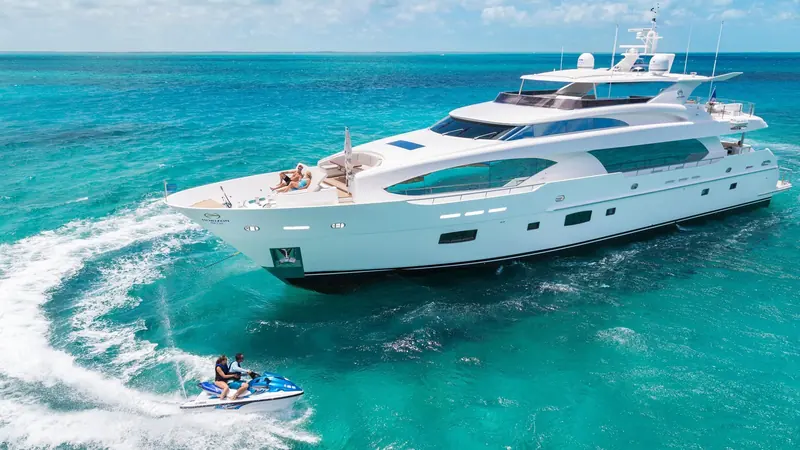
| 36.58 m LOA, 30.27 m waterline length, 7.62 m beam | |
| 2.01 m draft, 156 t displacement, semi-displacement hull | |
| Twin Caterpillar C32A diesels, 1,800 hp each, up to 19 knots | |
| 26,000 L fuel and 3,000 L fresh water capacity | |
| Five guest cabins sleeping ten, plus three crew quarters | |
| Exterior design by J.C. Espinosa | |
| Current generation debuted at the 2016 Taiwan International Boat Show |
The series that built Horizon's big-boat name
Before the FD line existed, the RP series was how Horizon proved it could build over 100 feet. RP stands for raised pilothouse, and the RP120 became the range's statement piece early. By December 2011 the yard had launched its third hull, the motoryacht Muses, which went to a Chinese owner as the second Horizon over 100 feet sold into China that year, a signal of how far the brand's reach already extended.
The model kept developing. Horizon debuted a new 37 meter generation of the RP120 at the 2016 Taiwan International Boat Show and released its detailed specification through the trade press that year. A decade later the design remains in the current range alongside the RP110, and brokerage houses list a new RP120 for 2026 delivery, evidence that the order book never really closed.
A hull that prefers distance
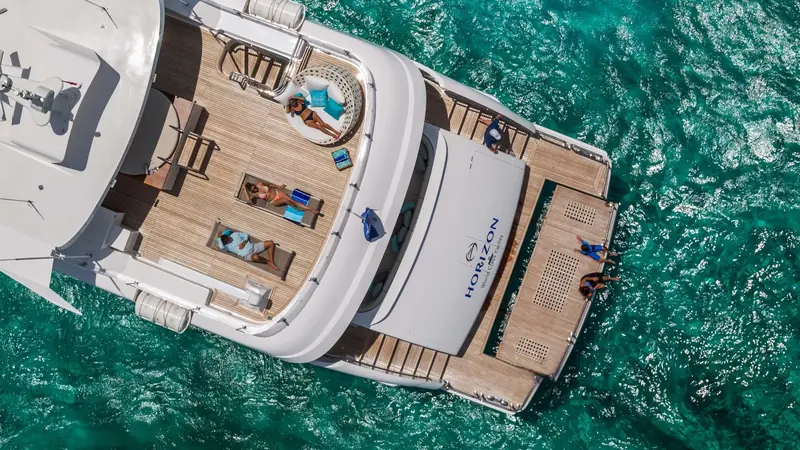
The RP120 rides Horizon's proven low-resistance semi-displacement platform, a hull the yard credits with superior seakeeping and comfort underway, and it will reach 19 knots when asked. Power comes from twin Caterpillar C32A diesels of 1,800 hp each, with a pair of 55 kW Kohler generators supplied in 50 or 60 Hz form depending on where in the world the boat will spend its life. Both choices mirror the machinery of the wider Horizon fleet, which simplifies crewing and support.
The measurements tell the cruising story: 36.58 meters overall on a 30.27 meter waterline, a 7.62 meter beam, 2.01 meters of draft and 156 tons of displacement. Fuel capacity is 26,000 liters, about 7,000 US gallons, alongside 3,000 liters of fresh water. Run the C32As at displacement speed and the RP120 becomes a genuine passage-maker with the legs for the Bahamas, Alaska or a season of island-hopping across Southeast Asia.
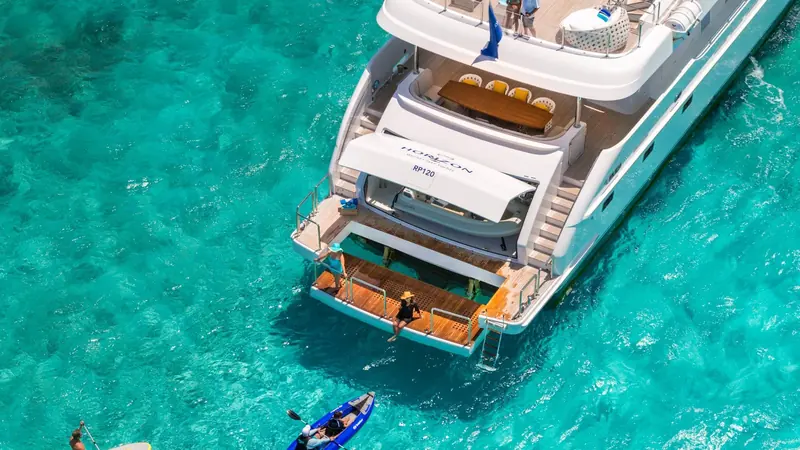
A decade of delivered hulls, 19 knots on tap and 26,000 liters of fuel under the classic raised pilothouse profile.
Why the raised pilothouse endures
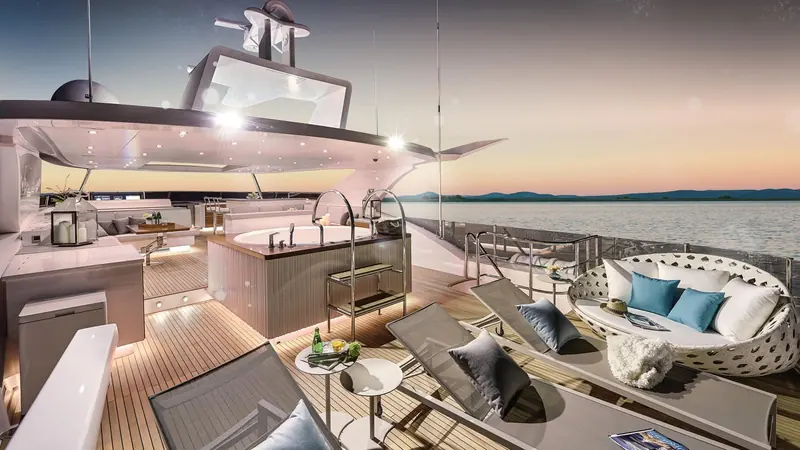
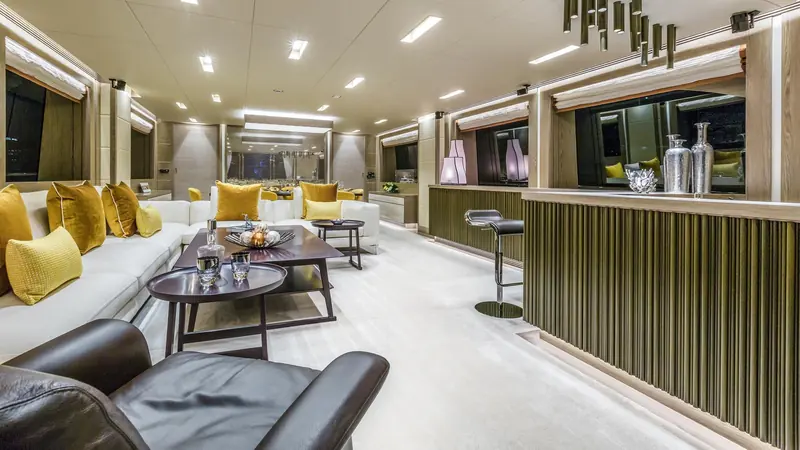
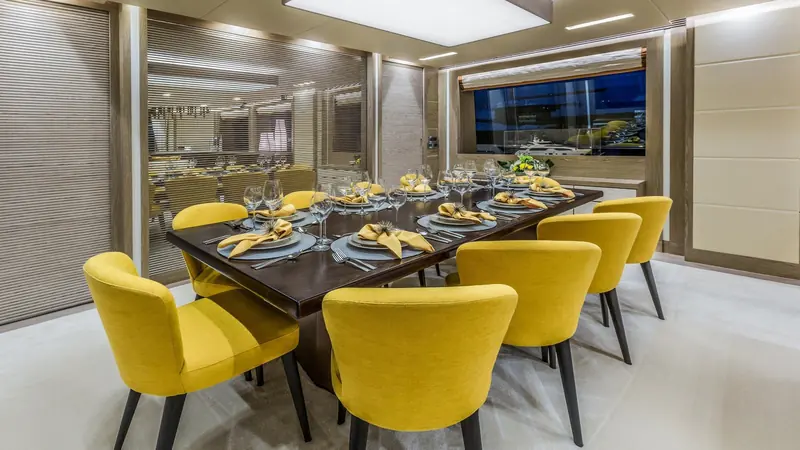
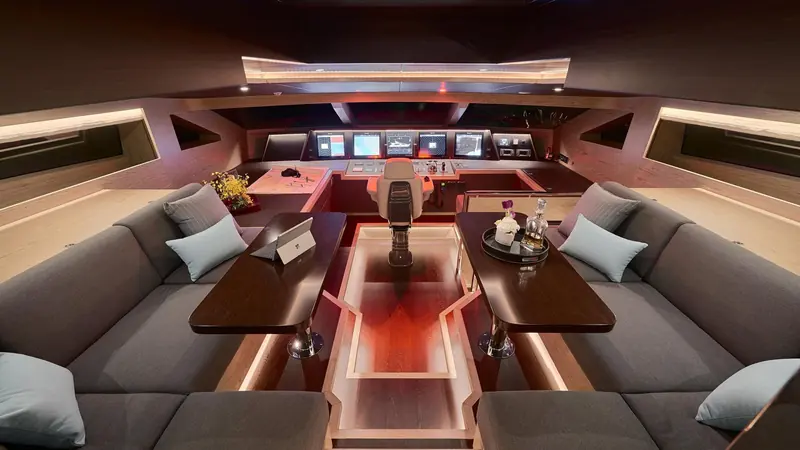
The raised pilothouse arrangement is a working owner's layout. Lifting the helm half a level above the main deck gives the captain commanding sightlines and a dedicated ship's domain, while the main deck flows uninterrupted from the aft deck through the salon and dining room to the accommodation forward. Guests never squeeze past a helm station, and night passages never bleed instrument light into the living spaces.
Horizon's current RP120 leans harder into outdoor living than the early hulls did, with the yard pitching increased exterior entertaining space across the flybridge and aft decks for what it calls sun worshipers, adventurous families and active cruising enthusiasts. The interior pilothouse remains, and the layouts stay fully customizable, which is why no two delivered hulls read the same inside.
Five cabins and crew who can disappear
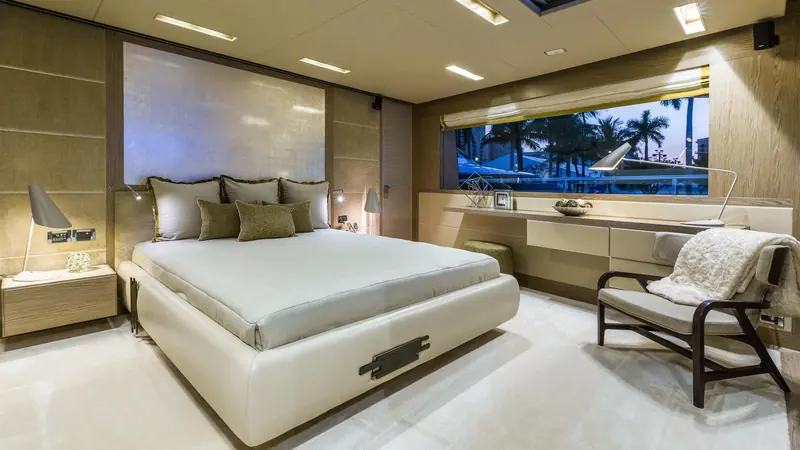
The standard arrangement sleeps ten guests in five cabins with four en-suite staterooms below decks, supported by three crew quarters reached by a separate circulation route. On a 25 foot beam that translates into full-size cabins rare at this length, walk-in stowage, and a galley and laundry sized for a boat that entertains hard through a full season.
As with every Horizon, the general arrangement is a starting point. Owners have reconfigured cabin counts, converted spaces and specified regional galley layouts across the run of delivered hulls, and the yard's in-house joinery executes whatever the owner's designer draws. For families who charter occasionally, the five-cabin, ten-guest format lines up neatly with the commercial sweet spot.
Where it fits in today's range
Inside Horizon's own catalog the RP120 sits between the FD110 and the coming FD130, and choosing it over the FD boats is mostly a matter of taste. The RP wears the classic profile, raked and long-lined, where the FDs are vertical-bowed and glassy. Owners who find the newer look severe land here, and they give up nothing in build quality or systems.
It is also the value play in the big-boat range. A mature platform with tooling long amortized, a hull the yard has refined for well over a decade and a specification proven across many owners adds up to a 120 footer with very few first-of-type risks. The 2026-delivery listing shows the market has reached the same conclusion.
A chi si rivolge: An owner drawn to the classic raised pilothouse profile who wants a proven, customizable 120 footer with passage-making range and none of the first-of-type risk of a new model.