Sea Eagle II
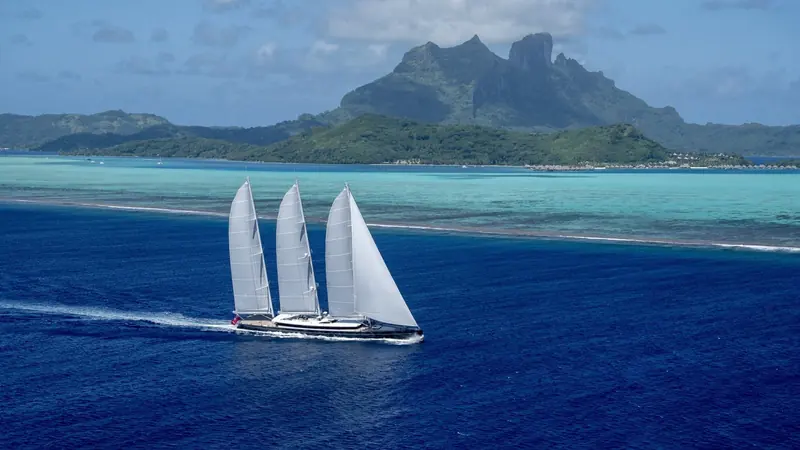
| LOA 81 m, gross tonnage 1,150 GT | |
| Largest aluminium sailing yacht in the world | |
| Three carbon Rondal Panamax masts, 61 m air draft | |
| Around 2,580 sq m upwind, over 3,500 sq m downwind | |
| Naval architecture by Dykstra, exterior and interior by Mark Whiteley | |
| 21.5 knots logged on North Sea trials | |
| 11 guests, 14 crew | |
| Delivered 2020, circumnavigation completed |
A schooner without the nostalgia
Where Athena wears the profile of a golden-age clipper, Sea Eagle II is unapologetically modern. Her plumb bow, clean sheer and low, glassy superstructure read as this century's answer to the same question, how to move a very large yacht by wind alone. Dykstra Naval Architects drew the hull and rig from the same calculations that shaped the firm's other giants, and Mark Whiteley handled both the exterior detailing and the interior.
The pairing was already proven. Dykstra and Whiteley had delivered the acclaimed 56 metre ketch Aquarius from the same build halls barely a year earlier, and the owner of Sea Eagle II bought into that partnership at nearly half again the length. The result is a family resemblance in discipline, if not in style, the same rigour applied to a completely different aesthetic.
Three masts, one bridge
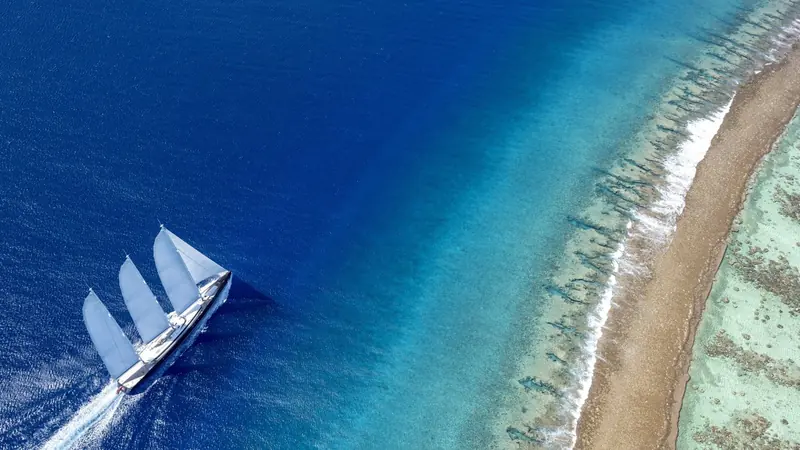
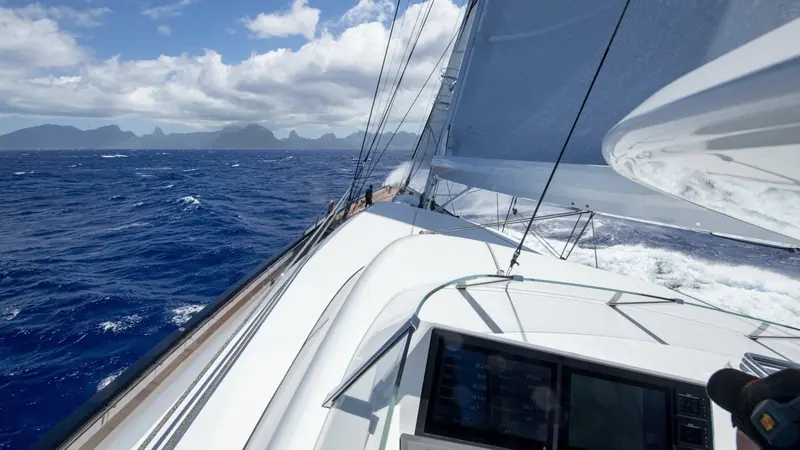
The rig is a Rondal production of three carbon Panamax masts with an air draft of 61 metres, sized so the yacht can transit the Panama Canal. She sets around 2,580 square metres upwind and over 3,500 square metres downwind, all of it managed by captive winches and furling systems that let a crew of fourteen handle a sail plan that would once have needed fifty hands.
On her North Sea trials she ran at 21.5 knots in a moderate breeze, within half a knot of theoretical hull speed, an extraordinary figure for an 1,150 gross ton vessel. Numbers like that are the reason serious sailors take this yacht seriously. She is a machine for eating ocean miles, and her log now proves it, a non-stop circumnavigation among more than 45,000 miles sailed since delivery.
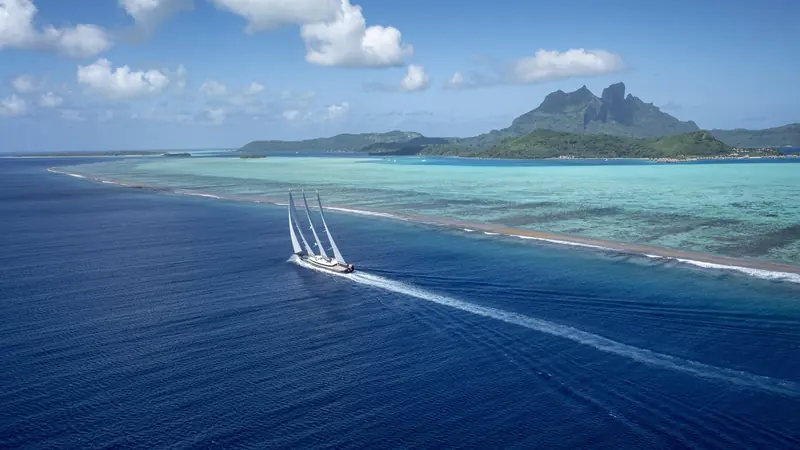
On trials Sea Eagle II ran 21.5 knots in a moderate breeze, half a knot off hull speed, with more than 45,000 nautical miles logged since.
Designed to be sailed from on deck
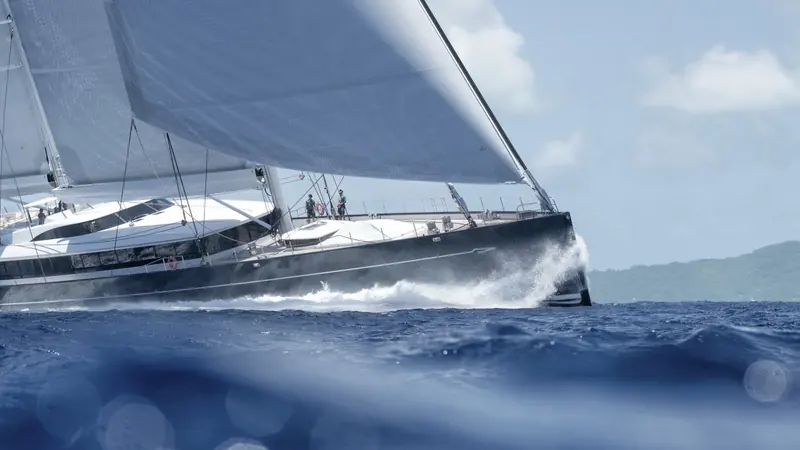
Whiteley gave her a half-raised bridge for inside steering in poor weather, and above it a flybridge with full sailing controls, guest seating close to the navigation and open lounging space. On a yacht this size the flybridge arrangement matters, it keeps the owner and guests inside the experience of sailing instead of sealed away from it, watching three masts of canvas work from the best seat on the water.
Below, the interior accommodates eleven guests with the crisp, tailored joinery Whiteley is known for. The volume of an 1,150 GT hull gives her guest spaces that rival a large motor yacht, but the layout never forgets she heels and moves, handholds, sightlines and circulation are all drawn by people who sail.
The largest of her kind
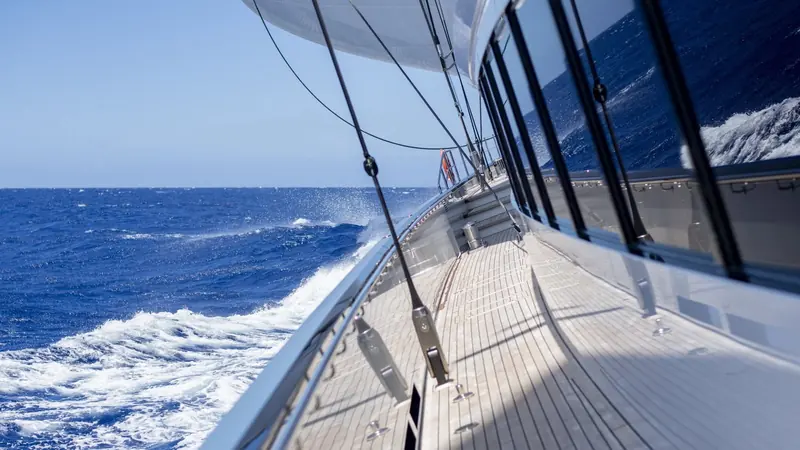
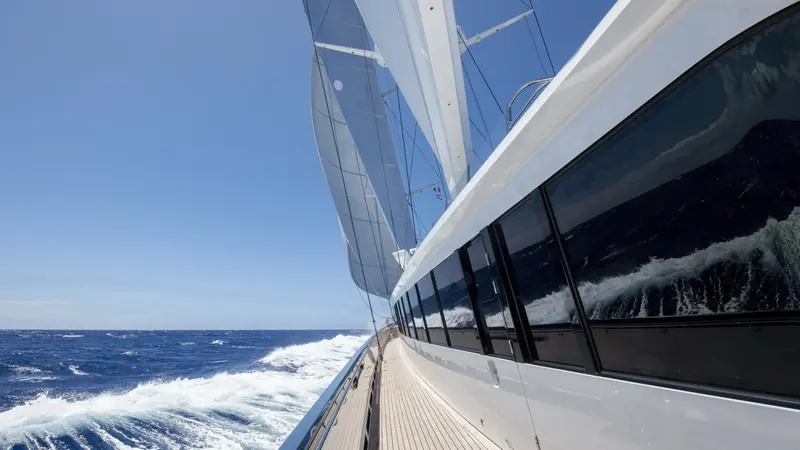
Sea Eagle II holds a title that is harder to win than it sounds, largest aluminium sailing yacht in the world. Aluminium was the deliberate choice, the material the yard has worked for sixty years, giving her a hull that is light enough to perform, tough enough for high-latitude water and straightforward to maintain and refit for decades. Among all sailing yachts of any material she ranks in the top ten by length, and at her delivery trade press placed her seventh. On a 12 metre beam she carries her volume low and lean, which is part of why the sailing numbers stay honest.
She left the shed in 2020, in the middle of the pandemic, and went straight to work. Since then she has kept one of the most active logbooks in the large sailing fleet, and she has been made available for charter, which for a prospective owner means her operating record, crew program and running costs are unusually well documented for a yacht of this rarity.
The case for her
For an owner weighing the very largest sailing yachts, the field is a handful of boats, most of them one-off builds that never trade. Sea Eagle II offers the credentials that matter in that company, a Dykstra platform, a Rondal rig, Lloyd's-class Dutch construction and a builder one time zone away with every drawing on file.
She is also evidence of what Royal Huisman can deliver on a working schedule. An 81 metre, three-masted schooner is close to the most complex sailing object a yard can attempt, and Vollenhove delivered her sailing at hull speed within weeks of launch. Buyers commissioning at this scale read that record the way they would read an audited balance sheet.
A chi si rivolge: The owner who wants the biggest modern schooner that actually sails hard, with a documented ocean record and charter-proven operations.