MB92 locks Barcelona to 2050 and puts EUR 40m into the dry dock
The port signs away another decade
MB92 said on 31 July that the Port of Barcelona has extended its concession by ten years, carrying the yard's right to occupy the site from 2040 out to 2050. A second phase already written into the agreement would add five more years to 2055, with a further period beyond that, and the negotiation behind it began in 2019. The yard is committing EUR 40 million alongside the extension, and says more than 90 per cent of that money goes to work starting immediately.
The footprint grows as well, though modestly, from 126,500 square metres to 130,540, an increase of about 3 per cent. The extra land is not the interesting number. The calendar is. A refit yard cannot rebuild a dry dock against a lease with fourteen years left to run, because the asset outlives the right to stand on it. Extending to 2050 is why the two announcements arrived on the same day.
The dry dock comes apart
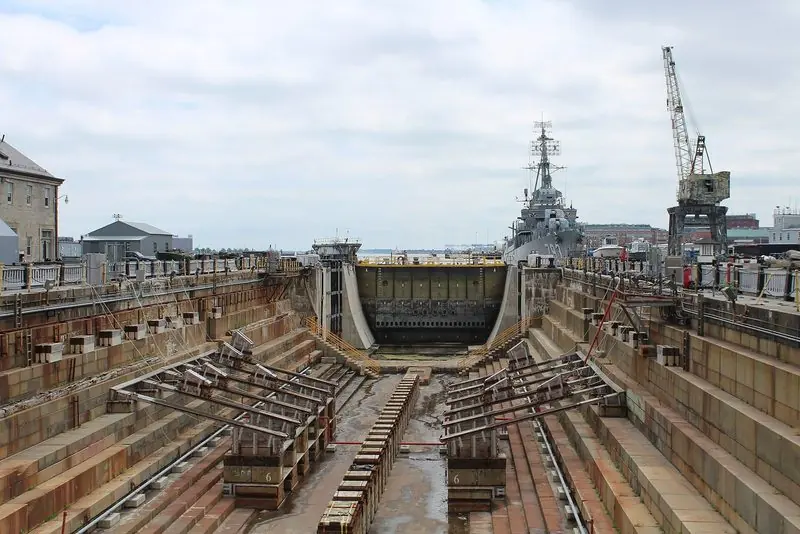
The programme finishes at the end of 2028. Its centrepiece is a complete reconstruction of the dry dock, the 220-metre by 36-metre Panamax basin that lets the yard take the largest yachts in the fleet out of the water in one piece. The Travelift and Syncrolift areas are being renewed with two new lifting units. The western dock gains a new platform and reworked mooring built for larger yachts than it holds today, a quiet admission that the fleet has outgrown part of the site.
Two further items read as housekeeping and are not. New water management systems and acoustic mitigation are the cost of running an industrial operation inside a working city port, and they are what a port authority weighs when it decides whether to renew anybody. Barcelona has spent a decade arguing about what its waterfront is for, and a yard that can show it has dealt with noise and water keeps the concession that follows.
What Barcelona already lifts
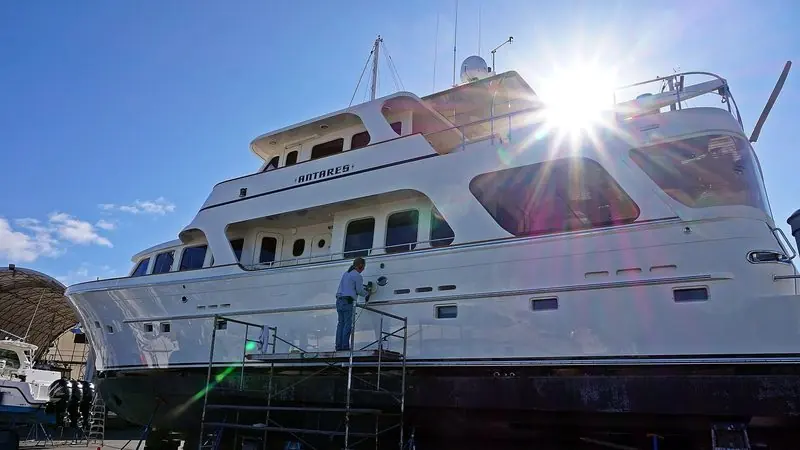
The yard's published capability explains why this matters beyond Catalonia. Its shiplift, opened in 2019 and rated at 4,800 tonnes, is the largest built anywhere for superyachts, and it takes vessels up to 115 metres with hardstanding for as many as nine of them across 30,000 square metres. Beside it sit a 2,000-tonne Syncrolift with room for four more yachts and a 150-tonne Travelift. Berthing runs to fourteen yachts, to a maximum of 220 metres alongside.
That combination is rare. Most yards can either haul a very large yacht or berth one, and few do both while a dozen other projects keep moving around them. It is the reason an owner at 90 or 100 metres planning paint, a five-year survey and an interior refresh in a single window puts Barcelona near the top of a very short list. Had the site come into question, that work would have gone to Italy or across an ocean.
Two MB92 decisions in a single week
The announcement lands three days after the tribunal administratif de Nice ended the group's right to run the shipyard inside Port Camille Rayon at Golfe-Juan, a ruling deferred by nine months. The two point in opposite directions. In France the group lost a site working to a limit of about 43 metres, in the most contested stretch of the Riviera market, on a procedural finding about how the right was awarded. In Spain it has tied down its largest yard for another quarter century.
MB92 runs La Ciotat as well, and the group's centre of gravity now sits more clearly in Barcelona than it did a month ago. The ownership has settled in the same direction. Squircle Capital bought 77.5 per cent in 2019 for EUR 105 million, raised that to 93 per cent in 2022, and took the last of it in March 2026. A single owner holding a concession to 2050 is a different counterparty from a shared one on an expiring lease.
What an owner should take from it
A major refit is the largest predictable cost of owning a big yacht, and it decides what the yacht is worth when it is finished. Slots at the top end are taken eighteen months to two years out, and the price of one moves with how much dock exists to sell. Adding capacity in Barcelona while French capacity is in open question does not make a refit cheaper. It makes the date on the contract more believable, which for a yacht already committed to a season is worth more.
The awkward part is the transition. A dry dock under reconstruction is a dry dock earning nothing, and this programme runs to the end of 2028. Anyone planning a haul-out inside that window should be asking which basin the yacht is going into, what the sequence of works is, and what the fallback looks like if the schedule slips a quarter. The concession is the long answer. The next two winters are the short one.