Palumbo Renames Its Refit Arm Upfit, Betting on a Whole Yacht Life
What is Palumbo Upfit and why did Palumbo rename its refit business?
Palumbo has not sold or restructured the refit division; it renamed it to describe a shift already underway, from single repair contracts to standing, lifecycle-long support across its own network.
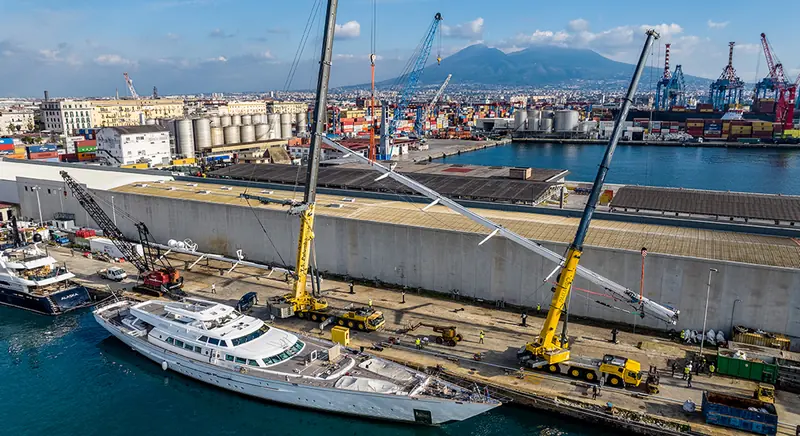
Palumbo SY Refit, the refit and repair division of the Naples-based Palumbo Group, announced on 4 September 2026 that it now trades as Palumbo Upfit. Founder Antonio Palumbo framed it as a naming catch-up rather than a strategy shift: "We didn't feel the need to change what we are. We felt, instead, the need to give a name to what we had become," he said, according to Stylo24's coverage of the announcement. Managing director Antonio Palumbo Junior put the commercial logic more plainly: "Our clients don't choose a shipyard for a single project; they access an entire network in the Mediterranean."
The word swap is deliberate. "Refit" describes a single job - haul out, fix the gelcoat, replace a genset, relaunch. "Upfit" is pitched as an ongoing relationship: preventive maintenance, technical consulting, systems upgrades and conversions scheduled across a yacht's working life rather than triggered by a breakdown or a five-year survey deadline. Nothing about the physical yards, the ownership structure or the pricing model changed on the day of the announcement - only the umbrella the seven sites now sit under. Palumbo lists the fuller scope explicitly: repairs, maintenance, conversions, technical upgrades, engineering, structural interventions, systems work and interior fit-out, coordinated as one programme rather than negotiated separately each time a need arises.
How big is the Palumbo Upfit network and what can it actually lift?
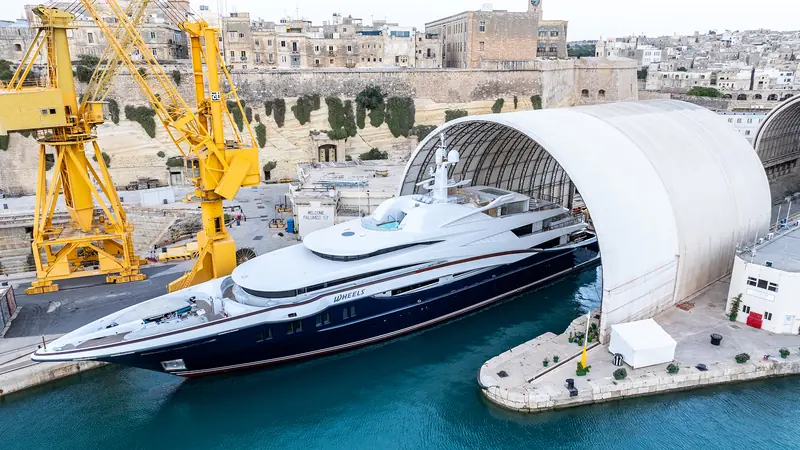
Palumbo Upfit spans seven Mediterranean shipyards with a combined 5.6 kilometres of dock space, dry-dock capacity up to 268 metres and a 3,300-tonne syncrolift - enough to cover nearly every superyacht currently afloat.
The network runs Naples (the group's 57-year-old headquarters), Malta's Grand Harbour, Marseille, Messina, Ancona, Savona and Rijeka's Viktor Lenac yard, which has operated continuously since 1896, plus a representative office in Monaco. Palumbo's own site lists seven dry docks and six floating dry docks rated to 260-268 metres, four travel lifts at 820 tonnes each, and a superyacht lifting platform rated to 3,300 tonnes - capacity that covers essentially the whole existing superyacht fleet, including the small number of 150-metre-plus hulls that routinely struggle to find a Mediterranean slot at all. Stylo24's figures for total surface area (44.5 hectares against Palumbo's own 41.5) differ slightly from the company's own published number, a rounding gap rather than a contradiction, but the berth length - 5.6 kilometres - matches across both.
Palumbo puts more than 600 superyachts through the network in the past five years, a figure that makes it, by its own and independent trade-press description, the largest superyacht maintenance and repair operation in the Mediterranean. That scale is the actual product being sold under the new name: an owner or a captain who books a haul-out in Naples can, in principle, move the same project to Malta or Marseille if a slot slips or a specific trade - paint, engineering, structural steel - sits at a different yard, without re-negotiating a contract with an unfamiliar business each time. One project moving through the Malta yard shows the kind of work the network is built to carry: a four-masted, 109.5-metre sailing yacht built in 1931, Sea Cloud, is roughly midway through a top-to-bottom rebuild that includes four new steel masts forged to her original lines.
What does the lifecycle model actually buy a yacht owner over a normal refit contract?
The lifecycle pitch trades a series of separate, competitively-bid refit contracts for a standing relationship with one operator that already knows the yacht's maintenance history - convenient, but it concentrates leverage with a single supplier rather than testing the market each time.
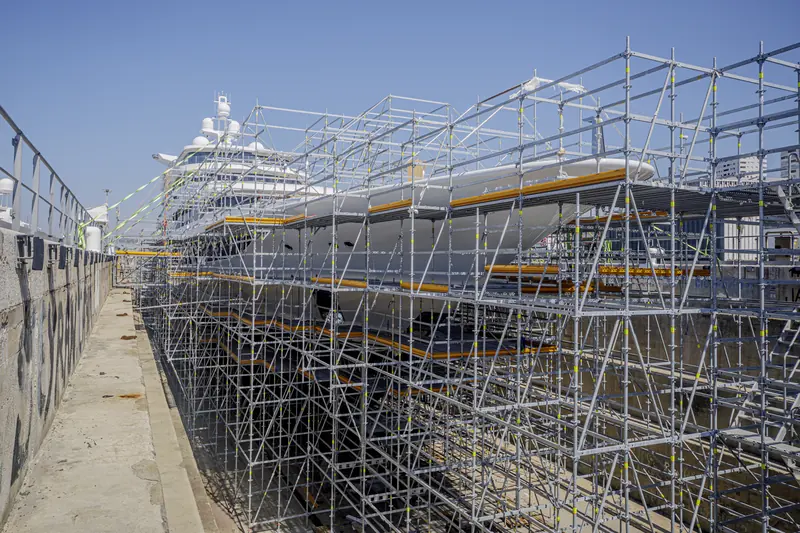
A conventional refit is transactional: an owner or management company puts a project out to two or three yards, picks on price, schedule and trade references, and starts from zero relationship each time. Palumbo Upfit's pitch inverts that - a yacht stays inside one network from delivery onward, with the same operator handling preventive inspections, warranty work, technical consulting and eventually a major refit, in theory catching problems before they become an unscheduled haul-out. For an owner who dislikes re-vetting a yard every few years, or a management company running several hulls across different flags and itineraries, a single relationship across seven ports is a genuine scheduling convenience.
It is also a trade-off the announcement does not address directly: a lifecycle contract with one network removes the competitive pressure a fresh tender applies every time a project comes up. Nothing in Palumbo's own materials or the trade coverage of the rebrand publishes what a standing lifecycle arrangement costs against a one-off contract, so an owner cannot yet weigh the convenience against the price of giving up that leverage - the case for Upfit rests on trust in one operator's judgment about a yacht's own maintenance needs, not on a rate card. That timing matters beyond Palumbo itself: Mediterranean refit capacity has not kept pace with a fleet that keeps growing, and yards across the region increasingly report booking further out than owners are used to.
Why is Palumbo rebranding its refit arm now, while its newbuild side is booming?
The refit rebrand lands while Palumbo's newbuild brands are at a record EUR 1 billion order backlog, and a lifecycle-support pitch gives the group a second, recurring revenue line from yachts it already built.
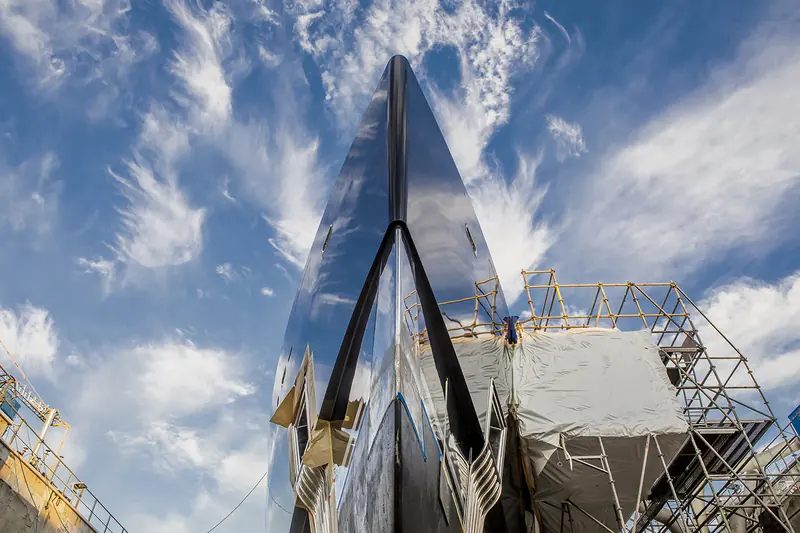
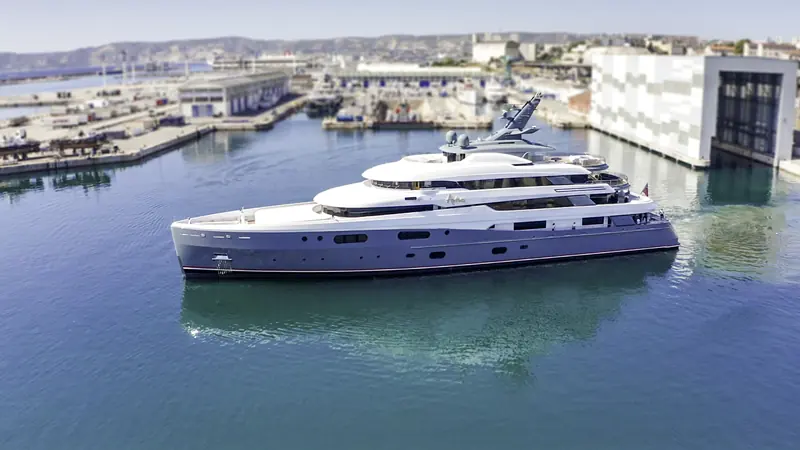
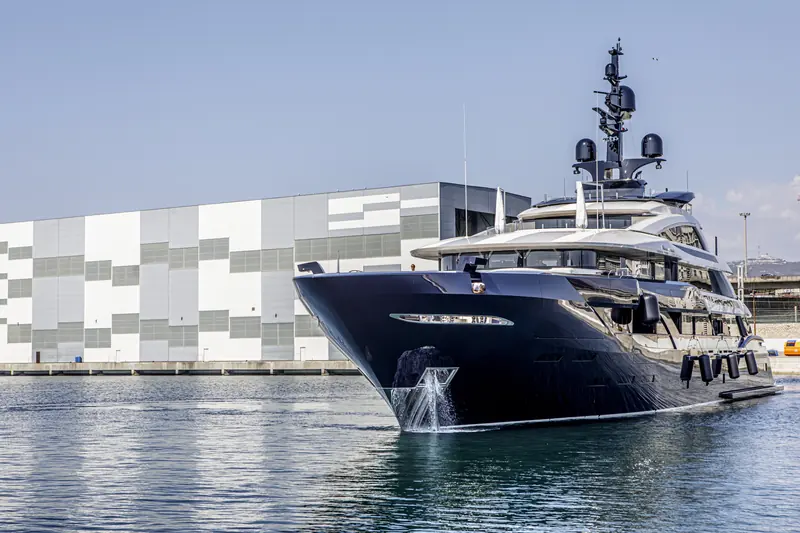
Palumbo Group is not just a refit operator - it owns five brands including ISA Yachts, Columbus, Mondomarine and Extra Yachts, and SuperyachtNews reported the group's newbuild order backlog at roughly EUR 1 billion, with 22 yachts over 30 metres under construction, including the 100-metre ISA GT. The group has also secured a 13,049 square-metre concession at the Port of Ortona to expand capacity for those same newbuild brands. A refit arm that keeps every yacht the group ever built - and plenty it did not - inside its own service network for decades afterward is a natural complement to that build pipeline: it turns a one-time sale into a recurring relationship.
That context matters for how an owner should read the rebrand: it is not primarily a response to refit-market pressure, but a formalisation of a cross-selling strategy a large, vertically integrated builder is well placed to run. Whether that benefits an owner depends on whether the network's scale genuinely lowers costs and downtime, or simply makes it easier for Palumbo to keep a yacht's maintenance spend inside the group once the newbuild contract is signed.
What is good, and what to watch
Strong points
- One relationship, seven yardsA project can move between Naples, Malta, Marseille and the rest without re-vetting a new yard or re-negotiating terms mid-refit - useful if a slot slips or a specific trade sits at another site.
- Real lifting capacity at the top end268-metre dry-dock capacity and a 3,300-tonne syncrolift cover nearly the whole existing fleet, including the handful of 150-metre-plus hulls that struggle to find a Mediterranean slot at all.
What to watch
- The name is ahead of any new capabilityPalumbo's own founder says the business itself has not changed - a shared network and preventive-maintenance packages already existed before the rebrand; Upfit formalises the pitch more than it adds anything new.
- Pricing stays opaqueNeither Palumbo nor the trade coverage of the launch publishes what a standing lifecycle contract costs against a one-off refit, so the trade-off against losing competitive tendering is hard to evaluate from outside.
Practical detail
| Network size | 7 shipyards - Naples, Malta, Marseille, Messina, Ancona, Savona, Rijeka - plus a Monaco office |
|---|---|
| Largest vessel handled | up to 268m in dry dock; 3,300-tonne syncrolift |
| Lift capacity | 4 travel lifts at 820 tonnes each |
| Berths | 5.6km of dock space across the network |
| Track record | 600+ superyachts refitted across the network in the last 5 years |
| Group newbuild backlog | EUR 1 billion, 22 yachts over 30m under construction, including the 100m ISA GT |
| What is not published | no rate card for a lifecycle contract versus a one-off refit; pricing is quoted per project |
Questions this story answers
What happened?
Palumbo has renamed its Mediterranean refit business from Palumbo SY Refit to Palumbo Upfit, folding seven shipyards into one lifecycle offer instead of a list of one-off projects. For an owner choosing where a yacht gets serviced for the next decade, the pitch is fewer contracts and fewer surprises - if the network delivers on it.
What is good about it?
One relationship, seven yards. A project can move between Naples, Malta, Marseille and the rest without re-vetting a new yard or re-negotiating terms mid-refit - useful if a slot slips or a specific trade sits at another site.
What should an owner or buyer watch?
The name is ahead of any new capability. Palumbo's own founder says the business itself has not changed - a shared network and preventive-maintenance packages already existed before the rebrand; Upfit formalises the pitch more than it adds anything new.
Who reported this?
Stylo24, Palumbo SY (company website), SuperyachtNews, Megayacht News.
We do this for everyone who loves this world. The people who have spent their lives in it, and the people just discovering it. Yotters exists so that what we learn belongs to all of them.
Nobody pays us for this. No ads, no sponsors, nothing for sale. We just believe the world is a little better when knowledge is shared instead of kept.
If it gave you something today, tell us to keep going. Follow us, leave a like, or write a positive comment. We read every one, and they are what keeps us going.