Compass Tenders
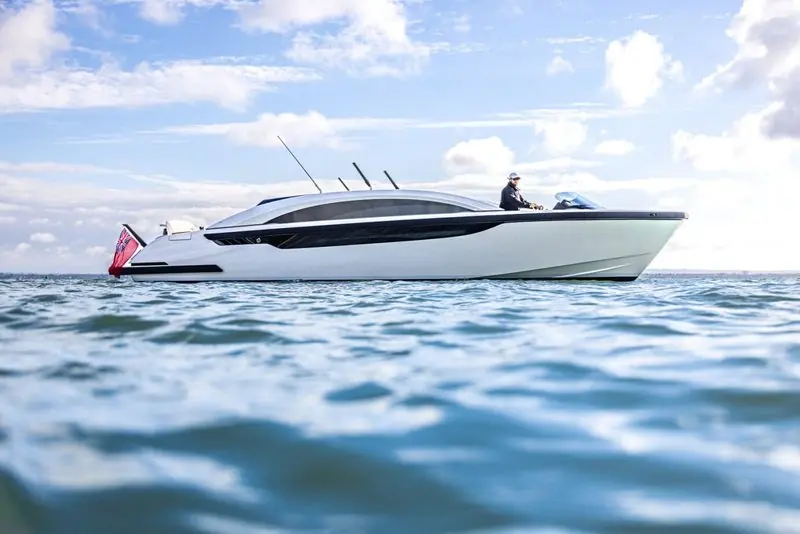
| Category | bespoke superyacht tenders |
|---|---|
| Founder | Richard Faulkner, owner and chief executive |
| Origins | a yacht building and repair business started on the River Hamble about thirty years ago |
| Based | Port Hamble, Hampshire, England |
| Facility | more than 35,000 square feet dedicated to new tender building |
| Team | more than 100 skilled staff |
| Delivered | more than 75 custom tenders since 2007 |
| Categories | limousine, open, catamaran, utility, D-RIB and semi-custom |
| Limousine tenders | 8.7 m to 14.0 m |
| Open tenders | 7.5 m to 11.6 m, including chase, sports and jet variants and owner's launches at 8 m and 8.5 m |
| Catamaran tenders | 10 m to 13.5 m |
| Semi-custom | the Latitude range, offered in four coachroof styles |
| Latitude build time | about 20 percent shorter than a fully custom Compass tender, giving delivery in little over a year, per SuperyachtNews, 27 September 2017 |
| Latitude North | 11 m by 3 m, GRP hull and superstructure, cabin seating for up to 12 guests, described as the entry level of the semi-custom range, per Yachtbuyer, read July 2026 |
| Latitude, from Compass's own model pages read July 2026: 9.50 m to 11.00 m overall, 3.00 m beam, 2.10 m maximum stowed height, 36 knots maximum predicted speed, 5,250 kg estimated lightship on the 10 m version and seating for 12. No price | |
| Nearest dated price anchors in the bespoke limousine market: Pascoe open Landau from EUR 780,000 on a twelve-month build and Limousine from EUR 1,070,000 on a fifteen-month build, SuperyachtNews August 2013, and about GBP 1 million excluding VAT for a 9.6 m Pascoe SL Limousine, Boat International August 2015 | |
From a Hamble repair yard to bespoke tenders
The business began about thirty years ago as a small yacht building and repair operation on the River Hamble, the stretch of Hampshire water that has been the centre of English yacht building for a century. Richard Faulkner owns and runs it. The move into bespoke tenders came in 2007, and since then the yard has delivered more than 75 of them.
The operation now occupies more than 35,000 square feet at Port Hamble and employs over 100 people. The senior team includes Katharine Dominy as head of operations and Ed Wingate as head of design, and there is a dedicated aftercare coordinator. The yard has taken multiple Boat International design awards, which in this industry is the currency that gets a builder onto a shortlist.
Six kinds of boat
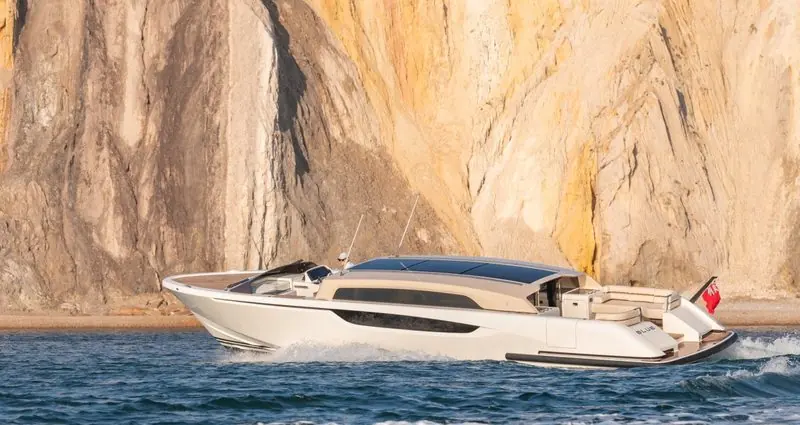
The catalogue is organised by what the tender is for. Limousine tenders are the enclosed guest boats, running from 8.7 m to 14.0 m across more than twenty delivered designs. Open tenders cover 7.5 m to 11.6 m and include chase boats, sports tenders, jet tenders and owner's launches at 8 m and 8.5 m. Utility tenders and D-RIB tenders handle the working end.
Catamaran tenders sit between 10 m and 13.5 m and exist for a specific reason. The wide beam gives an open-plan interior and a stable platform, which suits both guest transfers and water sports from the same boat. On a yacht that can only carry one large tender, a catamaran is often the answer, and the cost is garage width.
The garage dimensions come first and the boat is designed inside them.
The limousine tender
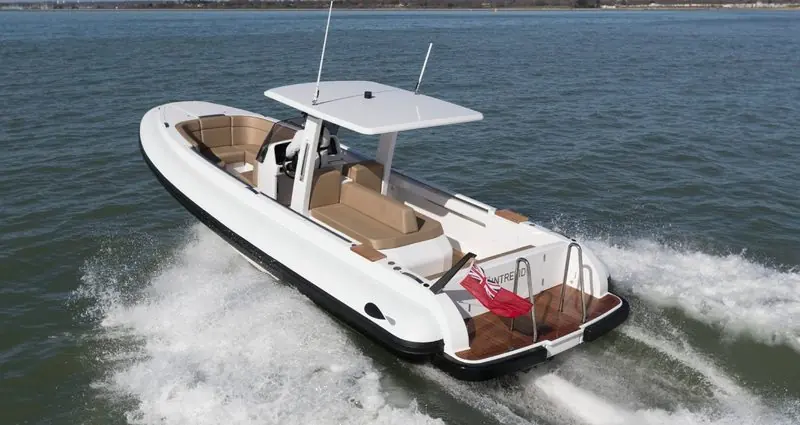
The limousine is the boat guests see first and judge the yacht by. Compass designs each one to reflect the mothership, matching the interior scheme, the exterior lines and the materials, and it works with whichever stylist the owner already employs for the yacht itself. The range of delivered lengths, from 8.7 m to 14.0 m in roughly half metre steps, shows how tightly each boat is fitted to its garage.
The practical qualities that matter are less visible. An enclosed tender has to be quiet enough to talk in, dry enough to arrive at a restaurant properly dressed, and easy to board from a swim platform in a swell. Air conditioning, seat height, door geometry and step arrangements are where a good limousine separates itself, and none of it shows in a photograph.
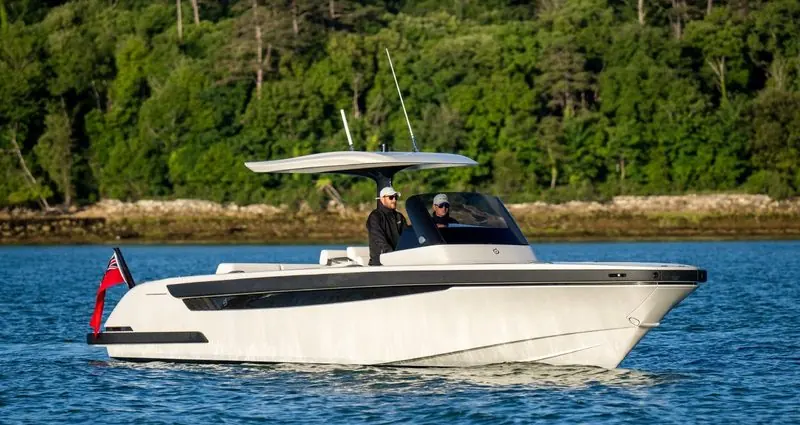
Open boats, and the bow door
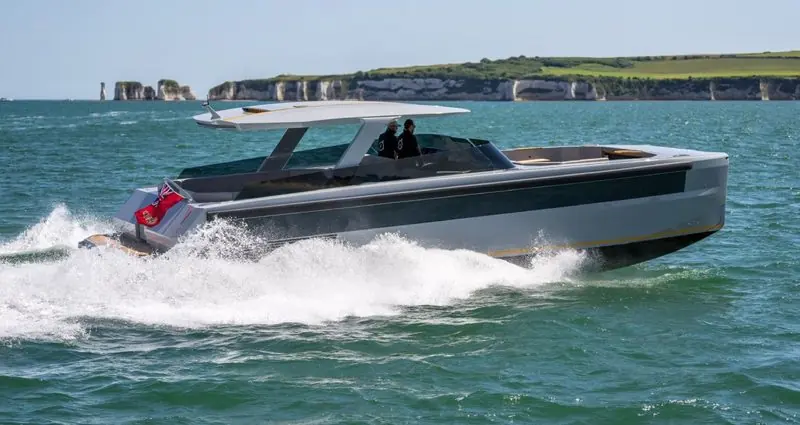
The open range is the working half of a large yacht's fleet. A 11.6 m chase tender runs guests and stores over distance, a 10.5 m jet tender gives propeller-free operation near swimmers, and the 8 m and 8.5 m owner's launches are the boats used most often and photographed least. Compass offers an optional bow door across the open range.
The bow door is worth understanding. It lets guests step directly onto a beach without wading and without a second dinghy, which is the difference between a tender that gets used for shore trips and one that does not. It also adds structure, weight and a seal that has to be maintained. Owners who anchor off beaches will use it constantly, and owners who berth in marinas will not.
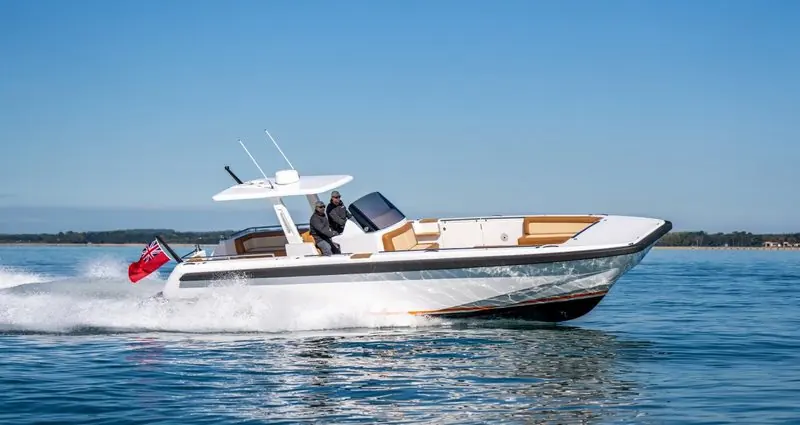
Latitude, the semi-custom answer, and what it does not tell an owner
Not every owner wants an eighteen month design process. The Latitude range takes the hull and systems from the custom boats and offers four coachroof styles, North, East, South and West, on a platform ready for customisation with a shorter build. SuperyachtNews put a number on the saving when the range was announced on 27 September 2017: choosing semi-custom over fully custom cuts the build time by around 20 per cent, allowing delivery in little over a year. Yachtbuyer, read in July 2026, gives the entry-level Latitude North at 11 m by 3 m, GRP hull and superstructure, with cabin seating for up to twelve guests, air conditioning, a fridge and an integrated sound system. Custom design work remains available on top.
What Latitude still does not give is the thing it was supposed to give. Every Latitude page publishes the platform numbers - 9.50 m to 11.00 m overall, 3.00 m beam, 2.10 m stowed height, 36 knots maximum predicted speed and 5,250 kg estimated lightship on the 10 m version - but no price and no delivery date, so the promise of getting a price and a date earlier in the conversation is still not visible from outside the conversation. That matters most on refits and brokerage purchases, where a new owner inherits a garage of fixed dimensions and needs a boat inside a season. Until Compass quotes, the only dated public anchors in this market are Pascoe's: an open Landau from EUR 780,000 on a twelve-month build and a Limousine from EUR 1,070,000 on a fifteen-month build at the SL launch in August 2013, and about GBP 1 million excluding VAT for a 9.6 m SL Limousine in August 2015. Both are more than a decade old and should be read as a floor. The other trade is that a semi-custom boat starts from someone else's decisions about layout and proportion.
How a bespoke tender actually gets built
The process starts with the garage, not the boat. Length, beam, height, cradle position, launch and recovery arrangement and lifting weight are all fixed by the yacht, and the tender is designed inside that envelope. Compass works with the yacht's designers, the captain and the build manager from the beginning, which is why on a new build the tender is contracted early.
The trap is the reverse case. A tender designed to millimetres for one yacht will not fit another, and that is the single largest factor in what a used bespoke tender is worth. Owners who expect to change yachts within a few years should be honest about that with themselves before commissioning a boat that only one garage in the world will take.
What it costs
Compass publishes lightship displacement and top speed on every tender page - 9,800 kg and jets on the 14.0 m, 7,000 kg and 45 knots on the 12.5 m, 6,450 kg and 38 knots on the 11.2 m, 5,000 kg and 40 knots on the 9.4 m - but no prices at all, which is normal for a builder that makes one boat at a time. Figures come through the yard, the captain or the build manager, and they move with length, engine package, interior specification and the amount of custom engineering involved. A 14 m limousine finished to superyacht interior standards is a significant capital item in its own right.
The running costs are conventional. A tender of this class carries marine diesels or jet drives with normal service networks, and the specialist items are the hydraulics, the doors, the seals and the interior. What owners underestimate is the cost of matching. Upholstery, veneers, paint and hardware chosen to match a yacht are made to order, and a replacement panel is a manufacturing job.
Aftercare and the season
Compass keeps an aftercare function in house, which is the right structure for a builder whose boats are scattered across the Mediterranean and the Caribbean every summer. In practice support for a custom tender means a technician who travels, because there is no dealer network for a boat that exists in a fleet of one. Engine and drive problems go to the local Volvo, Yanmar or jet drive agent.
The realistic expectation is that mechanical faults are resolved locally within days and anything structural, hydraulic or cosmetic comes back to Hamble or waits for a visit. Owners who cruise far from the yard should hold a spares package aboard, agreed with the builder at handover. That conversation is easier to have before delivery than in August.
Against Pascoe, Vikal and the production yards
Pascoe International is the best known name in bespoke limousine tenders and the most direct comparison. Vikal International competes on the same ground from Australia. Below them, Novurania, Williams and the other catalogue builders offer boats that are customised within a standard hull, at a fraction of the engineering cost and with far shorter lead times.
Compass wins where an owner wants a boat conceived with the yacht by the same designers, and where the garage is an awkward shape that no catalogue hull will fill. It loses on lead time, on price and on resale, because a bespoke boat is worth what the next garage will take. An owner who does not need the boat to match the mothership should look at the catalogue builders first.
Practical detail
| Price | Not published at any size. Every tender is a commission, not a catalogue purchase, including the semi-custom Latitude range. |
|---|---|
| How you buy one | Direct through the Hamble yard, usually specified alongside a new-build superyacht in collaboration with the mothership's exterior stylist, or via a broker for a resale. |
| Lead time | A fully custom tender runs longer; the semi-custom Latitude range is built about 20 percent faster, delivering in a little over a year, per SuperyachtNews, 27 September 2017. |
| Aftercare | Full crew training and familiarisation at handover, then an ongoing maintenance programme with the captain, including technology and performance updates over the tender's life. |
| Where sea trials happen | On the Solent, direct from the Port Hamble yard, which is also why the yard has stayed on the River Hamble through its growth from repair shop to 35,000-square-foot builder. |
| Not published | Any price, new or used; independent fuel-burn or speed figures; and warranty terms, all of which sit inside the private commissioning process rather than on a spec sheet. |
Request a quote for Compass Tenders.
Tell us the model and where it needs to go. The desk obtains a written offer from the maker or an authorised dealer, checks it against the prices published on this page, and comes back to you by email. No obligation, no fee.
- 01A written offerPriced in your currency, with VAT, delivery and lead time stated, not a brochure figure.
- 02Delivered where the yacht isTo the marina, the yard or your address, with the paperwork a lithium pack or a crane lift needs.
- 03IndependentYotters is tied to no single dealer, so the offer is compared before it reaches you.
What owners and crew report
Hull specification is tailored per tender, not pulled from a fixed catalogue lay-up
Compass founder Richard Faulkner told Boat International that outer hull laminates are specified to the individual tender's role, with core density upgraded where a tender will run distance passages rather than short ship-to-shore hops, and that the yard works with a specialist composite engineering company on the structural calculations rather than relying on standard figures. This is the builder's own account of its process, not an independent owner's, and no on-the-record owner or captain assessment of handling or after-sales service was found for this page.
Boat InternationalNo independently attributable owner testimony found
Compass's own site carries client praise for dependability and repeat commissions, including one client who names three separate projects, but none of it is attributed to a named individual, so per this site's sourcing rule none of it can run as an owner report
Yotters research desk
What is good, and what to watch
Strong points
- A genuine design collaboration with the mothership, not a catalogue matchFounder Richard Faulkner has said the yard often works directly with the mothership's own exterior stylist on a tender's design, and the client list backs that claim: tenders built for Feadship's 110m Anna and 99m Madame Gu, Oceanco's 90m DreAMBoat, and Lurssen's 91m Lady Lara and 123m Al Lusail, per Superyacht Content, March 2020.
- Handover and aftercare are built into the price of admission, not sold separatelyEvery delivery includes crew training and familiarisation, and Compass then runs an ongoing maintenance programme with the captain rather than leaving the owner to find third-party service for a bespoke hull.
What to watch
- There is no public price for the custom range, at any sizeNothing in the catalogue is priced because nothing is a product until an owner commissions it; even the semi-custom Latitude range, which is the closest thing to a fixed model, carries no published figure on Compass's own site.
- Fully custom means a long wait, and there is no independent performance data to plan aroundThe semi-custom Latitude range trims build time by about 20 percent specifically because full custom does not; and no independent sea trial, fuel-burn table or speed test for a Compass tender turned up in trade press, unlike the production mega-tenders reviewers do put through their paces, so a buyer is relying on the yard's own figures for performance.
Who it is for: Owners commissioning or refitting a large yacht who want the tender conceived with it, and who will keep the yacht long enough for that to pay.