Dometic Marine
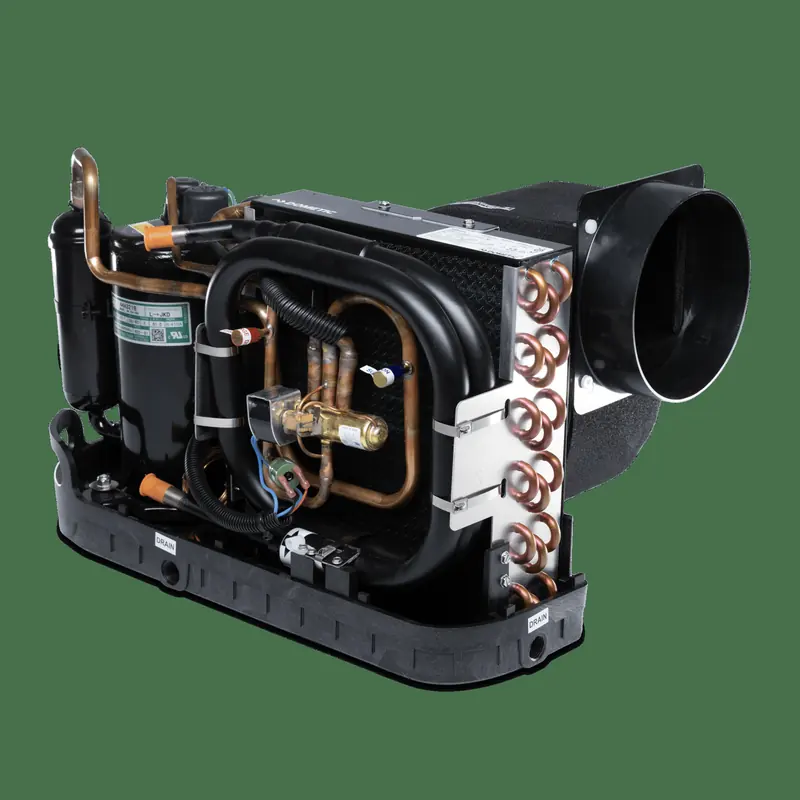
| Category | marine air conditioning and climate control, self-contained, split and chilled-water systems, for boats from about 20 feet to superyachts |
|---|---|
| Cruisair founded 1959 by Jere Crews, pioneered marine air conditioning in the United States; credited with the first reverse-cycle heat pump with automatic switchover, the first marine battery charger with automatic shutoff, the first computer-based air conditioning controls and the first automatic dehumidification routine for an unattended boat | |
| Dometic, founded 1920 in Sweden, acquired Cruisair from Taylor Made Corporation in 2003 | |
| Dometic's other yacht air conditioning brand, Marine Air, founded 1977, later joined the same portfolio; the two catalogs merged into one Dometic-branded line from 2016, complete by 2017 | |
| Manufacturing | Pompano, Florida and Milan, Italy |
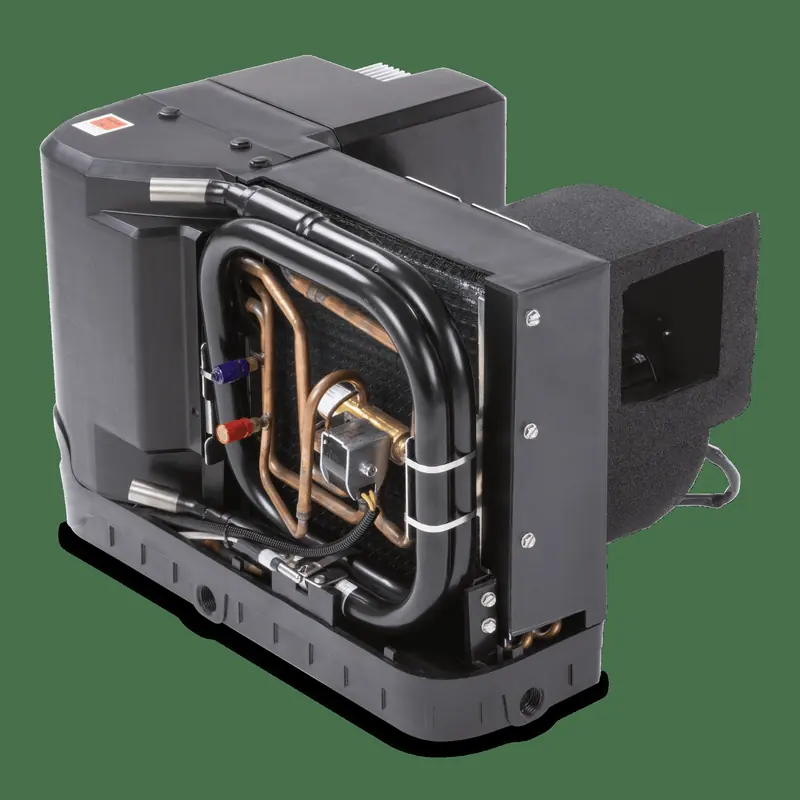
| Self-contained units | single chassis, compressor to blower on one base, suits boats up to roughly 40 to 50 feet; dealer reference list prices from about USD 2,950 for a 6,000 BTU ECD6K to USD 7,660 for a 27,000 BTU DCU27K |
| Split systems | remote condensing unit in the engine room, evaporator in the cabin, suit craft up to about 80 feet |
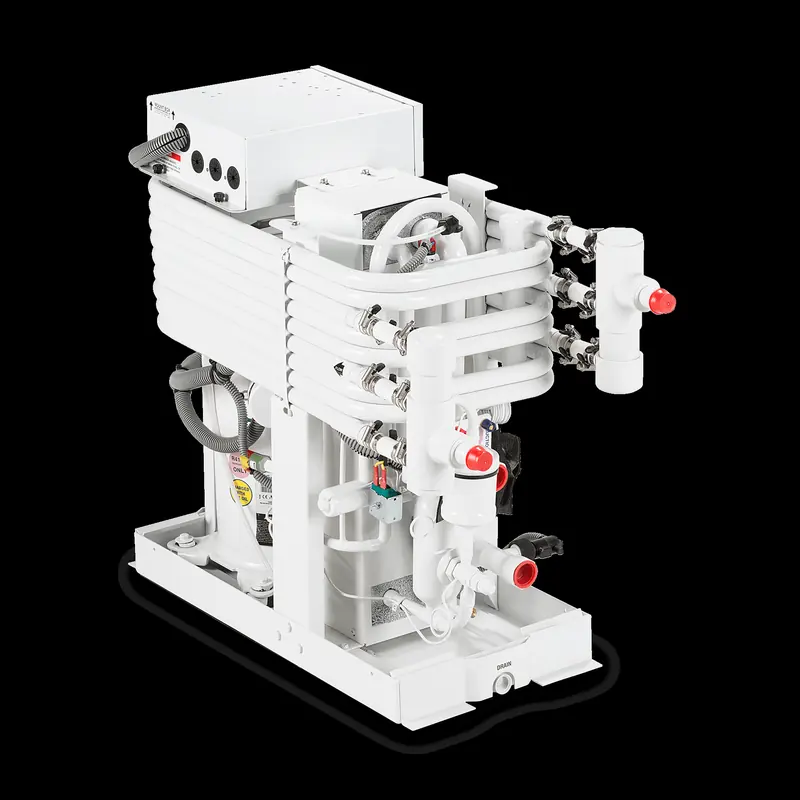
| Chilled-water systems | for yachts above roughly 24 metres (80 feet); TWCX Titan modular chillers cover 24,000 to 72,000 BTU/h with titanium condensers; component prices from about USD 7,200 to USD 11,650 |
| A chilled-water retrofit on an 80 foot yacht with 260,000 BTU and a new generator runs to roughly GBP 100,000 plus VAT in equipment, with survey, installation and commissioning adding about GBP 12,000 more, per one 2026 UK trade estimate | |
| A 16,000 BTU self-contained unit draws roughly 10 to 13 amps at 115V running, with peak inrush current as high as 72 amps without a soft starter fitted | |
Sixty-Five Years Under Three Names
Crews and Cruisair are credited with a run of firsts that still shape how a boat's air conditioner behaves: the first reverse-cycle heat pump with automatic switchover between heating and cooling, the first marine battery charger with automatic shutoff, the first computer-based air conditioning controls and the first automatic dehumidification routine for a boat sitting unattended at the dock. Cruisair also built the first tempered-water, or chilled-water, systems sized for large yachts, which is the architecture every superyacht air conditioning system on the water today still uses.
Dometic itself dates to 1920, founded in Sweden as a maker of boat and RV refrigerators, and grew into a marine and outdoor equipment group through acquisition rather than invention. It bought Cruisair from Taylor Made Corporation in 2003. Dometic's other marine air conditioning line, Marine Air, was founded in 1977 and later joined the same portfolio. From 2016 the two catalogs began merging into a single Dometic-branded range, a transition Dometic's own product pages describe as complete by 2017, though many dealers and long-time owners still call every unit on the water a Cruisair. Manufacturing now runs out of Pompano, Florida and Milan, Italy.
A Boat Cannot Just Run a Window Unit
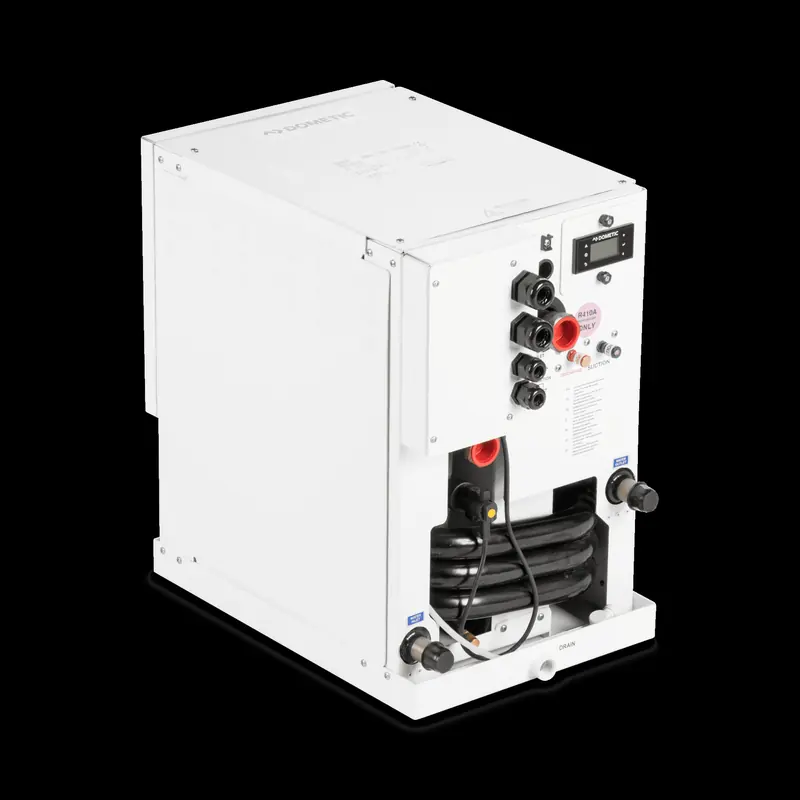
A household split unit cools its condenser with outside air, which is exactly what a boat cannot rely on: there is rarely room for a full-size air-cooled coil, and salt air corrodes exposed fins far faster than a suburban backyard does. Marine units instead run seawater through the condenser, which is smaller, quieter and immune to ambient air temperature, at the cost of needing a through-hull, a strainer and a raw-water pump that a house system never has to think about. External components carry corrosion-resistant coatings, and because a generator or an inverter is a far less forgiving power source than shore-grade household wiring, marine compressors are built around soft-start electronics or variable-frequency drives to tame the inrush current a bare compressor would otherwise demand on startup. Dometic's newest units also carry R-454B and R-32 refrigerant options, launched in 2025, cutting global warming potential by 78 percent and 68 percent respectively against the outgoing R-410A.
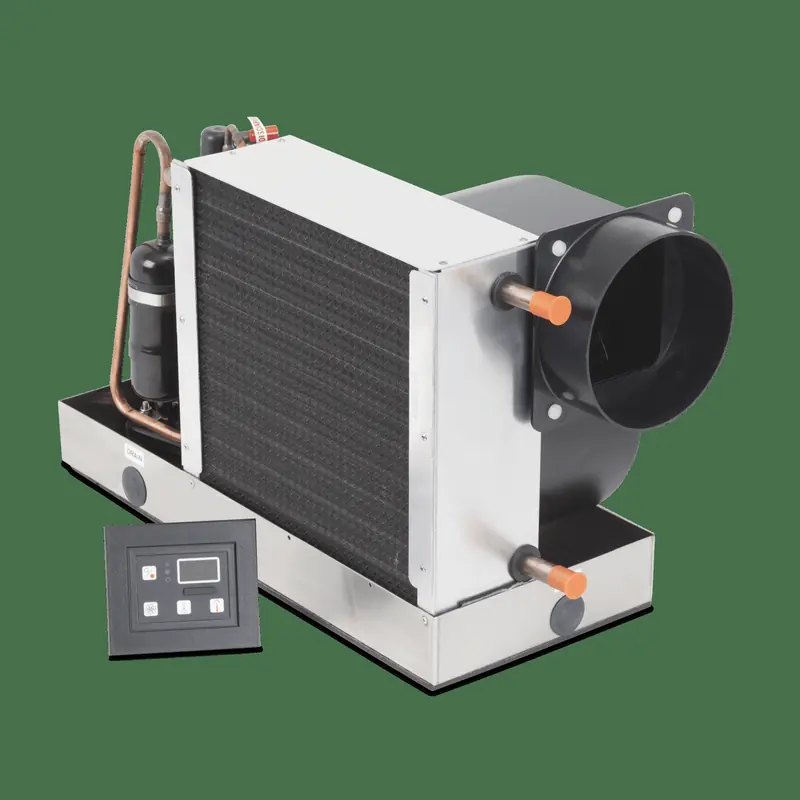
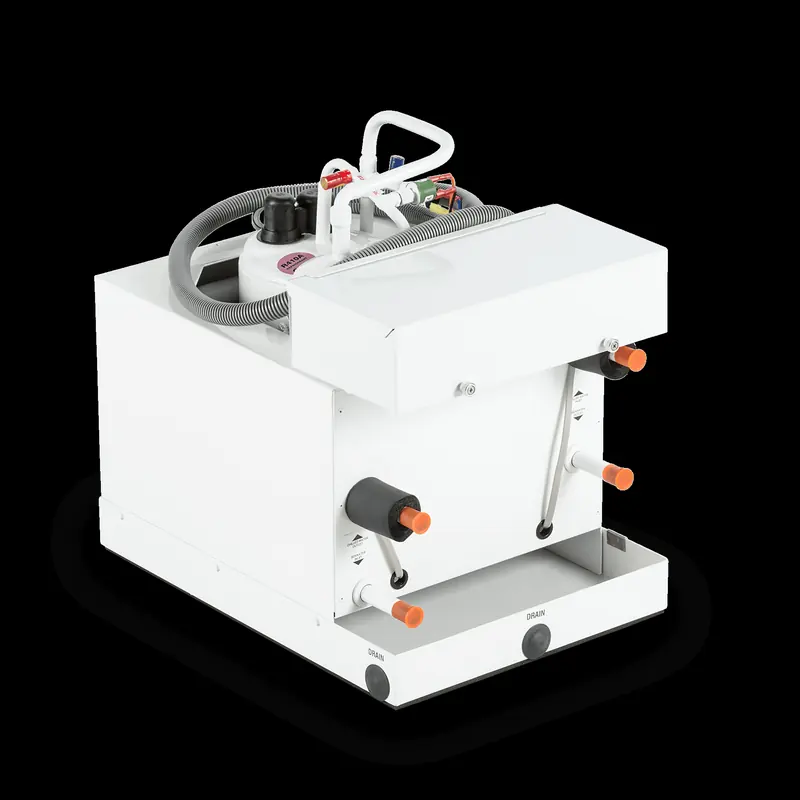
The bigger difference is architectural. A self-contained unit puts the compressor, condenser, evaporator and blower on one chassis under a berth or in a locker, which is simple to install and service but ties one box to one or two zones, and it tops out at around 40 to 50 feet of boat. A split system moves the noisy, hot half into the engine room and pipes refrigerant to a quieter evaporator in the living space, which scales further, to around 80 feet. Above that, a chilled-water system takes over: one or more chillers cool a fresh-water and glycol loop that a pump sends to as many air handlers as the boat needs, with no real limit on zone count or distance from the machinery space, which is why every system above about 24 metres uses this layout rather than multiple self-contained boxes.
A gyro or a stabiliser is optional comfort. Air conditioning at anchor in a Florida August is the equipment that decides whether anyone stays aboard at all.
The Range and What It Costs
Dometic sells only through a certified dealer network and does not publish a direct consumer price list, so the clearest numbers come from a dealer's own 2026 reference sheet: an ECD6K self-contained unit at 6,000 BTU lists around USD 2,950, a DTGX12 at 12,000 BTU around USD 3,610 and the largest self-contained box, the 27,000 BTU DCU27K, around USD 7,660. Split-system evaporators in the TVE range run roughly USD 1,240 to USD 1,420 before the remote condensing unit. Chilled-water components, the MDGX and TWCX ranges, run from about USD 7,200 to USD 11,650 per unit, and the TWCX Titan chillers, built with titanium condensers for durability, cover 24,000 to 72,000 BTU/h.
None of those figures include fitting, and fitting is where a marine air conditioning budget actually goes. A single self-contained retrofit commonly runs USD 3,000 to 5,000 all in in North American trade estimates, equipment included. Motor Boat and Yachting, working a real UK refit budget in 2026, put four self-contained units totalling 44,000 BTU plus a new generator on a 50 foot boat at roughly GBP 35,000 plus VAT in equipment with about GBP 6,850 plus VAT to install. Scale that to an 80 foot boat needing a 260,000 BTU chilled-water system and a generator to run it, and the same source put equipment at roughly GBP 100,000 plus VAT, with survey, installation and commissioning adding a further GBP 12,000 or so. Multi-zone and chilled-water installations more broadly are quoted in the USD 20,000 to 50,000 range for labour alone, and above that scale nothing is priced off a list at all: every yard quotes the job individually.
What It Asks of the Generator
Running load on a 16,000 BTU self-contained unit sits around 10 to 13 amps at 115V depending on the source and the exact model, which is manageable for most gensets on its own. The number that catches boats out is inrush current: the same 16,000 BTU class of unit can pull a measured peak of around 72 amps for a fraction of a second at startup, which is what actually determines whether a marginal generator trips or a small inverter gives up. Trade guidance puts the floor at a 3,000 watt generator for a single 12,000 BTU unit, and a 16,000 BTU Cruisair-class unit is described as borderline on a 3,000 running-watt genset, particularly at the moment the compressor kicks in.
Soft-start electronics exist specifically to fix this. Fitted to a 16,000 BTU unit, a soft starter is reported to cut peak inrush by more than half, from around 72 amps down to roughly 32 amps, and general marine trade guidance puts the typical reduction at up to 60 percent across unit sizes. That difference is what lets a boat run a compact backup generator or an undersized inverter instead of the full genset, and it is also why running two or three units off one generator without soft-start protection is a common way to trip a breaker the moment the second compressor tries to start. Sizing the generator to the running load of every unit combined, not the nameplate wattage of the biggest one, is the calculation that gets skipped most often.
Living With It: Noise, Humidity and Upkeep
The recurring job is the raw-water strainer, which owner guidance across boating forums puts at a clean once or twice a season at minimum, more often in warm, growth-prone water. Marine growth inside the intake hose and strainer basket is the single most common reason a unit that was cooling fine a month ago suddenly is not, and a common piece of forum maintenance folklore is dropping a couple of small pool chlorine tablets into the strainer basket every month or so to slow it down. Annual professional maintenance budgets run in the range of USD 200 to 400 per unit in trade estimates, with a compressor replacement, when one is actually needed, running into several thousand dollars.
Noise is real, and it is more about where you are standing than what the spec sheet says. Owners on Trawler Forum describe units that are barely audible from a berth directly above them but clearly heard by anyone with a direct line of sight to the return-air grille, and one long-running thread on that same forum notes the maker has historically been reluctant to sell the parts needed for a quieter aftermarket fan swap. The upside owners consistently credit is automatic dehumidification, a feature Cruisair pioneered specifically for boats left closed up between visits: run in that mode, the system keeps mildew and damp cushions from becoming the thing you come back to, which matters more to most owners than the cooling capacity ever does.
Where It Breaks, and the Real Tradeoffs
Pump failure is the single most common service call reported across marine air conditioning forums: a seized or corroded impeller, a pump that has lost its prime, corroded electrical connections or a tripped breaker. A replacement Cruisair raw-water pump, the PML500L, lists at roughly USD 410 for the part alone, before labour. A second recurring complaint is erratic cycling, a unit that runs cold for a few seconds then falls into a repeating timer pattern, which owners on Cruisers and Sailing Forums have traced to a restricted air filter icing the coil or a faulty reversing valve rather than to the compressor itself, both of which are diagnosable without a full replacement.
The sharper tradeoff shows up on larger, multi-chiller boats. One owner's account on Sam's Marine's Hatteras forum describes a 116 foot yacht where an electrical fault destroyed two of three chiller control boards, only to find Cruisair no longer carries a replacement for that board and instead pushes a newer all-in-one computerized controller, which puts every chiller on a single point of failure instead of three independent ones. Trawler Forum threads on the same subject split much the same way: owners running Cruisair self-contained units thirty or forty years old report no trouble at all, while a recurring complaint is that Dometic ownership has not obviously lifted build quality or warranty response since the RV side of the same parent company, and some owners facing a full system replacement have moved to Flagship Marine or CTM Marine equipment instead of staying with the brand.
Practical detail
| Self-contained unit prices, by BTU | A 2026 dealer reference sheet, published for Dometic's self-contained line, gives an ECD6K at 6,000 BTU around USD 2,950, an ECD10K at 10,000 BTU around USD 3,175, an ECD16K at 16,000 BTU around USD 3,420, a DTGX12 at 12,000 BTU around USD 3,610, a DTGX16 at 16,000 BTU around USD 3,795 and the largest self-contained box, the 27,000 BTU DCU27K, around USD 7,660. Dometic itself does not publish these prices; they come from a certified dealer's own list. |
|---|---|
| Split and chilled-water component prices | Split-system evaporators in the TVE range run roughly USD 1,240 to USD 1,420 before the remote condensing unit. Chilled-water components in the MDGX and TWCX ranges run about USD 7,200 to USD 11,650 per unit, and the titanium-condenser TWCX Titan chillers cover 24,000 to 72,000 BTU/h across that range. |
| Installation is often the bigger half | A single self-contained retrofit runs roughly USD 3,000 to 5,000 all in, equipment included, in North American trade estimates. Motor Boat and Yachting priced a real UK job in 2026: four self-contained units totalling 44,000 BTU plus a new generator on a 50 foot boat at about GBP 35,000 plus VAT in equipment and about GBP 6,850 plus VAT to install, a ratio where fitting is a small fraction of the hardware cost on a mid-size retrofit. |
| A named large-yacht chilled-water job | The same UK trade source put an 80 foot yacht's 260,000 BTU chilled-water system and generator at roughly GBP 100,000 plus VAT in equipment, with survey, installation and commissioning adding about GBP 12,000 more. Multi-zone and chilled-water labour more broadly is quoted at USD 20,000 to 50,000 in North American estimates. |
| Power draw and generator sizing | A 16,000 BTU self-contained unit draws roughly 10 to 13 amps running at 115V, but peak startup inrush on the same class of unit can hit about 72 amps. Trade guidance sets a 3,000 watt generator as the floor for a single 12,000 BTU unit, and calls a 16,000 BTU unit borderline on that same generator without a soft starter fitted. |
| Soft-start cuts the number that actually matters | A soft-start device fitted to a 16,000 BTU unit is reported to cut peak inrush from about 72 amps to roughly 32 amps, over a 50 percent reduction, and general trade guidance puts typical reductions at up to 60 percent. Running more than one unit off a single generator without soft-start protection is a common way to trip a breaker when the second compressor starts. |
| Annual service and the parts that actually wear | Annual professional maintenance is commonly budgeted at USD 200 to 400 per unit, with a compressor replacement, when needed, running into several thousand dollars. The raw-water strainer needs cleaning at least once or twice a season, more often in warm water prone to marine growth, and a worn or seized raw-water pump, the single most common service call, replaces for roughly USD 410 in parts alone plus labour. |
| What is NOT published | Dometic sells only through certified dealers and publishes no direct consumer price list; every figure here traces to a dealer reference sheet or a trade estimate, not a factory list. Chilled-water systems above the self-contained and split range are quoted per project with no published installed cost at all, which is the entire large-yacht end of this market. No independently verified noise (dB) comparison across the current model range exists either; what is available is owner description, and it disagrees by where you are standing relative to the unit. |
What owners and crew report
A large chiller installation lost its redundancy when the control board was discontinued
An owner of a 116 foot yacht, posting as Pascal, described an electrical fault that destroyed two of three chiller control boards, then finding Cruisair no longer carries that board and instead pushes a newer all-in-one computerized controller, which the owner contrasted unfavourably with a 53 foot yacht's Flagship chillers using off-the-shelf relays and thermostats with LED diagnostics, simple, cheap and easy to fix.
Sam's Marine Hatteras Owners ForumOld units run for decades, and owners are split on the newer ones
Posters report self-contained Cruisair units thirty and around forty years old still working with no issues, alongside a recurring complaint that Cruisair has been owned by Dometic since 2017 without an obvious lift in quality, and that discontinued parts are pushing owners facing a full replacement toward Flagship Marine or CTM Marine equipment instead.
Trawler ForumNoise is about position, not just the unit, and quieter parts are hard to get
One owner reported a unit that is barely audible from directly above it but clearly heard with a direct line of sight to the return-air grille, and noted that Cruisair had been reluctant to sell the parts needed for a quieter aftermarket fan swap.
Trawler ForumDecades of reliable service is common enough to be unremarkable
One owner described running three all-in-one Cruisair units, two more than thirty years old and one around forty, all still working with no issues at all, in a thread specifically about routine strainer and raw-water maintenance rather than about a failure.
The Hull TruthErratic cycling is usually airflow or the reversing valve, not the compressor
An owner troubleshooting a unit that ran cold for twenty seconds before falling into a repeating ninety-second cycle was pointed toward a restricted intake filter icing the coil, or a faulty solenoid reversing valve next to the compressor, as the likely causes rather than compressor failure.
Cruisers and Sailing Forums
What is good, and what to watch
Strong points
- Real, dated engineering firsts, not marketing claimsCruisair is credited with the first reverse-cycle marine heat pump with automatic switchover, the first computer-based marine air conditioning controls, the first automatic dehumidification routine for an unattended boat and the first tempered-water systems sized for large yachts, an architecture every superyacht system still uses today.
- One brand covers every boat sizeSelf-contained units for boats up to about 40 to 50 feet, split systems to about 80 feet and chilled-water systems above that with no real capacity ceiling, all sold and serviced through the same certified dealer network rather than three separate brands with three separate parts supply chains.
- Decades-old units that are still runningOwners on The Hull Truth and Trawler Forum report self-contained Cruisair units thirty and even forty years old still working with no issues, evidence that the underlying mechanical design, independent of who owns the brand today, was built to last.
- A real answer to a real electrical problemSoft-start electronics cut a 16,000 BTU unit's peak startup draw by roughly half, which is what makes it practical to run marine air conditioning off a generator or inverter sized for the running load rather than the surge, and Dometic builds this into its current line rather than leaving it to an aftermarket fix.
- Moving to lower-impact refrigerant ahead of the mandateThe 2025 line brought R-454B and R-32 refrigerant options, cutting global warming potential by 78 percent and 68 percent respectively against the outgoing R-410A, before either gas is required by regulation on the boats this equipment ships into.
What to watch
- Control-board redundancy has gone backward on larger systemsAn owner account of a 116 foot yacht on Sam's Marine's Hatteras forum describes Cruisair discontinuing an older chiller control board in favour of a newer all-in-one computerized controller, which puts every chiller on one shared point of failure instead of several independent ones.
- Dometic ownership carries a reputation it has to keep disprovingA recurring theme on Trawler Forum is owners assuming Dometic-era quality and warranty support will resemble the company's RV division, which several posters rate poorly; whether that carries over fairly to the marine line is disputed, but the expectation itself shapes buying decisions.
- No price transparency at the end of the market this site coversAbove the self-contained and split ranges, every chilled-water system is quoted per project with no published installed cost, and Dometic itself sells only through dealers rather than publishing a factory list, so a buyer researching a large-yacht retrofit starts with no public benchmark at all.
- The raw-water side is a real, recurring maintenance burdenMarine growth, a clogged strainer or a failed raw-water pump are the most common reasons a system stops cooling, and unlike a household air-cooled unit, neglecting the seawater side for even one season is enough to cause a failure.
- Noise depends on where you stand, and the maker has not made it easy to fixOwners describe units that are quiet from a berth above but clearly audible with a direct line of sight to the return-air grille, and a Trawler Forum thread on quieter aftermarket fans notes reluctance from the company to sell the parts an owner would need to upgrade it.
Who it is for: Owners and buyers sizing or budgeting a marine air conditioning retrofit or new build, from a single self-contained cabin unit up to a full chilled-water system on a yacht over 24 metres.