Hempel
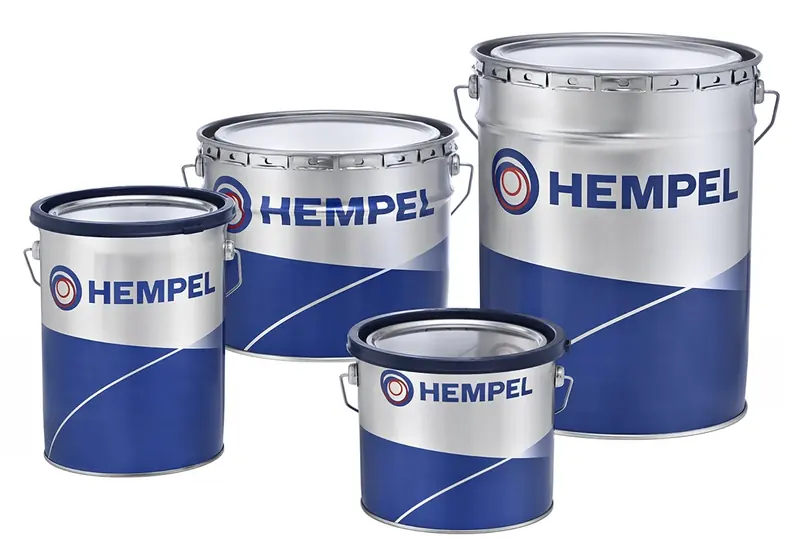
| Hempel A/S, Lundtofte near Copenhagen, Denmark; founded 1915 by Jorgen Christian Hempel (1894 to 1986); own paint factory from 1916; first ship antifouling 1917 with the Technical University of Denmark (Wikipedia) | |
| 2025 revenue EUR 2,165 million, free cash flow EUR 259 million, adjusted EBITDA margin 18.2 percent; Marine segment EUR 750 million (European Coatings, 4 March 2026) | |
| Majority owned by the Hempel Foundation, with CVC Funds as minority investor (Hempel annual report 2025 text) | |
| Hempaguard line | more than 6,000 applications since 2013 (Hempel product page) |
|---|---|
| Hempaguard X7 system on three superyacht case stories: Light Primer 100 microns, Nexus II 100 microns, X7 150 microns (Hempel case stories: Saudade, G2, Missy) | |
| X7 claims | up to 20 percent lower fuel use against market average antifouling and a 5 year paint system (Hempel); 19.5 percent over five years per Hempel product manager Chris Toole (OB Magazine) |
| Idle limit given as 120 days; service interval given as up to 60 months on Hempel's yacht pages and up to 90 months on the data sheet listing | |
| Consumer range seen at UK chandlers | Classic 2.5 L about GBP 45 to 50, Cruising Performer 2.5 L about GBP 62 to 79, Tiger Xtra 2.5 L about GBP 85 to 90, Hard Racing 2.5 L about GBP 98 to 100 |
| Hempel publishes no price for Hempaguard X7 | |
Where Hempel comes from
Hempel began as a marine paint wholesaler, opened its own mixing factory in 1916 and in 1917 developed its first antifouling for ship hulls together with the Technical University of Denmark. That makes it one of the few suppliers on a yacht's bottom whose business started on the hull rather than arriving from building or industrial paint later. It reports EUR 2,165 million of revenue for 2025 with an adjusted EBITDA margin of 18.2 percent, and its Marine division is the largest growth engine at EUR 750 million after 9.8 percent organic growth (European Coatings, March 2026). The group employs more than 7,000 people according to Wikipedia's 2025 figure.
Yachts are a small slice of that. Hempel's own reporting doesn't break out a yacht segment, so nobody outside the company can say how much of the EUR 750 million comes from yachts. For a yard or an owner that matters in one way only: the yacht range gets technology developed for commercial ships, where fuel bills pay for the research, and then adapted for boats that sit idle for months.
The leisure range and what it costs
Listings the desk found: Classic 2.5 L at roughly GBP 45 to 50, Cruising Performer 2.5 L at roughly GBP 62 to 79 (one retailer shows a GBP 104.74 list price against its own GBP 72.95), Tiger Xtra 2.5 L at roughly GBP 85 to 90 and Hard Racing 2.5 L at roughly GBP 98 to 100 (Marine Superstore, Seamark Nunn, Force4, Norfolk Marine). Prices move by retailer, colour and date, and these are UK pounds with VAT, so treat them as a shape, not a quote. One Classic listing gives 12.5 square metres per litre, which is a theoretical figure before application losses.
Hempel also sells Olympic+, a high-solids self-polishing rosin antifouling with docking intervals up to 36 months on its product page, and for larger or faster hulls the Dynamic and Globic lines that Hempel lists with intervals up to 90 months. The desk did not find consumer prices for those. They are mostly sold through yards and Hempel's own technical staff, which is why a price list for them doesn't exist in public.
A real silicone system on a superyacht, a published fuel claim, and not one price or independent test.
Independent tests of the tins
In PBO's 20-paint, 13-location test, Hempel Cruising Performer placed third in the overall top five behind Seajet 033 and Seajet 038, took first place at Caernarfon in North Wales and fourth at Port Edgar in Scotland. The boards went in during late March and came out in early October, so it is a single-season static test. The desk couldn't confirm the publication year from the pages it could read.
Motor Boat and Yachting's group test scored Hempel Mille NCT, a different and older product, at 64 percent and called it a strong all-round performer, with hardly any slime in the Mediterranean but uneven and in places thick slime in the Solent. Neither test covers Hempaguard X7 or any superyacht product, so nothing independent speaks for the expensive end of the range. The desk found no PBO or MBY result for Mille Dynamic.
Hempaguard X7 for superyachts
Hempel describes X7 as high-solids, silicone based and cured by adding a crosslinker, with an advanced hydrogel silicone and an efficient biocide working together. That hybrid matters for a buyer who expects a biocide-free hull: if that is the goal, Hempel's separate Hempablue and Hempasil Pro are the biocide-free silicone options. The Hempaguard family has had more than 6,000 applications since 2013 according to Hempel, and an earlier brochure cited more than 4,000 vessels including over 50 superyachts. X7 itself carries product code 89900.
The yacht pages claim a five year paint system, no limit on service speed and idle periods up to 120 days. The service interval is stated differently in different places: up to 60 months on Hempel's yacht pages and up to 90 months in a data sheet listing, so ask for the figure that applies to your trading pattern in writing. A trade report says only professional applicators may apply it.
What the three case stories show
G2 was coated in October 2019. Hempel says about 16 months later only light cleaning at the waterline was needed, and Captain Jason Geale says the team is happy with the silicone and has almost no growth, even after three months in Antigua. Missy, a carbon fibre yacht first painted in 2016, was recoated in March 2021 after touch-ups covered 25 to 30 percent of its underwater hull; a final fresh water wash ran at 150 bar. Saudade was done in June 2022 by roller and airless spray inside an application tent, and was lifted 48 hours after the coats went on.
The Saudade story is the interesting one for a sceptic. Captain Rob Cumming says the owners tested X7 on the rudder and keel for six months with fantastic results before deciding to do the whole boat, and that the previous silicone system needed regular diving and cleaning. That is a real owner decision, but it is Hempel's own page and the owner is a company, Casa Julia S.A. All three pages sit under the same customer, so they are a single relationship, not three independent verdicts.
Fuel claims and the cost question
Hempel's yacht page says an owner can cut fuel cost by up to 20 percent without changing routes, speed or crew behaviour, and that the higher initial cost of the paint system will be covered by fuel savings alone in about two weeks, or in as little as two weeks for the whole system in some cases. Product manager Chris Toole told OB Magazine that X7 gives up to 19.5 percent fuel savings over its five year service life. That article does not give vessel names, test method, sample size or conditions. Hempel's 2024 DNV verification for the commercial Hempaguard X7 reports a 20 percent fuel reduction and 1.4 percent speed loss, which is a ship result and not a yacht one.
A superyacht that burns fuel for a few hundred hours a year can't pay back a premium in two weeks of idle use, so read the two weeks as an upper claim for a hard-working vessel. Toole also says a warranty doesn't guarantee a better paint job because preparation, application and environment all matter, so the hull's result depends heavily on the yard. The honest summary is that the mechanism is real and the number is a vendor's.
Choosing between the ranges
Hempel's own labels point the same way. Olympic+ is sold as a self-polishing rosin antifouling for the yacht market with an interval up to 36 months, which suits a boat that moves regularly and is redone on a docking cycle. Globic and Dynamic are listed for intervals up to 90 months, but they are specified for hulls where the yard and Hempel's technicians are involved. Silicone is the third route, and Hempel has sold it to yachts since Hempasil appeared in 1999 according to a 2014 trade piece.
Before signing a quote, ask three things. What was on the hull before, because Saudade's crew describe cleaning a previous silicone system by diving, and a change of system needs a proper tiecoat. Who applies it and under what tent conditions, since the 2022 Saudade job took place in a standard application tent. And what the interval is for your own pattern of idle days and speed, in writing, because the pages quote 60 and 90 months for the same product family. Hempel's strongest evidence is its own, so it is worth asking the yard for the names of captains who are not in the case stories.
Practical detail
| Price, boats | UK retail for 2.5 L: Classic about GBP 45 to 50, Cruising Performer about GBP 62 to 79, Tiger Xtra about GBP 85 to 90, Hard Racing about GBP 98 to 100 (Marine Superstore, Seamark Nunn, Force4, Norfolk Marine) |
|---|---|
| Price, superyachts | Not published. Hempaguard X7 and the Globic, Dynamic and Olympic+ lines are quoted per hull by Hempel or the yard |
| System | Light Primer 100 microns, Nexus II 100 microns, Hempaguard X7 150 microns, with Silic One Tiecoat shown on G2 (Hempel case stories) |
| Interval claims | X7 up to 60 months on Hempel yacht pages, up to 90 months in a data sheet listing, idle up to 120 days; Olympic+ up to 36 months |
| Application | Roller and airless spray in a tent by a professional; Saudade was lifted 48 hours after the coats were applied |
| Compare | Jotun, International (see its own entry), Seajet and Veneziani; PBO's test put Cruising Performer third overall behind two Seajet products |
| Check before buying | Ask for the service interval in writing for your trading pattern, the yard's applicator record, and whether the hull already carries silicone |
| What is not published | Any superyacht price, test conditions behind the 19.5 and 20 percent fuel claims, the yacht segment's revenue, and any independent test of Hempaguard X7 on a yacht |
What owners and crew report
Silicone hull, almost no growth after Antigua
About 16 months after the October 2019 coating only light waterline cleaning was needed, and the hull stayed almost free of growth after three months in Antigua
Captain Jason Geale, G2, in a Hempel case storySix month trial before the full hull
The owners tried X7 on the rudder and keel for six months, then coated the whole underwater hull in June 2022; the previous silicone needed regular diving and cleaning
Captain Rob Cumming, Saudade, in a Hempel case storyCruising Performer placed third overall
Hempel Cruising Performer was third in the top five behind Seajet 033 and Seajet 038, first at Caernarfon and fourth at Port Edgar
Practical Boat Owner antifouling testMille NCT scored 64 percent
Hardly any slime in the Mediterranean but uneven, in places thick, slime in the Solent
Motor Boat and Yachting group test
What is good, and what to watch
Strong points
- A hull coating house, not a boat paint brandFounded 1915, first ship antifouling 1917, EUR 750 million Marine division in 2025
- One range from GBP 45 tins to superyacht systemsClassic, Cruising Performer, Tiger Xtra and Hard Racing for boats; Olympic+, Dynamic, Globic and Hempaguard for yards
- Cruising Performer holds up in independent testingThird overall in PBO's 20-paint test, first at Caernarfon
- Silicone options with and without biocideX7 is a hydrogel silicone with biocide; Hempablue and Hempasil Pro are biocide free
What to watch
- No public price for the yacht systemsHempel quotes through yards and technical staff; none of the superyacht products has a published price
- Yacht evidence is Hempel's ownThe G2, Missy and Saudade stories are hosted by Hempel and share one customer
- Interval claims disagreeUp to 60 months on the yacht pages against up to 90 months in a data sheet listing
- Needs a professional applicationA three coat 350 micron system is applied in a tent by trained applicators, so the yard's skill sets the result
Who it is for: Owners and captains of superyachts deciding between a conventional antifouling and a silicone hydrogel system, and boat owners comparing Hempel's tins against Jotun, Seajet or International.