Loro Piana
| Category | luxury textiles, with an interiors division supplying yacht upholstery, bedding, drapery and wall coverings |
|---|---|
| Founded | 1924 by Pietro Loro Piana at Quarona in Piedmont, on a family wool-trading business reaching back to the early nineteenth century |
| Ownership | LVMH took 80 percent in 2013 for about EUR 2 billion, and raised its stake from 85 to 94 percent for a further EUR 1 billion announced with LVMH's annual results in late January 2026, valuing the house at about EUR 11 billion |
| Chief executive | Frederic Arnault |
| Interiors division | created in 2006, close to 200 fabrics in more than 1,000 colourways, all woven in Italy |
| Yacht range | blends of linen and cashmere for upholstery, bedspreads, cushions and blackout drapes, with an outdoor line built on Sunbrella for sun, salt, chlorine and damp |
| Fibres | vicuna at 12 to 13 microns, baby cashmere at 13.5 microns yielding about 30 g a year from each animal, and The Gift of Kings merino at no more than 12 microns |
| Marine certification | Loro Piana publishes no IMO 2010 FTP Code approval or MED wheelmark for its interiors fabrics |
| Superyacht Regatta | title sponsor at Porto Cervo with the Yacht Club Costa Smeralda from 2009 to 2021, an event that now runs under Giorgio Armani |
| Giraglia | title sponsor since 2024, run by the Yacht Club Italiano with the Societe Nautique de Saint-Tropez, the 2026 edition being the 73rd, with a 241 nm offshore leg from Saint-Tropez to Genoa around the Giraglia rock |
| Supply chain | placed under judicial administration by the Court of Milan on 14 July 2025 over subcontractors accused of exploiting workers, with the measure revoked early in April 2026 |
| Remediation | about 2,400 supply-chain audits since 2024 and business ended with around 100 suppliers and subcontractors that failed the company's criteria |
Wool traders from the Valsesia
The Loro Piana family were trading wool in Piedmont from the early nineteenth century, and Pietro Loro Piana formalised the business at Quarona in 1924. The mills are still there, in the Valsesia north-west of Milan. What the house sells is control of a raw material, from the animal through the spinning and the weaving to the finished cloth, and that vertical grip is the reason nobody has quite replicated it.
The reputation rests on fibres that barely exist in commercial quantity. Vicuna measures 12 to 13 microns. Baby cashmere is 13.5 microns and each animal gives about 30 grams a year. The Gift of Kings merino is capped at 12 microns. To put that in perspective, ordinary good merino sits several microns coarser, and every micron is a step change in what the yarn costs.
What LVMH owns now
LVMH bought 80 percent of Loro Piana in 2013 for about EUR 2 billion, leaving the family with the balance and Sergio and Pier Luigi Loro Piana in place. In late January 2026, alongside its annual results, LVMH confirmed it had exercised a call option to move from 85 to 94 percent for a further EUR 1 billion, which values the house at about EUR 11 billion. Frederic Arnault runs it.
For an owner buying fabric this is not gossip. Group ownership determines whether a colourway will still exist in eight years, whether an interiors division survives a strategy review, and who answers when a batch fails inspection. A house valued at EUR 11 billion inside the largest luxury group in the world is a supplier with continuity risk close to zero.
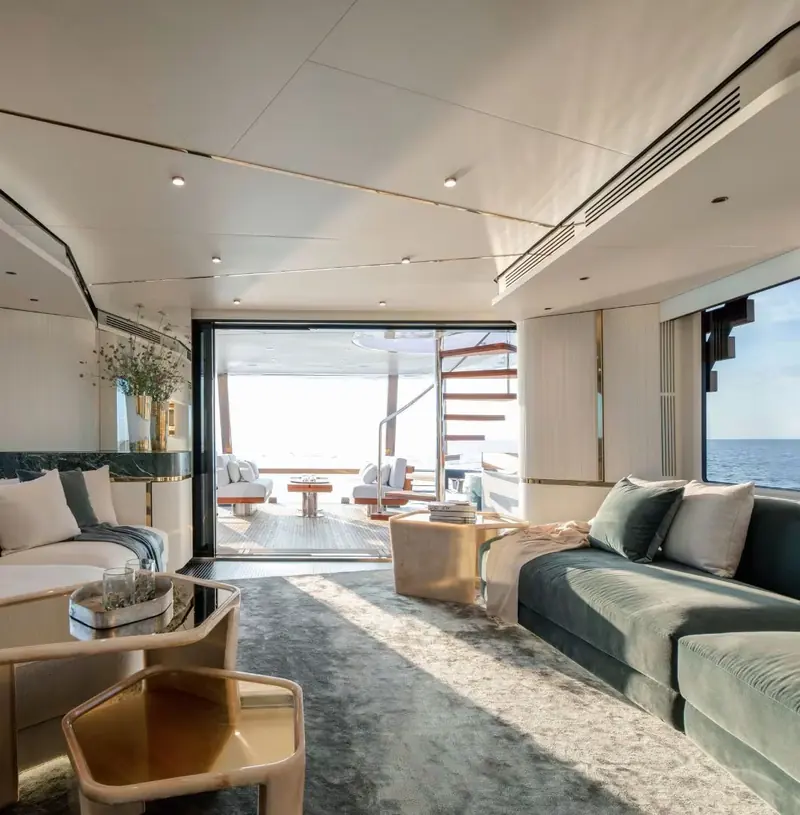
Nothing woven from baby cashmere is going onto a sundeck, which is why the outdoor range is built on Sunbrella.
Loro Piana Interiors and the yacht cloths
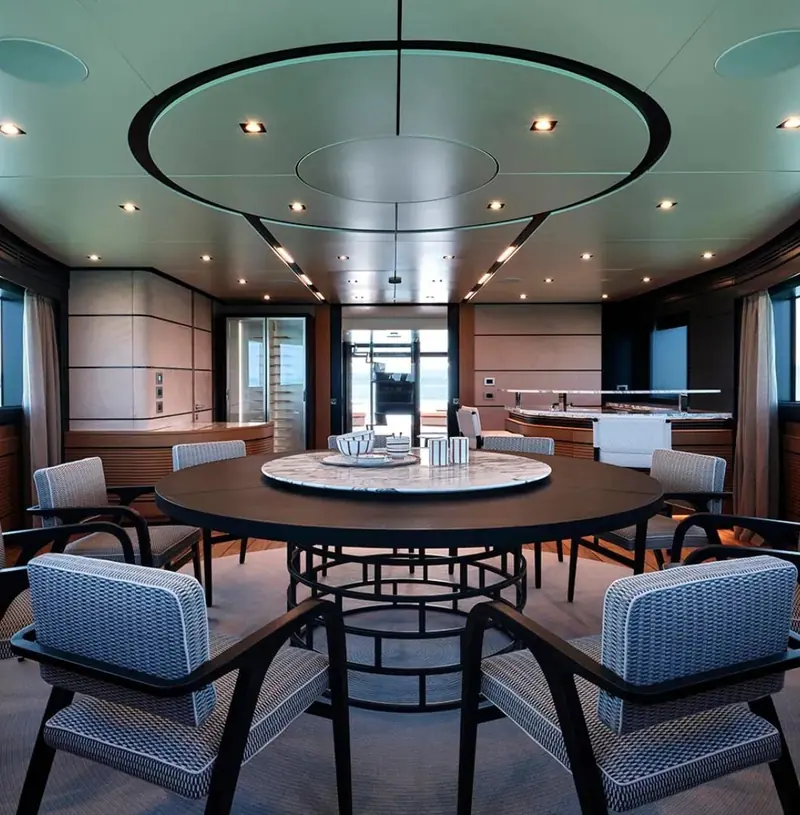
The interiors arm was set up in 2006 to take the mill's output into houses, yachts, aircraft and hotels, and it now runs to close to 200 fabrics in more than 1,000 colourways, all woven in Italy in cashmere, wool, alpaca, cotton, linen and silk, pure or blended. The yacht series leans on linen and cashmere blends chosen to sit well in damp air, in several weights, for upholstery, bedspreads, cushions and blackout drapes.
For exposed areas the house works with Sunbrella, the acrylic that dominates marine outdoor fabric, to produce cloths that keep a Loro Piana hand while surviving sun, salt, chlorine and moisture. That partnership is the honest admission that the noble fibres belong indoors, and it is the right answer. Nothing woven from baby cashmere is going onto a sundeck.
The fire code, which is the owner's problem
The IMO 2010 Fire Test Procedures Code has been mandatory since 1 July 2012 and covers upholstered furniture in Part 8, curtains and other vertically supported textiles in Part 7 and bedding in Part 9. Part A of the REG Yacht Code, applying since January 2019 to yachts of 24 m and over in commercial use, requires upholstery and suspended textiles to be inherently fire retardant unless the space carries sprinklers or an equivalent approved fixed system.
Loro Piana publishes no FTP Code approval and no MED wheelmark for its interiors range. Drapery is where this bites hardest, because a full-height curtain in a saloon is exactly what Part 7 exists for. Any owner whose yacht will charter should have the designer establish, in writing and before ordering, which cloths can be supplied with certificates and which cannot.
How natural fibre behaves in a saloon
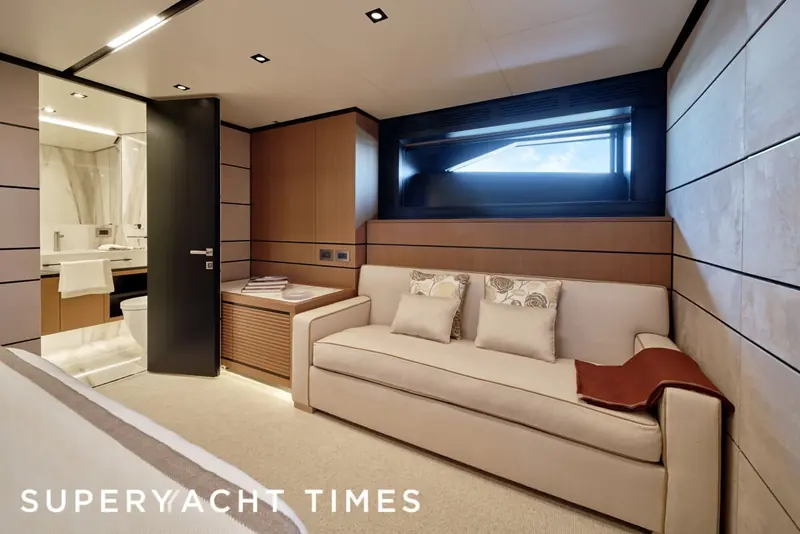
Cashmere and fine merino are soft because the fibre is thin, and a thin fibre abrades. On a sofa that four adults use every evening for a season, a cashmere blend will pill and go shiny at the front edge of the seat long before a technical cloth would. That is a property of the material and not a defect, and it is worth understanding before the fabric goes on the piece people actually sit on.
Protein fibres also attract moths and hold moisture. A yacht laid up for a Caribbean summer with the air conditioning off is the ideal environment for both. The practical rules are simple. Put the fine cloths on headboards, wall panels, cushions and drapes, put technical fabric on the seats that take daily use, and give the interior crew a written laying-up procedure.
What it costs, and how it is actually bought
Loro Piana publishes no price per metre for interiors fabric, and the range is sold through agents and specifier showrooms to interior designers. Owners do not buy it direct. The clothing side gives a sense of scale: a pure vicuna stole starts around USD 7,800 and a part-vicuna cape runs past USD 32,000. Interiors cloth is priced by fibre, weight and width, and the spread across the range is enormous.
The number that matters on a yacht is not the metre rate. It is the total metreage, which pattern repeat and grain direction can inflate by a third, plus the make-up cost of the upholsterer. Ask for the quotation to state metreage, repeat and wastage separately, and buy the spare cloth in the same dye lot at the same time.
The supply chain, and why an owner should care
On 14 July 2025 the Court of Milan placed Loro Piana under judicial administration for twelve months, having found the company negligently facilitated the exploitation of workers at subcontractors, in a case that began with the assault of a migrant worker seeking unpaid wages. The company said its supplier had not disclosed the subcontractors and that it ended the relationship within 24 hours of being told.
The court revoked the measure early in April 2026, describing the company's response as a virtuous path. Loro Piana says it has run about 2,400 supply-chain audits since 2024 and cut ties with around 100 suppliers and subcontractors. An owner chartering a yacht photographed for a magazine is lending his boat to whatever the brands aboard are carrying, and this one now has among the most closely examined supply chains in Italy.
Sailing, and what the sponsorship actually signals
Loro Piana put its name to the superyacht regatta at Porto Cervo with the Yacht Club Costa Smeralda from 2009 to 2021, and that event now runs under Giorgio Armani. Since 2024 the house has been title sponsor of the Giraglia, organised by the Yacht Club Italiano with the Societe Nautique de Saint-Tropez, whose 2026 edition was the 73rd.
The Giraglia is a real race and not a fashion week afloat. Four days of coastal racing off Saint-Tropez lead into a 241 nautical mile offshore leg to Genoa around the Giraglia rock at the top of Corsica. Owners who race their own boats meet the brand at the dock, which is a materially different kind of association from a showroom.
Against the alternatives, and who should buy elsewhere
The furnishing textile houses are the direct rivals, with Rubelli and Dedar in Italy and Pierre Frey in France covering the same designers and the same yachts, generally with deeper marine documentation. Against those, Loro Piana wins on fibre quality and on a name the owner's wife already knows. Against a technical marine supplier it loses on certification and on abrasion.
The owner who should specify it wants the private areas of the boat, the owner's suite, the study, the master headboard, to feel like nothing else afloat. The owner who should look elsewhere is furnishing a charter yacht throughout, is putting the cloth where guests sit wet, or wants a single supplier to carry the fire certification for the whole interior.
Seeing the collection before ordering
Loro Piana shows its interiors range each year at Milan's Salone del Mobile alongside the rest of the Haworth Lifestyle group, and an owner or a designer can see and handle a season's cloths on the stand rather than working from swatches alone. For a yacht order that spans several rooms and multiple weights of cloth, seeing the hand and the drape of a fabric in person before it is cut is worth the trip.
The trade-only channel cuts both ways. It keeps quality and consistency high because every yard of cloth passes through the same specifier network, but it means an owner has no direct account with the house and no way to reorder a discontinued colourway once a designer's relationship with Loro Piana ends. Keep the interior designer's specification sheet with the yacht's own documents, not just on the designer's file.
Practical detail
| How it is bought | Interiors fabric is sold through agents and specifier showrooms to interior designers and yacht outfitters; owners do not buy it direct and there is no published price list. |
|---|---|
| Pricing benchmark | General retail Loro Piana fabric has been seen at roughly GBP 150 to 165 a metre through specifier stockists; the marine range, sold only through the trade, is not quoted at that level and has to be requested project by project. |
| What actually drives the bill | Total metreage, not the rate per metre. Pattern repeat and grain matching can inflate the metreage needed by around a third, so ask any quotation to state metreage, repeat and wastage as separate lines. |
| Fire certification | Loro Piana publishes no blanket IMO 2010 FTP Code approval or MED wheelmark for its interiors range; a commercially registered yacht over 24 m needs the certificate named and supplied in the purchase order before any hide is cut, not assumed. |
| Care aboard | Fine natural fibres need a written laying-up procedure: air conditioning maintained through a summer layup, and spare cloth from the same dye lot bought at the time of order, because dye lots drift over time. |
| What is not published | No per-metre marine price list, and no public list of which of its roughly 200 fabrics currently hold fire-test certificates. |
What owners and crew report
Loro Piana is a recurring name on delivered superyacht interiors
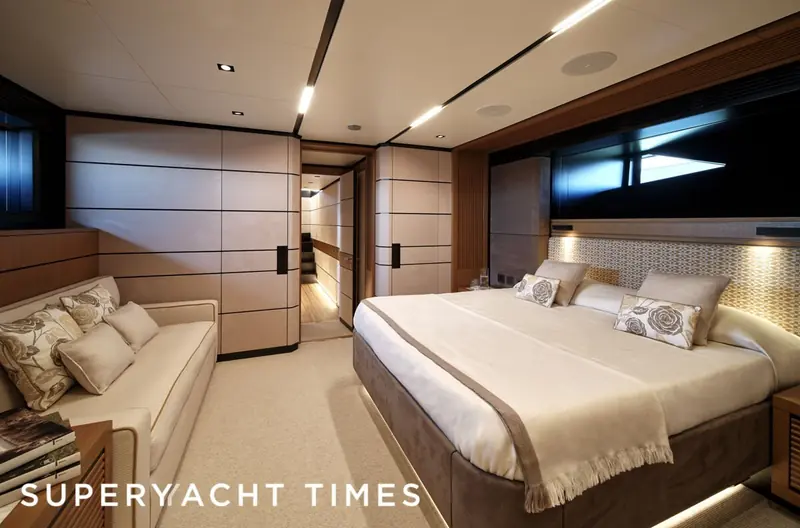
The house is credited with the interior decor of Ferretti's wallywhy200 and, in partnership with Benetti, the new Motopanfilo 37M.
SuperyachtTimesThe Milan court's monitor endorsed the remediation as genuine
The ruling that lifted the judicial administration early found the company had undertaken and swiftly completed a virtuous path, after roughly 2,400 supplier audits and around 100 supplier terminations since 2024.
WWDThe marine range is a deliberate technical adaptation, not a residential fabric repurposed
A Paris showroom opened in 2017 specifically to develop yacht and private-jet interiors, and the outdoor line is built on Sunbrella rather than the house's own noble fibres.
Boat International
What is good, and what to watch
Strong points
- Vertical control of exceptional fibreOwnership of the supply chain from animal through spinning to finished cloth, in fibres such as 12 to 13 micron vicuna and 13.5 micron baby cashmere, is not something a rival can replicate quickly.
- A name with a current, active record aboardNamed work on record includes Ferretti's wallywhy200 and, with Benetti, the new Motopanfilo 37M, which puts the brand in the conversation as an active marine supplier and not a legacy claim.
- Continuity as a supplierA house now valued at about EUR 11 billion inside LVMH is a supplier with close to zero risk of disappearing mid-refit, unlike a boutique atelier.
What to watch
- No published fire certificationUnlike some technical marine fabric houses, Loro Piana does not publish an FTP Code or MED wheelmark position, leaving the owner to chase paperwork the supplier could simply publish.
- The fibre is wrong for anywhere guests sit wetAniline-dyed cashmere and fine merino absorb sunscreen and salt water and abrade under daily use, so the range is only correct for the private, dry parts of the interior.
- A live supply-chain finding, even though resolvedThe Court of Milan placed the company under judicial administration in July 2025 over labour conditions at a subcontractor; the measure was lifted early in April 2026 after audited remediation, but it is a fact an owner chartering the yacht should be able to answer for.
Who it is for: Owners who want the private end of the yacht, the master suite and the study, finished in cloth that no technical supplier can match.