Novurania
| Category | superyacht tenders and rigid inflatable boats |
|---|---|
| Roots | 1950s Italy, when Adelmo Pellegrini and Pietro Caresano merged their businesses to form Urania at Tione di Trento |
| Founded | Novurania established in 1964 to build inflatable boats |
| United States arm | Novurania of America established in 1983, production moved to Florida in 1991 |
| Based | Vero Beach, Florida |
| Range | 3.4 m to 11.6 m across the Chase, LX, Catamaran, Como and DL series |
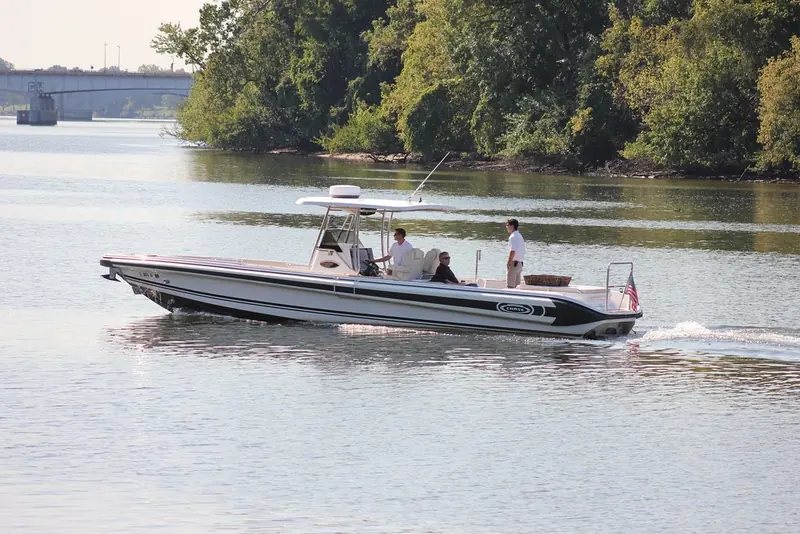
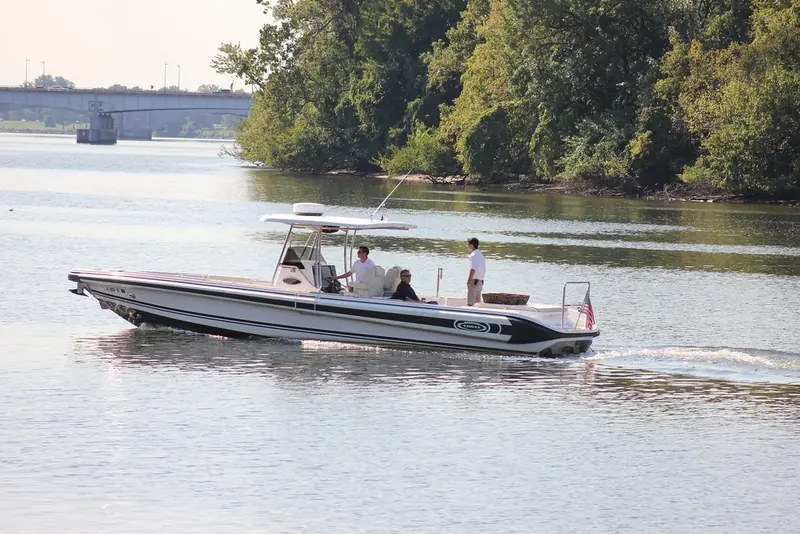
| Chase 38 | 11.6 m, 3.1 m beam, 21 people, twin Volvo D6 380 hp, 833 litres of fuel |
| LX 750 | 7.5 m limousine tender, 2.7 m beam, 15 people, up to 44 knots on outboards |
| Catamaran series | hydraulic bow ramp for beach landings, Cat 20 to Cat 28 |
| DL series | 3.4 m to 5.5 m side-console RIBs from 4 to 9 people |
| Tubes | made in house, neoprene inside and Hypalon outside |
| Prices | not published, quoted boat by boat through the yard or dealer |
| Average dry weight, Chase 38 | 4,630 kg or 10,200 lbs, from Novurania's own model page, read July 2026 |
| Average dry weight, Chase 31 | 3,700 kg on twin 300 hp outboards, 3,200 kg on twin Yanmar 4LV inboards |
| Average dry weight, Chase 27 | 2,720 kg |
| Average dry weight, LX 750 | 1,723 kg on outboards, 2,000 kg on the Yanmar 4LV inboard |
| Average dry weight, Cat 28 | 2,404 kg. Cat 24: 1,600 kg outboard, 1,950 kg inboard |
| Average dry weight, DL 550 | 645 kg |
| Lead time | 14 to 30 months for a custom build, 6 to 14 weeks for a stock boat, per the Superyacht Tenders Register, read July 2026 |
| Brokerage anchor | Boat Trader's Novurania Chase listings, read July 2026, ran USD 43,900 to USD 118,995 with an average of USD 85,000 across eight boats of model years 2007 to 2024 |
| Warranty, recreational use, 2017 boats and newer: lifetime on hull, deck, transom and stringer system, five years on tube seams, valves and fabric, 120 days on handles, seats, rails and cushions | |
| Warranty, commercial or charter use | the fibreglass cover drops from lifetime to five years |
| Warranty registration | must be completed within sixty days of original purchase |
| Mediterranean support, July 2026 | EYOS Tenders in the Balearics (dealer and service), Bodhi Nautic in Barcelona (service only), Blues Yachting at Mugla in Turkey (dealer and service). No listed dealer in Italy, France or Greece. |
From a Trentino fabric mill to Florida
The business began in the 1950s at Tione di Trento, where Adelmo Pellegrini and Pietro Caresano were competitors in protective garments before merging to form Urania, a maker of rubber-coated fabric. In 1964 the same founders started Novurania to put that fabric into inflatable boats. By the 1970s the company was an international name in the category, and in the 1980s the two businesses merged under the Novurania name as American demand grew.
Novurania of America was set up in 1983 to serve United States customers, began domestic production in California in 1989 with the MX 430, described by the company as the first American-built RIB, and moved manufacturing to Florida in 1991. The operation is now at Vero Beach on the Atlantic coast. That location puts it inside the Florida marine cluster and close to the yachts that use its boats through the winter.
What the range covers
Five series and two standalone models cover 3.4 m to 11.6 m. The DL series is the simple end, side-console RIBs from the 3.4 m DL 335 carrying four people at 24 knots up to the 5.5 m DL 550 carrying nine on a 115 hp outboard at 41 knots. These are the boats that get used every day for beach runs and provisioning, and they are the ones that take the abuse.
Above them sit the LX limousine tenders, the Chase series and the catamarans, plus the Como line and the individual TR 270 and GS 420. The structure of the range is unusual in that it does not step neatly by length. A yacht may take a 5.5 m DL for daily work and a 7.5 m LX for guests, and the two boats are built to different briefs entirely.
One of the last tender builders that still makes the fabric its boats are wrapped in.
The LX and Chase tenders
The LX series is the guest tender. Four boats run from the 6 m LX 600 to the 7.5 m LX 750, all on a 2.7 m beam with a 0.58 m tube, carrying ten to fifteen people. Outboard versions reach 42 to 44 knots and inboard diesel versions 37 knots. The consistent beam across the series matters, because it means a garage sized for one LX will take a longer one.
The Chase series is the faster and more serious boat. The 5.8 m Chase 19 runs a single Yanmar 4LV of 195 hp for ten people, the 8.3 m Chase 27 offers a 320 hp Volvo D4 or twin Yanmars and reaches 38 knots, and the 9.5 m Chase 31 will do 51 knots on twin outboards. At the top the 11.6 m Chase 38 carries 21 people on twin Volvo D6 380 hp diesels with 833 litres of fuel.
The catamarans and the bow ramp
The catamaran series is the part of the range that solves a problem specific to large yachts. Every model carries a hydraulically operated bow ramp, so guests walk off onto a beach without wading and without a second dinghy. The Cat 20 at 6.1 m is the beach lander proper, and the Cat 24 at 7.3 m carries ten people at 43 knots on a 250 hp outboard or a Yanmar diesel.
The twin hull format buys stability at rest, which is what makes these boats useful for diving, for loading luggage and for elderly or nervous guests. The Cat 28 at 8.7 m and 3.3 m beam carries fourteen on twin 200 hp outboards. The trade is beam. A catamaran tender eats garage width, and on many yachts that is the dimension in shortest supply.
How they are built
Novurania makes its own tube fabric, which almost no other tender builder does. The material is layered with neoprene on the inside and Hypalon on the outside, a construction chosen for resistance to delamination, abrasion, mould and colour loss. Hypalon tubes cost more than the PVC used on cheaper RIBs and last considerably longer in Mediterranean and Caribbean sun, which is the difference an owner sees in year five. The hull under it is a vacuum-bagged cored laminate with foam-encapsulated stringers.
The company has been vertically integrated since the 2000s, with engineering and design in house and production controlled under one roof. Boats are specified individually, so upholstery, deck, hardware and colour can be matched to the mothership, and the order book sets the delivery date. One thing Novurania does publish, and most bespoke tender builders do not, is an average dry weight for every model on its own specification page. That single habit makes the range checkable against a crane before a dealer is in the room, and the figures that follow were read from those pages in July 2026.
The weights, and what the crane has to lift
Length, beam and height decide whether a tender enters the garage. Average dry weight decides whether it can be lifted out of the water at all. Read in July 2026, Novurania's model pages give the 5.5 m DL 550 at 645 kg, the 7.3 m Cat 24 at 1,600 kg on outboards and 1,950 kg on the Yanmar inboard, the 7.5 m LX 750 at 1,723 kg outboard and 2,000 kg inboard, the 8.7 m Cat 28 at 2,404 kg, the 8.3 m Chase 27 at 2,720 kg, the 9.5 m Chase 31 at 3,200 kg inboard or 3,700 kg on twin outboards, and the 11.6 m Chase 38 at 4,630 kg. The spread across the catalogue is a factor of seven.
Two consequences follow. The first is that engine choice moves the number materially and not always in the same direction, so the weight has to be taken for the exact build and not for the model. The Yanmar inboard adds 277 kg to an LX 750, while on the Chase 31 it is the twin outboard installation that is heavier, at 3,700 kg against 3,200 kg. The second is margin. The Superyacht Tenders Register guide to launch and recovery, read in July 2026, advises adding 10 to 15 percent over published dry weight for fuel, gear and lifting tackle before comparing against a davit's certified safe working load, and puts typical capacities at 500 kg to 8,000 kg for side-mounted hydraulic davits, 1,500 kg to 12,000 kg for aft slewing cranes and 500 kg to 4,000 kg per arm for garage launch systems. A Chase 38 at 4,630 kg dry therefore needs better than 5,000 kg of certified lift, which is an aft crane on a yacht of roughly 50 m and up, not a garage arm.
What it costs, and how long it takes
Novurania publishes no prices and quotes every boat through the yard or a dealer, so the only public anchors are the brokerage market and the comparable builders. Boat Trader's Novurania Chase listings, read in July 2026, ran from USD 43,900 to USD 118,995 with an average of USD 85,000 across eight boats of model years 2007 to 2024. Those are mostly small and mostly used, and none of them is a new Chase 38, so the figure sets a floor and nothing more. For scale at the top of the range, a United Kingdom tender guide consulted in July 2026 put a 7.10 m Williams EvoJet 70 from roughly GBP 300,000, and Boat International put a 9.6 m Pascoe SL Limousine at about GBP 1 million excluding VAT in August 2015.
Lead time is the number that actually constrains a project. The Superyacht Tenders Register, read in July 2026, gives 14 to 30 months for a custom Novurania build and 6 to 14 weeks for a stock boat, and that gap is the whole planning decision. A tender replaced during a winter refit can be a stock hull ordered in November and aboard for the season. A tender matched to the mothership in upholstery, hardware and paint is ordered more than a year ahead, which on a new build means contracting it when the general arrangement is fixed rather than when the yacht reaches the paint shed. Engine choice remains the largest single variable in the quote, and a twin diesel inboard installation costs far more than a single outboard on the same hull.
Who fixes one in the Mediterranean in August
This is the weakest part of the proposition, and Novurania's own dealer directory says so. Read in July 2026 it lists thirteen points in the United States, one in Canada, one in Puerto Rico and one in Singapore, against exactly three around the Mediterranean: EYOS Tenders in the Balearics as dealer and service, Bodhi Nautic in Barcelona as service only, and Blues Yachting at Mugla in Turkey as dealer and service. There is no listed dealer in Italy, in France or in Greece, which is where most of these boats spend August. The Italian company that still carries the name, Novurania S.p.A., now sells technical fabrics, printing blankets and protective clothing materials, and lists no boats at all.
The practical consequence is that a structural, tube or hydraulic fault on the Cote d'Azur or in the Ionian is handled by a local composite or inflatable specialist working from Vero Beach's instructions, or the boat travels to Mallorca or Turkey. Engine faults are the easy case, because Yanmar and Volvo Penta reach every cruising ground and parts are ordinary inventory. Tube repair is a specialist job but a common trade in any large marina. What takes weeks is anything custom, because a matched upholstery panel or a shaped piece of hardware has to be made in Florida and shipped. A spares package agreed at handover is worth more on a Novurania than on a Williams, precisely because the network behind it is thinner in the water the boat lives in.
Against Williams, Pascoe and the custom yards
Williams Jet Tenders dominates the small jet tender market and is the default fit on many production yachts. Pascoe International builds bespoke limousine tenders for the largest yachts and competes at a different price level. Novurania sits between them, with a catalogue range that can be customised heavily and a size ladder that reaches from a 3.4 m dinghy to an 11.6 m chase boat.
Where Novurania wins is breadth and the in-house tube. One builder can supply the daily beach boat, the guest limousine and the beach-landing catamaran, all finished to match. Where it loses is on the jet-drive question. Owners who want a propeller-free tender for swimming areas will look at Williams or at a Castoldi-driven boat, and owners commissioning a fully bespoke limousine will look at Pascoe.
The warranty, and the two clauses that cost money
Novurania's published warranty, read in July 2026, is unusually strong at the structural end and unusually short at the end an owner actually touches. On 2017 and newer boats the fibreglass hull, deck, transom and interior rib stringer system are warranted for the lifetime of the boat, subject to normal recommended use and maintenance. Tube seams, inflation valves and the Hypalon and neoprene fabric carry five years, with the fabric written against cracking and porosity but explicitly not against discolouration, fading or chafing. Handles, seats, rails, cushions and oars carry 120 days.
Two clauses decide whether any of that is available. Warranty registration has to be completed within sixty days of the original purchase date, which on a tender delivered alongside a yacht is the sort of administrative step that falls between the yard, the broker and the crew, and it should be confirmed in writing at handover. The second is commercial use. A tender on a chartered yacht sits under the commercial terms, where the fibreglass cover drops from lifetime to five years. An owner who intends to charter should settle the tender's warranty position before delivery rather than after the first claim.
Practical detail
| Price | Not published; quoted boat by boat through the yard or a dealer |
|---|---|
| Used-market benchmark | Novurania Chase listings on Boat Trader, read July 2026, ran USD 43,900 to USD 118,995, averaging USD 85,000 across eight boats from model years 2007 to 2024 |
| Lead time | 14 to 30 months for a custom build; 6 to 14 weeks for a stock boat, per the Superyacht Tenders Register, July 2026 |
| Warranty, recreational use, 2017-on | Lifetime on hull, deck, transom and stringer system; five years on tube seams, valves and fabric; 120 days on handles, seats, rails and cushions - registration must be completed within 60 days of purchase |
| Warranty, commercial or charter use | The lifetime fibreglass cover drops to five years |
| Where to get it serviced in the Med | EYOS Tenders (Balearics, dealer and service), Bodhi Nautic (Barcelona, service only), Blues Yachting (Mugla, Turkey, dealer and service) - no listed dealer in Italy, France or Greece as of July 2026 |
| What is NOT published | New-boat pricing for any model in the range - a buyer must go through the yard or a dealer to get a figure |
Request a quote for Novurania.
Tell us the model and where it needs to go. The desk obtains a written offer from the maker or an authorised dealer, checks it against the prices published on this page, and comes back to you by email. No obligation, no fee.
- 01A written offerPriced in your currency, with VAT, delivery and lead time stated, not a brochure figure.
- 02Delivered where the yacht isTo the marina, the yard or your address, with the paperwork a lithium pack or a crane lift needs.
- 03IndependentYotters is tied to no single dealer, so the offer is compared before it reaches you.
What owners and crew report
Owners report exceptional tube longevity, well beyond the Hypalon warranty period
One owner bought a boat that came with a 13-foot Novurania already 20 years old, fully expecting to replace the tender; the tubes still held air with only cosmetic colour fading. Another, running a 1996 12-foot Novurania, called it the best RIB they had owned - no leaks, still holding air decades in.
Trawler Forum members gsholz and Juliet 15The brand's reputation among long-time boat owners is that no rival matches the build quality
Asked to compare RIB tender brands for a used-boat purchase, a 21,000-post veteran member put it simply: no one tops Novurania in quality of RIB for dinghy or tender, though condition matters more than brand once a boat is used.
Trawler Forum member BandBA loaded small Novurania with a light crew can be bow-heavy at speed
An owner running a 1996 12-foot Novurania noted that with only one or two people seated aft at the console, the bow rides high, and cautioned that fitting a bigger outboard than the boat's original 30 hp would make that worse into a headwind.
Trawler Forum member Juliet 15
What is good, and what to watch
Strong points
- In-house tube fabric and a reputation that survives decades of useNovurania is one of the few builders that still makes its own Hypalon/neoprene tube fabric, and long-term owners report tubes holding air two decades on with only cosmetic fading - the opposite of the seam failures reported on some rival brands new out of the box.
- A genuine model ladder from tender to chase boatThe range runs from a 3.4 m side-console RIB to an 11.6 m twin-diesel Chase 38 carrying 21 people, plus a catamaran series with a hydraulic bow ramp built specifically for beach landings - few tender builders cover that spread.
- A real warranty, not a marketing figureLifetime cover on the hull, deck, transom and stringer system for 2017-and-newer recreational boats, with five years specifically on tube seams, valves and fabric - the part of a RIB that actually fails.
What to watch
- Thin Mediterranean dealer coverage for a brand built around superyacht cruising groundsAs of July 2026 there is no listed Novurania dealer in Italy, France or Greece - three of the busiest yachting markets in the Med - leaving EYOS in the Balearics, a service-only outpost in Barcelona, and a dealer in Mugla, Turkey as the only official points of contact.
- No published pricing anywhereEvery price is quoted boat by boat through the yard or a dealer; the only public benchmark is the brokerage market, where used Chase models have traded from USD 43,900 to USD 118,995.
- The commercial-use warranty is materially shorterPut a Novurania into charter or commercial service and the fibreglass hull cover drops from lifetime to five years - exactly the use case a superyacht tender is bought for.
Who it is for: Owners who want the daily RIB, the guest limousine and the beach lander from one builder, finished to match the yacht.