Ocean Signal
| Category | EPIRBs, AIS SARTs, personal locator beacons and man overboard (MOB) devices for GMDSS and personal safety |
|---|---|
| Founded | incorporated 23 June 2008 as Coverise Limited, renamed Ocean Signal Limited on 10 June 2010 |
| Founders | Alan Wrigley and Simon Nolan, both previously of Navico/Simrad |
| Headquarters and manufacturing | Margate, Kent, United Kingdom |
| Ownership | acquired by Drew Marine on 1 May 2015, now operating alongside ACR Electronics within the Acron Technologies group |
| Awards | DAME Design Award 2022 for the rescueME PLB3; King's Award for Enterprise (Innovation), announced 6 May 2026 |
| Flagship product | rescueME PLB3, the first PLB to combine 406MHz satellite distress with AIS |
| Battery/service intervals | EPIRB1 and EPIRB3, 10 years; E100/E100G and S100, 5 years; PLB1 and MOB1, 7 years |
| Retail pricing | rescueME PLB1 from USD 355.95 to 399.95; rescueME PLB3 from GBP 475 to EUR 699.95 |
| Professional battery replacement | USD 150 to 265 in the US per two named service centres; GBP 50 to 100 in the UK per an owner forum thread |
| Not a McMurdo relation | McMurdo and Kannad Marine sit under a separate corporate lineage, Seas of Solutions, unrelated to Ocean Signal/ACR |
Two Simrad veterans, a new company and a fast climb to a King's Award
UK Companies House records show the entity behind Ocean Signal was incorporated on 23 June 2008 under the name Coverise Limited and renamed Ocean Signal Limited on 10 June 2010, which is why press accounts of the company's founding differ by two years. Trade press coverage from the time confirms the business was built around a team based in Kent under Alan Wrigley as Managing Director and Simon Nolan as Technical Director, with a first product range planned for the SMM commercial shipping exhibition in Hamburg in September 2010. Both founders came from Navico and Simrad rather than from a dedicated beacon maker: Wrigley had worked at Racal Marine in the 1970s, then Sharp Autopilots, then founded the original Navico Ltd in 1984 before running Simrad Ltd from 2000 to 2008, and Nolan, an authority on radar target enhancement with an electrical engineering degree from Cranfield University, came from the same Navico/Simrad lineage.
Ocean Signal was acquired by Drew Marine on 1 May 2015 and placed alongside ACR Electronics, another Drew Marine subsidiary and a direct competitor in the same product category; the company today describes itself as operating within the Acron Technologies group alongside ACR. Wrigley stepped down as Managing Director on 1 June 2017 and was succeeded by Neil Jordan, who came with twenty years in maritime and land electronic safety-beacon technology. The company's recognition has accelerated since: its rescueME PLB3, the first personal locator beacon to combine 406MHz satellite distress alerting with a local AIS broadcast, won the DAME Design Award, the largest marine equipment design competition in the world, at METSTRADE in 2022, and the business won a King's Award for Enterprise in the Innovation category, announced 6 May 2026, one of 185 UK organisations honoured that year and again citing the PLB3 by name.
EPIRBs, AIS SARTs, PLBs and MOB devices: how the range breaks down
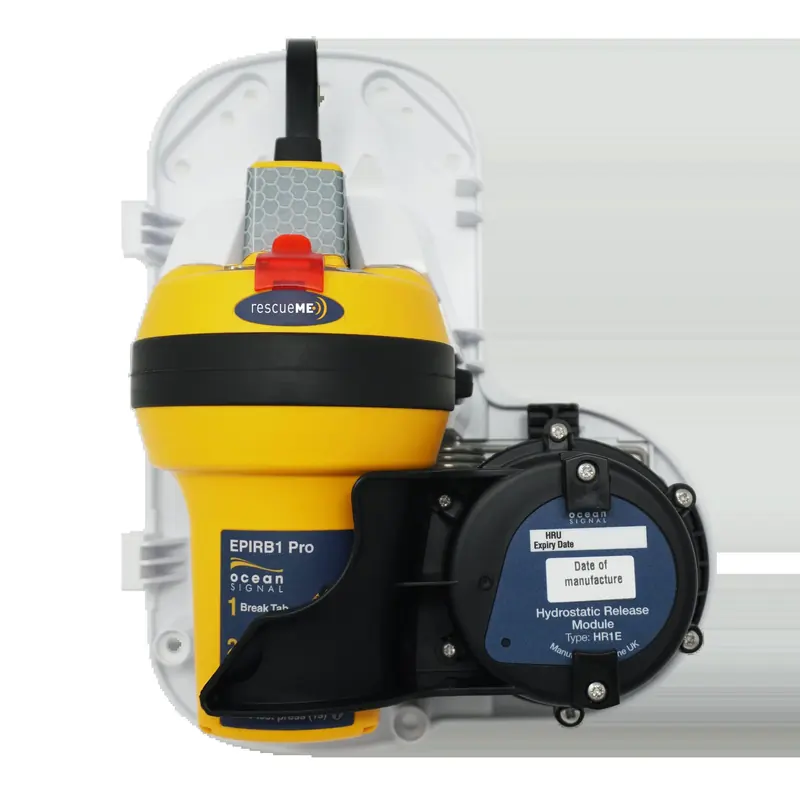
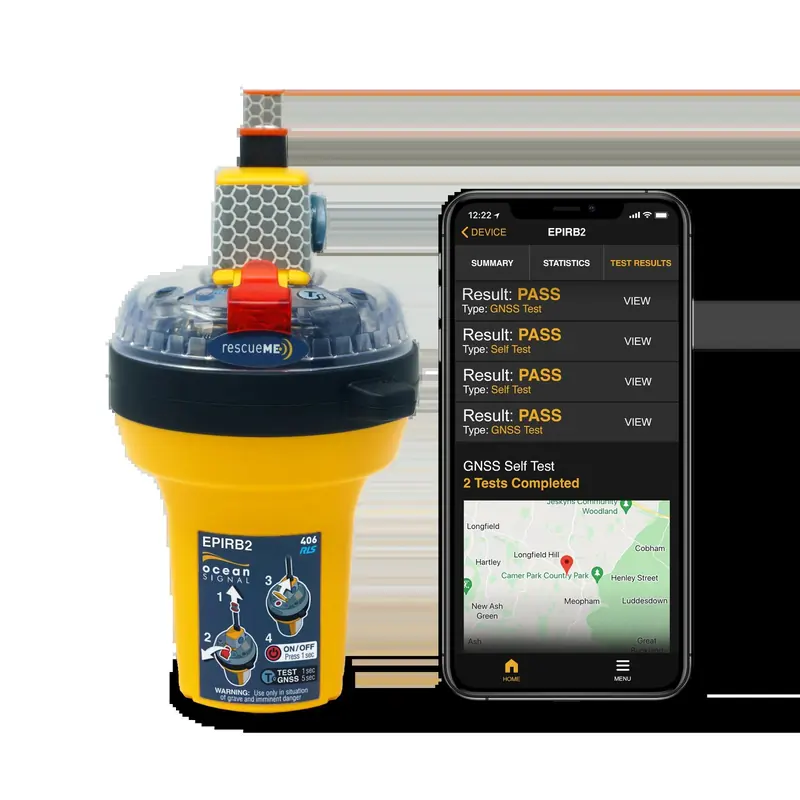
The current EPIRB line is the rescueME series, from the EPIRB1 through the flagship EPIRB3, which runs on a ten-year lithium battery, transmits on 406.031MHz at 12W with 121.5MHz homing, carries a 72-channel GPS accurate to about 100 m and adds Return Link Service, a satellite confirmation that the distress signal has actually been received. The company's older safeSEA E100 and E100G commercial EPIRBs are now discontinued but their spec sheets remain informative: a 96-hour operational life on a 5-year lithium battery and, on the E100G, a 50-channel GPS. Search and rescue transponders come in two forms: the safeSEA S100, a radar SART that answers an X-band radar sweep, and the safeSEA S200, an AIS SART built on the same housing that instead transmits eight AIS position reports a minute and gives roughly 5 nautical miles of average detection range on a battery rated for 96 hours.
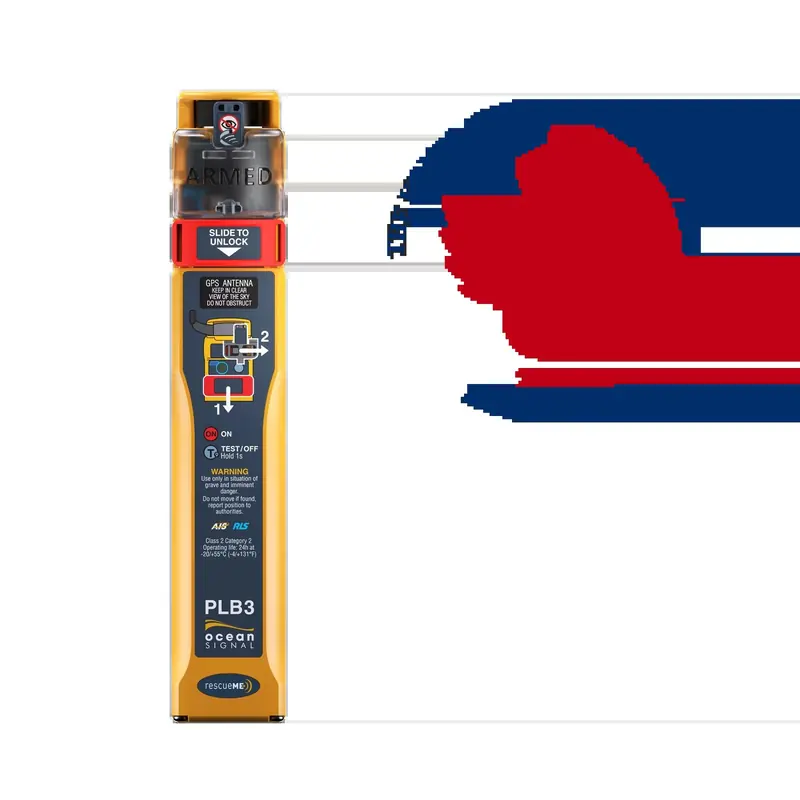
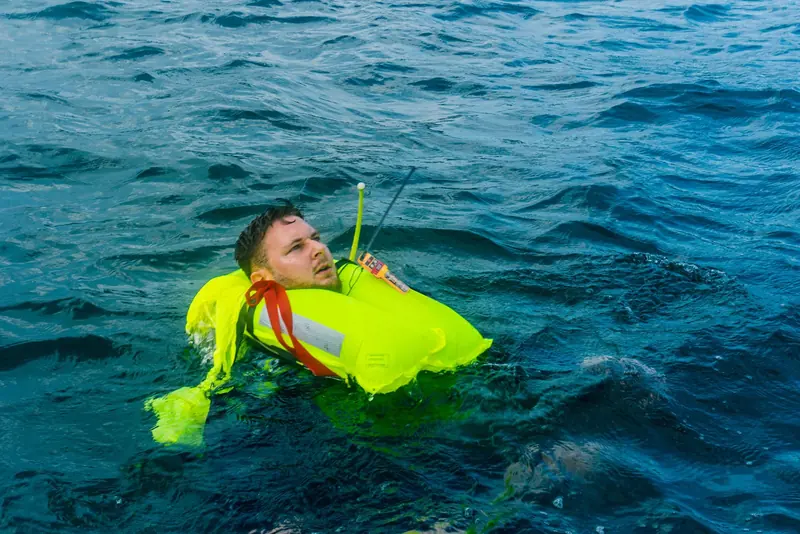
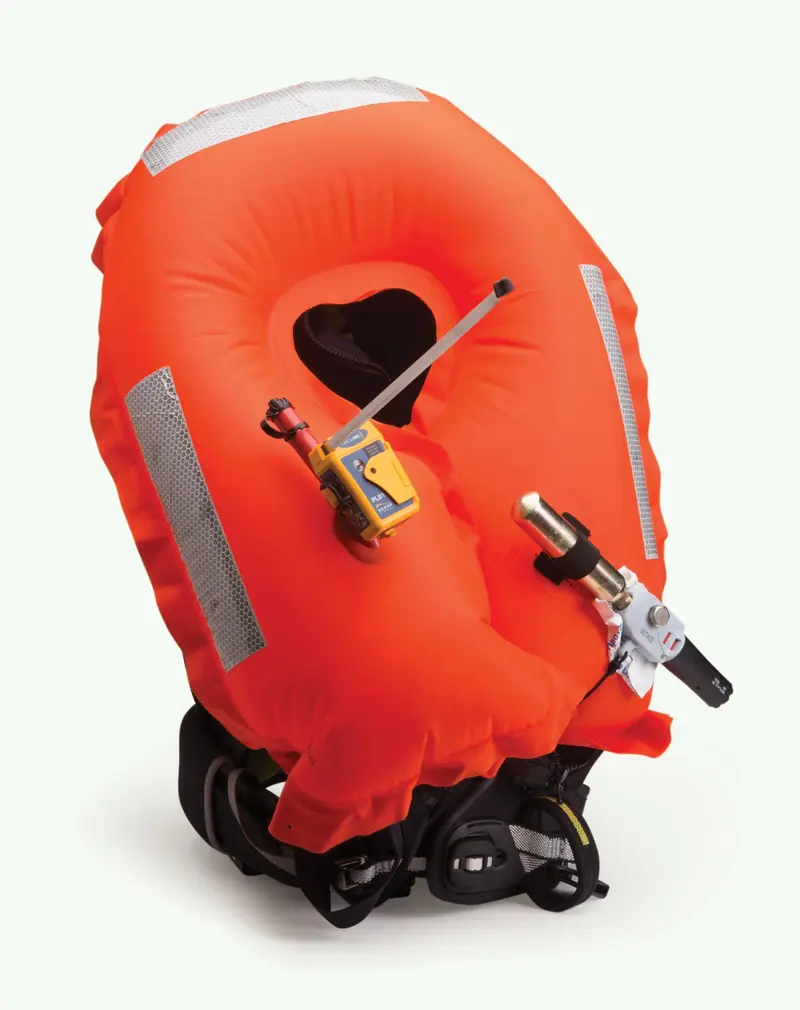
Personal locator beacons split the same way. The rescueME PLB1, at 116 g, is marketed as the smallest PLB on the market and carries a 121.5MHz homing signal and a 66-channel GPS on a 7-year replaceable battery good for at least 24 hours at minus 20 Celsius; it carries no satellite distress channel at all. The rescueME PLB3 adds that missing layer, combining 406MHz satellite distress, 121.5MHz homing, GPS and a local AIS broadcast in one 116 g by 32.5 by 200 mm unit, with NFC pairing to a companion app for battery status and test history. The rescueME MOB1, at 92 g, is described by Ocean Signal as the smallest AIS MOB device with integrated DSC on the market: it broadcasts AIS at 1W with a range of roughly 5 nautical miles and sends an individual DSC distress-relay call to nearby VHF radios within fifteen seconds of activation, automatically triggered by a lifejacket's inflation. A shipboard AIS Alarm receiver completes the system, sounding an 87dB alarm and distinguishing an MOB signal from a SART signal the instant either arrives, and storing up to thirty vessel MMSI numbers so it does not sound for another boat's own crew.
The beacon is a few hundred dollars. Keeping its certification valid for the next ten years costs more than the beacon did.
What a beacon costs to buy, and what it costs to keep certified
Retail prices vary by market and retailer since Ocean Signal does not publish one global price list. The rescueME PLB1 is listed at USD 355.95 to 399.95 across three named US retailers and at EUR 384.99 on Ocean Signal's own EU storefront. The rescueME PLB3 is quoted at GBP 475 by Practical Boat Owner's own review, at EUR 699.95 by a German retailer and at EUR 659.99 on the EU storefront, a real spread across three sources for what should be the same specification. The rescueME EPIRB1 runs USD 679.95 to 744.95 at one US retailer and EUR 634.95 at a German one. Every device carries a fixed, non-user-replaceable-in-the-field battery cycle: 10 years on the EPIRB1 and EPIRB3, 5 years on the older E100/E100G and the S100 SART, and 7 years on the PLB1 and MOB1.
Two named US service providers quote professional battery replacement at USD 150 to 175 for a PLB and USD 200 to 265 for an EPIRB. A UK owner forum thread puts the same job at GBP 50 to 100 including a re-certification sticker, against roughly GBP 4 for the raw replacement cells alone if done as a DIY job, and flags a real technical catch: swapping the batteries yourself does not reset the device's internal test counter, so the unit's flash-coded test history reads wrong afterward unless a USB or NFC interface is used to reset it, which is why several posters chose to pay for professional service rather than do it themselves. No exact battery interval for the PLB3 specifically was found published as a clean figure, and no source anywhere gives an aggregate, independently audited real-world activation success rate for the brand; Ocean Signal's own published rescue accounts are first-party marketing testimonials rather than an audited statistic.

Against McMurdo and ACR: a real lineage, and a real price gap
A common assumption is that Ocean Signal, McMurdo and ACR are one family; they are not. McMurdo and Kannad Marine were, at different points, owned by Chemring Group and then Orolia Maritime, and in April 2021 Orolia Maritime's beacon brands were bought by Seas of Solutions BV, which runs McMurdo Ltd and Netwave Systems BV today. Ocean Signal instead sits under ACR Electronics within the Acron Technologies group. All three brands compete head to head in the same product category from separate corporate owners.
On hard numbers, an Ocean Signal rescueME PLB1 weighs 116 g against a McMurdo FastFind 220 at 152 g, and Ocean Signal's battery-replacement interval runs 7 years against the FastFind's 5, both genuine, sourced advantages. But the FastFind 220 is markedly cheaper, listed around GBP 249 or USD 205 at named retailers against EUR 375.10 at another, while the Ocean Signal PLB1 runs USD 355.95 to 399.95, so Ocean Signal's positioning is premium and longer-lived rather than best value. ACR's own ResQLink family runs a 5-year battery shelf life and 24 to 28 hours of operation depending on model, broadly similar in scope to Ocean Signal's PLB1, with professional battery replacement on ACR units running a comparable USD 100 to 150.
What reviewers and owners actually report
Practical Boat Owner's Rupert Holmes reviewed the rescueME PLB3 in December 2023 and awarded it five stars and a Recommended rating, calling it a huge and welcome step forward in personal safety, especially offshore or at night, and specifically praising the combined PLB and AIS function together with automatic activation via a lifejacket's oral inflation tube for an unconscious casualty. His stated criticism was real rather than a formality: the device still relies on complex sequences of flashing lights to indicate its status, and he recommended laminating the manual's status key for reference at the helm, on the basis that safety-critical kit should be usable without consulting a manual. World Cruising Club, organiser of the ARC and World ARC rallies, mandates an AIS personal locator beacon on every crew member's lifejacket for its rallies, a category-level requirement that devices in the MOB1, PLB1 and PLB3 range satisfy, though the club's own documents specify this generically rather than naming Ocean Signal.
Attainable Adventure Cruising's own comparison of the PLB3 against the older MOB1 argues that an AIS-only signal is a real limitation for short-handed or solo sailors, since there is no one else aboard to see the alert arrive, which is exactly the gap the PLB3's added satellite channel closes for a single-hander with nobody to notice. The same coverage describes the MOB1's original configuration process, which needs an optical link held up to a screen, as somewhat clunky. On a UK owner forum devoted to the practicalities of servicing, one poster called the MOB1 probably the most important life saver for me if I go overboard, and the wider thread's substance, discussed above, was mainly a caution around keeping the device's certification valid through a battery change rather than any doubt about its usefulness.
Practical detail
| Retail prices, representative models | rescueME PLB1: USD 355.95 to 399.95 (three named US retailers), EUR 384.99 on Ocean Signal's own EU storefront. rescueME PLB3: GBP 475 (Practical Boat Owner's review), EUR 659.95 to 699.95 across two EU sources. rescueME EPIRB1: USD 679.95 to 744.95, EUR 634.95. |
|---|---|
| Battery replacement, the real recurring cost | Professional service: USD 150 to 175 for a PLB and USD 200 to 265 for an EPIRB, per two named US service centres. In the UK, GBP 50 to 100 including re-certification, against roughly GBP 4 for raw cells done DIY, though a DIY swap does not reset the internal test counter without a USB or NFC reset step. |
| Fixed service intervals by model | EPIRB1 and EPIRB3: 10-year battery. Older E100/E100G and the S100 SART: 5-year battery. PLB1 and MOB1: 7-year battery. The PLB3's exact interval was not found published as a single clean figure. |
| Real alternatives | McMurdo FastFind 220 (under Seas of Solutions, a separate corporate lineage): lighter interval advantage to Ocean Signal on price, at roughly GBP 249 to USD 205 against Ocean Signal's PLB1 at USD 355.95 to 399.95, but heavier at 152 g against 116 g and a shorter 5-year battery interval. ACR ResQLink family (same corporate family as Ocean Signal, under Acron Technologies' sister company ACR Electronics): comparable scope, 5-year battery shelf life, similar professional service cost. |
| Fit and carriage requirements | World Cruising Club's ARC and World ARC rallies require a 406MHz EPIRB, an AIS transponder and an AIS personal locator beacon on every crew member's lifejacket, a category-level requirement that Ocean Signal's MOB1, PLB1 and PLB3 satisfy generically alongside competing brands. |
| What is not published | No aggregate, independently audited real-world activation or rescue success rate for the brand exists; Ocean Signal's own published rescue accounts are first-party marketing testimonials. No fixed international battery-service price list exists either, only individual named service centres' own rates. |
What owners and crew report
A five-star verdict with one honest reservation
Reviewing the rescueME PLB3, Rupert Holmes called it a huge and welcome step forward in personal safety, especially offshore or at night, while separately flagging that its flashing-light status sequences are not intuitive and recommending owners laminate the manual's key for quick reference at the helm.
Practical Boat OwnerWhy a single-hander needs the satellite layer, not just AIS
A comparison of the PLB3 against the older MOB1 concluded that an AIS-only alert is of real limited use to a short-handed or solo sailor, since there is nobody else aboard to see it arrive, and separately described the MOB1's optical-link configuration process as somewhat clunky.
Attainable Adventure CruisingThe battery swap that quietly invalidates a certification
A detailed owner thread on replacing MOB1 batteries found the mechanical job simple, using off-the-shelf cells and a plain O-ring seal, but warned that skipping the official USB or NFC reset leaves the unit's internal test-history flag wrong, which is why several posters paid GBP 50 to 100 for professional service instead.
YBW ForumA category-level requirement, not a brand endorsement
Rally documentation for the ARC and World ARC mandates a 406MHz EPIRB, an AIS transponder and an AIS personal locator beacon on every crew member's lifejacket, specifying the requirement generically rather than by brand, which Ocean Signal's MOB1, PLB1 and PLB3 all satisfy.
World Cruising Club
What is good, and what to watch
Strong points
- A genuinely novel, independently recognised flagship productThe rescueME PLB3, combining 406MHz satellite distress with a local AIS broadcast in one handheld unit, was a real first and has been recognised twice by independent, juried bodies: the DAME Design Award in 2022 and a King's Award for Enterprise in 2026, neither of which is a self-declared marketing claim.
- Longer battery-replacement intervals than the nearest named rival10 years on the EPIRB1 and EPIRB3 and 7 years on the PLB1 and MOB1 beat McMurdo's FastFind 220 at 5 years, a real, checkable difference that lowers the lifetime service burden even though the unit price is higher.
- A named, positive verdict from the trade's own reviewerPractical Boat Owner's Rupert Holmes gave the PLB3 five stars and a Recommended rating in December 2023, a specific, dated, named endorsement rather than a manufacturer quote.
What to watch
- Battery service is a real, recurring cost that is easy to underbudgetProfessional replacement runs USD 150 to 265 in the US or GBP 50 to 100 in the UK per device, and a DIY swap, while mechanically simple, leaves the certification invalid unless the test counter is reset through a USB or NFC step, pushing most owners toward paid service anyway.
- Not the cheapest option in its classMcMurdo's FastFind 220 undercuts the Ocean Signal PLB1 substantially on list price despite being heavier and shorter-lived on its battery interval, so Ocean Signal's position is premium rather than value, a real trade-off for a budget-conscious buyer.
- Even the best-reviewed unit has a named usability flawPractical Boat Owner's own five-star review of the PLB3 still flagged its flashing-light status codes as unintuitive enough that the reviewer recommended laminating a reference card, a genuine criticism embedded in an otherwise strongly positive verdict.
- An AIS-only device has a real limitation for solo sailorsAttainable Adventure Cruising's coverage notes the MOB1's AIS-only alert depends on someone else being aboard to see it, of little help to a single-hander, which is exactly the gap Ocean Signal's own newer PLB3 was built to close rather than a flaw the company has ignored.
- No independently audited rescue success rate existsEvery positive real-world account published by Ocean Signal is a first-party survivor story rather than an aggregate, audited statistic, so a buyer has no independent figure to check the brand's real-world performance against.
Who it is for: Owners and crews assembling or renewing the safety kit on a 21 to 33 m yacht who want beacons that combine long battery-replacement intervals with a serious, independently juried design record, and who are prepared to budget for professional battery service rather than a one-time purchase.