Sea-Doo
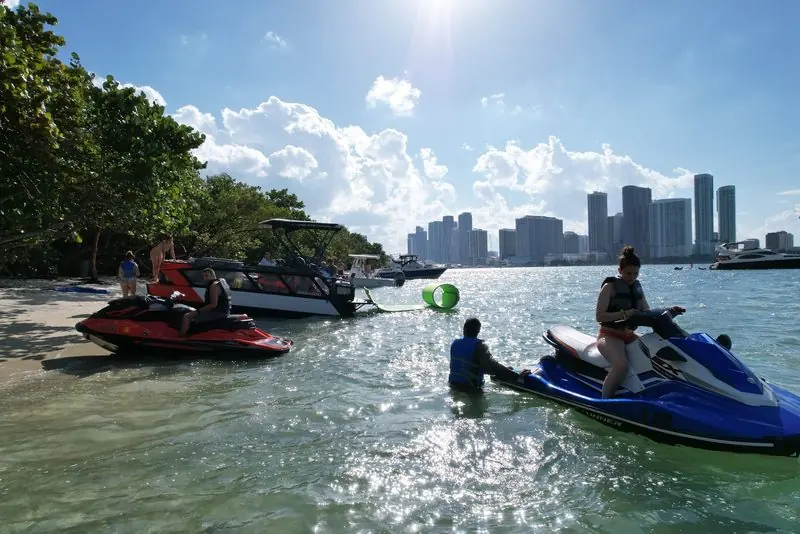
| Category | personal watercraft, three-seat and single-seat |
|---|---|
| Maker | BRP, independent since 2003, tracing to the first Ski-Doo built at Valcourt, Quebec in 1959 |
| Scale | close to 17,000 employees, products sold in 110 countries |
| Sister brands | Ski-Doo, Lynx, Can-Am and Rotax |
| Range | Spark and Spark Trixx, GTI and GTI SE, GTX and GTX Limited, Explorer Pro, RXP-X and RXT-X |
| Spark | Rotax 900 ACE, 60 or 90 hp, 194 to 207 kg dry, from USD 6,999 |
| GTX Limited | Rotax 1630 ACE at 325 hp, 385 kg dry, 3.45 m, USD 22,549 |
| Explorer Pro 230 | 416 kg dry, 3.73 m, 199 litres of stowage, USD 21,149 |
| RXP-X 325 | supercharged 325 hp, 353 kg dry, single seat, from USD 20,099 |
| Fuel | 70 litres on the big hulls, 30 litres on a Spark |
| Warranty | one year BRP limited warranty across the range |
| Braking | iBR reverse and brake system, which is what makes coming alongside a swim platform manageable |
The company behind the badge
BRP has been an independent business since 2003, when it was separated from Bombardier, but the lineage runs back to the first Ski-Doo snowmobile built at Valcourt in Quebec in 1959. The group now employs close to 17,000 people and sells into 110 countries under the Ski-Doo, Lynx, Can-Am, Rotax and Sea-Doo names. Sea-Doo covers personal watercraft and the Switch pontoon line. Rotax builds the engines that go into all of it.
For an owner the relevant part is scale. A personal watercraft is a high-hours machine that gets used hard by people who did not pay for it, and the thing that keeps it running is a dealer network. BRP has one on every coast that matters. That is a different proposition from the specialist water toy brands, where support usually means a distributor and a courier.
The 2026 range
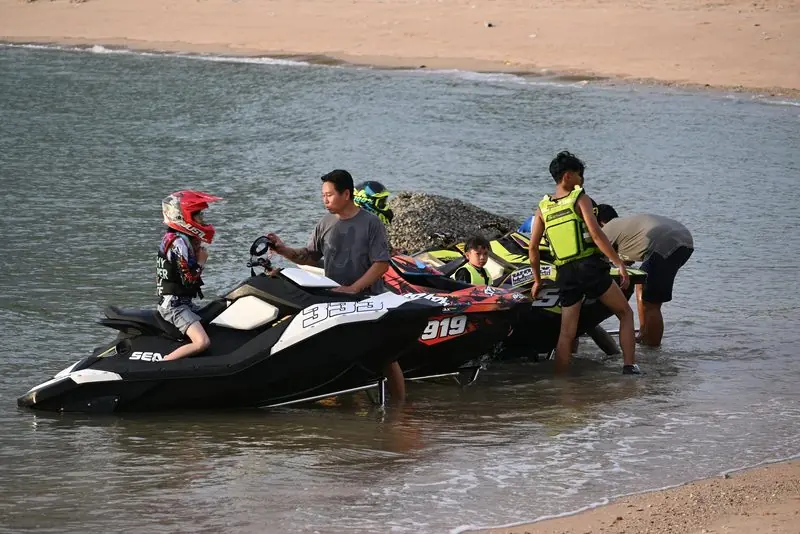
The range divides by weight and intent. Spark and Spark Trixx are the light entry craft, 2.83 m to 3.05 m long, 194 to 207 kg dry, built in Polytec instead of fibreglass, with a Rotax 900 ACE at 60 or 90 hp and prices from USD 6,999. GTI and GTI SE are the family boats above them. GTX and GTX Limited are the touring hulls, and the Limited runs the 325 hp Rotax 1630 ACE at 385 kg dry for USD 22,549.
Two models sit outside that ladder. The Explorer Pro is the long-range craft at 3.73 m and 399 to 416 kg dry depending on whether it carries the 170 or 230 hp engine, with 199 litres of stowage and a price from USD 20,149 for the 170 hp version, rising to USD 21,149 for the 230. RXP-X 325 is the single-seat performance hull, 353 kg dry, supercharged, from USD 20,099. Every big hull carries 70 litres of fuel and the Spark carries 30.
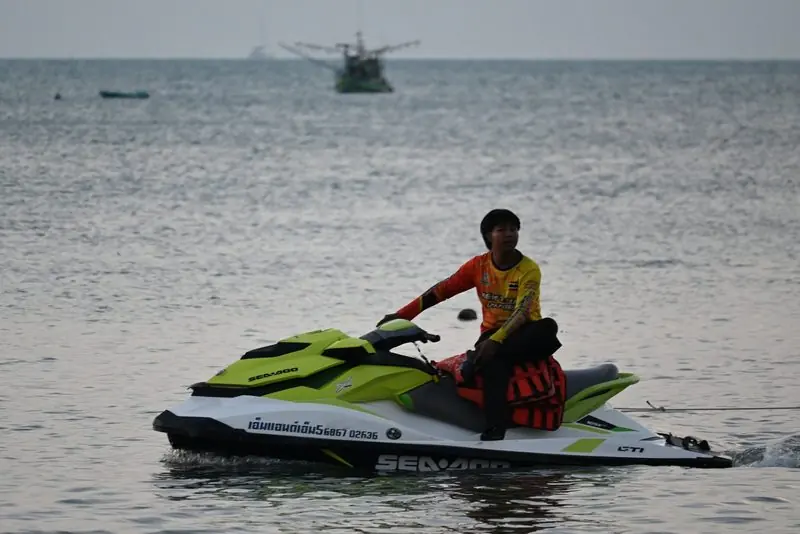
The toy whose dry weight decides how big a crane the yacht needs.
What the numbers mean on the water
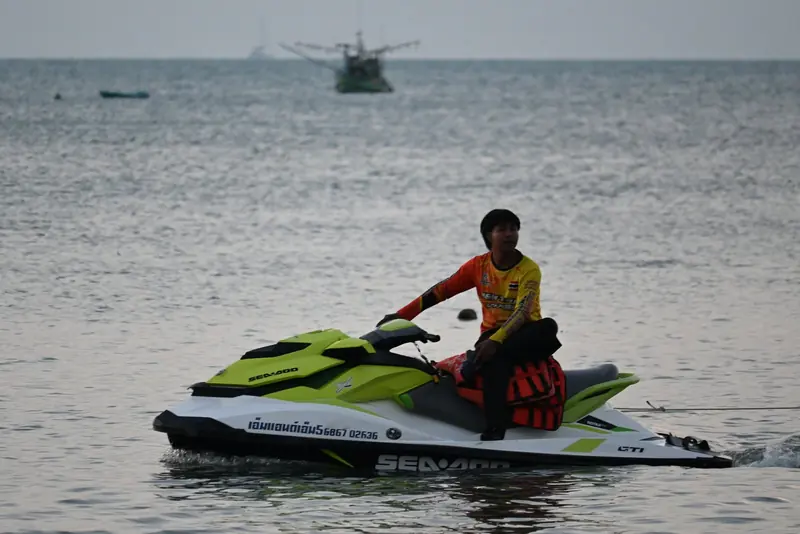
The 325 hp craft are genuinely fast and genuinely tiring. A supercharged RXP-X will outrun most tenders and will exhaust an unfit rider inside twenty minutes. The touring hulls are the better yacht toy because they carry three people, sit higher and stay comfortable in chop that would make a Spark unpleasant. Guests who have never ridden one should be put on a GTI or a Spark and left there.
The feature that matters most aboard is iBR, the electronic reverse and braking system fitted across the range. It is what allows an inexperienced rider to come alongside a swim platform without hitting it, and it is the single reason crew prefer these craft to older machines. The 10.25 inch touchscreen on the touring models is a convenience. The brake is not.

Weight, the crane and the garage
This is where a personal watercraft stops being a toy and becomes a naval architecture question. A GTX Limited is 385 kg dry, an Explorer Pro 230 is 416 kg dry, and a full 70 litre tank adds roughly 50 kg more. Add a cradle and slings and a yacht needs a crane rated well beyond half a tonne to handle one safely in any swell. That requirement drives the size of yacht on which a Sea-Doo is realistic.
Length is the other constraint. At 3.45 m the GTX Limited is longer than many garages allow once a tender is aboard, and the Explorer Pro at 3.73 m is longer again. The Spark, at 2.83 m and under 200 kg, exists in a different category and can be handled by a modest davit. Owners cruising on yachts under about 30 metres almost always end up on the light craft for that reason.
Fuel, and what it does to the garage
Two touring craft aboard means 140 litres of unleaded petrol in a space that otherwise holds diesel machinery. Petrol stowage, venting and refuelling are among the more tightly controlled aspects of a yacht's arrangement, and a garage that was designed for a diesel tender is not automatically suitable. A yacht already carrying a petrol outboard has most of the answer in place. One that does not is taking on a real change.
There is also the smell. A personal watercraft that has been run hard and stowed wet puts petrol vapour and exhaust residue into an enclosed garage, and it will find its way into the beach club if the ventilation is marginal. Crew manage this with forced extraction and by flushing the engine after every use. Owners notice the difference between a garage that is ventilated properly and one that is not.
What it costs to buy and to keep
The purchase prices are trivial against the yacht. A Spark for 2 is USD 6,999, a GTI sits in the low teens, and the most expensive craft in the range, the GTX Limited, is USD 22,549 before transport and preparation. The real expenditure is everything around it. A cradle, a set of slings, a cover, a lifting arrangement and a fuel handling routine cost more attention than the craft itself.
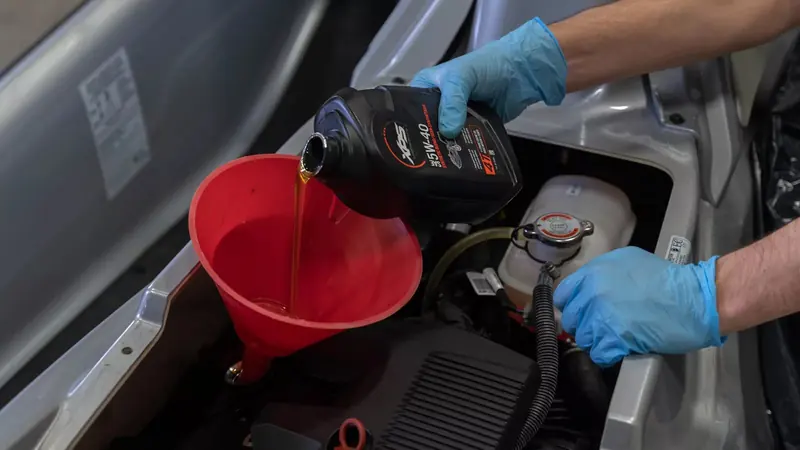
Servicing is an annual event and a straightforward one. The Rotax engines want fresh water flushing after every use, an oil change and impeller inspection each season, and supercharger service intervals on the 325 hp motors. BRP's warranty is one year, which is short by marine standards and reflects how these machines are used. Salt corrosion on hardware is the failure most owners actually see.
Service, parts and how quickly a problem is fixed
This is Sea-Doo's strongest argument. BRP dealers exist along the whole northern Mediterranean coast, through the Balearics, in Croatia and Greece, and across the Caribbean and Florida. Parts for the current Rotax engines are common inventory. A craft that fails in Palma or Antigua can usually be back in the water within days, which is not true of most specialist water toys.
The practical arrangement most crews use is a local dealer under a seasonal relationship, with a spare impeller and a service kit carried aboard. Because the craft are mass produced, second-hand values are well understood and a machine can be sold or replaced at the end of a season without difficulty. That liquidity is worth something on a toy that gets used harder than anything else aboard.
Licences, local rules and safety
A personal watercraft is not a free-for-all in the Mediterranean. Several countries require a boat licence to operate one, minimum ages apply, and coastal municipalities set distance limits from beaches and swimming areas that are enforced in season. Rules differ enough between Italy, Spain, Croatia and Greece that an owner should never assume a guest may simply take one out. The yacht's captain will know the local position and should be asked first.
Safety kit is basic and non-negotiable. The engine cut-off lanyard has to be worn, an impact vest is sensible above cruising speed, and the craft should not be used at dusk in an anchorage full of swimmers and dinghies. On a commercially registered yacht the craft sits inside the vessel's safety management arrangements and guests are briefed and logged before they ride.
Against Yamaha and Kawasaki
The category has three serious makers. Yamaha's WaveRunner range is the closest rival and the two brands trade the top of the market year by year, with Yamaha favouring its own marine engines and a reputation for durability. Kawasaki's Jet Ski line is the enthusiast choice and remains the name most people still use generically. Sea-Doo's distinguishing features are the iBR braking system, the Polytec light hulls and the breadth of the range.
Where Sea-Doo wins for a yacht is the bottom of the range and the brake. A Spark solves the weight problem that keeps personal watercraft off smaller yachts, and iBR solves the docking problem that puts scratches down a swim platform. Where it loses is at the top, where owners who want the most durable machine and the simplest engine often go to Yamaha instead.
Practical detail
| Buying new (2026 US pricing) | Spark from USD 6,999 up to the GTX Limited at USD 22,549 and the Explorer Pro 230 at USD 21,149; the RXP-X 325 performance hull starts at USD 20,099. |
|---|---|
| What actually gets specified for a yacht | A Spark or GTI for a yacht under about 30 m, because of crane and garage limits; a GTX or Explorer Pro only once the yacht carries a crane rated well past half a tonne. |
| Running costs | Annual servicing is a fresh-water flush after every use plus a season-end oil change and impeller check, and on the 325 hp motors a supercharger service; salt corrosion on hardware is the failure most owners actually see. |
| Warranty | One year BRP limited warranty across the range, short by marine standards and a reflection of how hard these machines are used. |
| Buying used | High liquidity: because the range is mass produced, a season-old craft is straightforward to sell or trade at a dealer, which is not true of most specialist water toys. |
| What is not published | BRP does not publish crane or lifting-point load ratings for its craft; that figure has to come from the tender-lift or crane maker against the wet weight, not the dry weight quoted in the brochure. |
Request a quote for Sea-Doo.
Tell us the model and where it needs to go. The desk obtains a written offer from the maker or an authorised dealer, checks it against the prices published on this page, and comes back to you by email. No obligation, no fee.
- 01A written offerPriced in your currency, with VAT, delivery and lead time stated, not a brochure figure.
- 02Delivered where the yacht isTo the marina, the yard or your address, with the paperwork a lithium pack or a crane lift needs.
- 03IndependentYotters is tied to no single dealer, so the offer is compared before it reaches you.
What owners and crew report
Sea-Doo has narrowed the reliability gap but not closed it
Rotax 4-TEC engines are far more dependable than the cooling- and electrical-troubled models of the early 2000s, but Yamaha still leads on routine maintenance and hull drainage.
PowersportsGuideSediment ingestion is a known Sea-Doo weak point
Sea-Doo hulls use a plastic wear ring that Yamaha and Kawasaki designs do not have, making them more susceptible to damage from running in shallow, sediment-laden water.
JetDriftCustomer-service experience is inconsistent
Owner complaints logged against the brand cite warranty disputes, long repair turnarounds and backordered parts, alongside praise for the machines themselves once running.
PissedConsumerYamaha remains the rental and longevity benchmark
WaveRunners are the PWC most rental operations choose specifically for low maintenance and long service life between rebuilds, which is the sharpest real-world reliability signal in the category.
Watercraft Zone
What is good, and what to watch
Strong points
- iBR braking is the real differentiatorElectronic reverse and braking lets an inexperienced guest come alongside a swim platform without hitting it, which is the single reason crew prefer these craft to older machines.
- Dealer network is unmatched for a PWCBRP dealers run the length of the Mediterranean, the Balearics, Croatia, Greece, Florida and the Caribbean, so a breakdown in Palma or Antigua is usually back in the water within days.
- The Spark solves the small-yacht problemAt under 200 kg dry it is the only touring-brand PWC that a modest davit on a sub-30 m yacht can actually handle.
What to watch
- Reliability trails Yamaha on the class-leading referencesIndependent comparisons and owner forums consistently rate Yamaha's WaveRunner range as more durable and lower-maintenance than Sea-Doo, and Sea-Doo hulls are more vulnerable to wear-ring damage from shallow-water sediment.
- Weight dictates the yacht, not the other way roundA GTX Limited at 385 kg dry plus a full tank needs a crane rated well beyond half a tonne, which rules the touring range out for most yachts under about 30 m.
- Petrol stowage is a real naval-architecture problemTwo touring craft aboard means about 140 litres of petrol in a garage that may have been designed for diesel, and ventilation has to be engineered, not assumed.
Who it is for: Owners with a garage, a crane rated for half a tonne and somewhere legal to keep petrol, and guests who want speed without a learning curve.