Seabreacher
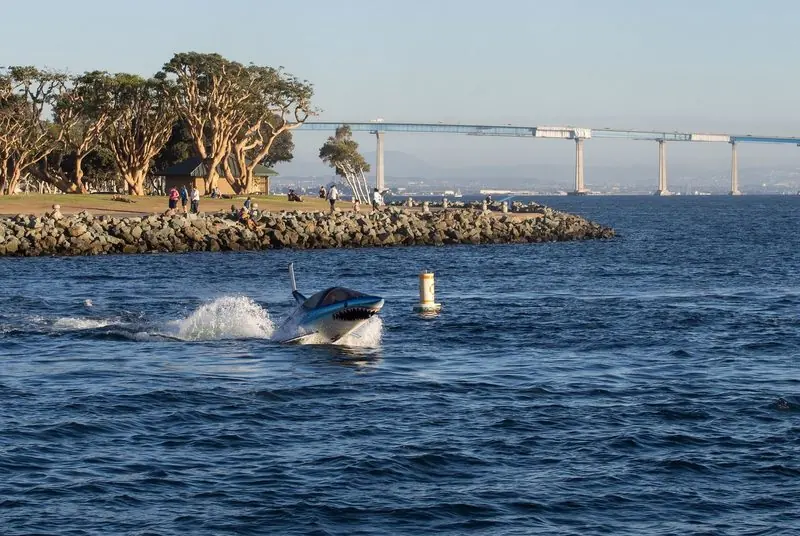
| Category | semi-submersible two-seat watercraft |
|---|---|
| Maker | Innespace Productions, which runs its demonstration and training days in northern California |
| Models | Seabreacher X in shark form, Y in killer whale form, Z with a retractable snorkel |
| Length | 4.82 m to 5.08 m depending on model |
| Beam | 1.06 m, with a wingspan of 1.98 m and a height of 1.47 m |
| Weight | about 658 kg |
| Engine | Rotax ACE 1500 cc four-stroke, 230 hp supercharged, with 300 hp and 325 hp options |
| Fuel | 52 litres |
| Speed | 43 to 48 knots on the surface, 17 to 22 knots submerged |
| Diving | about 1.5 m to 1.8 m for short periods, with the snorkel staying above water |
| Price | from USD 93,000, built to order, paid in three stages |
| Shipping | USD 3,000 to USD 6,000, and the craft fits inside a 20 foot container |
What it actually is
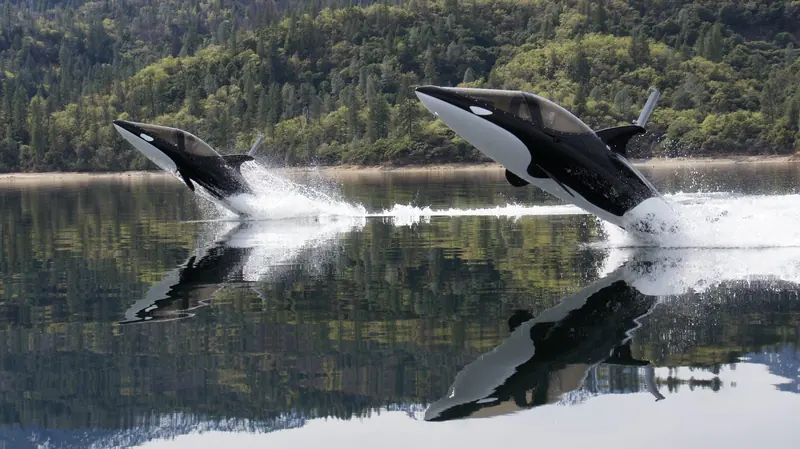
A Seabreacher is a closed-cockpit watercraft with wings, a tail and a snorkel, built around a Rotax jet engine and a hull that will not sink. It flies along the surface, dives to a metre and a half, rolls, breaches and comes back up. Innespace describes each one as hand built to the individual customer's specification, and the shapes are drawn from sharks, killer whales and dolphins. Ten years of development preceded the first deliveries.
The important classification point is that it is not a submarine and is not a personal watercraft. Innespace states that the craft can be registered as a conventional inboard powerboat in most countries, which is what makes it straightforward to own. Positive buoyancy and a self-righting arrangement of weight and foam mean it returns to the surface if the pilot loses the plot. Flooding the hull does not sink it.
Three models, one machine
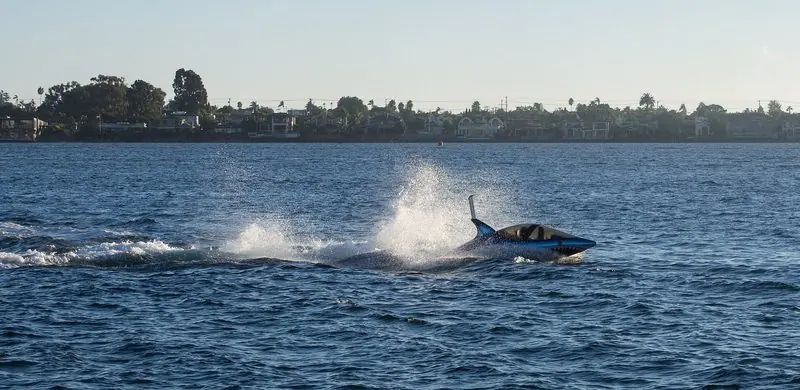
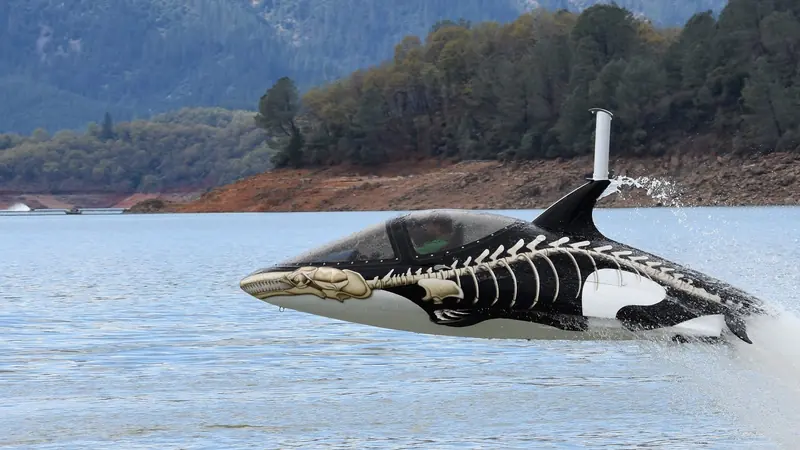
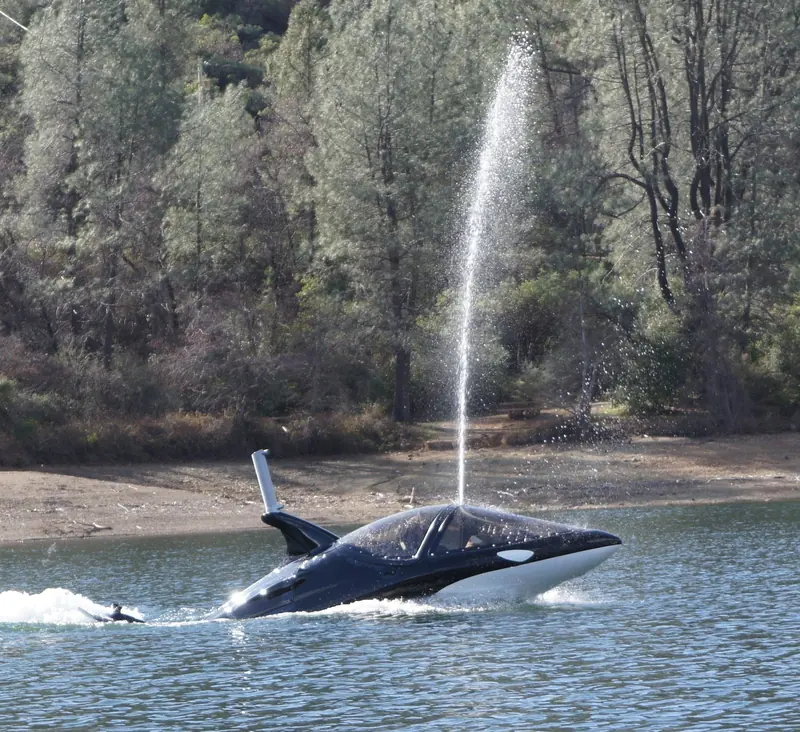
The X is the shark, at 5.08 m with an aggressive body and a fully vectored jet nozzle for manoeuvre. The Y is the killer whale, 4.82 m long, with larger wings, horizontal tail fins, a working blowhole, a full acrylic panoramic canopy and an upholstered interior with Bluetooth audio. It is the model to choose when the point is showing guests the water instead of throwing the craft around.
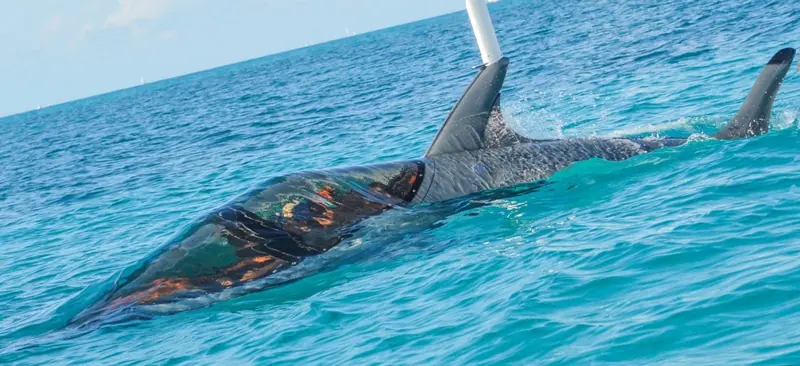
The Z is the newest and the most extreme, and the first with a fully retractable snorkel. Retracting the snorkel lets it complete a 360 degree barrel roll while staying in contact with the surface, which none of the earlier craft could do. All three share the same 1.06 m beam, 1.98 m wingspan, 658 kg weight and 52 litre fuel tank, and all three seat two.
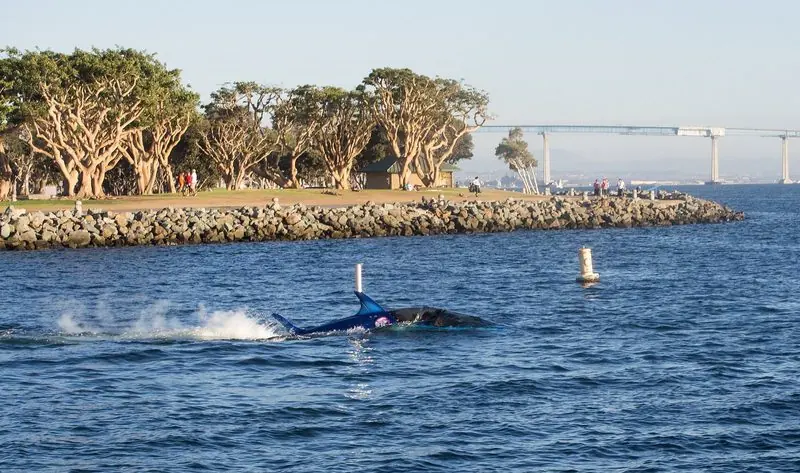
A metre and a half of depth, forty-five knots on the surface and a wingspan that decides whether the garage will take it.
What it does, and the depth honesty
The published depth is about 1.5 m to 1.8 m for brief periods, with the snorkel above water throughout. That is the whole of it. A Seabreacher is a surface craft that submerges the cockpit for a few seconds at a time, and an owner who imagines cruising a reef at ten metres is imagining a different product entirely. What it does instead is spectacular from the deck of the yacht and from inside the canopy.
Speeds are 43 to 48 knots on the surface and 17 to 22 knots submerged, with a performance package taking the surface figure higher. Innespace says most pilots are proficient within a couple of days, which is credible because the controls are conventional. The panoramic canopy and underwater viewports are the part that guests remember, and the acrylic is what needs looking after.
Weight, wingspan and the garage
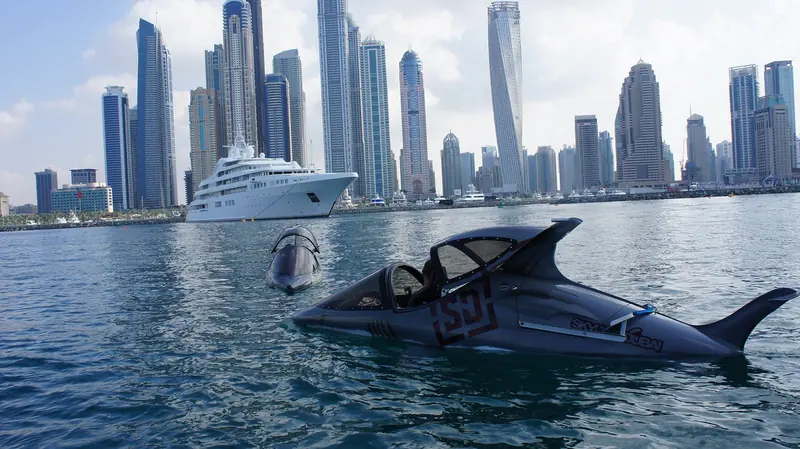
This is the constraint that decides whether an owner can have one. At roughly 658 kg dry, plus 52 litres of fuel, a Seabreacher needs a crane and cradle arrangement rated comfortably beyond three quarters of a tonne, handled in a seaway. That is tender territory, and on many yachts the Seabreacher ends up competing with the tender for the crane.
The dimension that catches owners out is the wingspan. At 1.98 m across the wings and 1.47 m high, the craft occupies far more garage volume than its 1.06 m beam suggests. Five metres of length is also a full tender bay. The realistic answer on most yachts under about 50 metres is that a Seabreacher replaces something else, and the decision should be made with the captain before the deposit is paid.
Buying one
Prices start at USD 93,000 and rise with model and specification. Because every craft is built to order, payment runs in three stages, with USD 40,000 at order, a further USD 40,000 when the craft reaches the paint and engine stage and the balance on completion. Financing is offered through a third party. Delivery is by container, and the craft fits inside a 20 foot box for USD 3,000 to USD 6,000.
Innespace also runs paid demonstration days in northern California at USD 1,000, non-refundable but credited against a purchase. For a buyer this is the sensible first step, because a Seabreacher is a strongly personal machine and the experience is not something a video settles. Craft have been delivered on every continent, so shipping to a Mediterranean or Caribbean base is routine.
Running it through a season
The mechanical side is conventional. A Rotax ACE 1500 is a marine engine with a wide service network behind it, which is the single most reassuring thing about owning something this unusual. Fuel is 52 litres of petrol, so the same stowage question applies as with any petrol toy aboard, and a yacht that already carries a personal watercraft has the arrangement in place.
The parts that are specific to the craft are the canopy, the seals and the vectoring nozzle. Acrylic scratches and hazes with salt and careless cleaning, and a clouded canopy destroys the reason for buying the machine. Fresh water rinsing and a proper cover are not optional. Because each hull is built to order, cosmetic parts are made to order too, and a repair after a hard impact will take time.
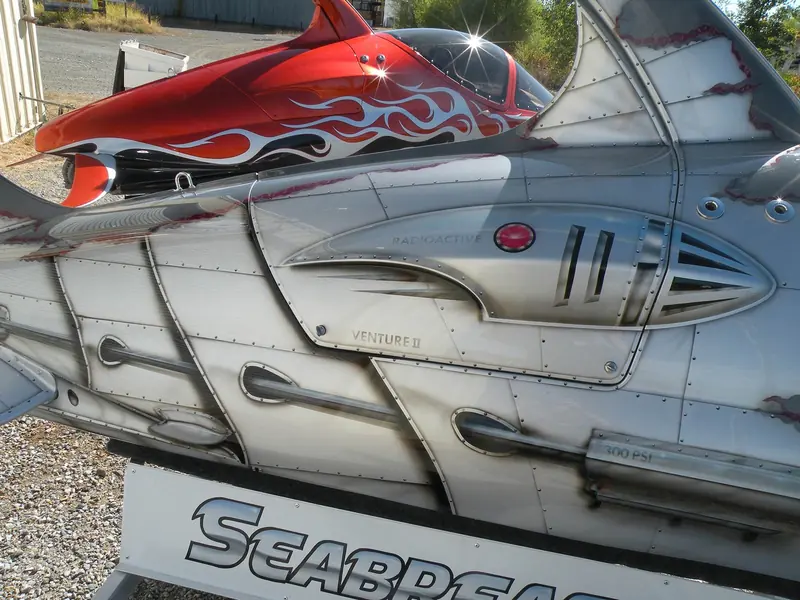
Support in the Mediterranean and the Caribbean
Innespace sells through a small dealer list and has delivered craft to every continent, but there is no service network in the sense that a Sea-Doo owner would understand. The engine is the exception. A Rotax ACE 1500 can be worked on by any competent marine engineer along the northern Mediterranean coast or in Florida and the eastern Caribbean, which covers the most likely failures.
Everything else routes back to California. Canopies, seals, vectoring components and body panels are specific to the craft, and an owner who plans to use one hard through a season should order the wear items before leaving. The realistic expectation is that an engine problem is fixed locally within days and a structural or canopy problem means the craft is out of service for the rest of the cruise.
Licences, training and safety
Innespace states that no licence is required to operate one, while recommending that the pilot understands boat handling. In practice the registration route as an inboard powerboat means local boating rules apply, and several Mediterranean countries require a licence to drive a powerboat of this speed. The captain should establish the position in each country before the craft is used.
The safety design is better than the appearance suggests. The hull is positively buoyant and self-righting with the canopy closed, and there are escape handles and emergency pull pins on both the inside and the outside of the cockpit. Diving too deep results in the craft returning to the surface. The genuine risks are collision at 45 knots and a guest who treats a closed canopy casually.
Against a jet ski and against a submersible
Nothing competes with a Seabreacher directly, so the comparison is with what an owner would otherwise buy. A top personal watercraft costs a quarter as much, weighs half as much and carries three people at similar surface speeds. A true personal submersible from a builder such as Triton or U-Boat Worx costs many times more, needs a launch and recovery system, and goes to depths a Seabreacher will never see.
The Seabreacher sits between them and does something neither can do, which is fly along the surface and dip under it repeatedly with two people watching through a canopy. It is bought for the experience and for the reaction, and it does not pretend otherwise. An owner who wants to look at a wreck at forty metres should be reading about submersibles instead.
Practical detail
| New price (2026) | From USD 99,750 for the X, USD 102,900 for the Y, USD 113,400 for the Z, paid in three stages - Innespace and dealer listings agree within a few hundred dollars of these figures, up from the roughly USD 93,000 entry price of a few years earlier |
|---|---|
| Used price | Thin market - a 2015 example with 81 hours and premium finish was listed at USD 99,000, close to new pricing, because so few come up for sale |
| Shipping | USD 3,000 to USD 6,000; the craft fits inside a standard 20 ft container |
| Who can service it | The Rotax engine, almost anywhere with a competent marine mechanic; canopy, seals and body panels, only through Innespace in California |
| Training | Every buyer goes through pilot training before taking delivery; no boating licence is legally required in most jurisdictions, but several Mediterranean countries require one for a powerboat at this speed, so the captain should confirm locally |
Request a quote for Seabreacher.
Tell us the model and where it needs to go. The desk obtains a written offer from the maker or an authorised dealer, checks it against the prices published on this page, and comes back to you by email. No obligation, no fee.
- 01A written offerPriced in your currency, with VAT, delivery and lead time stated, not a brochure figure.
- 02Delivered where the yacht isTo the marina, the yard or your address, with the paperwork a lithium pack or a crane lift needs.
- 03IndependentYotters is tied to no single dealer, so the offer is compared before it reaches you.
What owners and crew report
The learning curve is short but real
Brent Rose, testing one at Lake Shasta with Innespace co-founder Rob Innes instructing, called the ride wildly fun but said it isn't for anyone prone to claustrophobia or motion sickness, given the closed canopy and the underwater rolls.
Brent Rose, OutsideInnespace's own read on who actually buys one
Rob Innes describes buyers as wealthy, eccentric people drawn to obscure, adrenaline toys rather than boat enthusiasts, which is why every buyer goes through pilot training before taking delivery.
Rob Innes, Innespace Productions (the maker's own account)
What is good, and what to watch
Strong points
- Nothing else does what it doesNo jet ski or personal submersible combines surface flight, rolls and repeated 1.5 m dives; the closest alternatives, a top PWC or a Triton/U-Boat Worx submersible, each do only one half of the job.
- The safety engineering is more serious than the shape suggestsPositively buoyant and self-righting with the canopy closed, with emergency release handles inside and outside the cockpit; diving too deep simply returns the craft to the surface rather than deeper.
- The one wear part that matters is easy to service anywhereThe Rotax ACE 1500 can be worked on by any competent marine engineer along the northern Mediterranean coast or in Florida and the eastern Caribbean.
What to watch
- Everything except the engine routes back to CaliforniaCanopies, seals, vectoring components and body panels are Innespace-specific; a structural or canopy problem typically sidelines the craft for the rest of a cruise, not just days.
- The used market barely existsOnly a handful of used listings turn up at any time, so resale has almost no comparables to price against, unlike a mainstream PWC.
- Production is capped at around 20 units a yearEvery craft is hand-built to order in Redding, California, so lead times move with Innespace's order book, not with an owner's schedule.
Who it is for: Owners with a spare tender bay, a crane rated beyond three quarters of a tonne and an appetite for the most conspicuous toy in the anchorage.