Seakeeper
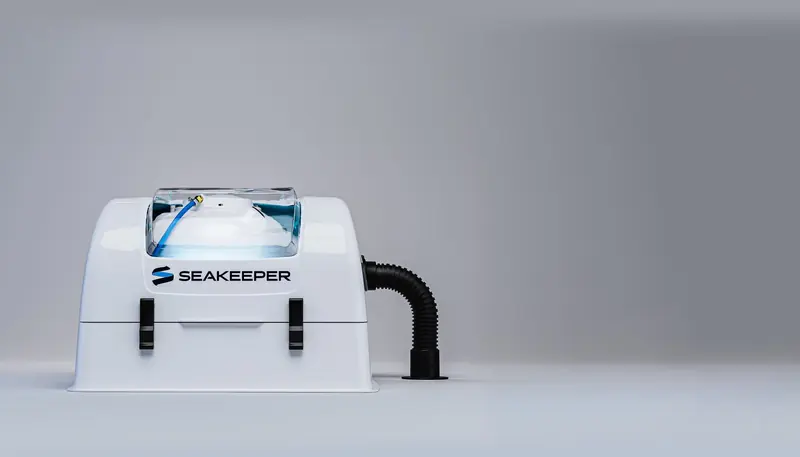
| Category | gyroscopic anti-roll stabilisers and vessel attitude control |
|---|---|
| Founded | 2001 by Shep McKenney and John Adams, with the first workshop at Solomons Island, Maryland in 2002 |
| Owner | Madison Industries, which acquired the company in 2018 |
| Manufacturing | Leesport, Pennsylvania, in a facility opened in 2022 |
| Milestones | first prototype on a 43 foot Viking in 2006, first production contract with Azimut in 2008, ten thousandth unit in 2020 |
| Range | fourteen models from Seakeeper 1 to Seakeeper 40 |
| Seakeeper 1 | boats of about 7 m to 9 m and up to 5.5 tons, USD 17,400 |
| Seakeeper 26 | boats of about 21 m to 26 m and up to 75 tons, 1,431 kg, USD 268,600 |
| Seakeeper 40 | boats of 26 m and up to about 115 tons, 1,848 kg, USD 365,400 |
| Roll reduction | up to 95 percent, in the company's own figures |
| Spool-up | about 40 to 43 minutes to full stabilisation on a Seakeeper 26 or 40, as published by the maker |
| Power | 3,000 W to spool a Seakeeper 26 and 1,375 to 3,000 W running, at 208 to 230 volts |
| Average installed cost, from a United States Seakeeper installer's published guide compiled from more than 900 installations and read in July 2026: Seakeeper 1 USD 14,600 install for USD 32,000 all in, Seakeeper 2 USD 16,900 for USD 43,000, Seakeeper 3 USD 21,700 for USD 62,000, Seakeeper 4 USD 23,600 for USD 71,000, Seakeeper 4.5 USD 19,400 for USD 75,000, Seakeeper 6 USD 20,400 for USD 90,000, Seakeeper 9 USD 25,300 for USD 140,000, Seakeeper 10 USD 23,200 for USD 150,000, Seakeeper 18 USD 26,300 for USD 210,000 | |
| Installation averages exclude taxes, shipping, travel, yard fees and any vessel-specific work | |
| Seakeeper 26 and Seakeeper 40 are quoted individually. No published installation figure exists for either, which is the whole 21 m to 33 m band | |
Twenty-five years of one idea
Shep McKenney and John Adams agreed in 2001 to develop a practical modern gyro stabiliser and started work in a garage at Solomons Island, Maryland, the following year. The first prototype went onto a 43 foot Viking in 2006. The M7000 launched commercially in 2008, and the first production contract came from Azimut Yachts in the same year, which is what took the technology from experiment to fitted equipment.
The company sold its thousandth unit in 2011 and its ten thousandth in 2020. It bought its manufacturing partner, Joma Machine Company, in 2008, moved to Mohnton in Pennsylvania and opened a purpose-built plant at Leesport in 2022. Madison Industries acquired the business in 2018. A training facility opened in Tampa in 2021, which matters because installation quality decides whether the equipment performs.
How the gyro actually works
A flywheel spins inside a vacuum enclosure. When the boat rolls, the gyro tilts fore and aft, and that precession generates a torque to port and starboard that opposes the roll. The vacuum is the engineering trick. It lets the flywheel spin roughly three times faster than a conventional design, which cuts its weight by two thirds and halves the power it needs.
The company quotes flywheel speeds up to 9,750 rpm on the smaller units and rim speeds around 557 miles per hour. The large units run slower, at 5,000 rpm on a Seakeeper 26 and 5,150 rpm on a Seakeeper 40, and carry far more angular momentum. A patented glycol and seawater cooling arrangement removes the heat. Control is automatic and reads the sea state continuously.
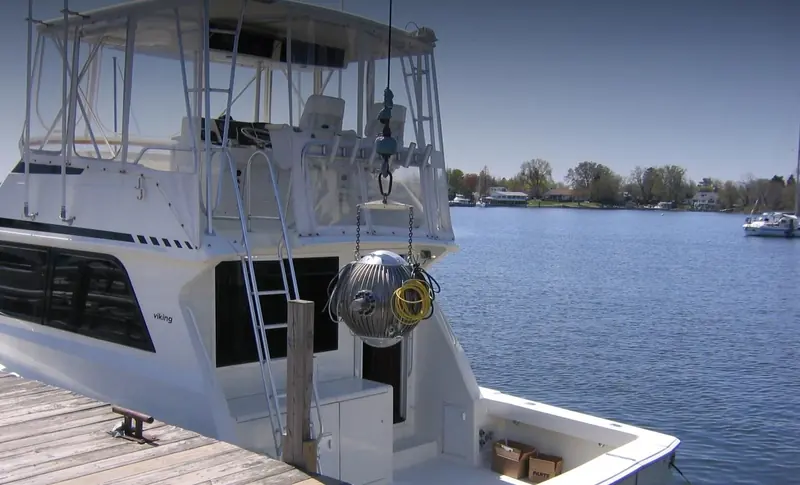
Forty minutes of spool-up is the price of an anchorage that nobody wants to leave.
The range, what it costs, and what installation adds
Fourteen models cover boats from about 7 m to over 33 m. A Seakeeper 1 suits craft of roughly 7 m to 9 m up to 5.5 tons and lists at USD 17,400. A Seakeeper 6 covers about 13 m to 16 m up to 24 tons at USD 69,600. A Seakeeper 18 covers roughly 18 m to 23 m up to 56 tons at USD 183,700. At the top, the Seakeeper 26 handles boats of about 21 m to 26 m and up to 75 tons for USD 268,600, and the Seakeeper 40 handles 26 m and above to about 115 tons for USD 365,400. Every one of those figures is the equipment alone, and the equipment is not the expensive half of a retrofit.
Seakeeper does publish an installation cost, as a budget band rather than a price. Its own cost FAQ, read July 2026, gives USD 10,000 to 15,000 to fit a Seakeeper 1 in the Americas, USD 15,000 to 25,000 for a 6 and USD 20,000 to 30,000 for an 18, with the equivalent European figures roughly half that in euros, and Custom against the 26, 35 and 40. A United States installer goes further and publishes actuals. A price and installation guide compiled from more than 900 fittings and read in July 2026 sets the average installed cost against each list price: USD 14,600 on a Seakeeper 1 for about USD 32,000 all in, USD 16,900 on a Seakeeper 2 for USD 43,000, USD 21,700 on a Seakeeper 3 for USD 62,000, USD 20,400 on a Seakeeper 6 for USD 90,000, USD 25,300 on a Seakeeper 9 for USD 140,000 and USD 26,300 on a Seakeeper 18 for USD 210,000. Those averages exclude taxes, shipping, travel, yard fees and any vessel-specific structural work, and they stop short of the two largest units. The Seakeeper 26 and the Seakeeper 40 are quoted case by case, which means the band this site is written for, roughly 21 m to 33 m, has no published installation figure at all and has to get one from the yard before the order goes in.

What it does to life aboard
The claim is up to 95 percent roll reduction, and the number that matters to an owner is not the percentage. It is whether guests stay at the table. A yacht lying beam-on to a swell in an otherwise perfect anchorage empties out by nine in the evening, and the usual fix is to move, which costs the anchorage. A gyro removes the reason to move.
The second effect is at low speed and at rest, where fin stabilisers historically did nothing. Seakeeper works at zero speed by design, which is why it appeared first on sportfishing boats that sit still for hours. On a yacht it changes tender operations, swimming off the platform and whether anyone is seasick in the saloon.
Spool-up, power and the generator
Two operational facts govern how the equipment is used. The first is spool-up time. Both the Seakeeper 26 and the Seakeeper 40 reach full stabilisation in about 40 to 43 minutes, with maximum revolutions taking 70 minutes on the larger unit. A gyro cannot be switched on as the anchor goes down. Crews start it well before arrival.
The second is power. A Seakeeper 26 draws up to 3,000 W to spool and 1,375 to 3,000 W running depending on sea state, at 208 to 230 volts single phase and 20 amps. A Seakeeper 40 needs 5,000 W to spool and 1,900 to 4,400 W running at 30 amps. A generator has to be online whenever the unit is running, and it also needs 4 to 8 gallons a minute of seawater cooling.

Weight, space and retrofitting
A Seakeeper 26 weighs 1,431 kg and a Seakeeper 40 weighs 1,848 kg, in packages a little over 1.4 m square and about a metre high. That mass has to go onto a properly engineered foundation, low and close to the centre of the vessel, and the structure often needs work to take it. There are no fins, no shafts and no hull penetrations beyond the cooling water.
The absence of appendages is the strongest retrofit argument. Fin stabilisers require holes in the hull, they add drag under way, and they can be damaged alongside or in shallow water. A gyro sits inside the boat and can be installed almost anywhere the structure allows. The installation cost behaves in a way most owners do not expect. Across the published averages it runs a fairly flat USD 14,600 to USD 26,300 whatever the model, because the labour is broadly the same job at any size, so fitting is about 84 percent of the unit price again on a Seakeeper 1 and about 14 percent on a Seakeeper 18. The small units are where the fitting cost hurts, and the installation quote should be in hand before the model is chosen rather than after.
Where it stops
The ceiling is real. The largest unit is rated to about 115 tons, which is a boat of roughly 26 m to 33 m. Above that an owner is either fitting multiple units or looking at fin stabilisers with zero-speed capability, which is what most yachts above 40 m carry. Anyone with a large displacement yacht should treat Seakeeper as one option among several and not as the default.
The other limit is the sea state. A gyro reduces roll and does nothing about pitch, so a head sea is unaffected. Seakeeper's answer to that is Seakeeper Ride, launched in 2023, a vessel attitude control system for planing boats under way. It is a separate product solving a separate problem.
Service, warranty and bearings
The units carry a multi-year factory warranty and the bearings are field replaceable, which is the single most important design decision for an owner. A sealed unit that had to go back to Pennsylvania when a bearing wore would be a season-ending failure. Field replacement means a technician comes to the boat.
Seakeeper trains installers and service technicians directly, and the network follows the American and European production boat industry, which means coverage in Florida, the Bahamas, the Balearics, the Italian and French Riviera and the eastern Caribbean. Noise output is about 74 dB at one metre on a Seakeeper 26, so the mounting location and the sound insulation around it are part of the specification and not an afterthought.
Against fin stabilisers, and who should fit one
Fin stabilisers from established European makers remain the standard on large displacement yachts, and modern fins work at zero speed. They cost more, they add drag, and they put moving surfaces outside the hull. A gyro costs less, adds weight instead of drag, and is invisible from the outside. On boats up to about 115 tons the gyro usually wins on installed cost and simplicity.
The owners who should fit one are those who anchor out most nights, who eat aboard, and who have guests with no sea legs. The owners who should look elsewhere are those with yachts beyond the size range, those without generator capacity to spare, and those whose boats are only ever used under way in flat water.
Practical detail
| Equipment prices, published in full | Seakeeper is one of the very few marine makers that publishes every list price. Its own cost page, read August 2026, gives Seakeeper 1 at USD 17,400, 2 at USD 26,100, 3 at USD 40,300, 4 at USD 47,400, 4.5 at USD 55,600, 5 at USD 60,500, 6 at USD 69,600, 7.5 at USD 78,700, 10 at USD 126,800, 10.5 at USD 133,900, 14 at USD 155,900, 18 at USD 183,700, 26 at USD 268,600 and 40 at USD 365,400. Those are equipment only, exclude taxes, storage, docking and haul-out, and the company states they are subject to passthrough on any levied tariff. |
|---|---|
| Installation is the bigger half of the bill | An Elite Seakeeper dealer publishes averages compiled from more than 900 installations as of 2025: Seakeeper 1 at USD 14,600 to fit for USD 32,000 all in, 3 at USD 21,700 for USD 62,000, 4.5 at USD 19,400 for USD 75,000, 6 at USD 20,400 for USD 90,000, 9 at USD 25,300 for USD 140,000, 10 at USD 23,200 for USD 150,000, 14 at USD 24,100 for USD 180,000 and 18 at USD 26,300 for USD 210,000. Averages exclude taxes, shipping, yard fees and any vessel-specific structural work. Access is what moves the number: a unit that has to go in through a cut hatch is a different job from one dropped into an open lazarette. |
| Annual service, with real numbers behind it | Two Elite Seakeeper dealers in Orange Beach, Alabama publish identical annual service tables: USD 750 for a Seakeeper 1, USD 850 for a 4 or 4.5, USD 1,150 for a 2, USD 1,200 for a 3, USD 1,350 for a 10, USD 1,500 for a 5, 6 or 14, USD 1,650 for a 9, USD 1,800 for a 16 or 18, USD 1,900 for a 26 and USD 2,250 for a 35 or 40. An independent Californian yard, Ventura Boat Services, puts a typical annual service at USD 1,500 to USD 3,000 in November 2025, so treat the dealer table as a floor rather than a ceiling. |
| The service schedule the warranty depends on | Remove the covers and inspect visually after every use, with a freshwater rinse and a strainer check. Every three months or 150 hours, inspect, rinse, check the strainer and replace the zinc on Seakeeper 5 and above. Annually or at 1,000 running hours, whichever comes first, a professional inspection checks seawater flow and cooling hoses, flushes the cooling system with glycol and inspects the electronics. Units must also be registered with Seakeeper to access after-sales programmes, and a technician has to verify sea hours for a warranty claim. |
| The long-run item nobody quotes up front | The spherical bearings that carry the spinning flywheel are rated at roughly 10,000 to 20,000 hours on many models. Ventura Boat Services puts bearing service or replacement past 10,000 hours at USD 20,000 to USD 60,000 or more, and hydraulic bushing replacement past 2,000 hours at USD 1,000 or more. Those are one yard's figures, published November 2025, and Seakeeper publishes nothing against which to check them. On a heavily used charter boat this is the number that decides whether the unit is worth keeping at ten years. |
| Power, weight and the generator question | The small units are DC and the rest are not, which changes life at anchor. A Seakeeper 1 weighs 166 kg and runs on 12 VDC at up to 50 amps, about 225 to 600 watts depending on sea state. A Seakeeper 6 weighs 395 kg and needs 220 VAC at 20 amps or 110 VAC at 30 amps, drawing up to 2,300 watts to spool and 1,100 to 2,300 watts running, plus 125 watts of 12 VDC control power. Above the small DC models the gyro is an AC load, so at anchor the generator runs while the gyro does, and that fuel is part of the cost of a quiet dinner. |
| Spool-up: switch it on leaving the berth | A gyro is not a switch you flick on arrival. A Seakeeper 1 reaches stabilising speed at 7,310 rpm in 18 minutes and full 9,750 rpm in 35 minutes. A Seakeeper 6 reaches stabilising speed at 7,275 rpm in 21 minutes and 9,700 rpm in 42 minutes. The large units carry far more angular momentum and take longer still, which the maker puts at about 40 to 43 minutes to full stabilisation on a Seakeeper 26 or 40. |
| Seakeeper Ride is a different product, not a cheap gyro | Ride is a vessel attitude control system that works underway rather than at rest, for boats up to about 55 ft with a cruising speed above 20 mph and a compatible multifunction display. The same dealer guide gives Ride 450 at USD 4,900 with installation from USD 4,500, about USD 9,400 fitted, up to the Ride 750 QUAD at USD 21,500 with USD 8,500 to USD 13,000 to fit, and the Ride 900 to 1500 from USD 24,500 with custom installation. It does not stop a boat rolling at anchor and it is not a substitute for a gyro. |
| What is NOT published | There is no published installation figure for the Seakeeper 26 or the Seakeeper 40. Both are quoted individually, and that is the entire 21 m to 33 m band, exactly where the equipment alone runs USD 268,600 to USD 365,400. Seakeeper publishes no bearing overhaul price, no out-of-warranty parts list and no independent roll-reduction test; the up to 95 percent figure is the company's own. One United States installer's table also lists the Seakeeper 40 at USD 348,000 against the maker's USD 365,400, so take the factory number and get the delivered price in writing. |
Request a quote for Seakeeper.
Tell us the model and where it needs to go. The desk obtains a written offer from the maker or an authorised dealer, checks it against the prices published on this page, and comes back to you by email. No obligation, no fee.
- 01A written offerPriced in your currency, with VAT, delivery and lead time stated, not a brochure figure.
- 02Delivered where the yacht isTo the marina, the yard or your address, with the paperwork a lithium pack or a crane lift needs.
- 03IndependentYotters is tied to no single dealer, so the offer is compared before it reaches you.
What owners and crew report
Owner opinion splits, and both sides are worth reading
Forum threads run from an owner with two Seakeeper 5 units reporting problems on every trip and summarising two years of problems and headaches, to an owner running a Seakeeper 2 on a Pursuit 28 for two years who calls it absolutely the best experience, with no roll sitting still or trolling and much less slamming underway because the boat is kept level. Several long-standing posters note that early units were not as reliable, nor as well supported, as they are now.
The Hull Truth (owner forum)What actually breaks, and what the back half of ownership costs
A service yard's published breakdown ranks cooling system problems first, from clogged heat exchangers and raw-water pump failures to overheat alarms triggering automatic shutdowns, then hydraulic and brake faults with accumulators needing replacement every few years, then electrical faults more common on the Seakeeper 1 to 5, then bearing and flywheel wear at roughly 10,000 to 20,000 hours, then corrosion and zinc depletion. It also states most owners see trouble-free operation for the first five to ten years if the unit is serviced annually.
Ventura Boat Services (November 2025)The competition is measurably faster to stabilise
Comparing the Yanmar-owned Smartgyro SG40 against the Seakeeper 9, the magazine reported both reaching maximum rpm in about 55 minutes but the SG40 reaching stabilisation in 25 minutes against 38 for the Seakeeper, with the SG40 heavier at 650 kg against 550 kg and drawing more power, and Smartgyro's modular sphere serviceable in the field without a factory return. The reviewer was explicit that he had not yet tested a Smartgyro at sea.
Motor Boat and Yachting (Hugo Andreae, July 2021)Ride is a real effect underway, and a separate purchase
In the first published test of Seakeeper Ride the reviewer reported bow rise on climbing onto plane significantly reduced, describing a boat that had previously laboured out of the hole lifting smoothly instead. Motor Boat and Yachting's own trial on a Nimbus T9 in typical lumpy Solent conditions found pitching reduced in size and severity and side to side roll almost entirely gone at 35 knots.
Power and Motoryacht (Dan Harding)The rest of the market is chasing on price and installation
A trade survey of the gyro market recorded Quick's air-cooled MC2 needing no water intake, with managing director Paolo Berni of Quick USA making the point that not needing a water-cooling system means not putting another hole in the boat, and some models retrofitting on eight bolts. Quick had sold about 600 units worldwide by 2021 against Seakeeper's ten thousand. Smartgyro's marketing director Sander Gesink summarised the demand simply: people want comfort and are willing to pay for it.
Soundings Trade Only
What is good, and what to watch
Strong points
- It does the one thing that changes an evening aboardA gyro stops the roll at anchor, which is where a yacht spends most of its life and where fin stabilisers do least. Seakeeper claims up to 95 percent roll reduction, and owners describe no roll at rest or at trolling speed. It is the single piece of equipment most likely to decide whether guests stay aboard after dinner.
- The prices are published, all fourteen of themEquipment list prices for every model, dealer installation averages drawn from more than 900 jobs, published annual service tables and a stated exclusions list. Almost nothing else in yachting is priced this openly, and it lets an owner build a real budget before a salesman is involved.
- Scale, and the support that comes with itMore than ten thousand units sold since the first prototype went onto a 43 foot Viking in 2006, a purpose-built plant at Leesport opened in 2022, and a training facility at Tampa since 2021. Installation quality decides whether the equipment performs, so a trained network matters more here than the specification sheet does.
- The vacuum enclosure is genuine engineering, not marketingSpinning the flywheel in a vacuum lets it turn roughly three times faster than a conventional design, which cuts its weight by about two thirds and halves the power it needs. That is why a 24 ton boat can carry a 395 kg Seakeeper 6 rather than something twice the size.
- Two years and 2,000 hours of full-system warrantyThe whole line carries the same 2 year, 2,000 hour factory warranty, with an extended programme available while the unit is still inside the factory period. Cover has to be activated by registering the unit, and a technician verifies sea hours on a claim.
What to watch
- The equipment price is not the priceA Seakeeper 6 lands at about USD 90,000 fitted against USD 69,600 of hardware, and a Seakeeper 1 at about USD 32,000 against USD 17,400. Above the Seakeeper 18 there is no published installation figure at all, so the 21 m to 33 m owner has the least information and the largest bill.
- It takes 18 to 42 minutes to come up to speedStabilisation arrives in 18 minutes on a Seakeeper 1 and 21 on a Seakeeper 6, with full rpm at 35 and 42 minutes, and the maker puts full stabilisation on a Seakeeper 26 or 40 at about 40 to 43 minutes. Forget to switch it on leaving the berth and the first half hour of the anchorage is exactly as rolly as it would have been.
- Above the small DC units it is an AC loadA Seakeeper 6 wants 220 VAC at 20 amps and draws up to 2,300 watts. At anchor that means the generator runs while the gyro runs, so a quiet night is a running genset, and the fuel and the generator hours belong in the running cost.
- The ten-year cost is opaqueBearings are rated at roughly 10,000 to 20,000 hours and an independent yard puts the overhaul at USD 20,000 to USD 60,000 or more, with hydraulic bushings adding USD 1,000 or more past 2,000 hours. Seakeeper publishes no figure for either, so a buyer cannot price the back half of the ownership.
- The failure modes are recurrent and unglamorousClogged heat exchangers, raw-water pump failures and overheat shutdowns lead the list, with hydraulic and brake faults and voltage drops more common on the smaller units and zinc depletion throughout. Owner opinion splits accordingly, between owners who call it the best money they ever spent and owners reporting years of intermittent faults.
Who it is for: Owners of boats up to about 115 tons who anchor out, eat aboard and are tired of moving at nine in the evening because of a swell.