Torqeedo
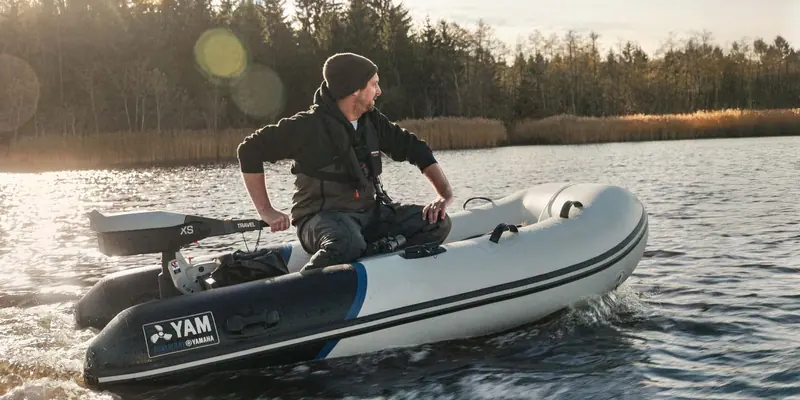
| Founded 2005 in Starnberg, Germany, in response to limits on combustion engines on Lake Starnberg; company profiles name Christoph Ballin and Friedrich Boebel as founders | |
| Owners | Deutz consolidated Torqeedo from 1 October 2017; Yamaha Motor completed the purchase in April 2024, price not disclosed |
|---|---|
| Range | electric and hybrid drives from 0.5 to 100 kW, more than 250 patents (Torqeedo, April 2024) |
| Cruise 3.0 FP pod | 3,000 W input, 24 V, motor 12.8 kg, for sailboats up to 9 m and 3 t; EUR 3,799 incl. 19% VAT in Germany, throttle EUR 226 extra |
| Cruise 3.0 FP range on one Power 24-3500 battery: 6.5 km/h for 9 h, 8.5 km/h for 3 h, 11 km/h for 1 h 10 min (Torqeedo, tested on a daysailer) | |
| Travel 1003 in 2011 | about 30 lb, 18 Ah battery of about 10 lb, USD 2,000, IP67 (Panbo) |
| Travel 1103C about USD 2,700 in October 2020, stock Travel 1103 battery 915 Wh (Panbo) | |
| June 2019 safety warning | Travel serials 1001-1752 and Ultralight serials 1117-1826, possible battery housing leak and fire hazard, free repair or replacement |
| Two-year warranty for private use | |
| Out-of-warranty repair on a Travel 1003: pylon assembly USD 631 plus shipping, after about 30% discount (Practical Sailor, 2017) | |
Who Torqeedo is and who owns it now
Torqeedo was founded in Germany in 2005 as a response to strict rules on combustion engines on Lake Starnberg in Bavaria. Company profiles name Christoph Ballin and Friedrich Boebel as the founders. The idea was simple and a bit stubborn: a boat motor that a lake authority couldn't object to, and that was good enough that nobody bought it only because they were made to.
Deutz, the German engine maker, announced the purchase on 27 September 2017 and consolidated Torqeedo from 1 October of that year, paying from cash on hand. Torqeedo kept its brand and management as a subsidiary, Ballin moved into Deutz's strategy role and the chief operating officer Ralf Plieninger took over electrification. On 3 April 2024 Torqeedo announced that Yamaha Motor had completed the acquisition from Deutz. The price was not published. Yamaha's Toshiaki Ibata called it a step in the company's marine strategy for 2024. Torqeedo describes itself today as covering electric and hybrid drives from 0.5 to 100 kW for recreational and commercial boats, with more than 250 patents. For a buyer the ownership change matters in one practical way: parts, dealers and service now sit inside a very large outboard maker instead of an engine group that had a small marine side.
The dinghy motors: Travel and Ultralight
Ben Ellison of Panbo reviewed the Travel 1003 in July 2011 at a retail price of USD 2,000. The motor weighed about 30 pounds and split into three parts, the battery was an 18 Ah pack of about 10 pounds, the propeller was 11.5 inches and the unit was rated IP67. The tiller carried a GPS and a display with charge percentage, speed and a range estimate that changes with the power you're drawing. On a 3.5 mile round trip around an island at mixed speeds his charge fell from 87 percent to 44 percent. Full throttle in open water gave about 6 knots, which he called hard on the battery, and in ordinary harbour use he could go weeks between charges.
He liked the smooth throttle at very low speeds, the quiet (a mild whirring), the torque in reverse and the range display. His complaints were specific. The plastic battery and tiller cable threads cross-thread easily, a high-revolution bearing whine came back over several seasons, and the E45 overcurrent shutdown fires on abrupt throttle changes or a fouled prop, which Torqeedo's service manager attributed to software thresholds, obstructions or internal defects. Commenters on the same piece added service delays and repair costs out of warranty. By October 2020 the newer direct-drive Travel 1103C cost about USD 2,700, roughly USD 700 more than ePropulsion's Spirit 1.0 Plus, and Ellison gave the stock Travel 1103 battery as 915 Wh against 1,276 Wh for the Spirit. A reader who owned a 1103 for more than six years reported no maintenance problems apart from a tilt mechanism that broke off and went overboard.
Torqeedo's own table shows the electric trade-off plainly: 21.7 nautical miles at 3.1 knots, but 10.3 at 6.8.
The Cruise pods for sailboats and small launches
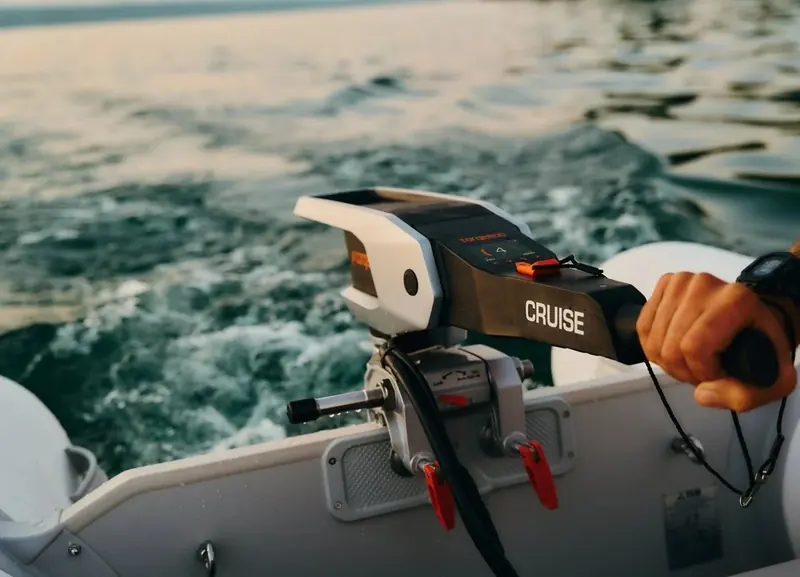
On Torqeedo's own page the Cruise 3.0 FP takes 3,000 W of input power, runs at 24 V nominal and the motor weighs 12.8 kg without a battery. The standard propeller is a 12 by 10.5 fixed unit, a folding propeller is optional, and the housing and shaft are seawater-resistant aluminium with an anode set. The page rates it IPx9K when mounted outside the hull. It has an integrated GPS with a display of speed, power, charge level and remaining range, and it can regenerate while you sail, using the standard or the folding propeller.
Torqeedo's range table is for one Power 24-3500 battery on a daysailer: 6.5 km/h for 9 hours at slow speed, 8.5 km/h for 3 hours at half throttle and 11.0 km/h for 1 hour 10 minutes at full throttle. Converted, that is 3.1 knots for 21.7 nautical miles, and 6.8 knots for 10.3 nautical miles. Note how steeply the miles fall as the speed rises, which is the whole story of electric propulsion in one table. The price in Germany is EUR 3,799 including 19 percent VAT, with the throttle EUR 226 extra, and Torqeedo's US site lists the same pod at USD 4,999 plus shipping. A UK dealer lists GBP 3,150 including VAT and another UK retailer GBP 3,399.95, so check the date and the market before you compare. The 48 V version is recommended with the Power 48-5000 battery, and third-party 24 V batteries are said to work if you match them carefully to the motor.
What goes wrong, and what it costs
Practical Sailor's Darrell Nicholson published the clearest account in August 2017. A retired admiral's Travel 1003, bought in 2013 and little used, threw error E45 at the start of the 2017 season. Torqeedo support suspected water in the housing and the owner opened it. The prop washers and pin were badly corroded and broken, water was present on the gearbox side and corrosion had reached the motor-side electronics, which pointed to the motor-side O-ring. Torqeedo recommended replacing the whole pylon assembly, which runs from the motor to the battery, at USD 631 plus shipping, with about 30 percent off. Nicholson wanted owners told that Torqeedo now uses more corrosion-resistant shaft parts, thought the housing seal needed more screws into aluminium, found the power and control plugs fragile and called the two-year warranty too short for such an expensive product.
Seven readers added their own cases between 2020 and 2022. One had E45 and paid about USD 700 all in, then a USD 250 tiller and a USD 125 diagnostic fee, and wouldn't recommend the 1003. Another had a second 1003 with E45 and water in the housing. A Cruise 2.0 owner had error E47 after about 25 hours with a month of warranty left. These are anecdotes and they come from people who had a problem, so don't read them as a failure rate. Against them stands Ellison, who reports no motor problems with his own Travel 1003 over 10 seasons in salt water, and Practical Sailor said both of its long-term test motors were still running. Trustpilot reviews are harsher and mostly concern batteries and support. The sensible reading is that a Torqeedo is a precision electric machine whose weak points are seals, connectors and the battery, and that you should rinse it, grease the contacts with dielectric grease, never leave the battery standing in water and not count on a quick local repair.
The 2019 battery safety warning
Health Canada framed the June 2019 notice as a fire hazard and told owners to stop using the affected lithium-ion batteries and contact Torqeedo. Panbo reported the cause as a rare manufacturing error which, combined with partial submersion, could corrode the battery management system and possibly cause a fire. Owners were asked to register at Torqeedo's safety page with the serial number. If you're buying a used Travel or Ultralight, check the serial against those ranges and ask for proof the battery was dealt with. The Power 26-104 manual, a different battery, says it meets IP67, which covers short immersion, and warns against leaving it in constant wetness or standing in water in case the housing is defective. We found no recall covering that battery.
What the desk could not find is a published fault rate for either the motors or the batteries, so the numbers above describe the notice, not how many units failed.
Alternatives and what to compare on the numbers
Ellison put the Spirit 1.0 Plus at USD 2,000, USD 700 below the Travel 1103C, with 1,276 Wh against 915 Wh, but it has no GPS and so shows time remaining and not miles. Commenters there said ePropulsion support and dealers were thin in the eastern United States. Several Panbo readers said Torqeedo's price is a barrier next to small petrol outboards. If you only need a tender motor a few times a season and have somewhere to charge, the cheaper option can be right. If you want a pod for a sailboat with regeneration, or a range up to 100 kW, Torqeedo is the name with the longest catalogue. Whatever you choose, ask for the serial number, the battery's age and the warranty terms in writing, and check the price in your own market.
One more thing the numbers can't show is support. Panbo commenters said Torqeedo service delays and repair costs out of warranty were their main complaint, while others said the rival's dealers were hard to find in some regions. Before you pay, find out who within reach of your home port will actually open the motor, and ask what a pylon or battery replacement costs today, because the USD 631 pylon on record is from 2017.
Practical detail
| New price, Cruise 3.0 FP | EUR 3,799 incl. 19% VAT in Germany (Torqeedo), throttle EUR 226 extra; USD 4,999 plus shipping on Torqeedo's US site; GBP 3,150 to 3,399.95 at UK dealers. Prices vary by market and date |
|---|---|
| New price, Travel | USD 2,000 in 2011 for the 1003; about USD 2,700 for the 1103C in October 2020 (Panbo). Current list not checked |
| Range and speed | Cruise 3.0 FP on one Power 24-3500: 3.1 kn for 21.7 nm, 6.8 kn for 10.3 nm (Torqeedo) |
| Warranty | 2 years from purchase for private use |
| Repair cost on record | Travel 1003 pylon assembly USD 631 plus shipping before about 30% discount (Practical Sailor, 2017) |
| Check on a used unit | Serial against the 2019 Travel and Ultralight ranges; corrosion on the prop washers and pin; error history; whether the battery has ever stood in water |
| Care | Rinse after salt water, use dielectric grease on the power and control plugs, don't leave the battery in water (Practical Sailor, Power 26-104 manual) |
| What is not published | No fault rate for motors or batteries; no independent test of the current Cruise range; Yamaha's purchase price |
What owners and crew report
Ten seasons in salt water without a motor problem
Ben Ellison reported no motor problems with his Travel 1003 over 10 seasons, while acknowledging Torqeedo's history of problems and the long comment thread on his own review
Ben Ellison, Panbo, October 2020Water in the housing of a lightly used Travel 1003
Error E45 at the start of 2017, corroded prop washers and pin, water on the gearbox side, motor-side O-ring failure, pylon assembly quoted at USD 631 plus shipping after about 30% discount
Practical Sailor, Darrell Nicholson, 2017Out-of-warranty repair bill
A reader with E45 reported about USD 700 including shipping and fees, then a USD 250 tiller and a USD 125 diagnostic fee, and would not recommend the 1003
Ab Ream, Practical Sailor commentsA 1103 that ran six years
One forum owner said the 1103 had run more than six years with no maintenance issue other than a tilt mechanism that broke off and went overboard
Owner post found by the desk in a boating forum searchAbrupt throttle and E45
Panbo reported E45 overcurrent shutdowns, often triggered by abrupt throttle changes or prop obstructions, and Torqeedo's service manager blamed software thresholds, obstructions or internal defects
Ben Ellison, Panbo, 2011
What is good, and what to watch
Strong points
- A real range displayThe GPS tiller or pod display shows charge, speed and remaining range, which cuts range anxiety on a tender or a sailboat
- The widest catalogueFrom a 30 lb dinghy motor to pods for 9 metre sailboats and drives up to 100 kW, with regeneration on the Cruise pods
- Long track record with named ownersOwners report ten seasons in salt water, and Practical Sailor's two long-term test motors were still running
What to watch
- Water ingress and fragile connectorsPractical Sailor and several readers report E45 with water past the seal, corroded prop parts and cross-threading plastic connectors
- Costly out-of-warranty repairs and a short warrantyA USD 631 pylon assembly, USD 250 tiller and USD 125 diagnostic fee are cases on record, with a two-year warranty for private use
- A 2019 battery warningTravel serials 1001-1752 and Ultralight 1117-1826 were covered by a fire-hazard notice, so check a used unit's serial
- Cheaper rivals existPanbo found ePropulsion's Spirit 1.0 Plus USD 700 below the Travel 1103C in 2020 with a larger battery
Who it is for: A sailor with a tender or a sailboat up to about 9 metres who wants a quiet motor with a real range display, who will rinse it and treat the battery carefully, and who accepts that service can be slow and expensive out of warranty.