Volvo Penta IPS
| Introduced | London Boat Show, January 2005 |
|---|---|
| Range expanded to four engines by 2006 with the IPS350 and IPS600 | |
| Adoption | almost 5,000 boats and more than 10,000 IPS units installed by 2010, five years after launch |
| Current leisure range | approximately ten models, IPS350 to IPS1200, three pod sizes, twin/triple/quad installations |
| Separate Professional and Superyacht IPS platform for larger installations | |
| Claimed efficiency gain versus shaft | approximately 20 to 35 percent depending on the source and metric, varying with hull, weight, sea state and speed |
| Routine service cost cited by boating-press sources: approximately 250 USD per pod for periodic inspection and re-greasing | |
| Gearbox rebuild after water intrusion | cited at upward of 15,000 USD for a single pod |
| Pre-2009 units used a bronze steering seal reported prone to premature failure in salt water | |
| Grounding can shear a pod outright - a risk a shaft-and-rudder installation does not carry in the same way | |
What IPS Actually Changes About How a Boat Is Driven
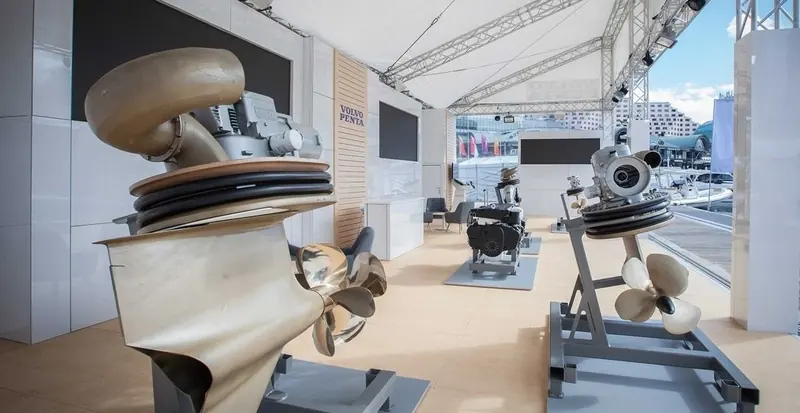
A conventional inboard pushes a boat with propellers mounted aft of the hull, working in water the hull itself has already churned up, and steers with a separate rudder that adds its own drag. Volvo Penta IPS does both jobs differently: twin counter-rotating propellers face forward on a steerable pod slung under the hull, pulling the boat through undisturbed water ahead of the running gear rather than pushing it through turbulence behind the hull. The pods themselves steer the boat, so there is no separate rudder to add drag, and Volvo Penta angles the pods by around 9 degrees to optimise the thrust vector for the hull forms IPS is typically fitted to.
The system was introduced at the London Boat Show in January 2005, initially as a smaller-boat product, with the IPS350 and IPS600 added to the range in 2006 to bring the total to four engines that year. By 2010, five years after launch, Volvo Penta reported almost 5,000 boats on the water fitted with more than 10,000 individual IPS units - a fast adoption curve for a propulsion system that asked boatbuilders to redesign their hulls around it rather than simply bolt it on. Today the core leisure range runs to roughly ten models from IPS350 up to IPS1200, matched to three pod sizes and installed in twin, triple or quadruple configurations depending on the boat, with a separate Professional and Superyacht platform introduced more recently for larger installations.
The Efficiency Claims, and What They Actually Depend On
Volvo Penta's headline figures for IPS against a conventional shaft installation are specific: about 30 percent lower fuel consumption and 20 percent higher top speed, a separately quoted 35 percent improvement at best cruise speed, and claims of up to 40 percent longer range, 30 percent lower emissions and 50 percent less perceived noise in some marketing material. These are Volvo Penta's own numbers, not independently audited third-party test results, and multiple boating-press sources report a narrower, more commonly cited range of 20 to 30 percent better fuel economy across many hull designs - still a large number, but a materially different one from the top-end 35 to 40 percent figures. Two of the largest published figures - the 35 and 40 percent numbers - come from Volvo Penta's own comparison material rather than from an outside test house, which is worth keeping in mind when weighing them against the more conservative 20 to 30 percent range independent boating publications tend to cite.
What is consistent across every source, including Volvo Penta's own technical material, is that the gap is not fixed: it depends on the specific hull the pods are fitted to, the boat's loaded weight, the sea state, and the speed being run. A hull genuinely designed around IPS from the naval architecture stage will show a bigger gain than one where IPS was simply substituted for a shaft on an existing design. A buyer comparing two similar-sized boats, one on IPS and one on shafts, should treat any single fuel-saving percentage as an estimate rather than a guarantee specific to their intended use.
The Repair-Cost and Grounding Risk a Shaft Drive Does Not Carry
Because the pods sit under the hull with a steering seal exposed to salt water, IPS carries maintenance costs a shaft-and-rudder boat does not. Boating-press sources describe periodic removal and inspection of the prop sets and seals, with re-greasing of the propshafts, at around 250 dollars per pod under normal conditions - a real, recurring cost on top of engine maintenance. Pre-2009 IPS units used a bronze steering seal reported to fail sooner than expected in salt water, and once a seal fails and water reaches the gearbox, the resulting clutch-plate damage can escalate into a full gearbox rebuild costing upward of 15,000 dollars for a single pod - a five-figure repair a shaft-drive equivalent would not face from the same failure mode.
Grounding is the other risk specific to a pod system: because the drives hang below the hull rather than sitting protected behind it, striking bottom or debris can shear a pod outright - one widely circulated example involved an Azimut 55S that sheared two of its three pods in a grounding incident. Boating forums also note that IPS oil is specific to the system, more expensive than conventional outdrive oil, and needed in larger quantities, and that qualified IPS repair expertise is concentrated in major boating centres rather than evenly distributed - a real consideration for an owner planning to cruise somewhere remote.
Buying a Boat on IPS: What to Check
The single most important thing to establish on a used IPS-equipped boat is whether it carries the earlier, seal-failure-prone generation or a later one, since that detail changes the real risk of an expensive gearbox repair regardless of how well the boat has otherwise been maintained. A sea trial and survey should specifically ask the surveyor to inspect the pods and steering seals rather than assume a general hull survey covers them, and a buyer should ask directly whether the boat has any grounding history - a shaft-drive boat that has touched bottom often shows it in a bent shaft or damaged strut that is visible and repairable; a pod that has been struck and 'straightened' by a specialist may look fine and still be out of tolerance.
None of this is a reason to avoid IPS - the adoption numbers alone (5,000 boats and 10,000 units by 2010, and a far larger installed base since) show the system has become the default for a reason, and the efficiency gains are real even if the top-end percentages in marketing material should be treated cautiously. It is a reason to budget differently than for a shaft-drive boat, and to have any IPS-specific system inspected by someone qualified on that exact drive rather than a generalist surveyor.
Scaling IPS Up to Superyacht Size
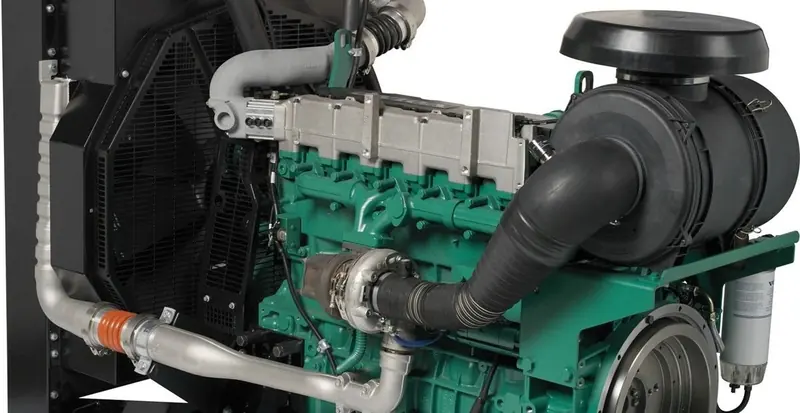
The core leisure IPS range tops out around the IPS1200, sized for planing motor yachts up to roughly 100 feet. For larger commercial and superyacht-scale vessels, Volvo Penta announced a distinct Professional platform in 2023, built around a new, larger drive unit called the IPS 40, paired with hybrid-ready D13 diesel engines. The platform targets vessels from about 80 feet to more than 180 feet, spanning a top-speed range from around 12 to 40 knots depending on the hull and application - a much wider performance band than the leisure range, reflecting that this platform serves both slow-running commercial craft and fast superyacht tenders and support vessels within the same product family.
Volvo Penta's own claim for the Professional platform repeats the familiar 30 percent fuel-economy figure over an equivalent shaft installation, alongside quieter running and hybrid-ready engines that can integrate battery power for silent running or reduced-emission operation in harbour. As of this entry, the platform was still moving from announcement toward deliveries, so there is no independent superyacht-scale sea trial or owner report yet to test those figures against - the same caution that applies to the leisure-range efficiency claims applies here, with the added caveat that the professional platform is newer and has a shorter track record than the core IPS range's twenty-year history. A yard or owner considering the Professional platform for a new build should treat it the same way this entry treats the leisure-range numbers: real, but unverified by anyone outside Volvo Penta at this stage, and worth asking for a specific reference installation rather than the headline percentage alone.
Practical detail
| Routine maintenance cost | Approximately 250 USD per pod for periodic prop and seal inspection, per boating-press sources - a recurring cost beyond standard engine service. |
|---|---|
| Major repair cost | A gearbox rebuild after water intrusion has been cited at upward of 15,000 USD for a single pod - materially more than an equivalent shaft-drive repair. |
| What generation matters | Pre-2009 units used a steering seal design reported prone to premature failure in salt water; confirm which generation is fitted on any used boat. |
| Where to get it serviced | Qualified IPS repair expertise is concentrated in major boating centres rather than evenly available - a real consideration for remote cruising. |
| What is not published | A single audited, independent efficiency figure - Volvo Penta's own marketing cites a range from about 20 to 40 percent depending on the specific claim and metric, and no independent third-party test spanning multiple hull types could be confirmed. |
Request a quote for Volvo Penta IPS.
Tell us the model and where it needs to go. The desk obtains a written offer from the maker or an authorised dealer, checks it against the prices published on this page, and comes back to you by email. No obligation, no fee.
- 01A written offerPriced in your currency, with VAT, delivery and lead time stated, not a brochure figure.
- 02Delivered where the yacht isTo the marina, the yard or your address, with the paperwork a lithium pack or a crane lift needs.
- 03IndependentYotters is tied to no single dealer, so the offer is compared before it reaches you.
What owners and crew report
Water intrusion is a known, feared failure mode among long-term owners
discussion on ownership-focused forums describes the pre-2009 steering seal as the specific point of failure, and once water reaches the gearbox the resulting clutch-plate damage can spiral into the most expensive repair an IPS owner faces.
IPS ownership discussion, YBW ForumGrounding damage is treated as a serious, specialist-only repair
boaters discussing IPS grounding incidents describe needing a qualified specialist to verify a pod is within tolerance after any impact before the boat can be used again, rather than a repair a general boatyard can assess.
The Hull Truth boating forum
What is good, and what to watch
Strong points
- A genuinely different, proven propulsion architectureforward-facing counter-rotating props in clean water and no separate rudder is a real mechanical difference from a shaft drive, not a marketing repackaging, and the adoption numbers (10,000-plus units by 2010 alone) show it has held up in service
- Meaningful efficiency gains in the right applicationeven the more conservative 20 to 30 percent fuel-economy figures cited by independent boating-press sources are a real, usable gain when a hull is designed around the system from the start
- A real handling benefit at the dockjoystick docking control, enabled by the independently steerable pods, is one of the most consistently praised practical benefits among boaters regardless of how the fuel-economy debate settles
What to watch
- Real repair costs a shaft drive does not carryroutine per-pod servicing and the possibility of a 15,000 USD-plus gearbox rebuild after water intrusion are genuine, documented costs, not a rare worst case
- Grounding risk is structurally different and potentially more expensivea pod hanging below the hull can shear outright on impact, as in the documented Azimut 55S case, where a shaft-drive boat more often bends a shaft or strut that is simpler to assess and repair
- The efficiency numbers are not independently standardisedclaims range from about 20 to 40 percent depending on which Volvo Penta figure or metric is quoted, with no single independent test cited across sources - a buyer should treat any one number as an estimate, not a guarantee
Who it is for: A buyer or owner of a planing motor yacht from roughly 35 to 100 feet weighing IPS against a conventional shaft drive, and anyone evaluating a used IPS-equipped boat who needs to know what to check before relying on the fuel-saving numbers in a brochure.