Zipwake
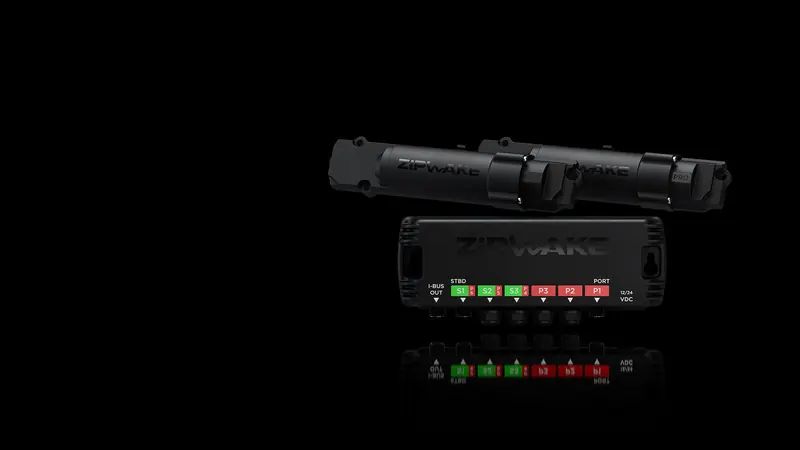
| Zipwake AB, Vastra Frolunda (Gothenburg), Sweden; founded 2015 by Niclas Olofsson per the company's own page, which also says launched in 2014 | |
| Olofsson holds a PhD in hydrodynamics; in 1994 at Fremantle, then at KaMeWa, he proposed an improvised interceptor on two 30 m ferries that needed 28 knots; in 2002 he co-founded Humphree | |
| Company reports about 65,000 deliveries and distributors in 34 countries | |
| Series S for boats up to 50 ft, Series E up to 100 ft, PRO up to 100 ft (Zipwake) | |
| Stroke 30 mm, adjustment in 0.33 mm steps, up to six interceptors per system (Boattest, 2022) | |
| Full travel in about 1.5 s against about 7 s for a trim tab (Yachting, 2017, sponsored by Imtra) | |
| 12 or 24 V DC, NMEA 2000 optional or standalone with own GPS and gyro (Panbo, 2021) | |
| USD 2,890 list for two 450 mm interceptors, distribution module and control head on a 22 ft centre console (Panbo, January 2021) | |
| Imtra is the exclusive US distributor | |
| No independent measured fuel saving was found by the desk |
Where Zipwake comes from
Zipwake's own history starts in 1994 at Fremantle in Australia. Niclas Olofsson, then working for KaMeWa, proposed welding an improvised interceptor blade across the transoms of two idle 30 metre ferries so they could reach a required minimum speed of 28 knots. In 2002 he co-founded Humphree, which took the interceptor idea into commercial shipping and which Yotters covers in its own entry. Zipwake AB followed to bring the system to recreational boats. The company's page gives 2015 as the founding year and also says it launched in 2014 in Gothenburg, so treat the year as 2014 to 2015. Directory profiles also name Olofsson as founder and say the original team of marine and automotive engineers was assembled in 2011.
The company reports about 65,000 deliveries worldwide, distributors in 34 countries and a factory in Sweden. Imtra is the exclusive distributor in the United States, which matters because most English-language reviews of Zipwake were either written by Imtra's customers or sponsored by Imtra.
How an interceptor trims a boat
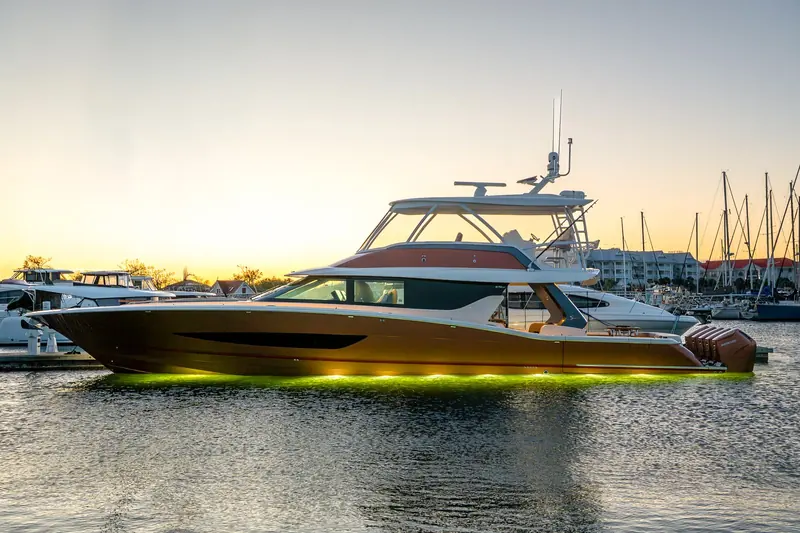
Yachting magazine's 2017 piece, which was sponsored content from Imtra, said the blade drops about 30 mm instead of extending out and up like a tab, that full travel takes about 1.5 seconds against about 7 for a conventional tab, and that a 3D gyro, 3D accelerometer and integrated GPS feed a controller that adjusts trim every few seconds and compensates for both pitch and roll. Frank Sargeant at Boattest wrote in May 2022 that Zipwake's stroke is 30 mm with adjustment in 0.33 mm increments, that many interceptors move fully in under 2 seconds against 6 to 8 for tabs, and that a standard system can run up to six interceptors. He added that lift is non-linear, so a small extension gives more at higher speed, and that Zipwake retracts the blades automatically as the boat slows so it comes off the plane with little trim change.
One practical advantage Sargeant names is that interceptors don't stick out from the transom, so they're less likely to be damaged on a trailer and don't obstruct a ladder. They can also go places a tab can't, such as the aft end of a propeller tunnel or between outboards.
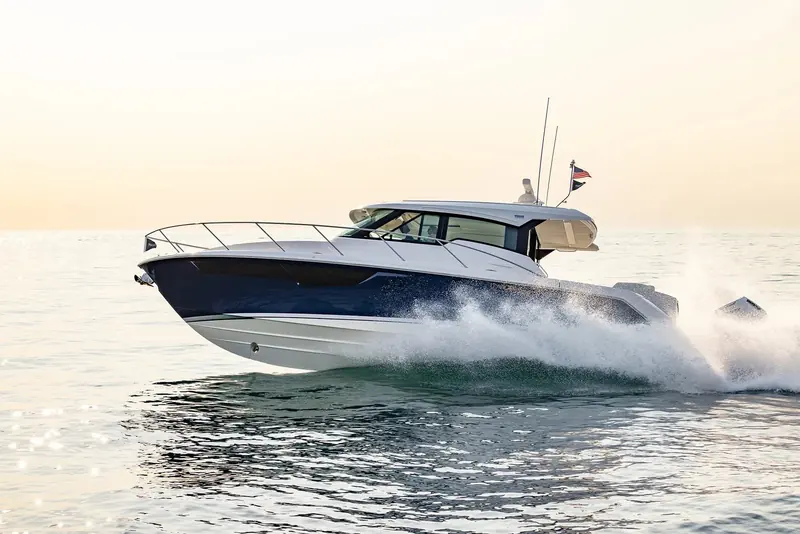
Zipwake's up to 20 percent fuel claim comes from a sponsored article, and nobody we found has measured it on the same boat before and after.
The product range and which size fits
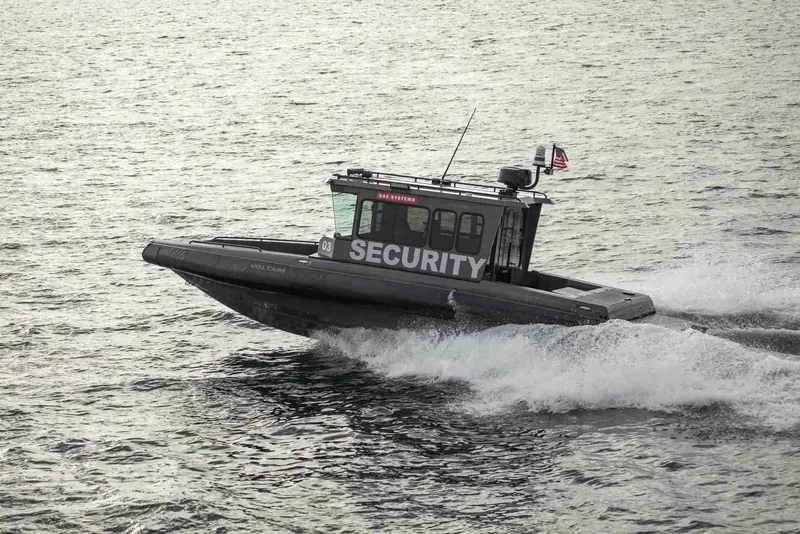
The company page lists those three families and doesn't publish blade lengths on it, so we can't give a size table. The 2017 Yachting piece described four sizes in V-shaped and straight versions for boats of 20 to 60 feet, so the range has been reorganised since then. Sargeant says Series E has longer blades suited to slower or heavier boats. The Panbo test boat, a 22 foot centre console, used two 450 mm interceptors. Ask the distributor for the sizing worksheet for your own hull, engine and weight rather than relying on a boat length, because the right blade depends on deadrise, displacement and cruising speed.
The practical consequence is that two boats of the same length can need different systems. A fast, light centre console and a heavy displacement-hull cruiser sit at opposite ends of the lift curve Boattest describes, where a small extension gives more lift at higher speed. Write down your normal cruising speed and your top speed before you call, and ask which series and how many blades the distributor recommends for those numbers.
What an owner installed and measured
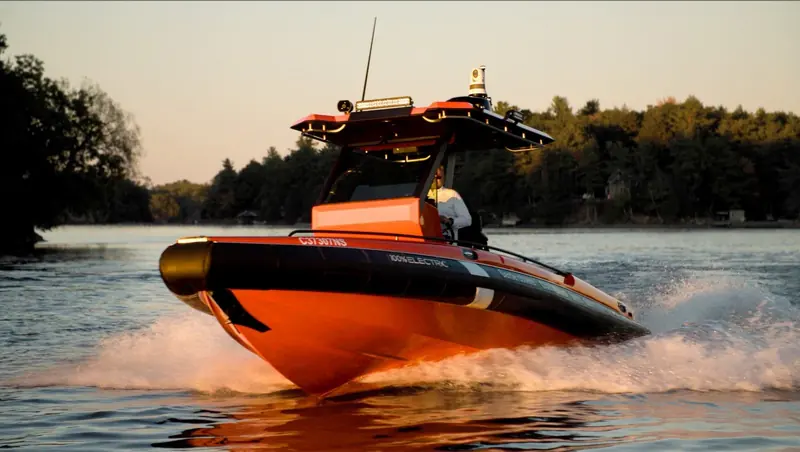
Ben Stein wrote the Panbo test in January 2021. The hardware was two 450 mm interceptors, a distribution module and a control head at USD 2,890 list. The physical install took half a day with help from neighbours. Each interceptor goes on with ten lag screws and the holes below the waterline need sealing, the control cables pass through cable glands that need no sealant and he reported no leaks. The system runs on 12 or 24 V DC and supports up to six interceptors, and the display can join NMEA 2000 or run alone on its own GPS and gyro.
On the water the boat planed at a lower speed and stayed on the plane longer when slowing. About 10 percent extension on the port blade removed the couple of degrees of list from prop torque. At first the boat felt nervous on the plane, with the blades pulling it from side to side and the bow less controlled than he expected. An Imtra technician tuned it, and he reduced sensitivity and adjusted the deployment timing. His pitch curve was 0 percent extension until 8 knots, 100 percent from about 8 to 12 knots and tapering to 0 at 17 knots. Roll reduction on beam wakes was noticeable but less than active stabilisers give. The display was hard to read in direct sun. He gave no fuel figures, top speeds or planing speeds, and he still uses engine trim.
The fuel saving claim and the limits
Yachting repeated up to 20 percent as a claim and attributed no measurement to it. Boattest said some users with automatic control report pitch reductions of up to 70 percent and roll reductions of more than 50 percent, which is a different thing from fuel. An honest reading is that interceptors can cut the bow-high attitude and the time it takes to get on the plane, which is known to affect fuel use, but that your saving depends on hull, load and speed, and nobody we found has published a fuel table with a before and after on the same boat.
The limits are real. Sargeant wrote that interceptors need strong water flow, so they do poorly on slow boats and that a heavy trawler at 8 to 10 knots might not generate enough lift. His suggestions were more interceptors, larger tabs or the longer blades of Series E. He also said many interceptor blades can be damaged above 60 knots. Panbo's author found roll control weaker than active stabilisers and that effectiveness rises with speed.
What it costs and what to compare against
The Bennett Bolt tab system Stein priced for a 22 foot boat was USD 682 plus USD 710 for an automatic control unit. He said Zipwake cost about USD 1,498 more and bought faster response, speed-based pitch settings, NMEA 2000 support and a steering mode. Sargeant adds that interceptors cost more to produce and the bill rises with the number you need, four or five across a wide transom for example, while installation is similar. A Panbo reader reported E-series units on a 70 foot yacht from Florida to the Great Lakes with no problems beyond clearing debris from one. HydroTab uses pneumatic tubes, which the company says keeps moving parts out of the salt water. Ask for the current quote, the sizing, the warranty period and who in your country does the tuning, and keep in mind that all of these prices are from 2021.
The comparison isn't only about the sticker. Stein's list of what the extra money bought was faster response, speed-based pitch settings, NMEA 2000 support and a steering mode, and he was candid that the settings he ended up with were specific to his boat and might differ for others. If you value the automatic trim and a boat that levels itself, the premium is easy to justify. If you mainly want to bring the bow down a little, a cheaper tab system with an automatic controller may do most of it.
Fitting, controls and what to check before you buy
Stein sanded the bottom paint under his interceptors flat because the previous coat had been poorly prepared, so a boat with lumpy antifouling needs that work before the blades go on. Each interceptor takes one cable for power and control back to the distribution unit, the transom penetrations are sealed with glands, and the holes for the lag screws below the waterline have to be sealed separately. On the controls, the display has a light sensor and a night mode, runs on its own GPS and gyro or joins an NMEA 2000 network, and offers manual control of each side as well as the automatic mode. There's also a steering mode that deploys one blade at a time, which Stein admits he often oversteers.
If you tow the boat, interceptors retract fully and leave nothing below the hull, which is the point Sargeant makes against tabs. If you already run engine trim, don't expect Zipwake to replace it. Stein still uses it, and says engine trim efficiency doesn't change with the running angle control. So the honest shopping list is short: your real cruising speed, the number and length of blades the distributor sizes for your hull, the price in your market today, the warranty in writing and a named person who will tune the system after installation.
Practical detail
| Price | USD 2,890 list in January 2021 for two 450 mm interceptors, distribution module and control head (Panbo). Current price not checked; ask the distributor |
|---|---|
| Compare | Bennett Bolt electric tabs with automatic control, USD 1,392 for a 22 ft boat (Panbo, 2021) |
| Fit | Series S up to 50 ft, Series E and PRO up to 100 ft; 12 or 24 V DC; up to six interceptors per system |
| Installation | Half a day for a 22 ft boat; ten lag screws per interceptor; seal holes below the waterline |
| Distribution | Imtra is the exclusive US distributor; Zipwake lists distributors in 34 countries |
| Check before buying | Cruising speed against the 8 to 10 knot slow-boat limit; hull deadrise and engine layout; who will tune the settings |
| What is not published | No independent fuel saving test; no public blade length table; warranty terms were not found on the company page |
What owners and crew report
Half-day install and early tuning problems
Two 450 mm interceptors on a 22 foot centre console, ten lag screws each, no leaks, initial nervous handling fixed with an Imtra technician's tuning, list USD 2,890
Ben Stein, Panbo, January 2021List removed and planing speed lowered
About 10% extension on the port blade removed a couple of degrees of list, and the boat planed at a lower speed and stayed on the plane longer when slowing
Ben Stein, Panbo, January 2021E-series on a 70 foot yacht
A reader reported units on a 70 foot yacht from Florida to the Great Lakes with no problems beyond cleaning debris from one
Panbo comment threadReplacing tabs on a 26 foot centre console
A reader replaced Lenco tabs and reported good performance
Panbo comment thread
What is good, and what to watch
Strong points
- Fast, automatic and out of the wayAbout 1.5 seconds of travel, a 30 mm stroke in 0.33 mm steps, automatic retraction and nothing protruding below the hull
- Fits where tabs don'tBetween outboards and at the end of a tunnel, up to six interceptors per system, 12 or 24 V
- Named, specific owner resultsPlaning speed, list and attitude changes are described by a named owner, with the price stated
What to watch
- No independent fuel testThe up to 20 percent figure appears in sponsored content and the desk found no before and after table
- Poor on slow, heavy boatsBoattest says a trawler at 8 to 10 knots may not generate enough lift without more or longer interceptors
- Costs about double tabsUSD 2,890 against USD 1,392 for a Bennett Bolt system in Panbo's 2021 comparison
- Needs tuningThe Panbo boat felt nervous until sensitivity and timing were adjusted, and the display was hard to read in sun
Who it is for: An owner of a 20 to 60 foot planing or semi-planing boat who wants faster planing, level running and less list, who can pay about double the price of tabs and doesn't need a promised fuel saving to justify it.