De Voogt Naval Architects
| Основатель | Henri de Voogt |
|---|---|
| Истоки | 1913 год, Feadship создана в 1949 году |
| База | Нидерланды (район Харлема) |
| Команда | около 180 человек |
| Дисциплина | корабельная архитектура и инженерия |
| Роль | проектный и инженерный центр каждой Feadship |
| Знаковые яхты | Anna (110 м), Symphony (101,5 м), Savannah (83,5 м) |
| Disciplines | naval architecture and engineering, plus exterior design on more than half the Feadship fleet |
| Largest Feadship | Breakthrough, 118.8 m, launched May 2024, with exterior and interior by RWD |
| Anna, 110 m, delivered 5 October 2018 and listed since as Ambassador: De Voogt naval architecture under a Michael Leach Design exterior | |
| Savannah, 83.5 m, 2015 | exterior by De Voogt with CG Design, and Feadship's first hybrid yacht |
| Savannah's package | one medium-speed main engine on a single centreline shaft, three generators, batteries and a contra-rotating azimuthing stern thruster, with a claimed 30 per cent fuel saving |
| No separate design fee. The naval architecture is inside the Feadship build price and is not negotiated by the owner | |
| The owner still appoints and pays the exterior and interior studios himself, at a market band of 1 to 5 per cent of build cost for a designer, plus 2 to 4 per cent for project management, both outside the yard price (SuperYachtReview 2026 price guide, updated March 2026) | |
| Ocean Independence names Feadship first among the Northern European yards that hold market confidence on build quality, engineering pedigree and long-term support (11 May 2026) | |
Век голландской корабельной архитектуры
Студия ведёт происхождение от 1913 года, когда корабельный архитектор Henri de Voogt открыл собственную практику в Нидерландах. Репутацию он построил между войнами на крупных моторных яхтах, включая 54-метровую яхту, сданную шаху Персии в 1936 году. В 1949 году De Voogt участвовал в создании Feadship, экспортного объединения, соединившего верфи Royal Van Lent и De Vries. С тех пор бюро корабельной архитектуры служит опорой этого партнёрства. Такой масштаб отражает глубину инженерии, которой сегодня требует Feadship.
Сегодня De Voogt Naval Architects - большая команда проектировщиков, корабельных архитекторов и инженеров в Нидерландах. Она обеспечивает корабельную архитектуру и инженерию каждой яхты Feadship. Эта роль ставит её в технический центр одного из самых уважаемых имён яхтинга. Студия выросла примерно до 180 человек. Работа студии определяет, насколько тихо и экономично идёт яхта, ещё до того, как кто-либо увидит интерьер.
Сначала инженерия
Дисциплина De Voogt - корабельная архитектура, наука о корпусе, его конструкции, остойчивости и поведении в море. Студия проектирует корпуса, которые экономичны и тихи и отвечают строжайшим классификационным требованиям и требованиям безопасности. Её работа часто невидима гостям и при этом определяет, как яхта себя ведёт. Здравая инженерия - фундамент, на котором строится каждая Feadship. Правильно сделать корабельную архитектуру - самая трудная и наименее заметная часть постройки яхты.
Бюро часто разрабатывает корабельную архитектуру, пока сторонний стилист формирует профиль выше ватерлинии. В этой вспомогательной роли ему комфортно: оно даёт платформу для чужого экстерьера. На многих яхтах оно участвует и в экстерьере, и в общем расположении помещений. Приоритетом всегда остаётся судно, которое безупречно работает в море. Бюро вполне устраивает роль платформы, на которую ляжет профиль другого дизайнера.
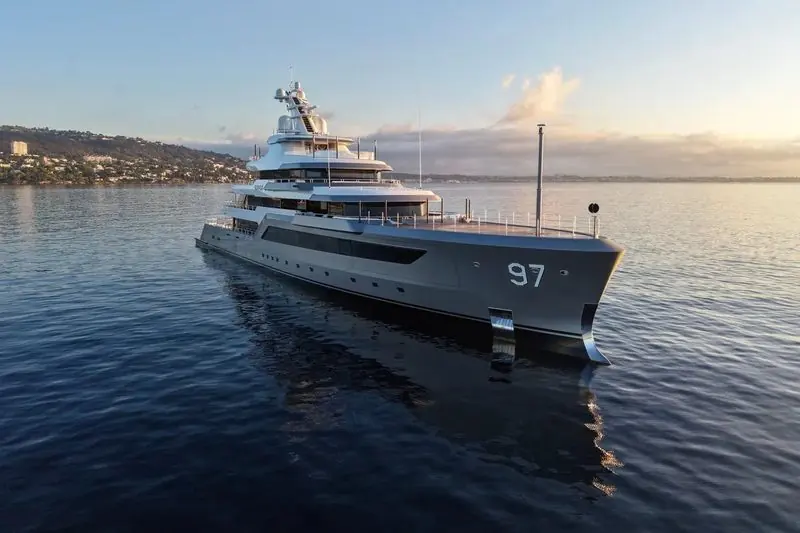
Столетний инженерный хребет за каждой яхтой Feadship.
Anna, Symphony и Savannah
110-метровая Anna - крупнейшая яхта, когда-либо сданная Feadship, и корабельную архитектуру для неё делала De Voogt. 101,5-метровая Symphony держала этот рекорд до неё и тоже опиралась на инженерию De Voogt, с экстерьером Tim Heywood. 83,5-метровая Savannah открыла новую страницу как ранняя яхта с гибридной движительной установкой, и снова с корабельной архитектурой De Voogt. Каждая показывает работу студии на границе размера или технологии. Это точки на длинной кривой ровного движения вперёд, а не разовые достижения.
Эти яхты стоят внутри длинного ряда Feadship, сформированных тем же бюро за многие десятилетия. Инженерия студии в равной мере обеспечила и рекордные размеры, и первопроходческие движительные установки. Её последовательность через поколения яхт впечатляет. За именем De Voogt стоит флот, который определяет голландское яхтостроение. Поколение за поколением Feadship опирались на одно и то же инженерное бюро.
Внутри системы Feadship
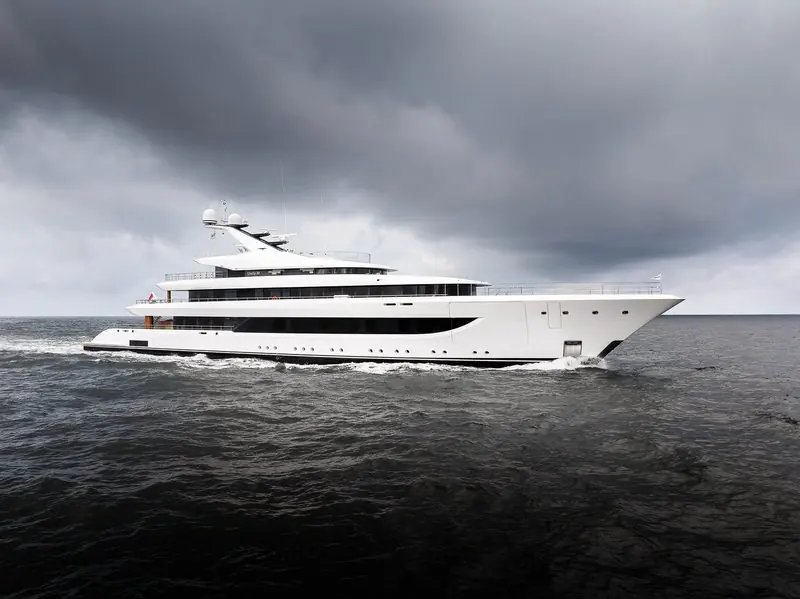
De Voogt не работает как независимая студия по найму, как это делает большинство имён в этом списке. Она является общим проектным и инженерным центром двух строительных верфей Feadship. Такая интеграция означает, что корабельные архитекторы сидят рядом с людьми, которые строят яхты. Это редкая модель, где дизайнер и строитель под одним знаменем. Эта близость между чертёжным залом и цехом во многом и держит качество Feadship.
Бюро часто сотрудничает с ведущими экстерьерными и интерьерными студиями, которых выбирает владелец. Оно даёт инженерный хребет, пока эти студии формируют то, что владелец видит. Такое разделение дало многие из самых почитаемых яхт на плаву. Система держится на том, что De Voogt правильно делает основы. Знаменитые экстерьеры работают только потому, что под ними здравая платформа.
Хребет Feadship
Положение De Voogt неотделимо от репутации Feadship по качеству. Век корабельной архитектуры студии - один из самых длинных послужных списков в отрасли. Её инженерия лежит под яхтами, которые широко считают одними из лучше всего построенных в мире. Этот тихий авторитет и есть её знак. Родословная от 1913 года входит в число самых длинных непрерывных в отрасли.
Бюро продолжает продвигать размер и экономичность на каждой новой Feadship. Роль технического сердца верфи держит его в центре голландского яхтинга. Немногие студии могут предъявить такую длинную и непрерывную линию. De Voogt - хребет одного из великих яхтостроителей. Каждый новый спуск добавляет к корпусу инженерных знаний, накопленному более чем за столетие.
Breakthrough
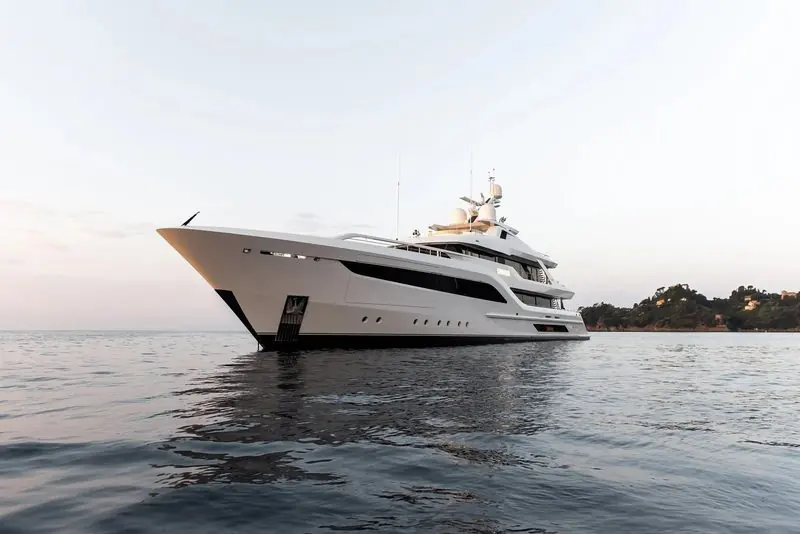
Feadship launched Breakthrough on 4 May 2024 at 118.8 metres and 7,247 GT, taking the yard's size record from Anna and becoming the largest superyacht ever launched in the Netherlands. RWD drew both the exterior and the interior. Her power comes from a 3.2 megawatt fuel-cell system running on cryogenic liquid hydrogen, with a hybrid arrangement allowing conventional diesel-electric operation as well.
The engineering problem was not the fuel cells. It was the hydrogen, which has to be stored at minus 253 degrees Celsius and occupies far more volume than diesel for the same energy, inside a hull that also had to carry fourteen balconies and seven unfolding platforms. Getting that arrangement past a classification society with no precedent to point at is naval architecture in its purest form. Five years of development went into it.
Where the naval architect's responsibility begins and ends
An owner should be clear about what this office guarantees. Speed, range, fuel consumption, noise and vibration levels and sea-keeping behaviour are the numbers that live in a build contract, and they rest on the naval architecture. Interior joinery, artwork and finish do not. If a yacht is loud at 12 knots or wet in a following sea, that is a hull and systems problem and the responsibility lies here.
The corresponding limitation is that De Voogt cannot fix a poor layout or an ugly profile chosen by somebody else. Where an outside studio holds the styling, the boundary between the two offices runs through the window line, the deck edge and the superstructure profile. On a Feadship that boundary is managed inside one project team, which removes the most common source of build disputes elsewhere in the industry.
How an owner meets De Voogt, and what it costs
There is no independent commission here. An owner does not appoint De Voogt. He orders a Feadship, and the naval architecture arrives as part of the yard's proposition, with the engineering fee inside the build price and not separately negotiated. That is a genuinely different commercial arrangement from every other studio in this directory, and it is worth pricing. On a custom project elsewhere the owner carries a designer's fee of 1 to 5 per cent of build cost and project management at a further 2 to 4 per cent, both outside the yard's number, per the SuperYachtReview guide updated March 2026. Here the first of those two lines is already inside the price for the engineering half of the job.
What an owner still chooses, and still pays for separately, is the exterior and interior studios, and Feadship is comfortable working with whoever he appoints. The sequence runs through a letter of intent, which reserves a slot, to the yacht building agreement, which is the commitment to price and delivery, as Oceanco describes the same industry practice in its owner's guide published by BOAT International on 10 June 2024. A yacht of 100 metres and above is commonly four to five years from first sketch to handover. The owner deals with the yard's project team once building starts, with De Voogt continuing through engineering, trials and delivery, which is attendance an outside naval architect would bill by the hour.
Standing, and who it does not suit
De Voogt's reputation is inseparable from Feadship's, and Feadship is generally placed at or near the top of any serious ranking of build quality. More than a century of continuous naval architecture is a record nobody else in yachting can claim. The office's contribution is invisible in photographs and decisive in ownership, which is why it is chronically underrated by buyers and never by captains.
This is not an option for an owner building anywhere other than Feadship, which rules it out for most of the market on price alone. It does not do interiors and it is not the place to go for a decorative brief. Owners who want a designer they can hire, argue with and take to a different yard should look elsewhere entirely, because that is not what this office is.
The engineering is the part the second owner pays for
A Feadship is the strongest resale position available in yachting, and the naval architecture is a larger part of that than the styling. Ocean Independence, writing on 11 May 2026, states that yachts from established Northern European yards, naming Feadship first, continue to command strong market confidence on build quality, engineering pedigree and long-term support. A buyer inspecting a fifteen-year-old boat is buying noise levels at 12 knots, fuel burn on a crossing, the condition of the steel and the quality of the systems drawings he will need at every refit. All of those are this office's work, and none of them can be improved later at a sensible price.
The consequence is that the exterior and interior studios an owner appoints move the number at the margin while the yard and the engineering set the range. That cuts both ways. A dated interior on a Feadship is a discount and a refit. A dated interior on a boat with weak engineering is a reason not to bid. It is also why the drawings matter at resale in a way they do not on a series boat. A complete, current, native-format engineering set makes a refit yard's quotation cheaper and faster, and a buyer who has been through one refit without the drawings will pay for the boat that has them.
Практическая информация
| Design fee | no separate fee; the naval architecture is inside the Feadship build price and is not negotiated by the owner |
|---|---|
| What the owner still pays for | the exterior and interior studios he appoints himself, at the market band of 1 to 5 per cent of build cost plus 2 to 4 per cent project management, both outside the yard price (SuperYachtReview 2026 price guide, updated March 2026) |
| Contract sequence | letter of intent to reserve a build slot, then the yacht building agreement, which commits price and delivery date, the same sequence Oceanco describes in its owner's guide published by BOAT International on 10 June 2024 |
| Timeline | commonly four to five years from first sketch to handover at 100 metres and above |
| Where responsibility runs | speed, range, fuel burn, noise, vibration and sea-keeping sit with De Voogt and are written into the build contract; interior joinery, artwork and finish do not |
| Notable exteriors by outside studios on a De Voogt platform | Michael Leach Design (Anna), Tim Heywood (Symphony), RWD (Breakthrough), Sinot (Drizzle), Winch Design (Madame Gu) |
Что сообщают владельцы и экипажи
No independently attributable owner testimony found
Feadship owners rarely speak on the record about hull performance, and coverage of Savannah, Anna and Breakthrough draws on the yard's own engineers rather than on owners or captains; this research found no on-the-record quote from anyone who has run one of these yachts describing her sea-keeping or systems
Yotters research desk
Сильные стороны и что учесть
Сильные стороны
- The longest unbroken naval architecture lineage in yachtingcontinuous operation since 1913, a record no other office in this directory can claim, carried through Frits de Voogt's near four decades at the head of the design side
- Naval architect and shipwright inside one organisationdrawings are checked against what the yard's own shop floor can build before they reach an owner, removing the referee role an owner normally has to play between separate design and build businesses
- Engineering that becomes the industry's reference pointSavannah's single-shaft hybrid drivetrain and Breakthrough's cryogenic hydrogen fuel-cell system were both solved at naval-architecture stage, years before either yacht's interior was chosen
- The strongest resale position the market offersOcean Independence names Feadship first among Northern European yards holding market confidence on build quality, engineering pedigree and long-term support
На что обратить внимание
- Not an independent hirean owner cannot appoint De Voogt directly; the naval architecture only comes as part of ordering a Feadship, which prices out most of the market before design even starts
- No interior, and exterior only on part of the fleeton more than half the fleet De Voogt also draws the exterior, but on the rest an owner appoints and funds a separate studio, and interiors are almost always somebody else's work
- Not for owners who want to shop the design elsewherethe naval architecture is bound to Feadship's yards; it cannot be taken to a different builder if an owner later changes his mind
- Long build times at the largest sizesa yacht of 100 metres and above is commonly four to five years from first sketch to handover
Для кого: Владельцы, заказывающие Feadship, которым нужна инженерная родословная длиной больше века.