Sanlorenzo backs a bid for Admiral's parent, and orders must be re-cut
An offer for everything except the debts
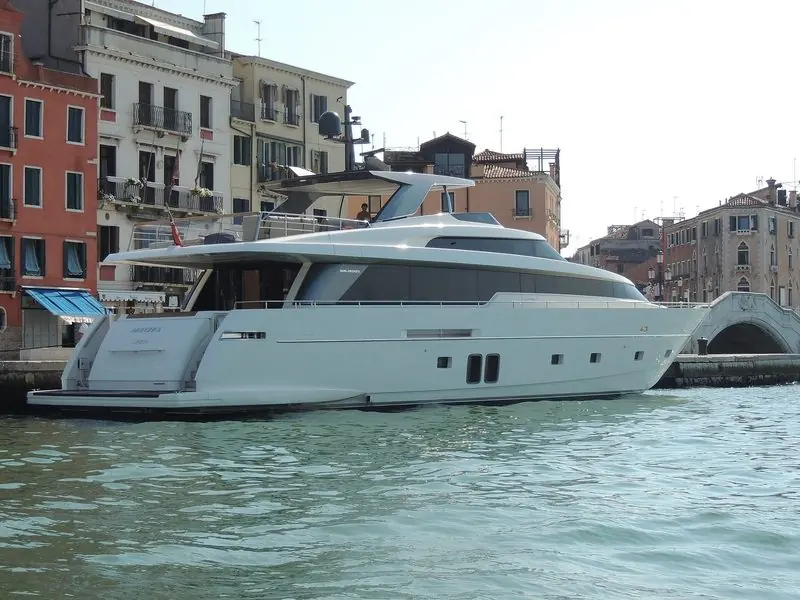
Sanlorenzo said on 27 July that it has joined Polo Nautico Carrara, a consortium formed to bid for the entire business of The Italian Sea Group. The expression of interest, with a secured offer attached, went to the court in Florence, which has supervised the group since it sought protection on 1 July. The perimeter is the whole industrial complex: the Marina di Carrara yard, the plant, the brands and the workforce. What it excludes is the debt, and the receivables with it.
Sanlorenzo is not buying TISG outright. It wants a minority position in the consortium, which Il Sole 24 Ore reports could reach 45 per cent, and it has issued a letter of patronage covering up to 10 per cent of the price as a guarantee of the consortium's payment obligations. The price has not been published, though market talk reported by Reuters puts it near the court-appointed valuation of roughly EUR 162m. The offer is conditional on due diligence and on the court opening a competitive procedure.
Your contract does not come with the yard
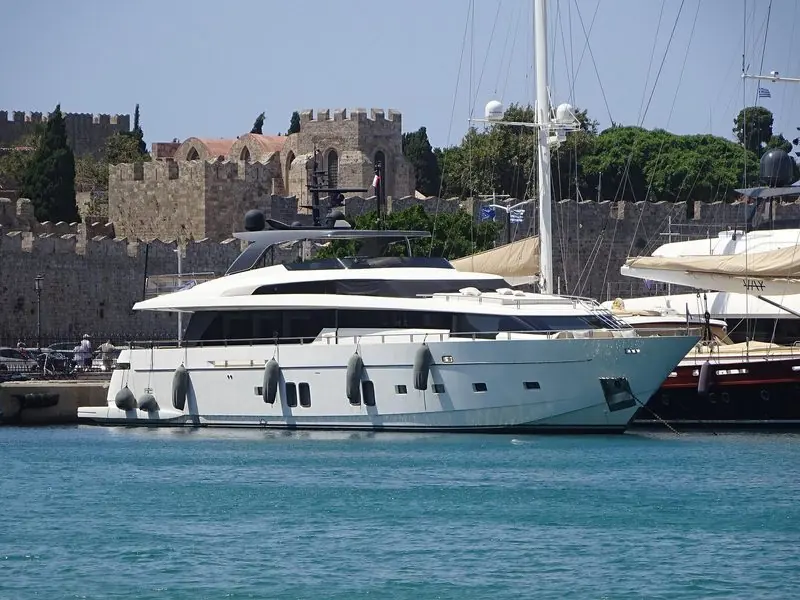
The detail that matters most to an owner is one line in the consortium's statement. Ongoing orders may continue, but only by direct negotiation with each individual owner. A contract signed with The Italian Sea Group is a claim against a company in a court-supervised crisis procedure, not an asset that travels automatically to whoever buys the sheds. If Polo Nautico Carrara wins, every owner with a hull in build sits down again with a new counterparty, on terms nobody has written yet.
For now the position is frozen rather than resolved. The Florence court granted TISG a four-month shield under which creditors cannot unilaterally dissolve contracts already in force, and the group was due to return a restructuring plan to the court on 22 July. Three commissioners appointed on 3 July, led by Professor Niccolo Abriani, sit over the process. The shield helps the owner too: a half-built hull is worth more inside a running yard than as a claim in a creditors' queue.
The size of the hole the buyer steps over
The numbers explain why the debt is left where it lies. TISG's overdue positions came to EUR 266.8m: EUR 99m to factoring companies, EUR 77.6m to suppliers, EUR 42.7m of financial debt, EUR 29.3m in tax and EUR 18.1m in social security. Wages were the one line reported at zero. Net financial position at 31 May stood at EUR 178.7m, against EUR 7.5m of cash.
The crisis was declared in February, when the group flagged roughly EUR 400m of costs beyond budget. Founder Giovanni Costantino, who controlled 53.6 per cent through his holding company, left the board on 21 July with his son Gianmaria, having earlier put EUR 25m of his own money in. Direct headcount has fallen from 530 to under 500, and about 200 of those are on Italy's extraordinary wage guarantee scheme. Local estimates put another 1,000 to 1,500 supply-chain jobs in the balance.
Who is actually behind Polo Nautico Carrara
The consortium was assembled by Riccardo Cima, the Viareggio accountant who founded the nautical centre there and is its sole director. His own company, with a group of suppliers, would hold 10 per cent of the capital. The other 90 per cent is earmarked for two or three international shipyards, with which talks are described as advanced but unfinished. Sanlorenzo is the first of them on the record, which turned a local initiative into a market event.
Massimo Perotti, Sanlorenzo's owner and executive chairman, framed the move as an obligation. "We chose to join this operation because we believe the role of a leading company is measured not only by its ability to create economic value, but also by the responsibility to protect employment," he said. Il Tirreno reported on 21 July that Sanlorenzo and Lurssen were the two names watched as potential rescuers. If the court opens a competitive procedure, today's offer is a floor rather than a settlement.
What an owner already in the fleet should watch
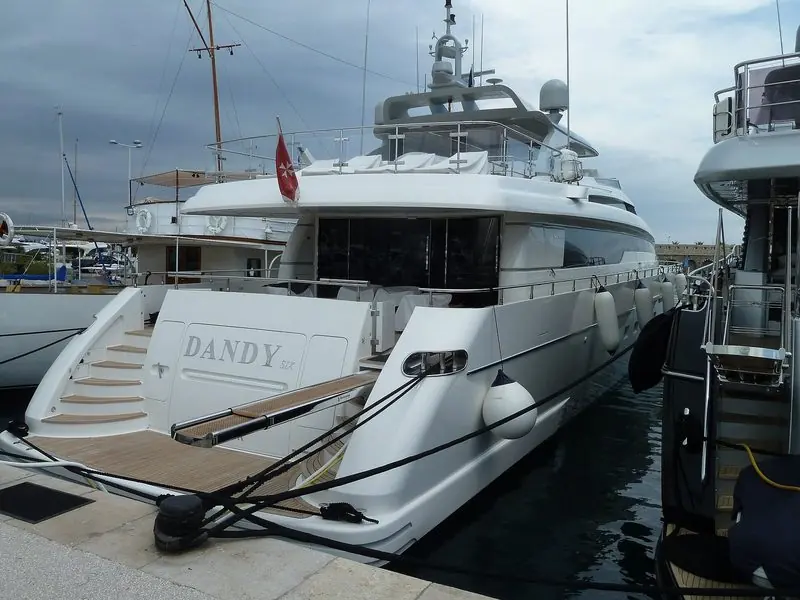
Three brands are on the table and they do not carry the same risk. Admiral is a going concern with hulls in the water and a legible resale market behind them. Tecnomar sits at the sportier, more replaceable end of the range. Perini Navi is the delicate one: the name behind Maltese Falcon, its value rests on provenance and on the yard's ability to refit what it built, and it had been through one insolvency before TISG acquired it.
For an owner already in the fleet, the signal to watch is continuity of the technical office, meaning who ends up holding the drawings, the warranty obligations and the refit capability for a hull that may run another thirty years. That matters more than the headline price. For an owner mid-build, the date to watch is the day the court opens the competitive procedure, because that is when the renegotiation he cannot avoid acquires a counterparty and a calendar.
Questions this story answers
What happened?
Sanlorenzo has put its name behind a consortium offer for the whole of The Italian Sea Group, the builder of Admiral, Tecnomar and Perini Navi, under court protection in Florence since 1 July. The bid takes the yards and the brands but leaves the debts behind, and the existing build contracts with them. For anyone holding an Admiral or a Perini order, the question is no longer whether the yard survives, but on what terms his own contract does.
Who reported this?
Reuters, Il Sole 24 Ore, Teleborsa, Borsa Italiana, MegaYacht News, Il Tirreno, La Nazione, Milano Finanza, Bolina.
We do this for everyone who loves this world. The people who have spent their lives in it, and the people just discovering it. Yotters exists so that what we learn belongs to all of them.
Nobody pays us for this. No ads, no sponsors, nothing for sale. We just believe the world is a little better when knowledge is shared instead of kept.
If it gave you something today, tell us to keep going. Follow us, leave a like, or write a positive comment. We read every one, and they are what keeps us going.