Seizing 20 superyachts cost $390m; three sold, Ukraine got $0
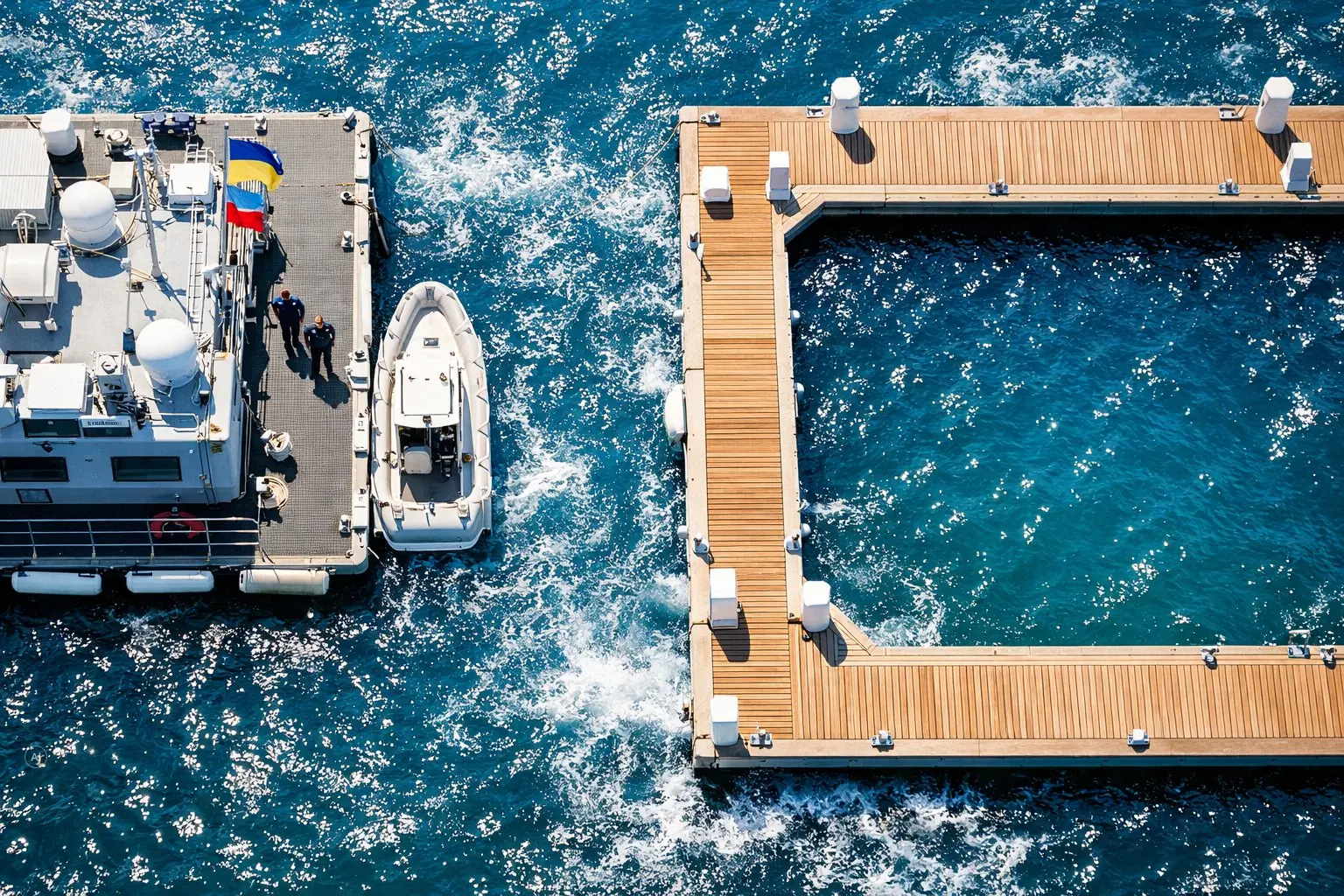
A $250 million yacht, bought without chasing the discount
Abbas Sajwani was 27 when he won the September 2024 auction for Amadea, the 348-foot Lurssen delivered in 2017 to the Russian billionaire Suleiman Kerimov and seized by the FBI and Fijian police in the port of Lautoka in May 2022. The Dubai real-estate developer's winning bid beat the next-highest offer by only about $1 million, and neither he nor the US Marshals Service has disclosed the final figure, though the yacht is now valued at around $250 million, down from the $300 million she carried when she was taken. Sajwani has said the price was not the point. "When I was looking to buy a boat, it wasn't one box I needed to tick," he told Forbes in August 2026. "It was 10 boxes, and Amadea, for me, ticked most of them."
What those boxes bought him is six decks, a gold-leafed elevator, an infinity pool, a spa and a theatre, plus a helipad he has since resurfaced as a pickleball court. The Justice Department filed its civil forfeiture case against the yacht in October 2023 and took it to auction in September 2024, under a year later - fast by the standard the other detained yachts have set. Sajwani now owns a yacht whose registered name and Kerimov-linked history will follow her through every future sale, survey and insurance renewal.
Three sold in four years, and none of the money has reached Ukraine
Amadea is one of only three sanctioned yachts to have actually changed hands since the seizures began in 2022, out of roughly twenty detained across nine countries. The other two are Axioma, taken from steel magnate Dmitry Pumpyansky in Gibraltar over unpaid loans and resold at a markup after first fetching $37.5 million, and Alfa Nero, the 267-foot yacht linked to fertiliser billionaire Andrei Guryev that Antigua and Barbuda sold in July 2024 for $40 million. Every official statement around the US and EU seizure programmes described the eventual sales as a route to funding Ukraine's reconstruction or defence. Four years on, none of that money has arrived.
Alfa Nero's sale has instead produced a lawsuit: the daughter of the yacht's acknowledged original owner is now in US federal court seeking the auction's financial records, after several failed attempts to block the sale in Caribbean courts, and alleging that $10 million of the proceeds has gone missing. Axioma's resale at a premium over its $37.5 million sale price shows a seized yacht can still find willing buyers - but it does nothing to answer where seizure proceeds are actually supposed to land, four years after the policy was announced with Ukraine named as the beneficiary.
The other seventeen are costing taxpayers about $390 million
The yachts still sitting in custody are the expensive part. Forbes puts the four-year taxpayer bill for holding the full detained fleet at roughly $390 million: more than $50 million in the United States, and nearly $100 million in Italy alone across five yachts, including the $510 million Scheherazade, tied by name to Vladimir Putin and held since May 2022 at a reported cost of $15 million and counting, and Lady M, linked to steel billionaire Alexey Mordashov and detained for more than 200 weeks. Spain has spent an estimated $14 million over 51 months holding the 255-foot Tango, seized from Renova founder Viktor Vekselberg, and Germany is sheltering the $600 million Dilbar, linked to metals investor Alisher Usmanov, in a floating dock at the Lurssen yard where she was built.
Amadea's own bill while in US custody ran to roughly $850,000 to $922,000 a month: about $360,000 for crew, $165,000 for maintenance, waste and food, $75,000 for fuel, and $144,000 in pro-rated insurance, on top of one-off dry-docking charges. Benjamin Maltby, a superyacht lawyer, told Forbes that the authorities behind the seizures "didn't have a clue as to how much these things cost just to have there, doing nothing." Robert Dolling, chief executive of refit specialist Verpeka Dolling, put the physical toll in blunter terms: without engines and generators running, he said, "everything starts going to hell."
What four years of seizures actually prove
The lesson for an owner is not that a state can seize a yacht - that has been obvious since the first warrant in 2022. It is how badly the mechanics of holding one were underestimated, and how slowly a legal system moves once it has one in its grip. Sam Tucker, a broker at Moravia Yachting, described a detained yacht bluntly to Forbes: "The paint is getting old, underneath the boat is probably filthy. It's just about legal and floating." Andrei Guryev Jr's Luminosity, held in Montenegro and once worth an estimated $275 million before the war, has reportedly deteriorated further still, with unpaid crew still aboard.
For anyone considering a purchase with a contested or sanctioned history, Richard Lambert, a broker at Burgess, put the practical advice plainly: "Anyone buying one of those yachts is going to have to take some very, very strong legal advice." The wider read for an owner has little to do with Russia specifically - it is that beneficial ownership, flag choice and insurer due diligence are no longer paperwork exercises. A jurisdiction willing to seize an asset in 2022 has shown it is willing to hold that asset for years without a clear plan to dispose of it, and the eventual buyer inherits a name and a history that four years of headlines will not let him forget.
Frozen is not the same as confiscated, and most of the fortune is still just frozen
The twenty detained yachts are a small, visible fraction of a much larger freeze. Roughly $58 billion in Russian oligarch assets - yachts, real estate, private jets, companies and bank accounts - has been blocked by Western governments since 2022, and only about $3 billion of that, some 5 percent, has ever been formally confiscated rather than merely held. A frozen asset stays legally the owner's; a confiscated one has changed hands for good. Of the twenty yachts, only four have reached confiscation. The rest, including Scheherazade, Dilbar, Tango and Luminosity, remain in the costlier, unresolved middle ground: too politically charged to release, too legally contested to sell.
That distinction is the one an owner's own lawyer should be pricing in before he ever touches a jurisdiction with a seizure programme. A freeze can be reversed if sanctions lift or a court finds insufficient grounds, in principle returning the yacht, minus years of dockage and upkeep bills the owner may still be liable for. A confiscation is final, and only four of the twenty have gotten there in four years. The gap between a $58 billion freeze and a $3 billion confiscation total is, in practice, the gap between a government making a political statement and a government actually finishing the legal case behind it.
What owners and crew report
Buying a seized yacht is a considered purchase, not an opportunistic one
Abbas Sajwani, the Dubai real-estate developer who bought Amadea, said the boat "ticked most" of ten boxes he set before bidding, rather than treating the discount as the draw
Forbes (Giacomo Tognini, 2 August 2026)A yacht that sits idle for years develops real problems, not just cosmetic ones
Sam Tucker, a broker at Moravia Yachting, said of a detained yacht that "the paint is getting old, underneath the boat is probably filthy" after years without upkeep
Forbes (Giacomo Tognini, 26 July 2026)Governments underestimated the cost of simply holding a superyacht
Benjamin Maltby, a superyacht lawyer, said authorities "didn't have a clue as to how much these things cost just to have there, doing nothing"
Forbes (Giacomo Tognini, 26 July 2026)
What is good, and what to watch
Strong points
- A seized yacht can be a genuine bargainAmadea, a 2017 Lurssen valued at $300 million when taken, changed hands for about $250 million with six decks, a spa, a theatre and a gold elevator already fitted
- A completed US forfeiture auction clears title cleanlya court-ordered civil forfeiture sale forecloses most future ownership challenges, unlike a private resale of a disputed asset
What to watch
- The provenance never really leaves the hullAmadea is still reported by her Kerimov-linked history in every account of her sale, a story every future buyer, charterer and insurer will hear again
- Years in custody degrade the yacht, not just its paperworkidle superyachts held without running engines or generators suffer real mechanical decline, and Luminosity's crew reportedly went unpaid while she sat detained in Montenegro
- The stated purpose of the seizures has not been metnone of the proceeds from the three yachts sold so far has reached Ukraine, and Alfa Nero's sale is now the subject of a US lawsuit over $10 million her original owner's family says is missing
Practical detail
| Total taxpayer cost, 4 years | about $390 million holding roughly 20 seized or detained yachts across 9 countries |
|---|---|
| Yachts actually sold | 3 of 20 - Amadea (about $250m), Axioma ($37.5m), Alfa Nero ($40m) |
| Proceeds transferred to Ukraine so far | $0, despite Ukraine being the stated beneficiary of the seizure programme |
| Amadea's running cost in US custody | about $850,000 to $922,000 a month - crew, fuel, maintenance and pro-rated insurance |
| What is not published | Sajwani's exact winning bid for Amadea, and the US government's total legal costs pursuing the forfeiture |
Questions this story answers
What happened?
Four years after the West began seizing Russian-linked superyachts, only three of twenty have been sold and taxpayers have spent an estimated $390 million just keeping the rest afloat, with none of the proceeds yet reaching Ukraine. The family behind one of the three, Alfa Nero, is now suing over $10 million it says went missing from her sale, while the Dubai developer who bought the best-known of the three, Amadea, calls the discount beside the point. For any owner weighing a flag, an insurer or where to lay up next, this is the clearest public account yet of what a state can do to a yacht - and how expensive it is to find out.
What is good about it?
A seized yacht can be a genuine bargain. Amadea, a 2017 Lurssen valued at $300 million when taken, changed hands for about $250 million with six decks, a spa, a theatre and a gold elevator already fitted
What should an owner or buyer watch?
The provenance never really leaves the hull. Amadea is still reported by her Kerimov-linked history in every account of her sale, a story every future buyer, charterer and insurer will hear again
What do owners and crew report?
Abbas Sajwani, the Dubai real-estate developer who bought Amadea, said the boat "ticked most" of ten boxes he set before bidding, rather than treating the discount as the draw (Forbes (Giacomo Tognini, 2 August 2026))
Who reported this?
Forbes, Robb Report, Megayacht News, SuperyachtNews.com.
We do this for everyone who loves this world. The people who have spent their lives in it, and the people just discovering it. Yotters exists so that what we learn belongs to all of them.
Nobody pays us for this. No ads, no sponsors, nothing for sale. We just believe the world is a little better when knowledge is shared instead of kept.
If it gave you something today, tell us to keep going. Follow us, leave a like, or write a positive comment. We read every one, and they are what keeps us going.